

SR20DET vs K24 vs 2JZ: Why Nissan's Legendary Turbo Engine Lost Its Edge
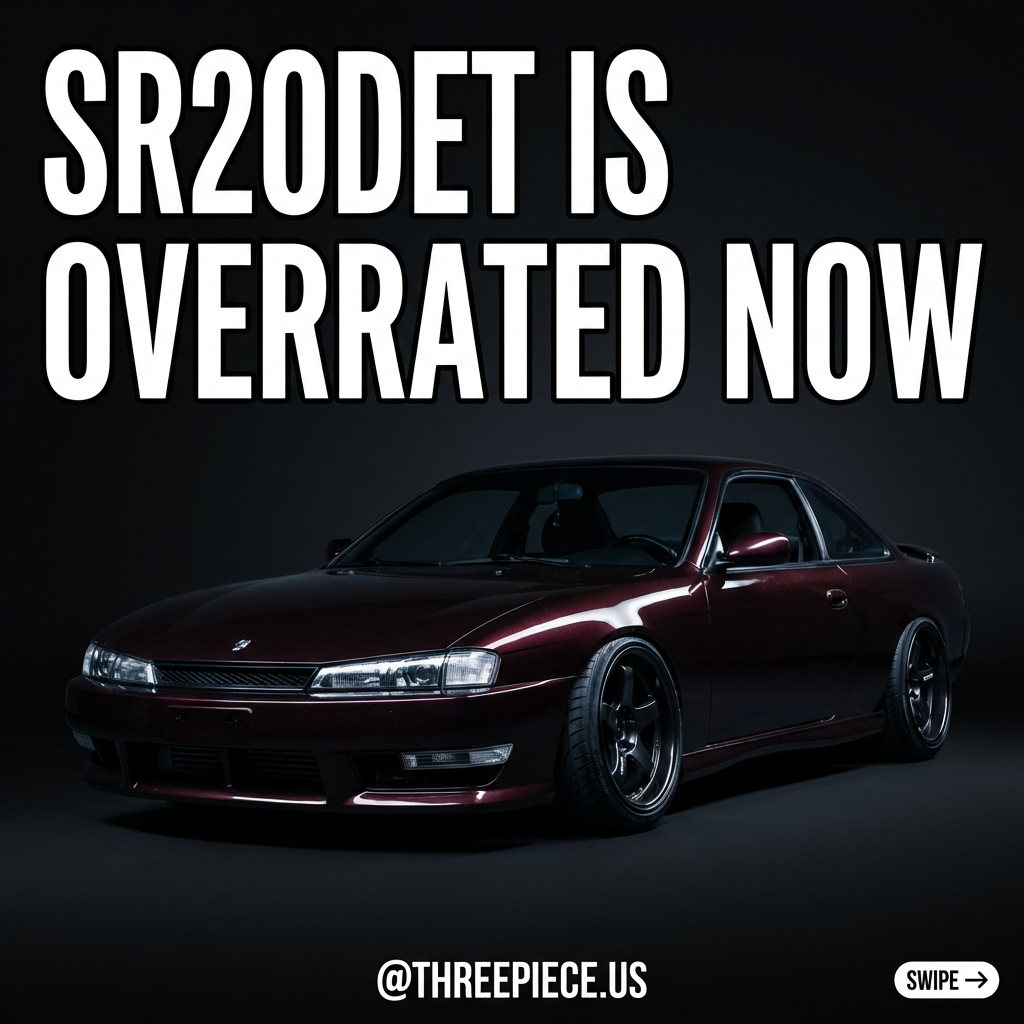
The SR20DET built the JDM tuning scene when S13s cost $3,000 and every junkyard had spare motors. But paying $8,000+ for 30-year-old tech while better options exist right next to it? That's the nostalgia tax hitting hard in 2025. Here's why the legend outpaced reality — and what actually makes sense now.
Quick links
- Why Everyone Loved the SR20DET Originally
- The Harsh Reality Check
- Modern Alternatives That Outperform
- When It's Still Worth Building
- The Bottom Line on SR Swaps
Why Everyone Loved the SR20DET Originally
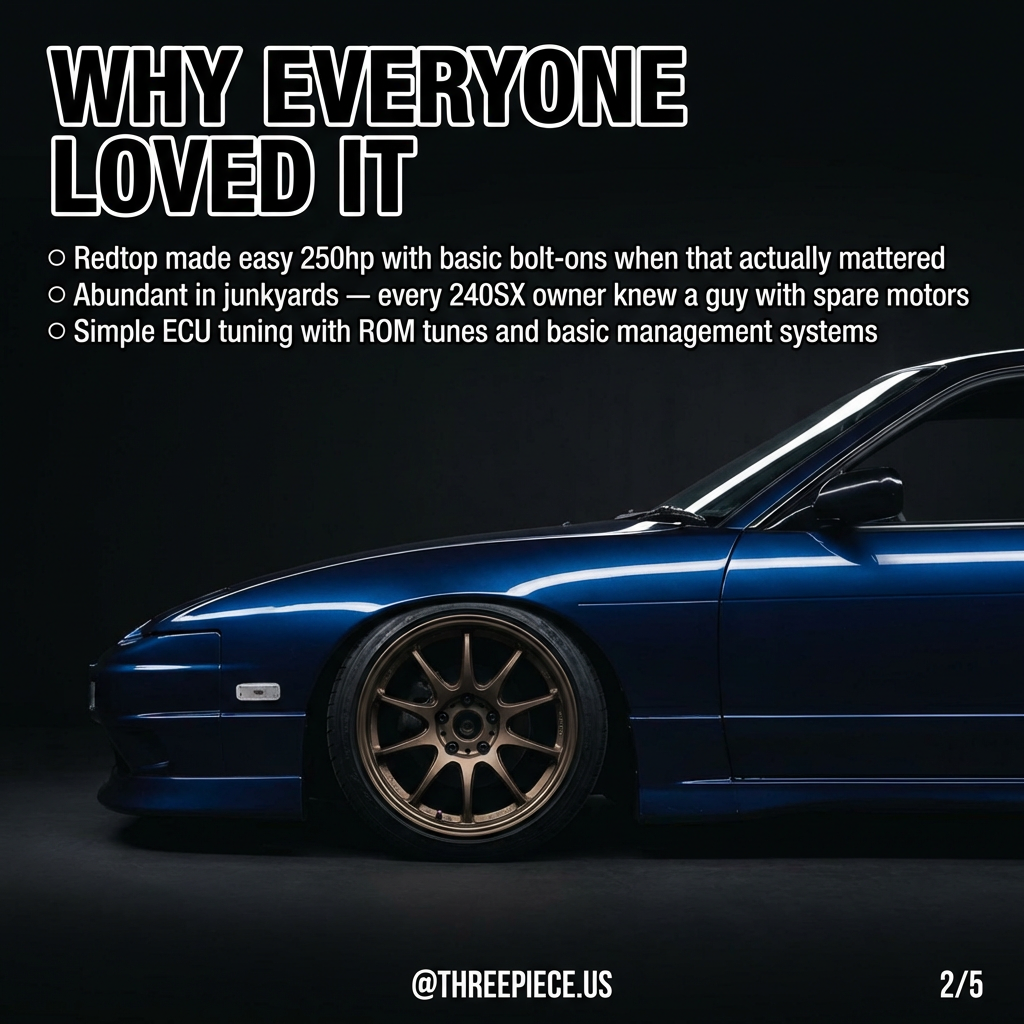
The Redtop SR20DET earned its reputation when 250 horsepower with basic bolt-ons actually mattered. In the late 90s and early 2000s, that power level walked most street cars while maintaining decent reliability. Every 240SX owner knew someone with spare motors, parts were abundant in junkyards, and simple ECU tuning with ROM chips made power gains accessible.
The timing was perfect: S-chassis cars were cheap, SR swaps were affordable, and the aftermarket exploded with support. Companies like Garrett, HKS, and Greddy built entire product lines around this motor. If you wanted a reliable turbo four-cylinder that made decent power without breaking the bank, the SR20DET was the obvious choice. For context on modern S-chassis builds, check out our SR20DET oil control guide for keeping these motors alive.
The Harsh Reality Check
Here's where the legend crashes into 2025 reality: the stock bottom end taps out at 350 horsepower before requiring internal work. Meanwhile, a K24 makes 400+ horsepower naturally aspirated and revs to 9,000 RPM, while 2JZ builds handle 500+ horsepower on stock internals.
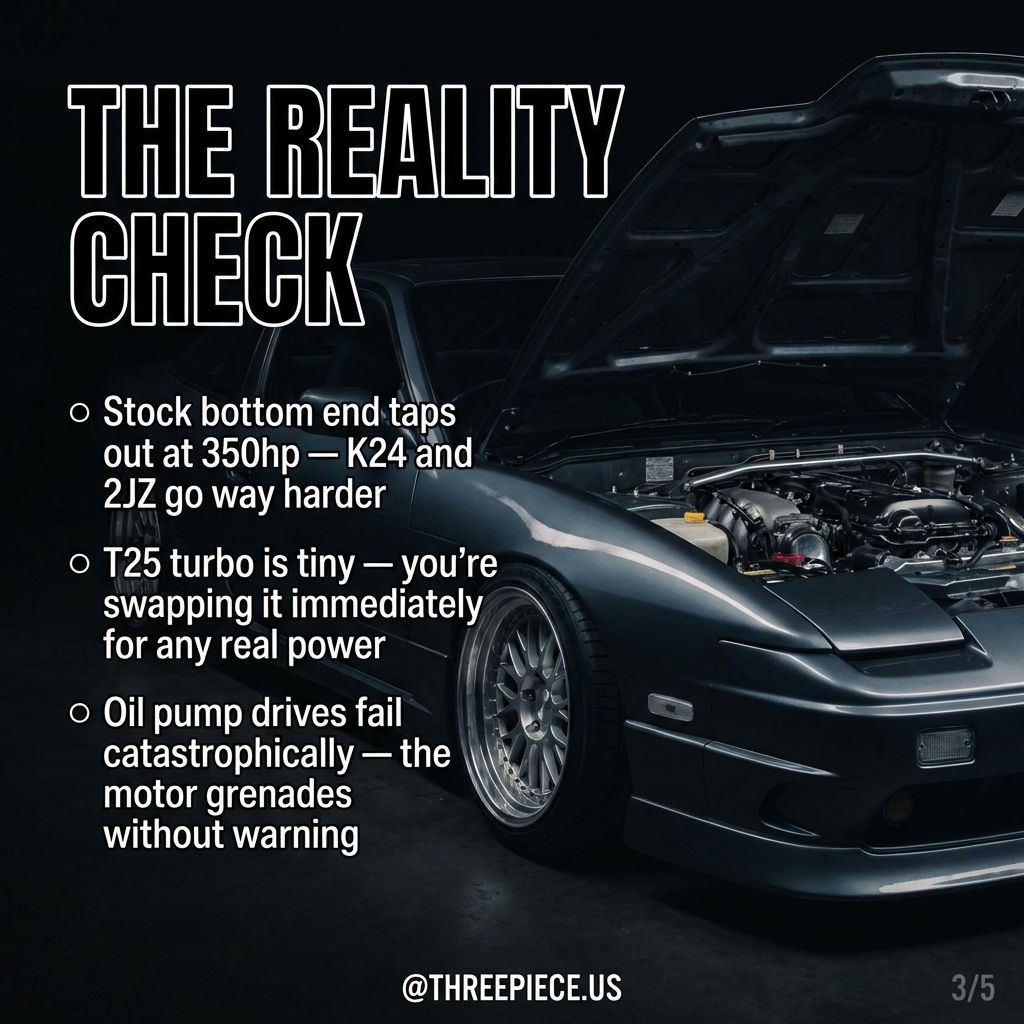
The factory T25 turbo is laughably small by modern standards — you're swapping it immediately for any real power. Worse, the oil pump drive fails catastrophically without warning, grenading the entire motor. This isn't a gradual failure you can monitor; one day it works, the next day you're shopping for a new block. Our article on K20/K24 S-chassis swaps covers why Honda's VTEC tech ages better than Nissan's turbo approach.
Clean SR20DET motors now cost more than complete 1JZ or 2JZ swaps. You're paying premium prices for inferior technology — the definition of nostalgia tax. When building any serious project, consider upgrading your assembly hardware to match the motor's capability.
Modern Alternatives That Outperform
The K24 swap costs roughly the same as a clean SR setup but delivers superior performance across every metric. It revs to 9,000 RPM, makes 400+ horsepower naturally aspirated with proper tuning, and doesn't require a turbo system to make decent power. Honda's VTEC technology aged far better than Nissan's early turbo systems.

For turbo applications, the 1JZ runs around $4,000 swapped and handles 500 horsepower on the stock twin-turbo setup. Even 2JZ-GTE swaps cost less than clean SR20DET packages now. These Toyota motors offer better reliability, more power potential, and stronger aftermarket support. Read our comparison of turbo four-cylinders versus V8 swaps for handling-focused builds.
The aftermarket reality matters too. K-series and JZ-series motors have massive ongoing support with new parts constantly developed. SR20DET parts are increasingly NLA (no longer available) or require expensive custom fabrication. For wheel fitment on these builds, browse our selection of Work Wheels that complement both classic and modern engine swaps.
When It's Still Worth Building
The SR20DET makes sense in exactly three scenarios: period-correct S13 builds where authenticity matters more than power, existing ownership of a clean motor, or wanting that specific SR sound and character that nothing else replicates.

If you're building a 1989-1994 S13 for shows, time attack, or personal nostalgia, the SR20DET belongs there historically. The motor sounds different from Honda's VTEC or Toyota's twins — that turbo whistle and blow-off valve signature is distinctly Nissan. Some builders value that character over raw performance numbers.
Already own a running SR? Don't chase market prices on upgrades. Build what you have with quality supporting modifications like proper valve stems at $3.80 and 90-degree valve stems for tight wheel clearances. Focus on reliability mods rather than chasing power that other platforms achieve more easily.
For wheel sizing on S-chassis builds, 17x9 +15 or 18x9.5 +15 work well with most body styles. Check our 350Z wheel fitment guide for related Nissan platform sizing. Complete the build with Work VS reproduction center caps at $50 for that authentic JDM look.
The Bottom Line on SR Swaps
The SR20DET built legends when legends were easier to build. In 2025, paying premium prices for 30-year-old technology while superior alternatives exist makes little financial or performance sense. K24, 1JZ, and 2JZ swaps offer better power potential, reliability, and ongoing support for similar money.
Save the SR20DET for period-correct builds where authenticity matters, or build what you already own. For new projects seeking maximum performance per dollar, Honda and Toyota's offerings aged far better than Nissan's early turbo technology. The legend is real, but legends don't always make the best daily drivers. Browse our vehicle gallery for inspiration on both classic and modern engine swap builds that actually make sense in today's market.