
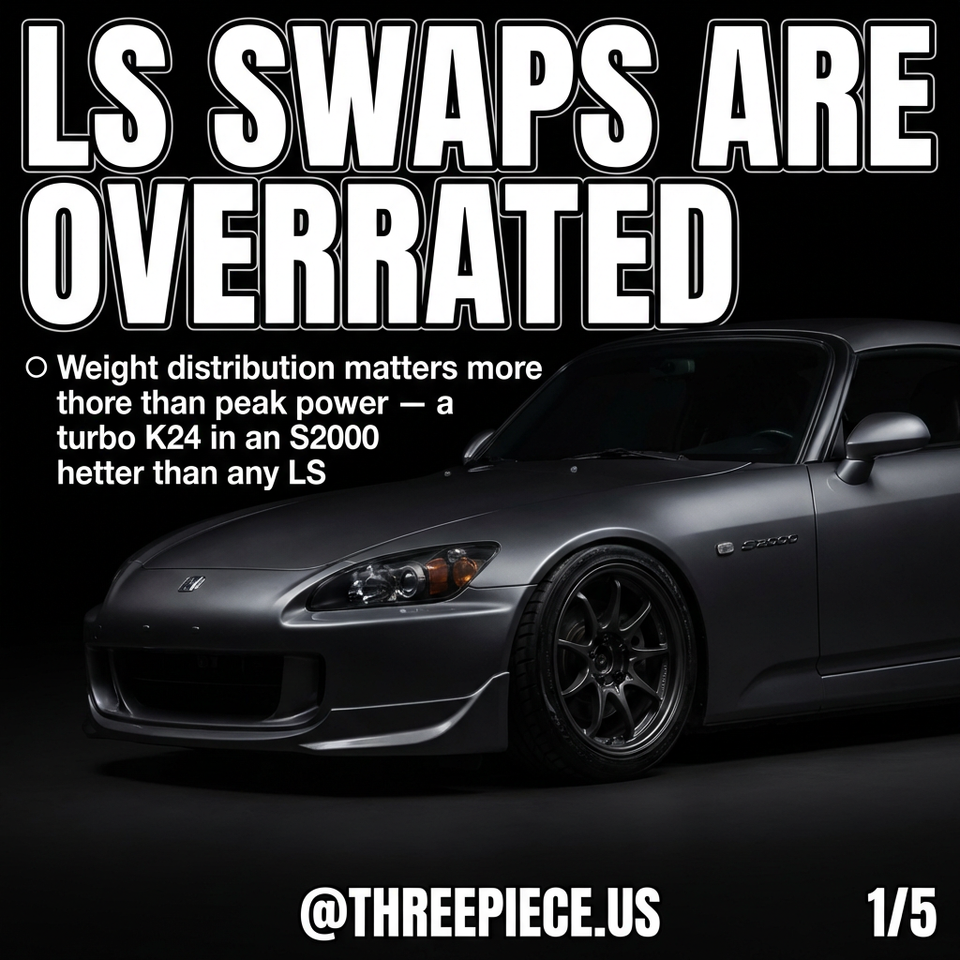
The LS engine swap has become the default answer for anyone wanting more power, but it's ruining what made lightweight sports cars special in the first place. While a junkyard 5.3L LS making 400 horsepower with a cam and headers sounds compelling, that extra 100+ pounds over the front axle fundamentally changes how these cars behave. Sometimes the smarter route is a turbo K24 making the same power at half the weight.
Quick links
- Why Everyone Defaults to LS
- The Hidden Weight Penalty
- Turbo Alternatives That Keep the Soul
- When LS Actually Makes Sense
- Platform-Specific Swaps That Work Better
Why Everyone Defaults to LS
The LS platform's popularity isn't just about power — it's about accessibility. Junkyard 5.3L truck motors are everywhere, parts support is endless, and every shop knows how to build them. A basic cam and header setup can push 400 horsepower reliably, and the aftermarket offers everything from budget builds to 1000+ horsepower monsters. The reliability factor is real too — these truck motors were designed to run 200,000+ miles with basic maintenance.
But this ease of use has created a cookie-cutter mentality. Every S13, Miata, and E30 gets the same treatment, regardless of what made the chassis special originally. When you see the same swap in everything from drift cars to canyon carvers, you know the enthusiast community has stopped thinking critically about platform-specific needs. Check out our Coyote 5.0 swap reality check for why Ford's V8 faces similar issues.
The Hidden Weight Penalty
Here's what LS swap advocates don't want to discuss: that iron block adds 100-150 pounds directly over the front axle. In a 2300-pound Miata or 2800-pound S13, this isn't just a numbers game — it's a fundamental shift in how the car rotates, brakes, and transitions between corners. The suspension geometry and brake package were never designed for this additional mass.
Heat soak becomes a real problem too. That iron block radiates heat into the cabin, making summer driving miserable. The cooling system needs upgrading, the brake package requires attention, and suddenly your "budget" swap needs $5000+ in supporting modifications just to work properly. For suspension upgrades that actually address these balance issues, explore our suspension category — proper coilovers and sway bars become mandatory, not optional.
Turbo Alternatives That Keep the Soul
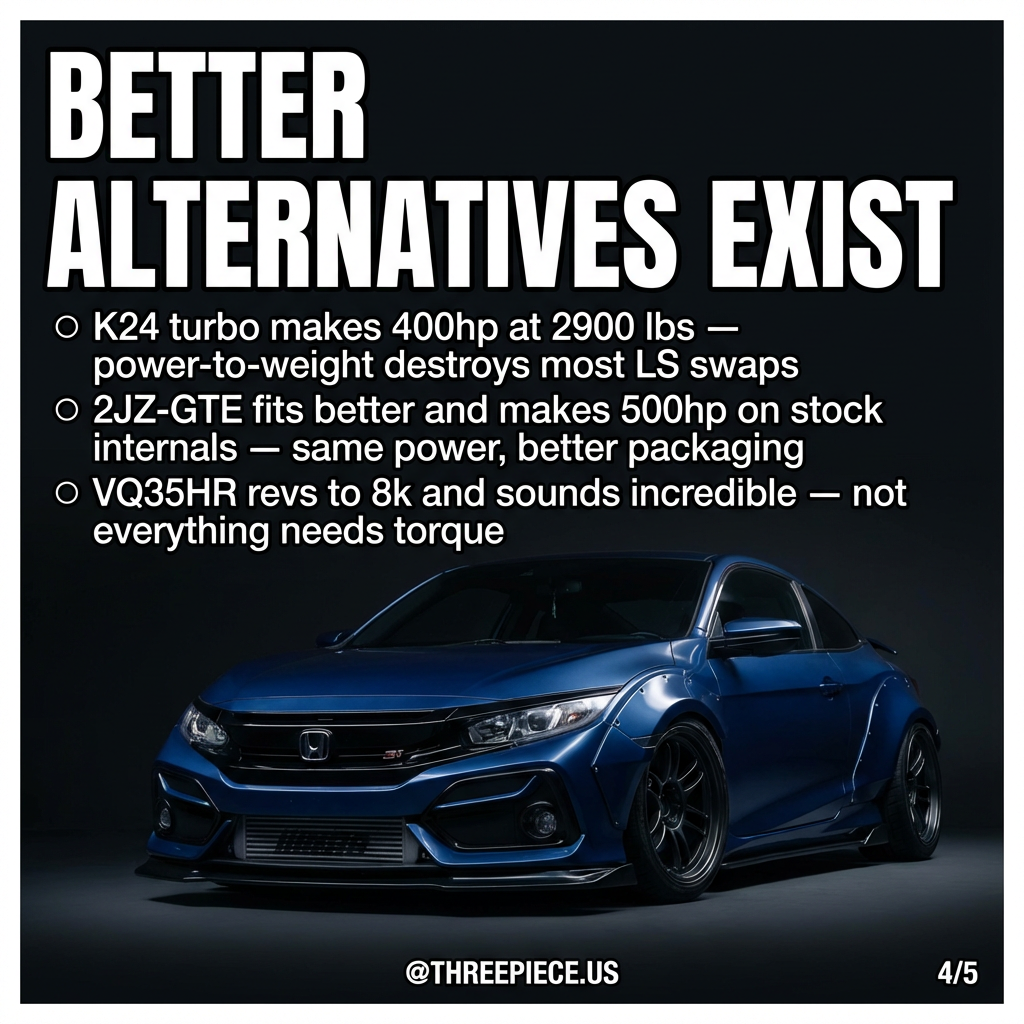
A turbo K24 making 400 horsepower in a 2900-pound chassis delivers better power-to-weight than most LS swaps while maintaining the car's original character. The 2JZ-GTE fits better in most engine bays and makes 500+ horsepower on stock internals — same power potential with superior packaging. Even the VQ35HR revs to 8000 RPM and sounds incredible, proving not everything needs low-end torque to be exciting.
The turbo four-cylinder route also opens up more sophisticated tuning options. Modern engine management can deliver progressive power delivery, anti-lag systems, and boost-by-gear mapping that makes the power more usable on the street. Read our K24 turbo build guide for the technical details on making reliable power with Honda's workhorse motor.
For wheel fitment on these lighter builds, 17x9 or 18x9 setups work perfectly without the brake clearance issues that plague heavy V8 swaps. Browse our Work Emotion series for wheels that complement the handling-focused approach — starting at competitive prices that leave budget for the engine work that actually matters.
When LS Actually Makes Sense
Don't misunderstand — there are absolutely situations where the LS swap is the correct choice. Drag racing applications benefit from the instant torque and proven reliability at high power levels. Chassis that were already heavy — trucks, muscle cars, anything over 3500 pounds — don't suffer the same balance penalties from the additional weight.
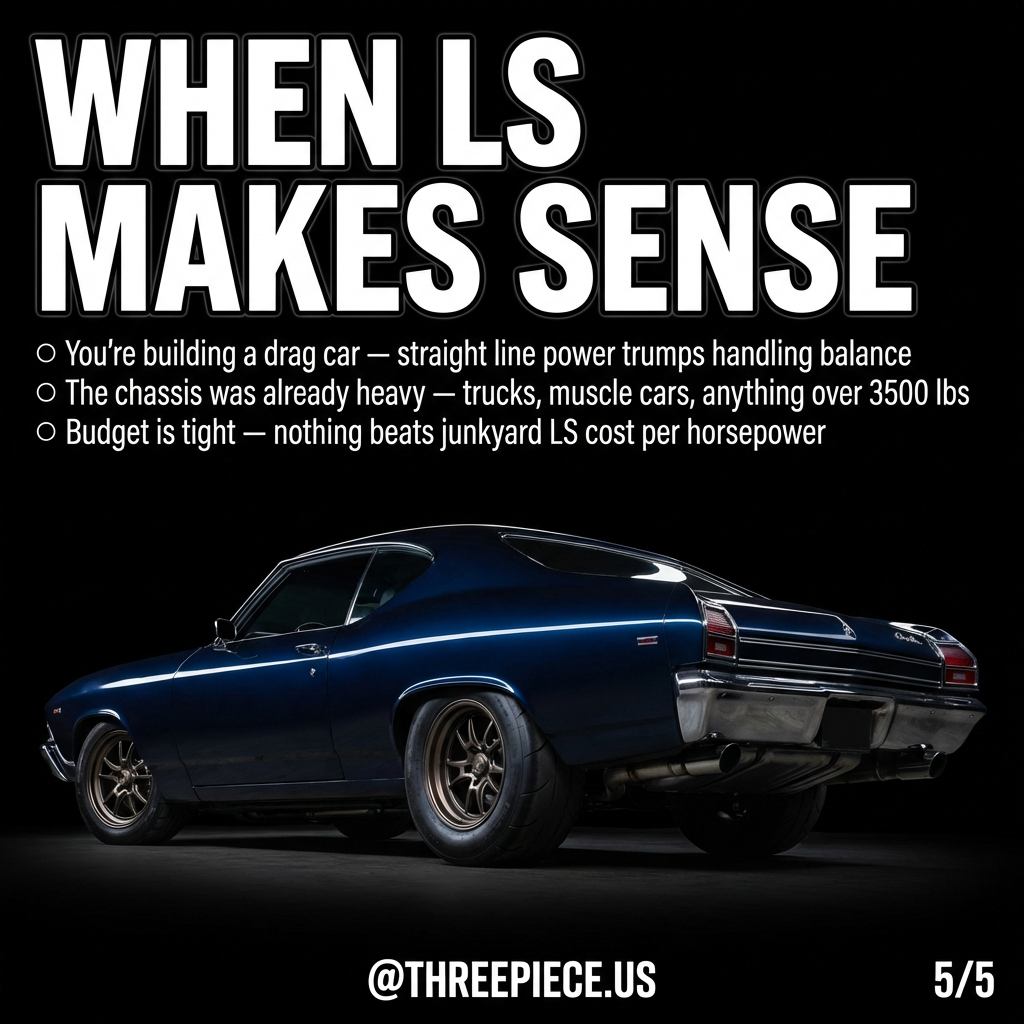
Budget builds also favor the LS route. Nothing beats junkyard LS cost-per-horsepower when you need 400+ horsepower for under $5000. But understand what you're trading away — the delicate balance that made cars like the S2000 and Miata legendary gets sacrificed for straight-line grunt. Our S2000 build guide shows how to extract performance while preserving the car's essential character.
Platform-Specific Swaps That Work Better
The best swaps respect the original platform's strengths. S13/S14 chassis work beautifully with SR20DET or 2JZ-GTE swaps that maintain the front-to-rear weight distribution. Miata builds benefit from turbo BP setups or K24 swaps that keep the car under 2500 pounds. E30s shine with S54 or turbo M50 builds that preserve the car's nimble character.
These platform-specific approaches require more research and custom work, but they deliver results that feel intentional rather than generic. The turbo life philosophy means building power that complements the chassis, not overwhelming it. Check out our BMW N54 build guide for an example of how forced induction can transform a platform without destroying its essence.
For these builds, wheel selection becomes critical. Lighter engines allow for more aggressive wheel and tire combinations without compromising handling. Our Work VS series offers the perfect balance of strength and weight savings, while quality assembly hardware ensures your setup stays tight through aggressive driving.
The Takeaway
The LS swap isn't wrong — it's just overused in applications where it compromises the original platform's strengths. Before defaulting to the junkyard V8, consider whether a turbo four or platform-specific six might deliver better results. Your car's character matters more than dyno sheets, and sometimes the harder path leads to more rewarding driving experiences.
Ready to build something different? Browse our vehicle gallery for inspiration on builds that prioritize handling balance over peak numbers. The best builds understand that power without balance is just expensive noise.