
Wheel Spacers
Want tires with these? Build a wheel & tire package — mounted, balanced and shipped free.
Wheel Spacers: push the wheel out to clear the caliper and fill the arch
A wheel spacer sits between the hub face and the wheel to move the wheel outward, changing your effective offset without buying new wheels. Fitters reach for wheel spacers to clear a big brake caliper or coilover, to line the wheel face up flush with the fender, or to widen track for a more planted stance. Slip-on spacers use your existing studs or bolts; bolt-on adapter-style kits carry their own hardware. Get the hub bore and bolt pattern right and the wheel stays hub-centric, so the studs are not carrying the load alone.
What we stock
There are 334 wheel spacers here from 16 brands, priced from $29 to $398 for what is currently in stock. That range is not a promise; it moves as inventory changes. The deepest lines are H&R (77), WheelMate (52), Eibach (43) and Muteki (42), with QuadBoss, Mishimoto, F2 Function & Form, ISC and Perrin Performance filling out the mid-range. Coverage in the fitment data runs across makes including Ford, BMW, Subaru, Audi, Honda, Volkswagen, Toyota, Lexus, Chevrolet and Mercedes-Benz, on vehicles from the Ford Mustang and Subaru Impreza to the BMW M3/M4, Toyota GR Corolla, Kia Stinger and Chevrolet Camaro, over model years spanning 1981 to 2026.
How to choose
Start with how far out you need the wheel and whether the kit brings its own hardware. Vehicle-specific bolt kits like the H&R RS6 (C8) 10mm spacer & bolt kit and the H&R Cayman S 7mm front/15mm rear kit include the bolts and are matched to the car, which takes the guesswork out. Eibach's Pro-Spacer line, like the 30mm 5x120 spacer for the E53 X5 and the 20mm Corvette Pro-Spacer System, lists bolt pattern and hub bore in the name so you can match it exactly. For hub-centric slip-on pairs, the Perrin 27mm Civic Type R pair and Perrin Subaru 5x100 30mm pair show the pattern and hub size up front. Thicker spacers may need longer studs or the kit's own bolts, so read the thickness and hardware note before you buy.
What else you need
Slip-on spacers reuse your fasteners, so check your lug nuts or lug bolts are the right seat and length. If you need to change bolt pattern entirely rather than just add width, look at wheel adapters. Locking hardware from McGard pairs well once the wheels sit further out, and center caps finish the look. Everything sits under the broader Wheel Accessories section.
Fitment and ordering
Confirm offset, bolt pattern and hub bore with the wheel fitment calculator before ordering, or call fitment help at 813-535-5801. Every order ships free, and Affirm financing is available. If you are still unsure which spacer clears your setup, reach us through contact us.
A wheel spacer pushes the wheel out from the hub so it sits closer to the fender, clears a caliper, or fills a wide arch. The spacers listed above cover car and truck bolt patterns from 3mm up to 2 in thick. Below is how to pick the right type and thickness, and how to match it to your car or truck.
Popular designs, side by side
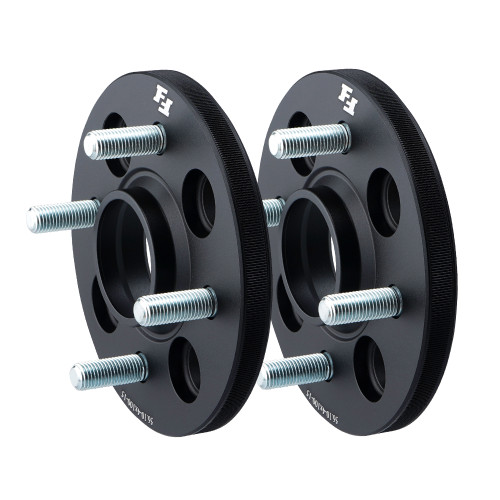
F2 HC Studded Wheel Spacer 15mm: CB56.10 (-) ODØ149
This is the same hub-centric studded design as the 20mm F2, in a thinner 15mm. It suits Subaru owners who want the wheel out a little without poke. Pick it over the 20mm if your tire already sits close to the fender lip. Measure the gap first, because 5mm makes a real difference at the fender.
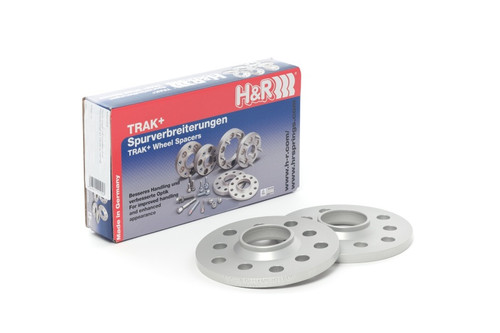
H&R Trak+ 3mm DR Wheel Spacers Bolt 5/120 Center Bore 72.5 Bolt Thread
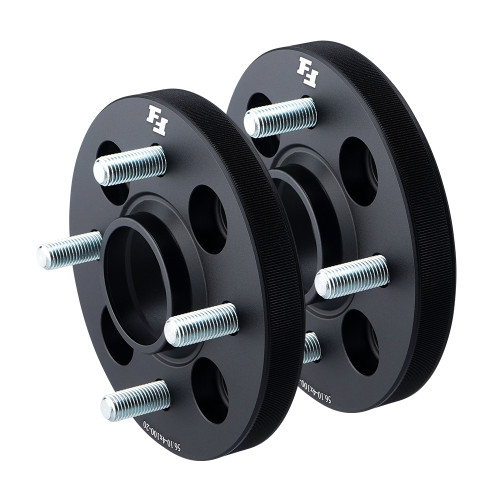
F2 HC Studded Wheel Spacer 20mm: CB56.10 (-) ODØ149
A 20mm hub-centric spacer with its own studs. It bolts to the hub, and the wheel then mounts to the spacer. The 56.1mm bore and 5x100/5x114.3 drilling line up with Subaru WRX and STI style hubs. It's bolt-on, so you don't need longer studs. Check that your wheel's center bore and seat match the spacer's studs before you order.
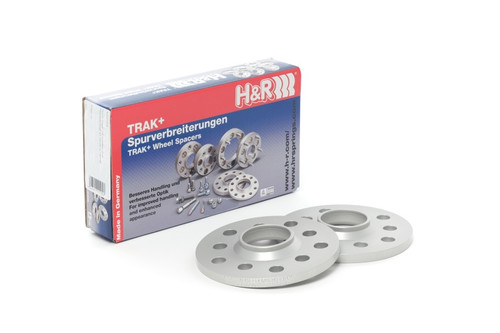
H&R Trak+ 14mm DRS-MZ Wheel Spacer Bolt 5/114.3 Center Bore 64 Stud Thread
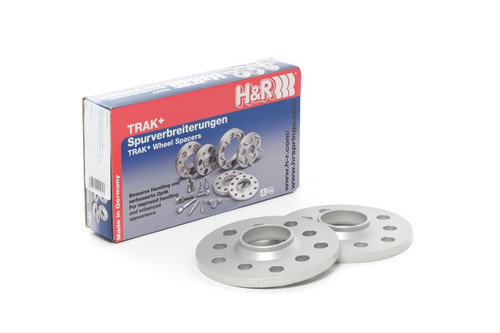
H&R Trak+ 15mm DRS Wheel Spacer 5/114.3 Bolt Pattern 56 Center Bore Bolt
A 15mm 5x114.3 spacer with a 56mm center bore, aimed at Subaru-style hubs. The listing gives a 12x1.25 thread. It comes in a standard version and a black version. Confirm that the thread matches your studs or bolts and that the kit's hardware matches your car.
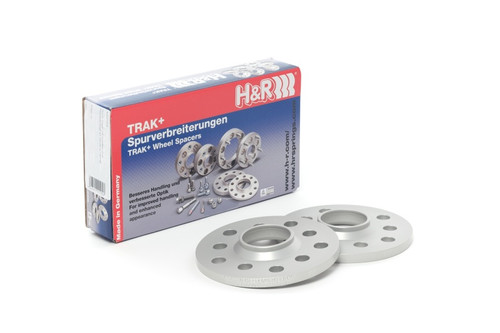
H&R Trak+ 20mm DRM Wheel Spacer 5/114.3 Bolt Pattern 56 Center Bore Bolt
This is the 20mm version of the 5x114.3, 56mm-bore H&R spacer, also listed with a 12x1.25 thread. Go with it over the 15mm when the measured gap to the fender is closer to 20mm. It comes in a standard finish or black. Check the listing for the hardware that comes in the box.
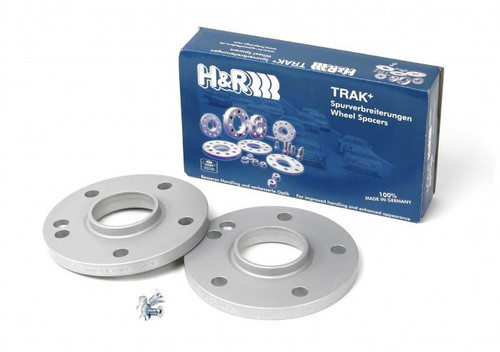
H&R Trak+ 25mm DRM Wheel Spacer for Land Rover - 50757257
A 25mm H&R spacer listed for Land Rover, and the thickest car-side H&R option on this page. Range Rover owners in our customer builds go flush with low-offset wheels instead, so a spacer is the cheaper route on the stock rims. Confirm your exact model and year in the fitment search before ordering.
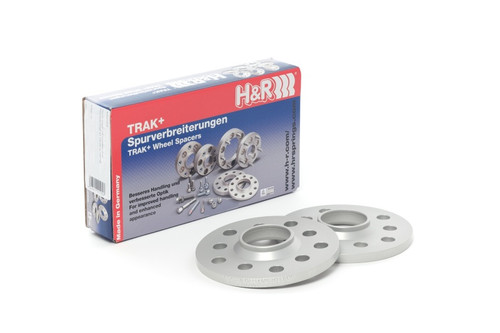
H&R Trak+ 25mm DRM Wheel Spacer 5/114.3 - 5065673SW
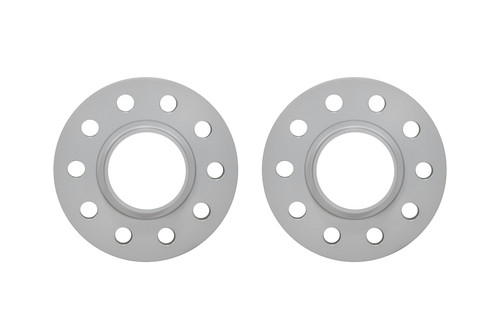
Eibach Pro-Spacer Kit 20mm Spacers 2009 Audi Q5 - S90-2-20-007
A 20mm Eibach Pro-Spacer kit listed for the 2009 Audi Q5. A car-specific kit takes the guesswork out of matching the pattern and bore. Twenty millimeters fills out the Q5's arches without going wild. Check that the kit's hardware covers your wheels' bolt seat.
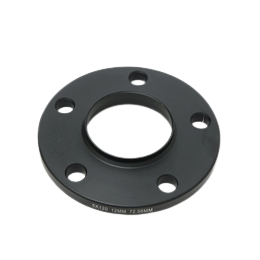
Wheel Mate Hub Centric Wheel Spacer 15MM 70.3MM CORVETTE / CAMARO Fitment Set of 2
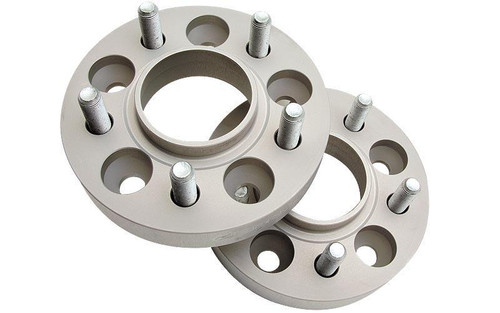
Eibach Pro-Spacer 13-18 Subaru BRZ 30mm Thickness Hub 56 - S90-4-30-030
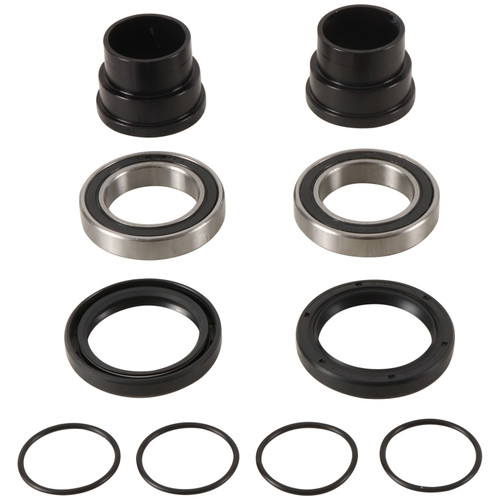
Pivot Works 2013 Husaberg FE250 - Front Waterproof Wheel Spacer Kit - PWFWC-T07-500
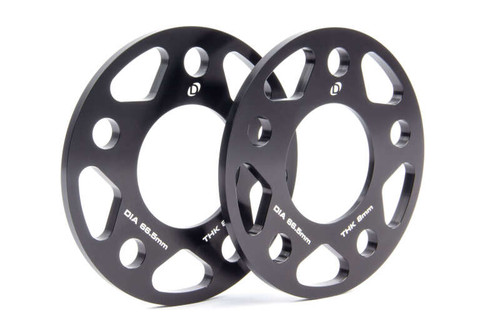
Dinan Wheel Spacers - - 66.5mm CB - 8mm Thick (Set of 2) - D210-2026
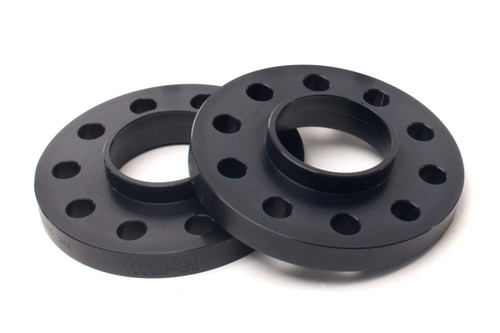
H&R 20-21 Mazda CX-30 / 19-21 Mazda3 Hatchback DRS Wheel Spacer Kit - 7.5mm Width - 15656700SW

Borne Off-Road Wheel Spacers - - 93.1 - 25mm - M12 - Black - BNWS-001-250BK
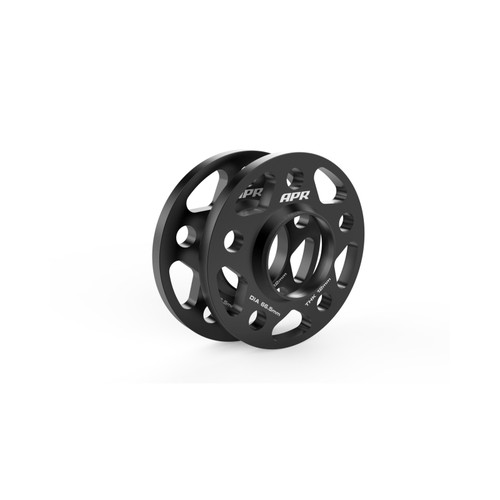
APR Wheel Spacers - - 66.5mm CB - 12mm Thick (Set of 2) - MS100167
On the car
Photos from customers in our fitment gallery. Click a car for its full setup.
What a wheel spacer does
A spacer sits between the hub and the wheel. It moves the wheel out by exactly its own thickness. That has the same effect as lowering the wheel's offset by the same number of millimeters. A +35 wheel on a 15mm spacer sits like a +20 wheel.
People use spacers for three things:
- Clearing a big brake caliper or a coilover body.
- Pulling a tucked wheel out to the fender.
- Widening the track for a planted, wider look.
Hub-centric wheel spacers vs lug-centric
Buy hub-centric. A hub-centric spacer has a center bore that matches your hub, and a lip that matches your wheel's bore. The hub carries the weight, and the studs just clamp the wheel down. A lug-centric spacer only lines up on the studs, which makes the wheel harder to center and easier to vibrate. Our guide on what actually centers a wheel goes deeper.
A hub-centric spacer has to match two numbers: the bolt pattern and the hub size. Getting the pattern right with the wrong bore doesn't make it hub-centric. If the wheel's bore is bigger than the spacer's lip, centering rings close the gap.
Slip-on vs bolt-on (studded) spacers
- Slip-on: a thin plate that slides over your existing studs or bolts. The wheel goes on top, so you lose thread engagement equal to the spacer's thickness. Thin ones often work with stock hardware. Thicker ones may need longer replacement studs or longer wheel bolts on bolt-hub cars.
- Bolt-on (studded): the spacer bolts to the hub with your factory nuts, then the wheel mounts to the spacer's own studs. Thicker spacers are usually this type, including most 1.5 in and 2 in truck spacers.
On a slip-on, a quick rule is that the nut or bolt should thread on at least as many turns as it did on stock hardware. If you can't get that, go to longer studs or bolts, or switch to a bolt-on spacer. Check that your lug nut seat type matches the wheel too.
How to pick thickness: 20mm, 1.5 inch, 2 inch and the rest
Measure. With the car on the ground, hold a straightedge against the fender lip and measure to the tire's sidewall bulge or the wheel face. That number is the most you can add without poke. Subtract a few millimeters if the car is lowered or the suspension compresses a lot.
The spacers here run from 3mm to 50mm, plus inch sizes from 1/4 in to 2 in. The sizes you'll see most on the shelf are 10mm, 12mm, 15mm, 20mm and 25mm.
| Inch size | Metric | Typical use |
|---|---|---|
| 1/4 in | 6.35mm | Small caliper or clearance fix, slip-on |
| 1 in | 25.4mm | Moderate stance change |
| 1.5 in | 38.1mm | Truck stance, wider tire clearance |
| 2 in | 50.8mm | Big stance change on trucks and off-roaders |
To test a number before you buy, the offset and backspacing calculator shows where the wheel ends up. Our write-up on why 15mm is often enough is worth a read for cars.
Wheel spacers vs wheel adapters
A spacer keeps your bolt pattern. An adapter changes it, for example to run 5x114.3 wheels on a 5x120 hub. Adapters also push the wheel out, but their main job is the pattern swap. If your wheels don't bolt to your hub at all, you want bolt pattern adapters, not spacers.
Are wheel spacers safe?
Yes, when four things are right:
- A quality hub-centric spacer that matches your pattern and hub size.
- Studs or bolts with full thread engagement.
- Lugs tightened to your car's factory spec with a torque wrench, not an impact gun.
- A re-check of the torque after the first 50-100 miles.
Keep the hub face and spacer clean of rust and dirt so everything sits flat. More in our full spacer safety guide.
Bolt patterns we stock spacers in
- 5x114.3 wheel spacers: the deepest group. Subaru WRX/STI, Toyota GR Corolla, Honda Civic Type R, Lexus.
- 5x100 and 5x112: older Subaru, VW/Audi, Toyota GR Supra and BMW G-series.
- 5x120: earlier BMWs. 5x120.7: Corvette and Camaro. 5x130: Porsche.
- 6x5.5 (6x139.7) wheel spacers: Ram 1500, Silverado, Sierra, Tacoma, 4Runner, Bronco.
- 6x135: F-150. 5x5 (5x127): Jeep Wrangler.
- 8x6.5 (8x165.1), 8x170 and 8x180 wheel spacers: heavy-duty pickups. Confirm your truck in the fitment search.
- Also 4x100, 5x10⁸, 5x110, 5x115 and 5x139.7.
Truck wheel spacers: pattern and hub by generation
| Truck | Years | Bolt pattern | Hub bore |
|---|---|---|---|
| Ford F-150 | 2004-2026 | 6x135 | 87.1mm |
| Ram 1500 | 2020-2026 | 6x139.7 | 77.8mm |
| Chevy Silverado 1500 / GMC Sierra 1500 | 1999-2026 | 6x139.7 | 78.1mm |
| Toyota Tacoma | 2005-2023 | 6x139.7 | 106.1mm |
| Toyota Tacoma | 2024-2026 | 6x139.7 | 95.1mm |
| Toyota Tundra | 2007-2021 | 5x150 | 110.0mm |
| Toyota Tundra | 2022-2026 | 6x139.7 | 95.1mm |
| Toyota 4Runner | 1990-2024 | 6x139.7 | 106.1mm |
| Jeep Wrangler | 2007-2026 | 5x127 | 71.6mm |
| Ford Bronco | 2021-2026 | 6x139.7 | 93.1mm |
Some trims run a different pattern, so confirm your exact truck in the fitment search before ordering.
F-150 and Ram 1500 wheel spacers
F-150 owners on 2021-2025 trucks can look at the aFe 1.5 in 6x135 F-150 pair. For Ram, aFe makes both the 1.5 in Ram 1500 spacers and a 2 inch forged Ram set, both with a 77.8mm bore. A Silverado shares the 6x139.7 pattern but has a 78.1mm hub, so don't assume a Ram spacer is hub-centric on a Chevy.
Tacoma and Tundra wheel spacers
The Tacoma kept 6x139.7 for 2024, but the hub shrank from 106.1mm to 95.1mm. A spacer from an older Tacoma isn't hub-centric on the new one. The Tundra changed both its pattern and its hub in 2022, going from 5x150 to 6x139.7.
Jeep wheel spacers
Match the stud thread. Our 2018+ Wrangler JL spacer uses M14x1.5 studs, and the other 5x5 Jeep spacers here use 1/2-20. JL owners should go straight to the Synergy JL hub-centric set.
The other route: lower-offset wheels
A wheel with less offset gets the same stance with nothing between the hub and the wheel. That's how many of our customers get there:
- Dodge Challengers (2011-2018) sit flush on 20x9 +15, 20x9 +18 and 20x9.5 +15, with 245 or 275 tires.
- A 2018 Tundra runs 20x12 -44 with 315s, flush.
- Range Rovers run 22x10.5 +38 and 24x10 +32, both flush.
- A 2010 C300 is staggered at 19x9 +44 front and 19x10 +55 rear.
- Two 1993 RX-7s run 18x10 +18 up front. Out back, one runs 18x10.5 +5 for a tucked look and the other 18x10.5 +17 for flush.
- A 2017 Crosstrek pokes on 15x8 +35 front and 16x8 +20 rear.
If you're buying new wheels anyway, pick the offset you need and skip the spacer. If you love your current wheels, a spacer is the cheaper fix. Browse truck wheels or 6x139.7 wheel options to compare.
Choosing a spacer
- Find a spacer that matches both your pattern and your hub size.
- Go slip-on for thin spacers. Go bolt-on for anything past about 20-25mm, or wherever your thread engagement runs short.
- Pick thickness from your fender measurement, not from a photo of someone else's car.
Not sure what fits? Plug your car or truck into the fitment search and start from there.
Questions
What thickness wheel spacer do I need?
Measure from the fender lip straight down to the tire or wheel face, and that's your maximum. Pick a spacer a few millimeters under that number if the car is lowered.
Do I need longer studs with wheel spacers?
Only with slip-on spacers that eat too much thread. Bolt-on spacers bring their own studs, so your factory hardware just holds the spacer to the hub.
What's the difference between 1.5 inch and 2 inch wheel spacers?
A 1.5 in spacer is 38.1mm and a 2 in is 50.8mm, so the 2 in pushes each wheel out about 13mm further. Both are usually bolt-on on trucks.
Will a Ram 1500 spacer fit a Silverado?
Not as a hub-centric fit. Both are 6x139.7, but the Ram hub is 77.8mm and the Silverado is 78.1mm, so get a spacer bored for your truck.
Do wheel spacers change my bolt pattern?
No, spacers keep the same pattern on both sides. If you need to run wheels with a different pattern, that's what an adapter does.
Do I need to re-torque after installing spacers?
Yes. Check every lug again after the first 50-100 miles, since parts can settle against each other once they're loaded.
Watch before you buy
Made by our team · tap a video to play it


