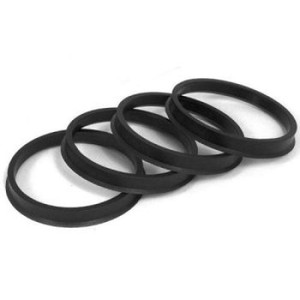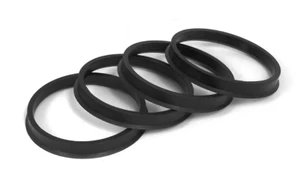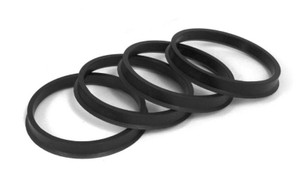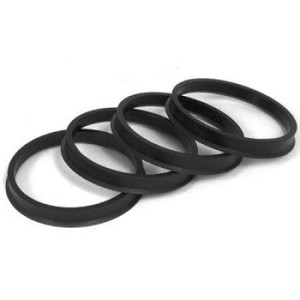
Hubcentric Rings
Want tires with these? Build a wheel & tire package — mounted, balanced and shipped free.
Hubcentric Rings: get the wheel riding on the hub, not the studs
Hubcentric rings fill the gap between a wheel's center bore and your vehicle's hub. Most aftermarket wheels are bored larger than any one hub so they fit a range of cars. That extra space means the wheel can sit off-center until the lug torque pulls it home. A ring closes that gap so the wheel is located by the hub itself, which is what stops the steering-wheel shimmy some people chase after new wheels go on. Fit one per corner, seat the wheel, then torque the lugs. Simple part, real job.
What's stocked here
This Wheel Accessories category currently shows 6 hubcentric ring products from 4 brands: Vossen, Method Wheels, SPC Performance and our own threepiece.us line. Current in-stock pricing runs from $21 to $124, which is the live range on what's here rather than a fixed promise.
- Method Hardware Hub Ring 106.25-78.3mm at $21.47 is the budget end.
- The threepiece.us Hubcentric Rings at $30 and the Vossen Center Rings 106-78.1 at $30 sit in the middle.
- The Vossen 73.1-60.1 hub ring set of four at $28 covers Lexus and Toyota fitments.
- The SPC Performance HD Wheel Centering 32111 at $124.41 is the heavy-duty option.
Product names in this sample reference Toyota, Lexus and Ford applications. There is no structured fitment data attached to these listings, so confirm the two numbers that matter before you buy.
How to choose
Two measurements decide everything: the wheel's center bore (the larger OD of the ring) and your hub diameter (the smaller ID). A ring like the Vossen 73.1-60.1 means a 73.1mm wheel bore over a 60.1mm hub. Get both numbers off your wheel spec and your vehicle, and match them exactly.
On cost, the Method and threepiece.us rings are the plain, do-the-job choice. Buy a full set so all four corners are centered. The SPC Performance unit is the heavy-duty centering piece and is priced accordingly; it's the pick if you want a more robust part rather than the simplest ring.
What else you need
Rings alone don't hold a wheel on. Match them with fresh Lug Nuts or Lug Bolts in the right thread and seat, and torque to spec. If you're spacing wheels out, our Wheel Spacers and Wheel Adapters often need their own centering and share this measuring logic. Finish the look with Center Caps once everything is torqued down.
Fitment help and ordering
Not sure of your bore and hub numbers? Run them through the wheel fitment calculator or call fitment help at 813-535-5801. All orders ship free, and Affirm financing is available at checkout. If you'd rather buy wheels and tires ready to bolt on, browse mounted packages.
Hub-centric rings fill the gap between an aftermarket wheel's center bore and your hub, so the wheel centers on the hub instead of floating on the studs. Our own 73.1mm rings are up top, with truck-size rings and a heavy-duty centering kit next to them. Below is how to pick the right size and get them on.
Popular designs, side by side
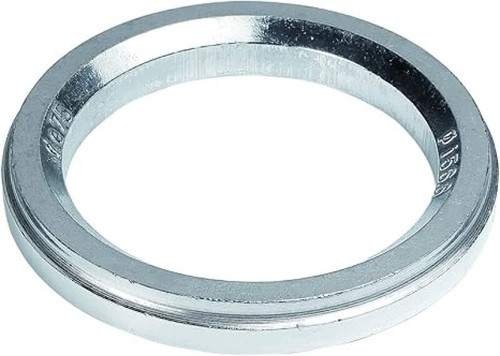
Project Kics Bimecc 75/64.1 Hub Centric Ring - W750641

Ultra Hubcentric Ring A89-8478 82W - A89-8478
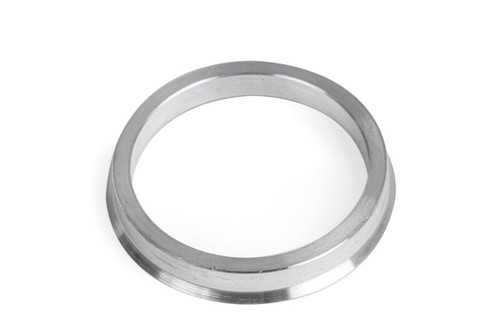
APR Hub Centric Ring - 66.5mm to 57.1mm - Z1003148

Ultra Hubcentric Ring A89-6357 82W - A89-6357
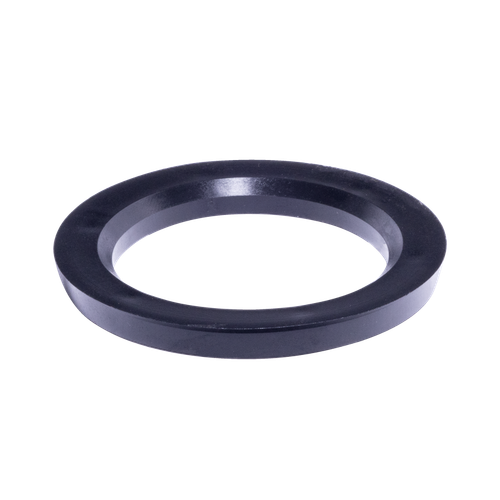
Method Hub Ring 106.25-95.25mm Plastic - MH-ZH-126-P
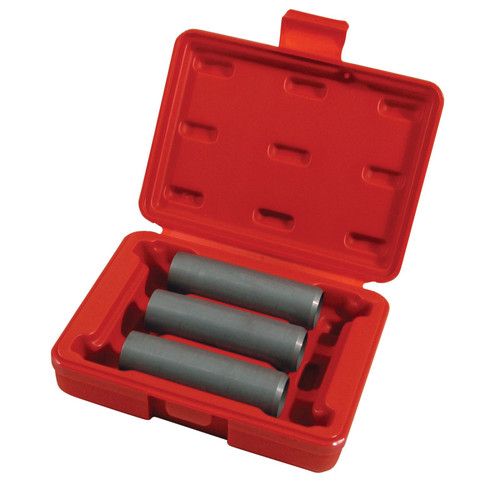
SPC Performance HD WHEEL CENTERING - 32111
A heavy-duty wheel centering kit, not a basic slip-on ring. It's the pick if you want a sturdier centering part than a plain ring. The name doesn't give a size, so check the listing details against your wheel bore and hub before you order. Expect to pay more than you would for a simple ring.
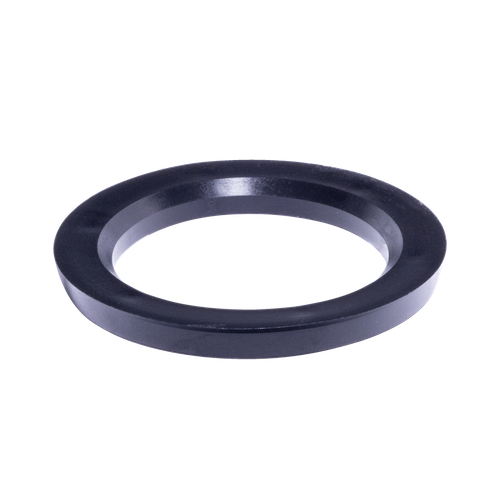
Method Hardware - Hub Ring - 106.25-78.3mm - MH-ZH-043
A truck-size ring with a 106.25mm outside and a 78.3mm inside. It's built for a wheel with a 106.25mm bore going onto a 78.3mm hub. It looks close to the Vossen 106 to 78.1 ring, but both numbers are slightly different. That matters, because the Silverado 1500 and Sierra 1500 hub is 78.1mm. Measure your hub and check your wheel bore before you pick between the two.
On the car
Photos from customers in our fitment gallery. Click a car for its full setup.
What are hub centric rings?
A hub-centric ring is a small sleeve that fills the gap between your wheel's center bore and your car's hub. With the gap filled, the wheel centers on the hub instead of hanging on the studs. This often stops the steering-wheel shake people get after new wheels go on. For the full explanation, read our breakdown of how hub-centric and lug-centric wheels differ.
Are hub centric rings necessary on aftermarket wheels?
Usually, yes. Aftermarket wheels have a big center bore on purpose, so one wheel can fit lots of cars. On any one car, that leaves a gap between the bore and the hub. Lug nuts can pull the wheel close to center, but close may not be good enough at highway speed. If you already have a shake you can't get rid of, see why wheels vibrate at highway speeds.
You only skip rings when the wheel bore matches your hub exactly. If the wheel bore is smaller than the hub, the wheel won't go on at all. A ring can't fix that.
What size hub centric rings do I need?
Every ring has two numbers, read as wheel bore to hub bore. A 73.1 to 60.1 ring has a 73.1mm outside that fits into the wheel and a 60.1mm inside that fits over the hub. Both numbers have to match exactly. If either one is off, the ring won't seat or won't center the wheel.
- Wheel bore (outside of the ring): listed with the wheel. Some wheels also have it stamped on the back.
- Hub bore (inside of the ring): measure the hub lip with calipers, or look up your car in the wheel fitment calculator.
Example: a truck wheel with a 106mm bore going on a Silverado 1500 with a 78.1mm hub needs a 106 to 78.1 ring, like the Vossen 106 to 78.1 truck ring.
Hub centric rings size chart: our house rings
Start with our own house hub-centric rings. Every size fits a wheel with a 73.1mm center bore. You choose the inside size that matches your hub. Measure your hub or check your car before you order.
| Ring size | Wheel bore (outside) | Hub bore (inside) |
|---|---|---|
| 73.1 to 54.1 | 73.1mm | 54.1mm |
| 73.1 to 56.1 | 73.1mm | 56.1mm |
| 73.1 to 57.1 | 73.1mm | 57.1mm |
| 73.1 to 60.1 | 73.1mm | 60.1mm |
| 73.1 to 64.1 | 73.1mm | 64.1mm |
| 73.1 to 66.1 | 73.1mm | 66.1mm |
| 73.1 to 67.1 | 73.1mm | 67.1mm |
Other hub centric ring sizes here
- Vossen 73.1 to 60.1 rings, set of four: the same size as our 60.1 ring, sold as a boxed set.
- Vossen 73.1 to 70.5 rings, set of four: a hub size our house line doesn't cover.
- Method 106.25 to 78.3 truck ring: a large-bore truck size.
- SPC heavy-duty centering kit: a sturdier option than a plain ring.
Hub bore by truck and car
This table gives the hub size, which is the inside number of your ring. Some trims use a different bolt pattern. If your vehicle or generation isn't listed, look up your exact vehicle instead of guessing.
| Vehicle | Years | Bolt pattern | Hub bore |
|---|---|---|---|
| Chevy Silverado 1500 | 1999-2026 | 6x139.7 | 78.1mm |
| GMC Sierra 1500 | 1999-2026 | 6x139.7 | 78.1mm |
| Ram 1500 | 2020-2026 | 6x139.7 | 77.8mm |
| Ford F-150 | 2004-2026 | 6x135 | 87.1mm |
| Toyota Tacoma | 2005-2023 | 6x139.7 | 106.1mm |
| Toyota Tacoma | 2024-2026 | 6x139.7 | 95.1mm |
| Toyota Tundra | 2007-2021 | 5x150 | 110.0mm |
| Toyota Tundra | 2022-2026 | 6x139.7 | 95.1mm |
| Toyota 4Runner | 1990-2024 | 6x139.7 | 106.1mm |
| Jeep Wrangler | 2007-2026 | 5x127 | 71.6mm |
| Jeep Gladiator | 2020-2026 | 5x127 | 71.5mm |
| Ford Bronco | 2021-2026 | 6x139.7 | 93.1mm |
| Dodge Challenger | 2008-2023 | 5x115 | 71.6mm |
| Dodge Charger | 2006-2023 | 5x115 | 71.6mm |
| Chevy Camaro | 2010-2024 | 5x120 | 66.9mm |
| Chevy Corvette | 2020-2026 | 5x120 | 66.9mm |
Shopping for a new set first? Check the center bore on any of our truck wheels against this table, then pick the ring.
Plastic vs aluminum hub centric rings
Plastic rings, usually polycarbonate, won't corrode and won't stick to the hub. They are the usual choice for street cars and trucks. Aluminum rings are metal and handle more heat. Over time, though, they can corrode and stick to the hub, which makes the wheel hard to pull off. For a daily driver, plastic is the easy choice. If you go with aluminum, pull the wheels now and then so the rings don't seize.
How to install hub centric rings
- Clean rust and dirt off the hub face and the hub lip.
- Press the ring onto the hub, or into the back of the wheel. It should be snug and sit flush.
- Hang the wheel so the ring slides into the center bore.
- Thread the lug nuts by hand, snug them in a star pattern, then torque them to your vehicle's spec.
- Check lug torque again after a short drive.
The ring centers the wheel while you tighten it. The lug nuts are what hold it on, so make sure your lug nuts have the right thread and seat. If you're running wheel spacers, they need their own centering, and you measure for them the same way.
Got your two numbers? Grab the matching size from our 73.1mm ring lineup above.
Questions
Do hub centric rings stop wheel vibration?
They stop vibration caused by a wheel sitting off-center on the hub. A shake from unbalanced tires or a bent wheel will still be there with rings on.
Do hub centric rings carry the weight of the car?
No. They center the wheel while you tighten it, and the lug nuts clamp the wheel to the hub.
Do I need a ring on every wheel?
Yes, run one on each corner. If only some wheels are centered, you can still get a shake from the others.
Can I use hub centric rings with wheel spacers?
Yes, but hub-centric spacers have their own hub lip. Size the ring to that lip, not to the car's hub.
Should I take the rings off when I go back to my factory wheels?
Yes, pull them off the hub first if the other wheels don't use them. A leftover ring can stop a wheel from seating flat.
Are hub centric rings the same as center caps?
No. A center cap covers the center of the wheel from the outside for looks, while a ring sits behind the wheel between the bore and the hub.
Watch before you buy
Made by our team · tap a video to play it