
Posted by THREEPIECE.US on Mar 23rd 2026
Mazda3 Turbo Buying Guide: BP Platform Sleeper Worth $30K
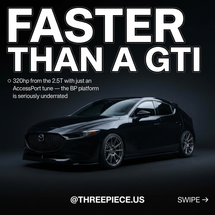
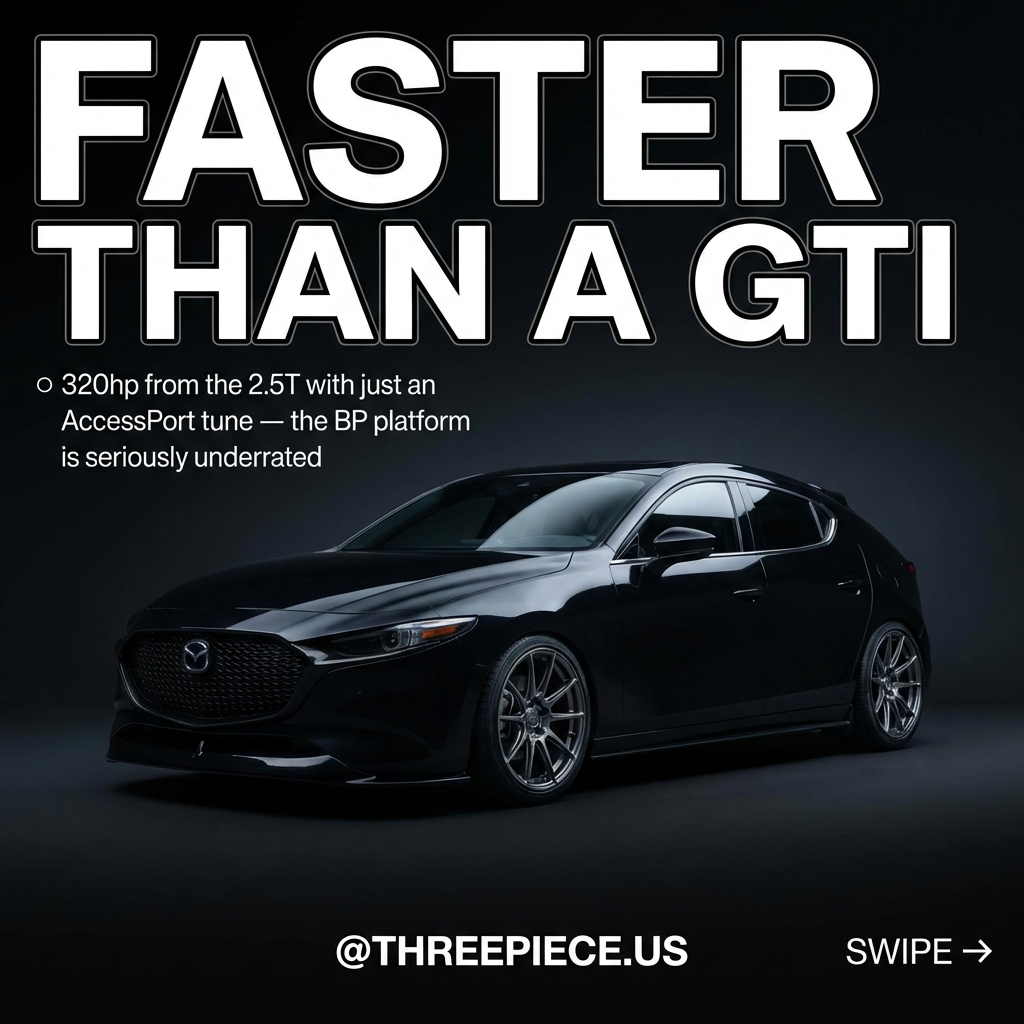
The Mazda3 Turbo makes 250 horsepower and 320 lb-ft from its SkyActiv-G 2.5T engine — the same powerplant found in the CX-5 Signature but tuned more conservatively. While everyone fights over marked-up GTIs and Type Rs, this BP-platform sleeper sits quietly making serious power with room to grow. Here's what you need to know before buying one.
Quick links
- Power Potential: 320HP with Just a Tune
- Drivetrain Reality: Manual vs Auto
- Common Issues: What Breaks First
- The Smart Mod Path
- Buying Checklist
Power Potential: 320HP with Just a Tune
The 2.5T in the Mazda3 is seriously underrated from the factory. An AccessPort tune alone unlocks 320 horsepower — that's GTI Performance territory without the DSG drama. The engine runs rich under boost from the factory, leaving power on the table that tuners have figured out how to extract safely.

Unlike the CX-5 application, the Mazda3 gets the same engine in a 300-pound lighter chassis with better weight distribution. The all-wheel drive system is torque-vectoring capable and doesn't suffer from the Haldex lag that plagues VW products. When you need grip, it's there instantly.
For context on turbo tuning approaches, check out our guide on EcoBoost Mustang boost-by-gear tuning — the principles apply here too.
Drivetrain Reality: Manual vs Auto
The six-speed manual is the enthusiast choice, but the six-speed torque-converter automatic handles power better than most dual-clutch setups. No clutch pack overheating, no mechatronic failures — just smooth shifts that get more aggressive with sport mode engaged.

If you're shopping manual cars, the clutch feel is notoriously weird until you get used to it. The clutch assist spring creates an artificial engagement point that some owners delete for better feel. This isn't a defect — it's just Mazda's attempt to make the clutch more user-friendly.
For clutch upgrade options down the line, consider the ACT XT/Race Sprung 6 Pad Clutch Kit at $1,690 — similar torque capacity to what you'll need for 350+ horsepower builds.
Common Issues: What Breaks First
The BP platform is relatively new, but patterns are emerging. The clutch assist spring snaps around 30,000 miles, making shifts feel notchy until you delete or replace it. This is a $50 fix that most owners end up doing.

Carbon buildup hits the intake valves by 60,000 miles due to direct injection. The stock tune runs rich under boost, accelerating this process. Budget $800-1200 for walnut blasting service every 60k miles — it's not optional on GDI engines.
The rear motor mount fails early, creating vibration that's most noticeable at idle. It's a $200 part but the labor adds up. Upgraded mounts from companies like Corksport solve this permanently while improving power transfer.
For comparison with other turbo platforms' common issues, read our MK7 GTI IS38 turbo build guide — the Mazda is actually more reliable long-term.
The Smart Mod Path
Start with wheels and tires — the factory 18x7 +50 setup is conservative. Moving to 18x8.5 +45 or 19x8.5 +40 transforms the handling without breaking the bank. Browse 18x8.5 wheels in 5x114.3 for options that fit perfectly.

The AccessPort tune should be your second mod — it unlocks 70+ horsepower safely while improving throttle response. Unlike other platforms that need supporting mods first, the Mazda's turbo and fueling system handle the extra power stock.
Coilovers come next. The stock suspension is soft and rolls too much for the power level. Quality options start around $1,200 and transform the car's dynamic balance. For spring rate guidance, check our coilover spring rates guide.
Skip the cold air intake — the stock airbox flows enough for 350+ horsepower. Your money is better spent on tires that can handle the power. As we covered in our hot hatch mod priority guide, tires beat intakes every time.
Buying Checklist
Test the clutch feel — grabby or notchy engagement usually means the assist spring has failed. It's not a deal-breaker but gives you negotiating room. A smooth, progressive clutch feel indicates the spring is still intact.
Check service records for carbon cleaning. If the car has 60,000+ miles with no cleaning service, budget for it immediately. Look for rough idle, hesitation under load, or check engine lights related to misfires.
Look for AccessPort evidence — previous tunes aren't necessarily bad, but they indicate the engine has been pushed. Check for boost leaks, unusual wear patterns, or modifications that suggest aggressive driving.
Inspect the rear motor mount — excessive vibration at idle is the telltale sign. It's not expensive to fix but indicates the car may need other maintenance items addressed.
Browse our vehicle gallery to see how other Mazda3 Turbo builds have turned out — the platform has serious potential when done right.
The Sleeper Nobody Talks About
The Mazda3 Turbo represents everything enthusiasts claim to want — practical daily use, serious performance potential, and reasonable pricing without the markup drama. At $30,000 used, it's cheaper than a new GTI and more reliable than a used Focus RS.
While everyone fights over the obvious choices, smart buyers are quietly building 350+ horsepower all-wheel drive sleepers that surprise people at red lights. The BP platform deserves more attention than it gets — maybe that's exactly why you should care.
Ready to build yours? Start with quality Work Wheels and proper wheel accessories to handle the power you're about to unlock.