
EcoBoost Mustang Boost-by-Gear: Why Your Turbo Spools Different
Your EcoBoost Mustang isn't broken — it's doing exactly what Ford programmed it to do. Boost-by-gear changes turbo spool characteristics based on which gear you're in, delivering 12 psi in first gear but the full 21 psi in sixth gear. Most owners think this is a malfunction when it's actually sophisticated torque management protecting your drivetrain.
Quick links
- How Boost-by-Gear Works
- Why Ford Uses This System
- Common Tuning Mistakes
- How to Tune It Properly
- Final Thoughts
How Boost-by-Gear Works
The EcoBoost ECU uses gear position sensors to determine which gear you're in, then references boost tables that specify different pressure targets for each gear. First gear might see 12 psi while sixth gear gets the full 21 psi — this isn't a malfunction, it's intentional torque management.

This system works by reducing boost in lower gears where gear multiplication creates massive torque at the wheels. The ECU calculates the optimal boost pressure based on gear ratio and traction needs, preventing wheelspin while maximizing power delivery in higher gears where you can actually use it.
For more technical details on turbo tuning, check our EcoBoost manual transmission guide that covers the complete platform.
Why Ford Uses This System
Ford implemented boost-by-gear for three critical reasons: preventing wheelspin on stock all-seasons, protecting the notoriously fragile MT-82 transmission from shock loads that snap shift forks, and making the car predictable for daily driving and wet weather launches.
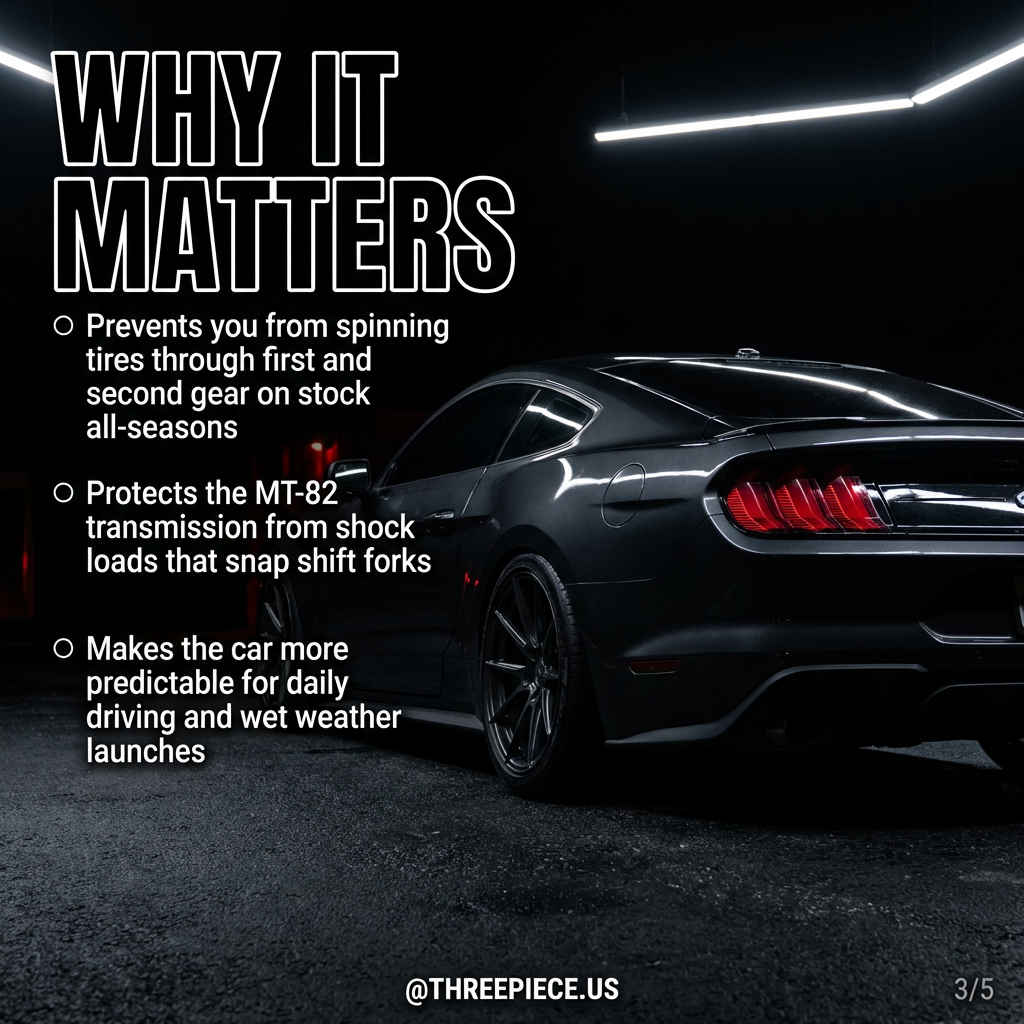
The MT-82 has documented issues with shift fork breakage under high torque loads. By limiting boost in lower gears, Ford reduces the shock loads that destroy these transmissions. This is why many S550 Mustang builds focus on supporting modifications before chasing power.
Stock Pirelli P Zero all-seasons can't handle full boost in first or second gear — you'd just spin tires and go nowhere. The system ensures power delivery matches available traction, which is why sticky tires are crucial for any serious EcoBoost build.
Common Tuning Mistakes
The biggest mistake tuners make is completely disabling boost-by-gear, creating undriveable wheelspin monsters that break traction in every gear. Dyno numbers look impressive but real-world performance suffers when you can't put power down effectively.
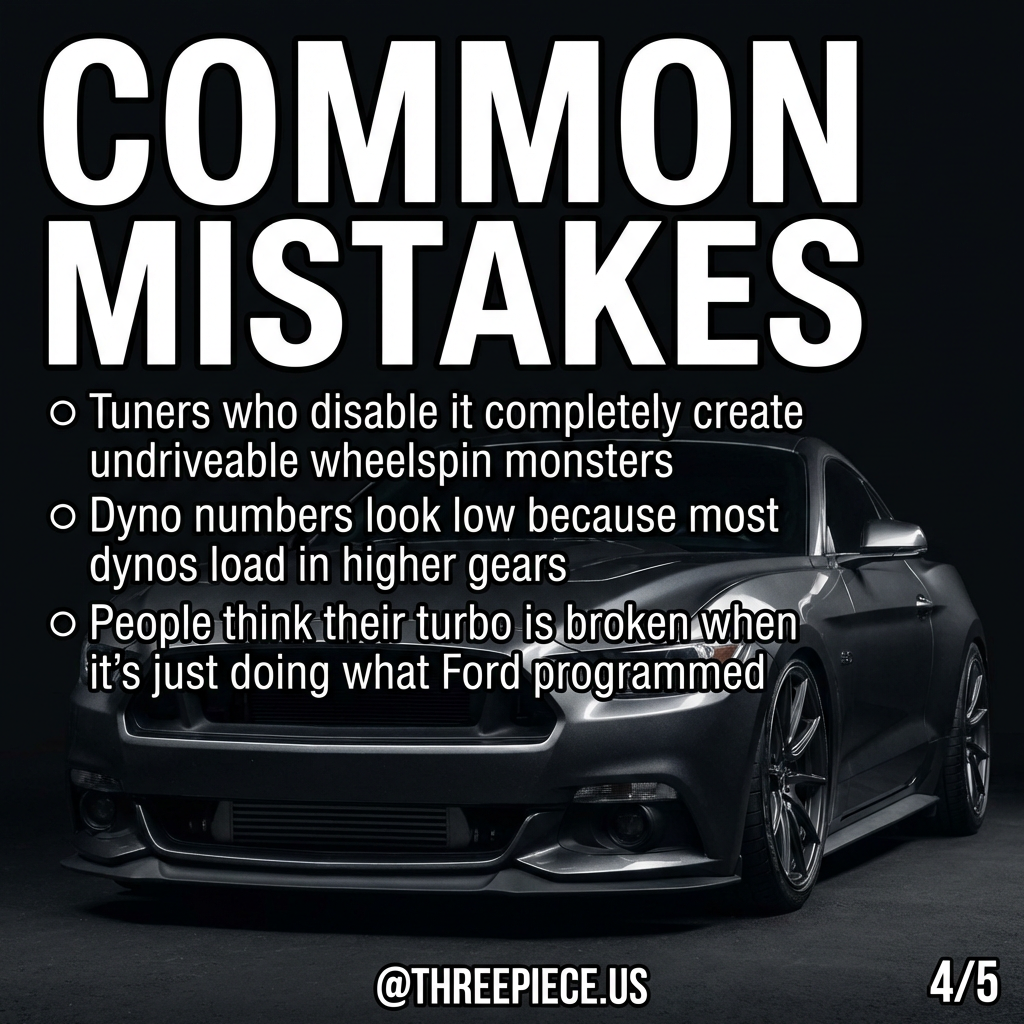
Another common issue is owners thinking their turbo is broken when boost feels different between gears. Most dynos load in higher gears where boost targets are highest, so dyno sheets don't reflect the reduced boost you feel in first and second gear during street driving.
Poor tuners also ignore the relationship between boost-by-gear and supporting modifications. You can't just crank boost without addressing downpipe flow restrictions or intercooler heat soak that kills power in higher gears.
How to Tune It Properly
Quality tuners like Cobb, Stratified, and JST don't disable boost-by-gear — they refine the tables. More aggressive boost targets in higher gears where you can use the power, conservative settings in lower gears to prevent wheelspin and drivetrain damage.
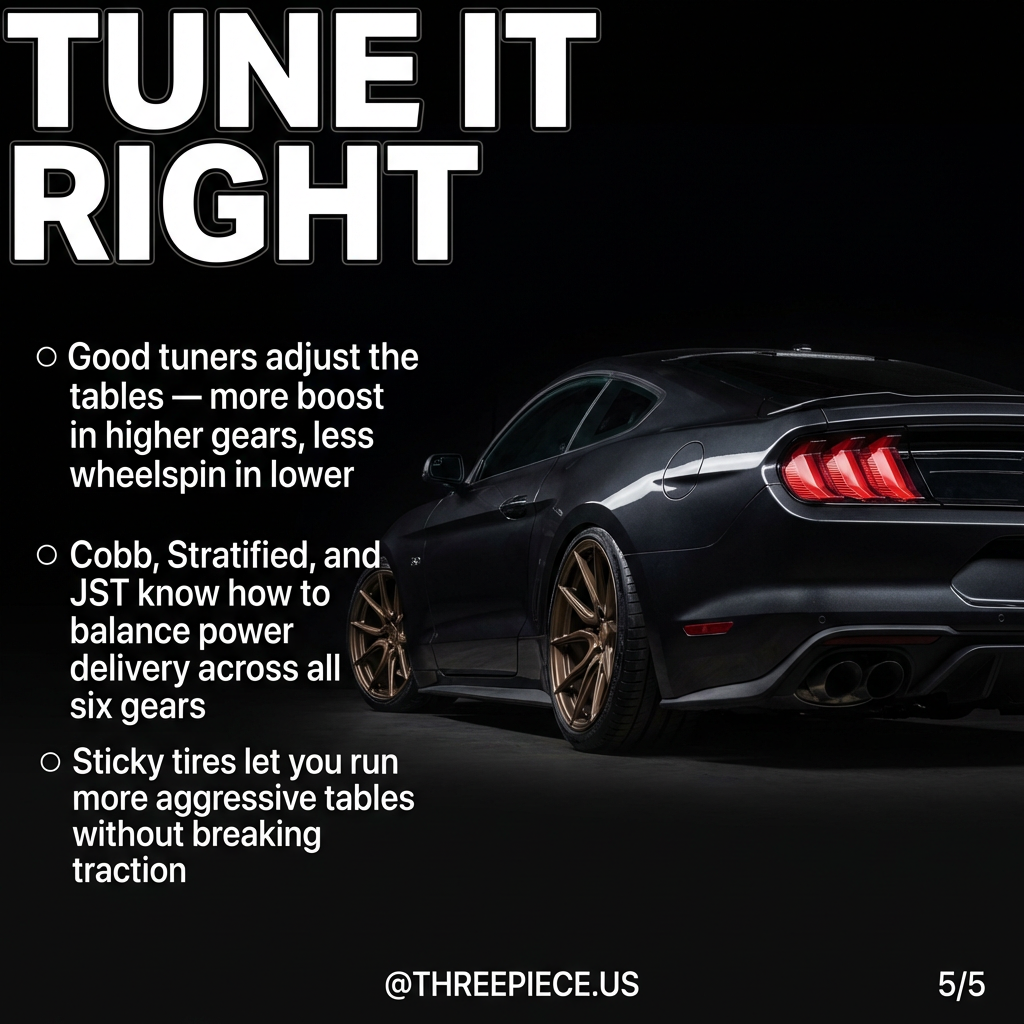
Sticky tires are essential for aggressive boost-by-gear tables. 245/40R18 summer tires let you run higher boost in second and third gear without breaking traction. The 245/40R18 tire selection offers multiple compound options for different performance needs.
Supporting modifications matter more than peak boost numbers. A proper intercooler, quality downpipe, and intake system let you run consistent boost across all gears without heat soak killing power. Focus on the complete system, not just peak pressure.
For wheel fitment on your EcoBoost build, 18x9 +35 is the sweet spot for most setups. Browse 18x9 wheels in 5x114.3 to see what works with your suspension setup.
Final Thoughts
Boost-by-gear isn't a limitation — it's intelligent power delivery that makes your EcoBoost more effective on the street. Work with the system, don't fight it. Quality tuning refines the tables rather than disabling them completely.
Understanding how your turbo system actually works prevents chasing phantom issues and helps you build a more effective platform. The right wheel and tire combination lets you take advantage of properly tuned boost-by-gear tables without breaking traction.
Ready to build your EcoBoost properly? Start with supporting modifications and quality tuning that works with Ford's engineering rather than against it.