
Posted by THREEPIECE.US on Apr 2nd 2026
K20/K24 S-Chassis Swap: VTC Tuning That Actually Works
Most K-swap S-chassis builds drive like garbage because tuners ignore VTC (Variable Timing Control) and treat VTEC like it's still 1999. The K20/K24 isn't your old B-series — VTC completely changes how cam timing interacts with VTEC engagement, especially in a lighter S-chassis where throttle response matters more than peak numbers.
Quick links
- VTEC Isn't Just Noise
- How VTC Changes Everything
- Why Most Swaps Suck
- Tuning It Right
- The Driveable Setup
VTEC Isn't Just Noise
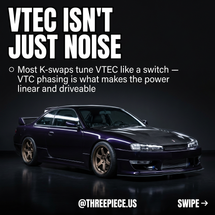
Most K-swaps tune VTEC like a switch — but VTC phasing is what makes the power linear and driveable. While your buddies are chasing dyno sheets, you should be focusing on how the car actually drives on the street. The Honda K-series was designed around sophisticated cam timing control that works with VTEC, not against it.
If you're building a K-swap and want it to feel naturally aspirated smooth, check out our guide on turbo K20 vs NA VTEC builds for context on why boost isn't always the answer. The S-chassis platform benefits from linear power delivery more than peak numbers.
How VTC Changes Everything
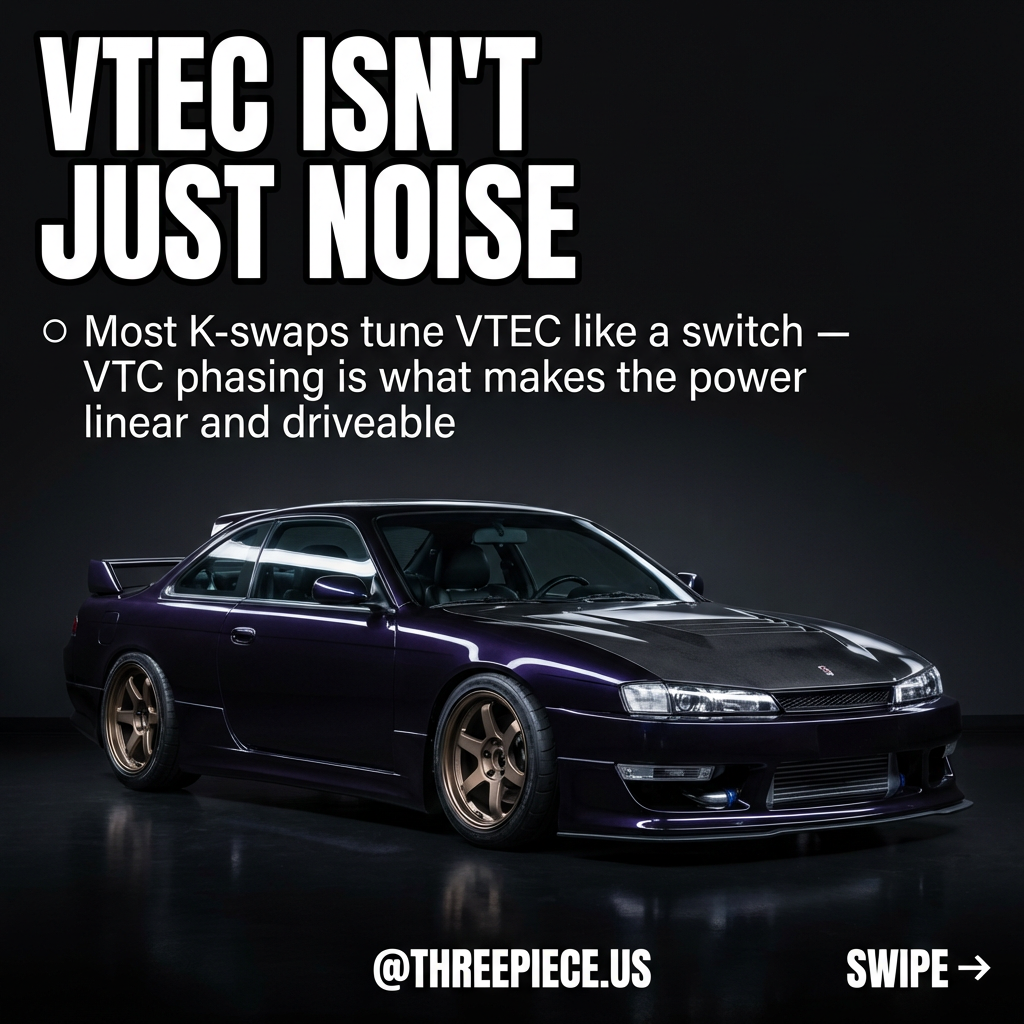
VTC advances cam timing under 4k RPM — this fills the torque hole that kills S-chassis drivability. VTEC crossover happens at 5800 rpm, but VTC smooths the transition so it doesn't feel like a light switch. A properly tuned K20A2 with VTC mapping makes torque from 2500-8400 rpm with no dead spots.
This is where most swaps fail — tuners lock VTC timing or delete it entirely, creating a car that drives like a turbo without boost below 4k. For more context on variable timing systems, read our breakdown of VTEC vs VVT-i vs VANOS tuning across different platforms.
Why Most Swaps Suck
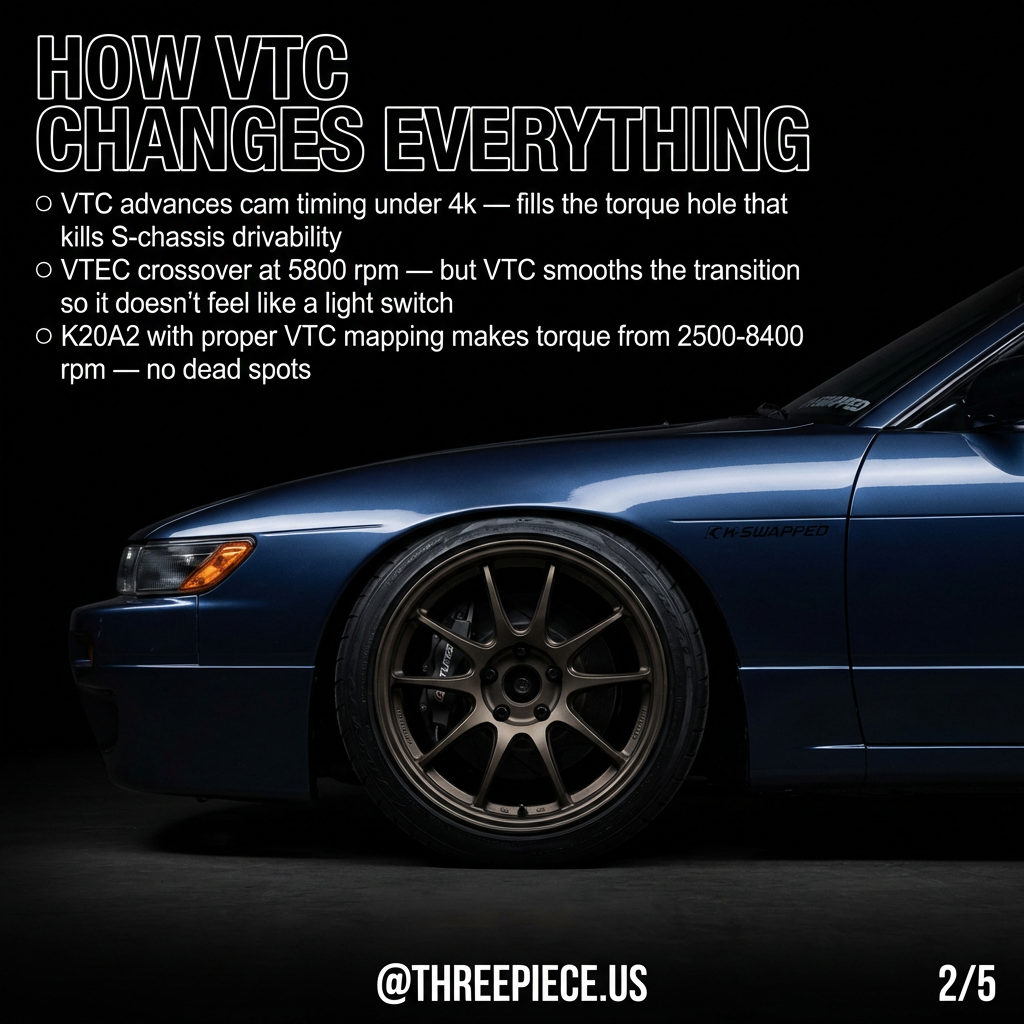
Locked VTC timing makes the car gutless below 4k — you're driving a turbo car without boost. VTEC engagement feels like getting rear-ended because the car lurches instead of pulling smooth. K24 bottom end with K20 head needs custom VTC maps because mixing platforms breaks the timing relationship.
The problem compounds in an S-chassis because the lighter weight amplifies throttle response issues. What feels acceptable in a 2800lb Civic feels terrible in a 2400lb 240SX. This is why turbo four cylinders often win for handling over big displacement swaps in lightweight platforms.
Tuning It Right
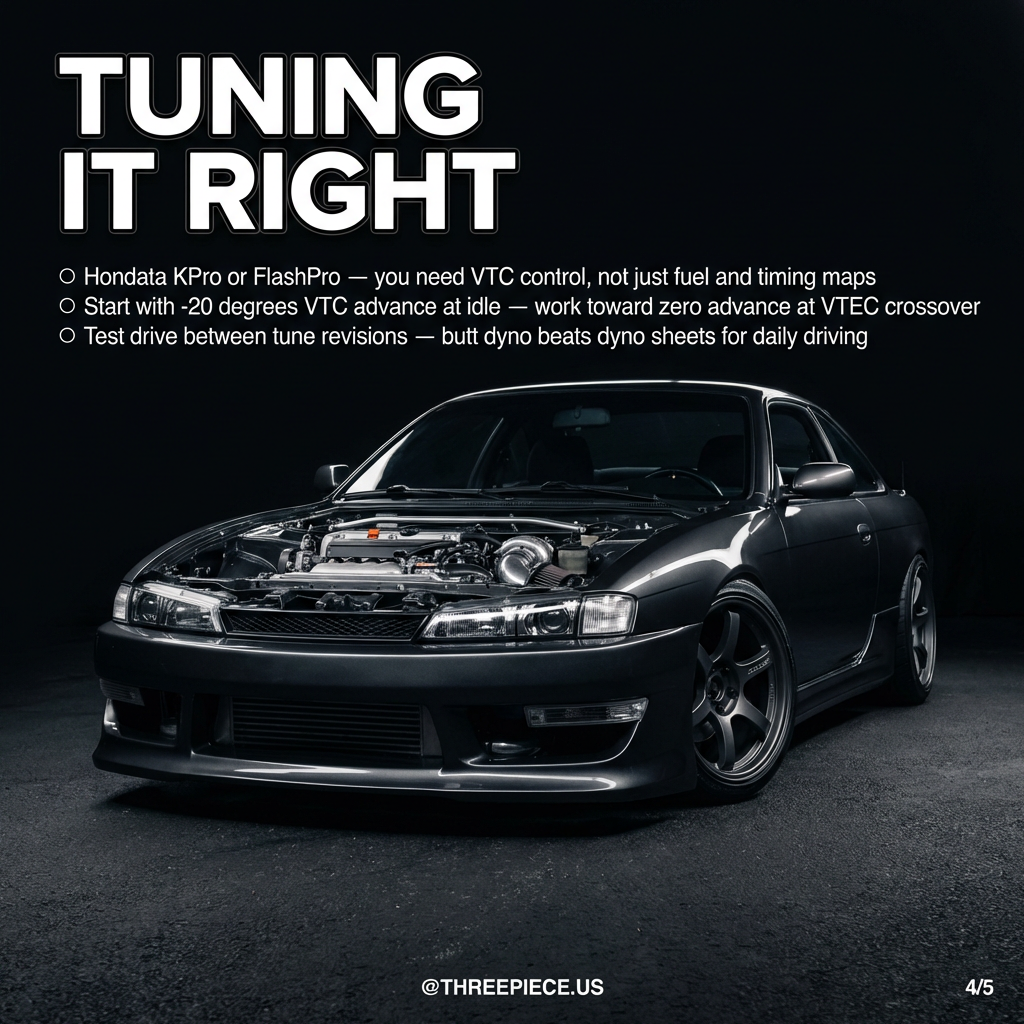
Hondata KPro or FlashPro — you need VTC control, not just fuel and timing maps. Start with -20 degrees VTC advance at idle and work toward zero advance at VTEC crossover. Test drive between tune revisions because butt dyno beats dyno sheets for daily driving.
The tuning process requires patience. Unlike simple fuel and timing adjustments, VTC mapping affects how the entire powerband feels. For more on why dyno numbers don't tell the whole story, check out our article on why 400HP Civics are slow despite impressive peak figures.
The Driveable Setup
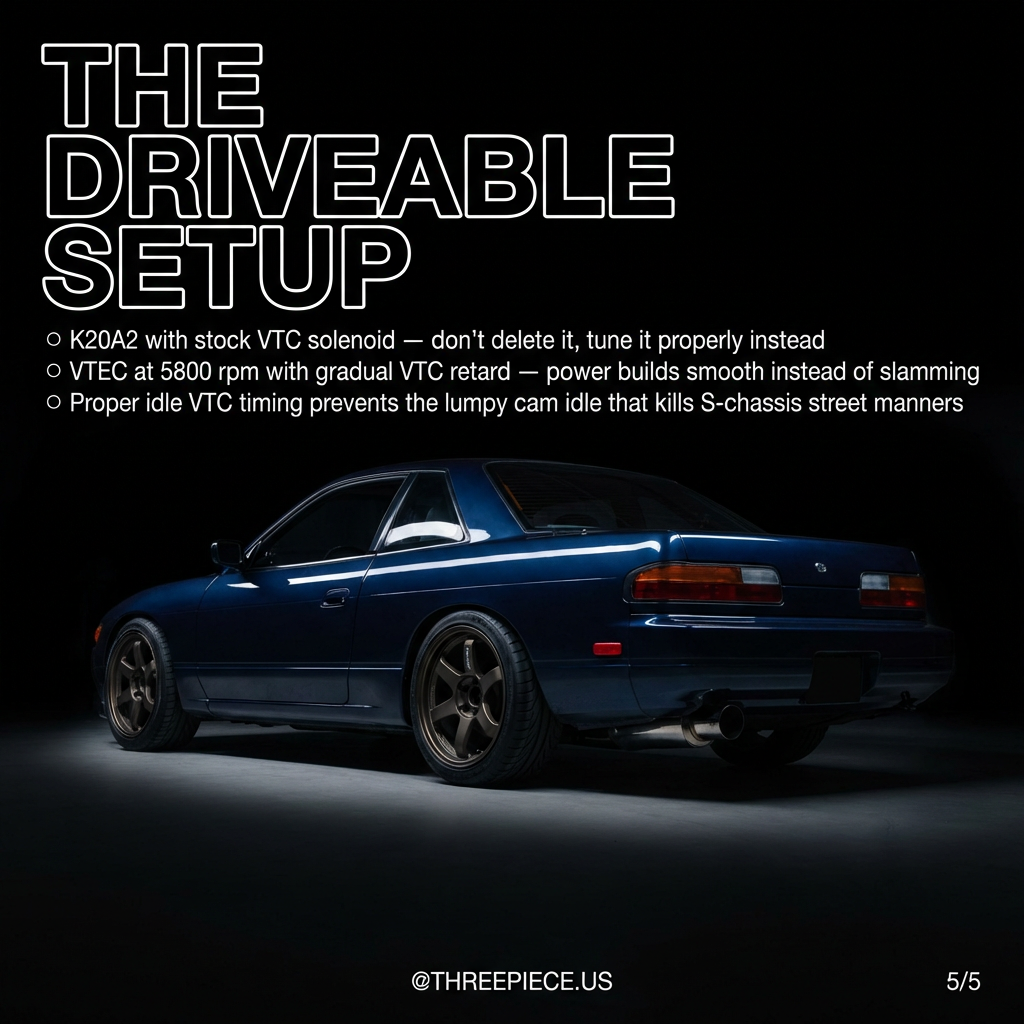
K20A2 with stock VTC solenoid — don't delete it, tune it properly instead. VTEC at 5800 rpm with gradual VTC retard makes power build smooth instead of slamming. Proper idle VTC timing prevents the lumpy cam idle that kills S-chassis street manners.
The goal is making your K-swap S-chassis feel like a naturally aspirated Honda should — linear, responsive, and smooth throughout the rev range. This setup works particularly well with lightweight wheels that don't upset the chassis balance. Browse our Work Wheels collection for options that complement the improved throttle response, or check out wheel accessories to complete your build.
For suspension upgrades that work with the improved power delivery, read our guide on suspension upgrades that beat coilovers. The combination of proper VTC tuning and quality suspension makes an S-chassis K-swap feel like the car Honda should have built.