

Posted by THREEPIECE.US on Apr 8th 2026
Are 700+ HP Hellcats Overrated? Why Dodge's Supercharged HEMI Street Monsters Aren't Automatic Wins
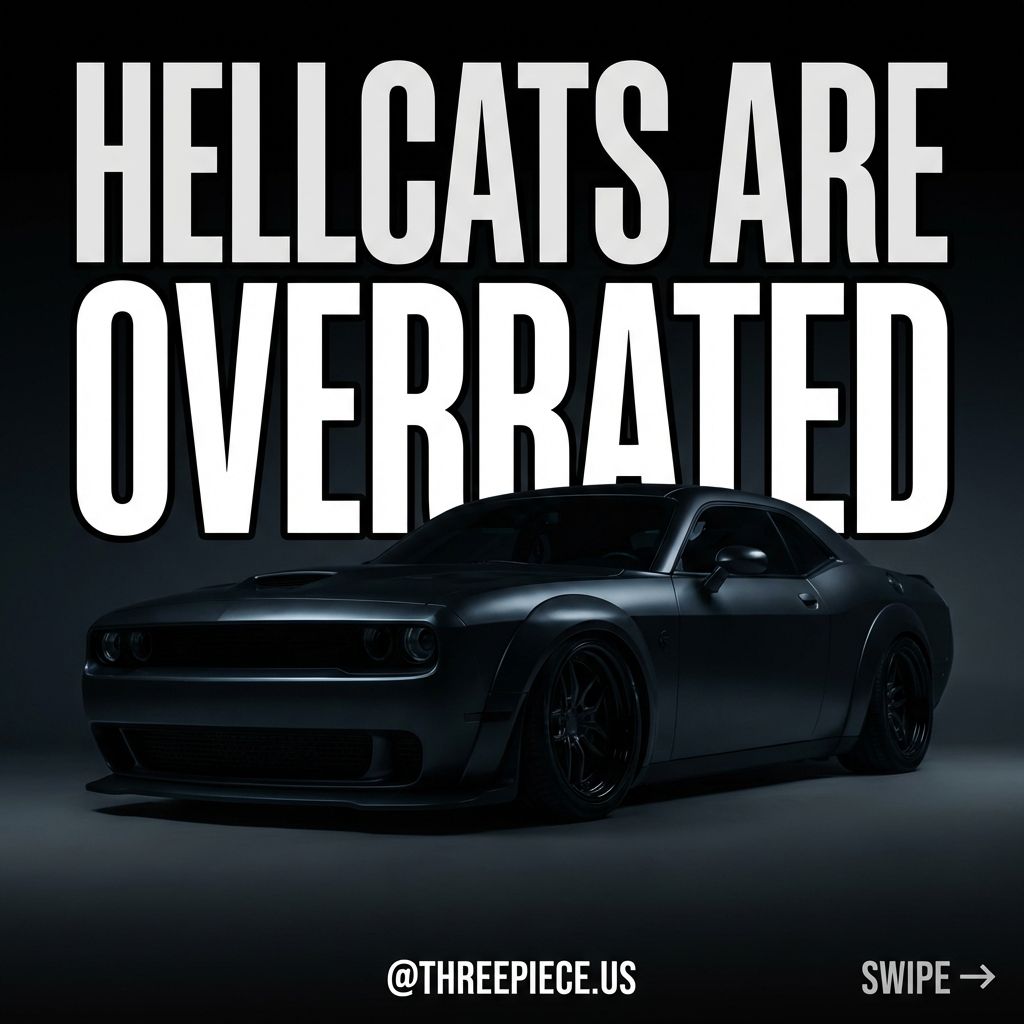
Dodge's Hellcat platform changed everything when it dropped 707 horsepower into everyday Charger and Challenger bodies with a factory warranty. But the internet hype machine has convinced people that horsepower equals performance. The reality? Most owners never see half that power on the street, and physics doesn't care about your dyno sheet.
Quick links
The Hype Is Real
Credit where it's due: that supercharger whine is intoxicating. Nothing else sounds like a screaming 2.4L IHI blower spooling up through the gears. Dodge put 707 horsepower from the factory with a warranty when no other manufacturer was this insane. Sub-4 second 0-60 times in a 4400lb sedan means the power-to-weight actually works in straight lines.
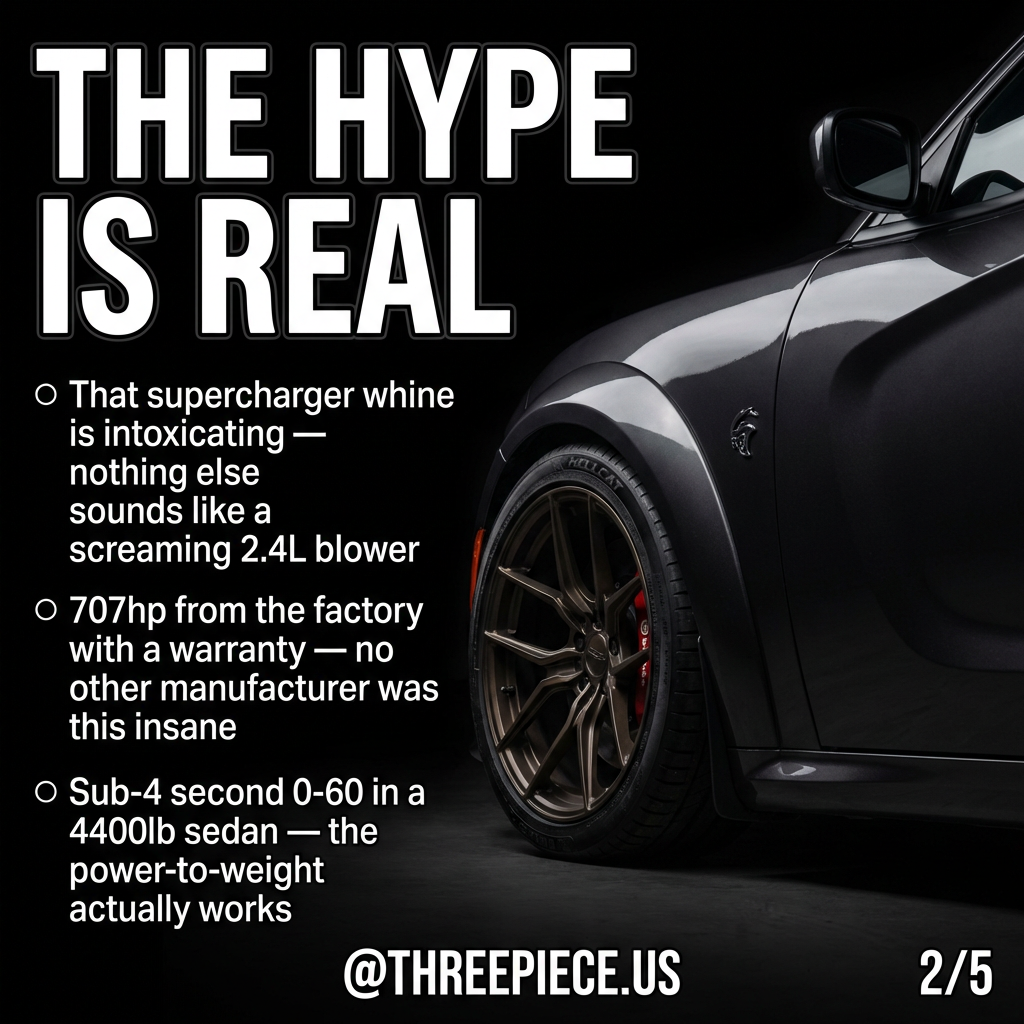
The 6.2L supercharged HEMI was genuinely revolutionary for its time. While competitors were building 400-500hp naturally aspirated V8s, Dodge strapped a massive blower on top and called it a day. For drag racing and highway pulls, it's theater and performance wrapped into one package. If you want maximum drama and don't care about lap times, nothing matches the Hellcat experience.
For those looking to enhance their Hellcat's performance further, consider upgrading the supercharger pulley system. The VMP Performance 2.8in 6-Rib Pulley at $157 can unlock additional power from that factory blower.
The Reality Check
Here's where physics ruins the party. That 4400lb curb weight means you're fighting momentum in every corner, every braking zone, every direction change. Most Hellcats left the factory with all-season tires that couldn't handle half the available power. Heat soak after two pulls means the supercharger gets overwhelmed and pulls timing, turning your 700hp monster into a 500hp disappointment.

The supercharger bypass valve becomes a limiting factor under sustained load. The VMP Low-Vacuum Bypass Valve at $217 helps with aftermarket cam setups, but it's addressing a fundamental issue: the factory setup wasn't designed for sustained high-performance use.
Weight distribution is another problem. The massive supercharger sits high in the engine bay, raising the center of gravity. Combined with the overall mass, it creates a car that feels sluggish transitioning between directions. Compare this to lighter platforms that put power down more effectively, and the Hellcat's limitations become obvious.
For more insight on why horsepower doesn't always translate to real-world performance, check our analysis of why dyno numbers don't win street races.
Better Alternatives Exist
The C7 Z06 makes similar power at 3500lbs — that 900lb difference changes everything. Corner entry, braking distances, acceleration out of turns, fuel economy, tire wear — physics favors the lighter car in every scenario except straight-line bragging rights.
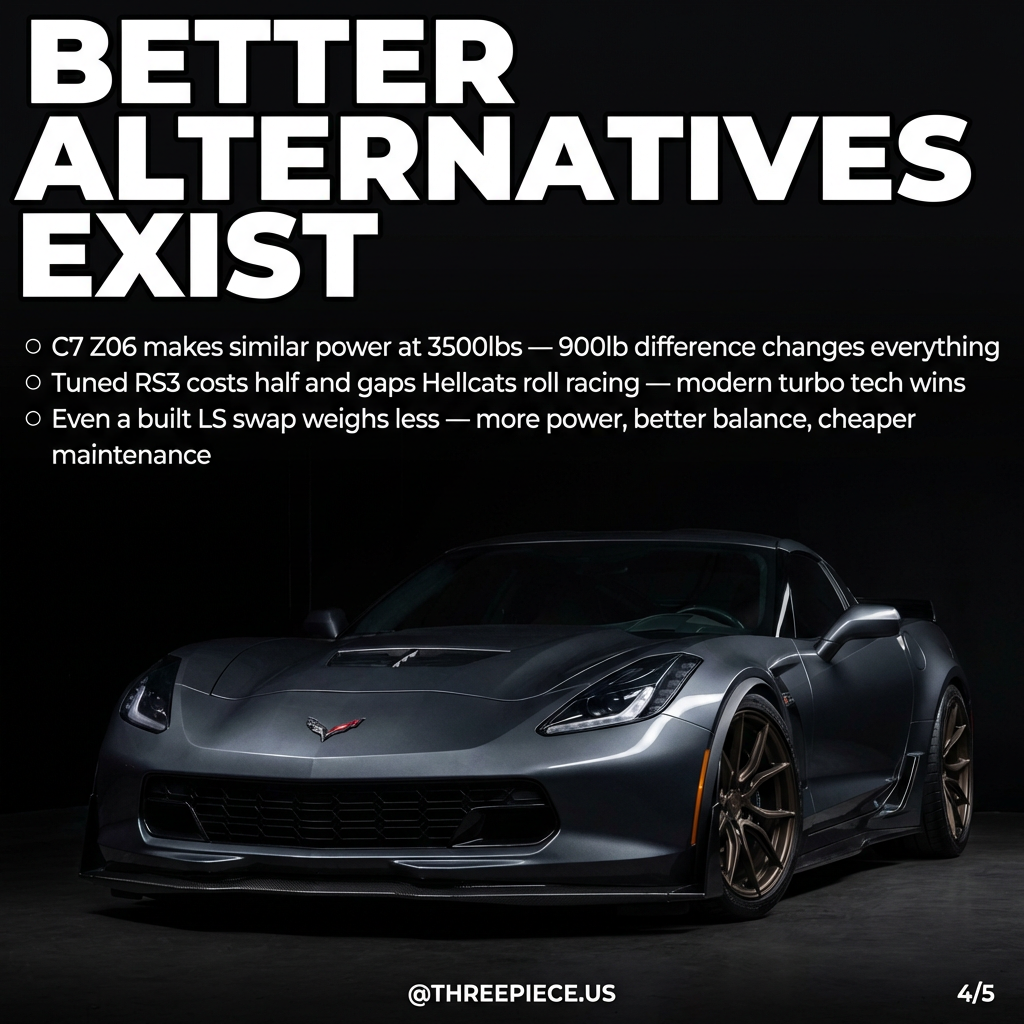
A tuned 8V RS3 costs half and gaps Hellcats in roll racing. Modern turbo technology wins when you need usable power across the rev range. The 2.5L turbo five-cylinder in the 8V Audi RS3 delivers 400hp in a 3600lb package that actually handles.
Even a built LS swap weighs less while making more power with better balance and cheaper maintenance. The LS swap reality shows that sometimes the obvious answer isn't the best answer, but it's still better than carrying around 4400lbs everywhere you go.
For those considering alternatives, browse our selection of performance wheels that work across multiple platforms. The Work Emotion series offers lightweight forged options that complement any performance build.
When It Makes Sense
The Hellcat makes perfect sense in specific scenarios. If you want maximum drama and don't care about lap times, it's pure theater. Nothing sounds more intimidating at a red light than that supercharger whine building boost. For straight-line heroics on the street, few cars deliver the same visceral experience.

The four-door Charger Hellcat is literally the only option that checks both the "four doors" and "700hp" boxes. If you need to haul kids to school and still want to embarrass Corvettes at stoplights, there's no alternative. The practicality factor is real — try fitting car seats in a Camaro ZL1.
For Hellcat owners looking to maximize their setup, proper wheel fitment is crucial. Check our vehicle gallery for inspiration on wheel and tire combinations that work with the Hellcat's aggressive fender flares and brake clearance requirements.
The supercharger gasket seal becomes critical on modified Hellcats. The VMP Boost-Lok Gasket Seal at $87 prevents boost leaks that rob power from high-output builds.
The Verdict
Hellcats aren't overrated if you understand what you're buying. They're overrated if you think 707hp automatically makes them the fastest car on every road. Weight, heat management, and traction limitations mean that power number is more theoretical than practical in most driving situations.
The real question isn't whether Hellcats are overrated — it's whether you value drama over outright performance. If the answer is yes, and you need four doors, nothing else delivers the same experience. If you want to actually use all that power effectively, lighter platforms with better weight distribution will always win.
For those building any high-performance platform, proper wheel and tire selection matters more than peak horsepower. Browse our wheel accessories to complete your build with quality components that match your performance goals.