
Posted by THREEPIECE.US on Mar 25th 2026
Wheel Alignment Settings That Save Your Tires: Camber, Toe & Caster Guide
Your $3,000 wheel setup is getting destroyed because nobody talks about alignment geometry. Most people obsess over offset and width, then wonder why their tires wear weird or their car feels sketchy. The real issue? Your alignment settings weren't adjusted for your new specs.

Quick links
- How alignment actually works
- Why alignment settings matter
- Common alignment mistakes
- Proper alignment settings
- Getting it done right
How alignment actually works
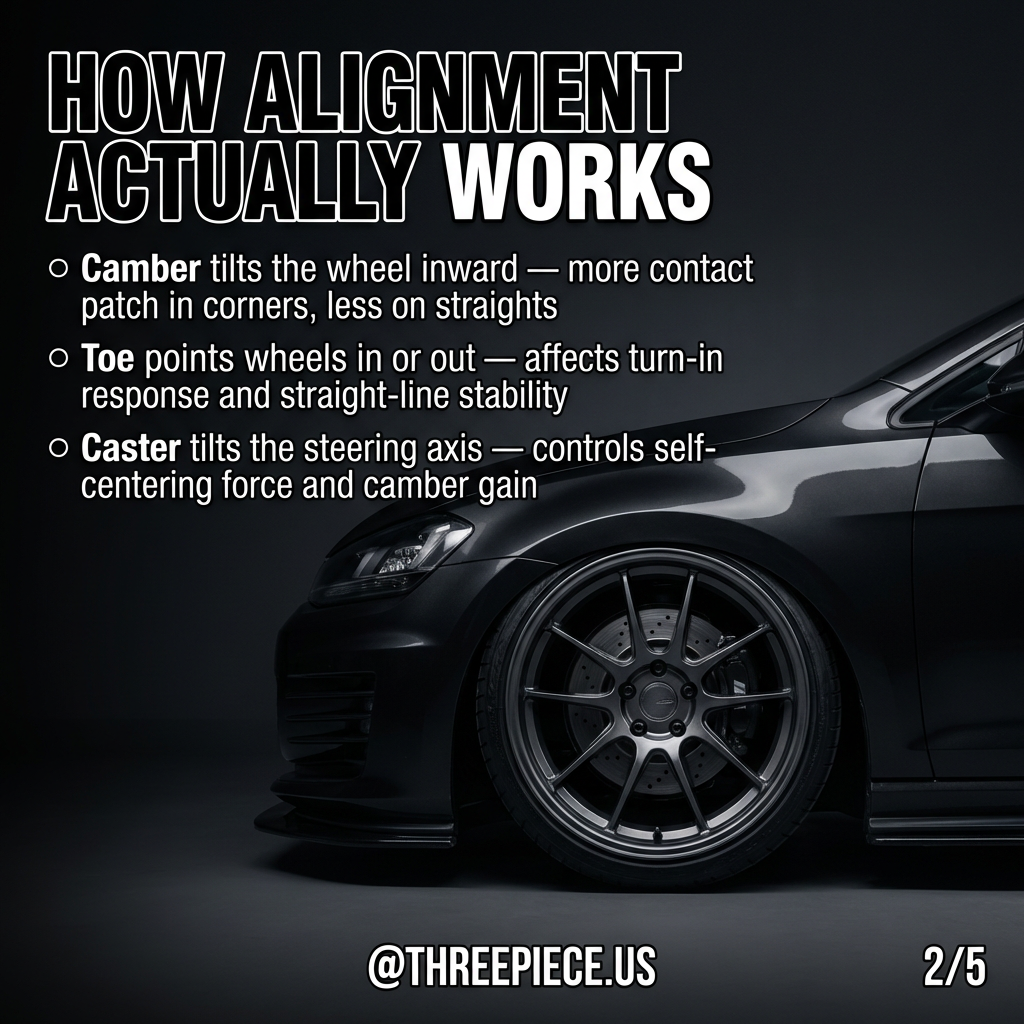
Camber tilts the wheel inward — more contact patch in corners, less on straights. Toe points wheels in or out — affects turn-in response and straight-line stability. Caster tilts the steering axis — controls self-centering force and camber gain.
Understanding these three angles is crucial when you're running aftermarket wheels. Your OEM alignment was designed for stock wheel specs — different offset and width changes how these angles affect tire contact. For adjustable alignment components, check out the Eibach Pro-Alignment Front Camber Kit at $471 for proper adjustment range.
If you're running lowering springs, read our guide on coilover spring rates to understand how ride height affects alignment geometry. The Whiteline Universal Camber Gauge at $255 helps you verify settings at home.
Why alignment settings matter
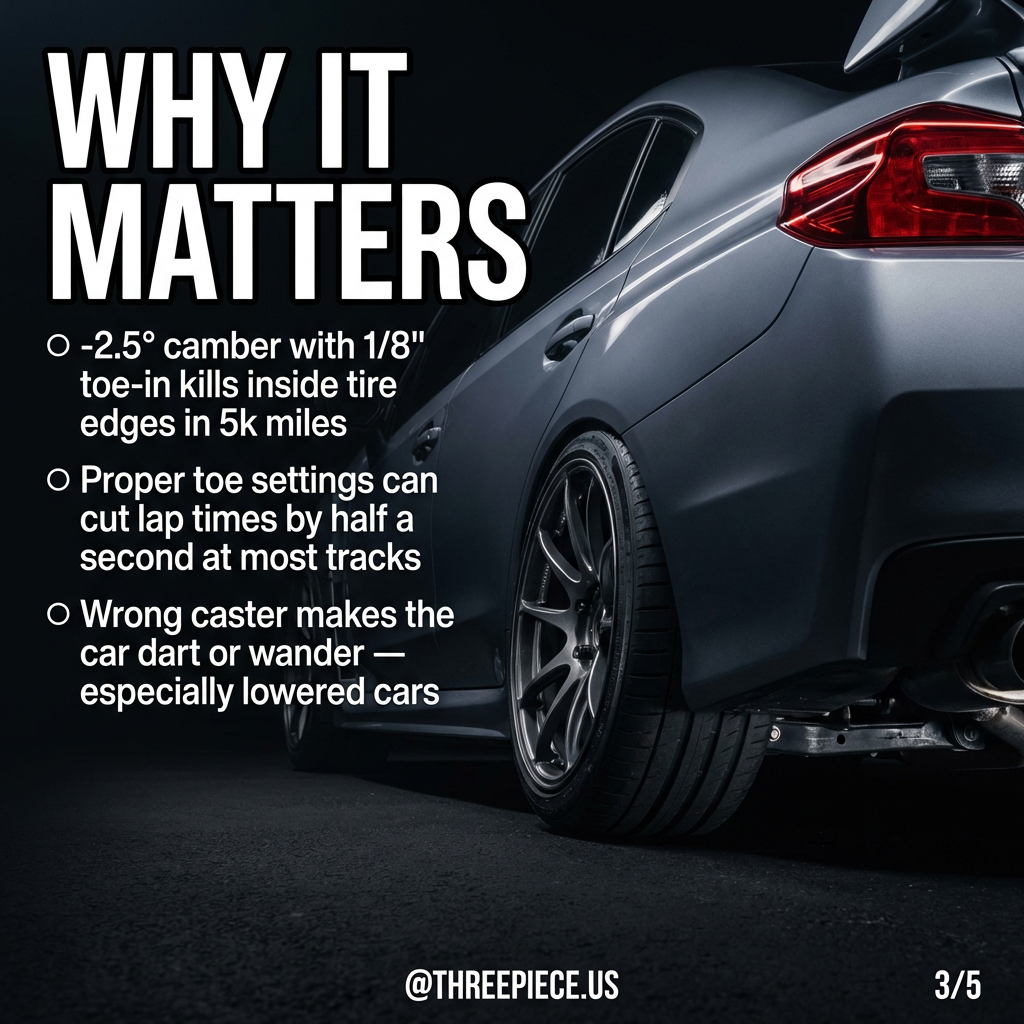
-2.5° camber with 1/8" toe-in kills inside tire edges in 5,000 miles. Proper toe settings can cut lap times by half a second at most tracks. Wrong caster makes the car dart or wander — especially lowered cars.
The math is brutal: aggressive camber without proper toe adjustment creates uneven contact patches that destroy expensive tires. For BMW E46 owners, the SPL Parts E46 Rear Camber Links at $421 provide the adjustment range needed for proper alignment after lowering.
This is especially critical if you're running staggered setups or aggressive offsets. Check our wheel offset guide to understand how ET numbers affect alignment requirements. The Eibach Pro-Alignment Rear Camber Arm Kit at $435 handles E46 rear alignment perfectly.
Common alignment mistakes
Running track camber on the street — you need less than you think for daily driving. Ignoring toe completely — most tire wear problems are toe, not camber. Setting alignment on lowering springs — wait until you're at final ride height.

The biggest mistake is copying track alignment specs for street use. Track cars run -3.5° camber because they're constantly cornering at high speeds. Your daily driver spends 90% of its time going straight, so excessive camber just burns through the inside edge.
For Mustang owners dealing with alignment issues after lowering, the Eibach Pro-Alignment Kit at $364 provides proper adjustment range. Read our Mustang GT Performance Pack guide for more suspension setup details.
Another common error is setting alignment immediately after installing lowering springs. Springs settle over the first 1,000 miles — your alignment will change. The Whiteline S550 Performance Lowering Springs at $372 are properly engineered to minimize settling.
Proper alignment settings
Street: -1.5° camber, 1/16" total toe for even wear and good turn-in. Track: -2.5° to -3.5° camber with zero toe for maximum grip. These numbers work across most platforms with proper suspension geometry.

Street alignment prioritizes tire life and straight-line stability. -1.5° camber provides enough cornering grip improvement without destroying the inside edge during daily driving. 1/16" total toe-in gives stable highway tracking without excessive scrub.
For Honda/Acura owners, the Eibach Pro-Alignment Camber Kit at $264 handles TSX and Accord alignment perfectly. Check our FK8 Type R vs FK7 Civic Si comparison for more Honda alignment specifics.
Track alignment is completely different. Zero toe eliminates scrub for maximum straight-line speed and tire life during sessions. -2.5° to -3.5° camber keeps the contact patch square during high-g cornering. Visit our vehicle gallery to see proper track alignment in action.
Getting alignment done right
Find a shop with a Hunter machine — string alignments are for classics only. Modern alignment requires laser precision, especially with aftermarket wheels and lowered ride height. The investment in proper alignment saves thousands in tire replacement costs.
Hunter machines provide ±0.1° accuracy versus ±0.5° for string methods. That precision matters when you're running $300+ per tire and need them to last more than 10,000 miles. Look for shops that specialize in modified cars — they understand the relationship between wheel specs and alignment requirements.
Before your alignment appointment, install all suspension modifications first. The suspension components in our catalog are designed to work together for optimal geometry. Don't forget hubcentric rings to ensure proper wheel centering during alignment.
For the complete wheel setup, browse our selection of premium wheels designed for proper fitment. The Work Wheels lineup offers the offset and width combinations that work with proper alignment geometry. Finish your build with the right alignment settings, and your setup will perform exactly as intended.