

Posted by THREEPIECE.US on Apr 8th 2026
OEM Performance Option Markups: Why Factory Performance Costs Double
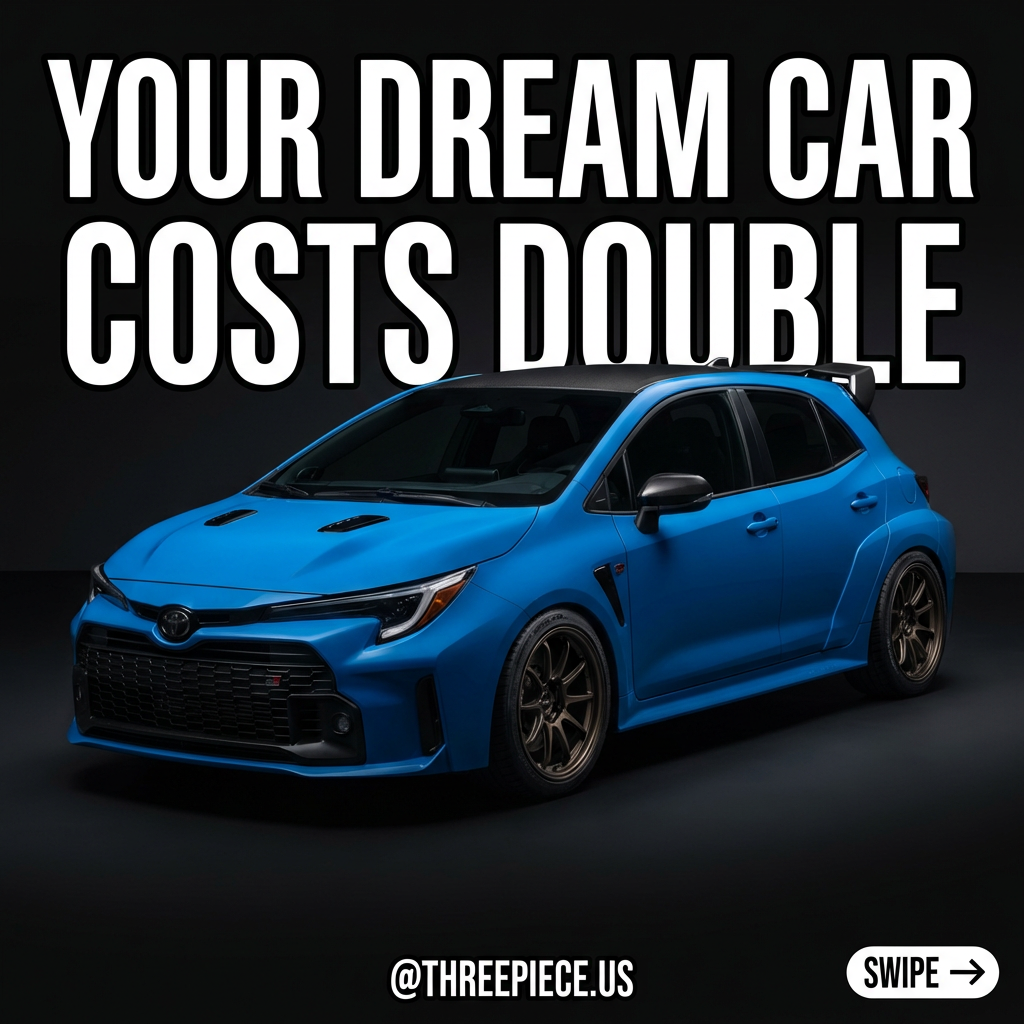
Dealers are charging $65,000 for a $35,000 GR Corolla, and $15,000 markups on Civic Type R performance packs that cost Honda under $3,000 to manufacture. OEM performance options have become ransom notes, not value propositions.
Quick links
- The Markup Reality
- Why Dealers Control Pricing
- Impact on Real Enthusiasts
- Aftermarket Advantage
- Smart Buying Strategies
The Markup Reality
Performance packs are getting 50-100% markups at most dealers. A $5,000 factory aero package becomes a $15,000 "market adjustment" overnight. Toyota, Ford, and Chevrolet all allow dealers to set their own pricing on limited-production performance models, creating a seller's market where enthusiasts have zero leverage.

The FK8 Civic Type R saw similar markups during its production run, with dealers adding $20,000-$30,000 over MSRP. Now the FL5 Type R is following the same pattern — base models at MSRP, but any performance option triggers massive dealer premiums.
Why Dealers Control Pricing
Limited production runs mean dealers hold all the cards. When Toyota builds only 6,500 GR Corolla Circuit Editions globally, every dealer knows their allocation will sell regardless of price. It's take-it-or-leave-it pricing, and most enthusiasts cave under FOMO pressure.
Dealers make more profit on one marked-up performance car than ten regular sales. A $30,000 markup on a GR Corolla generates more dealer profit than selling thirty Camrys. The math is simple: why honor MSRP when buyers will pay double? This is why our OEM vs aftermarket discussion matters more than ever.
Impact on Real Enthusiasts
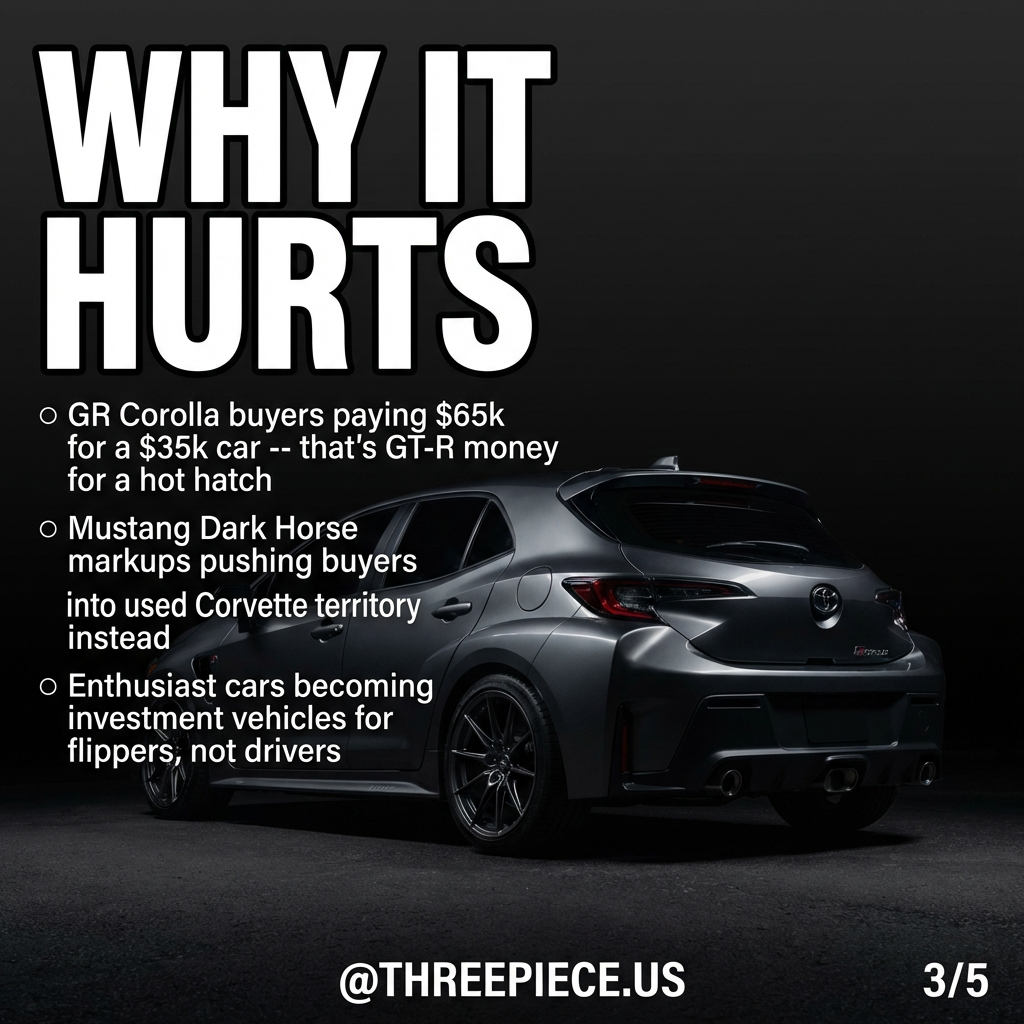
Mustang Dark Horse markups are pushing buyers into used Corvette territory instead of new Ford performance. When a $65,000 hot hatch costs GT-R money, the value proposition collapses. Enthusiast cars are becoming investment vehicles for flippers, not drivers who actually track them.

The GR Corolla vs STI comparison becomes irrelevant when dealer markups price the Toyota out of reach. Meanwhile, a clean used WRX with quality mods delivers similar performance for half the price. Check our vehicle gallery for examples of properly built alternatives.
Aftermarket Advantage
That $12,000 "premium" factory wheel package probably costs less than a proper aftermarket setup that actually fits correctly. OEM wheel specs are often compromised for mass appeal — conservative offsets, heavy cast construction, and generic sizing that works "okay" on multiple trim levels.
Quality aftermarket often exceeds OEM performance at half the price. A set of Work Emotion wheels with proper fitment will outperform any factory "performance" wheel package. Add 90 degree valve stems at $3.80 for track clearance and Work VS reproduction center caps at $50 for the authentic look.
Our 3-piece wheel guide explains why custom fitment matters more than factory options. The TE37 vs Meister comparison shows how enthusiast brands focus on performance while OEMs prioritize profit margins.
Smart Buying Strategies
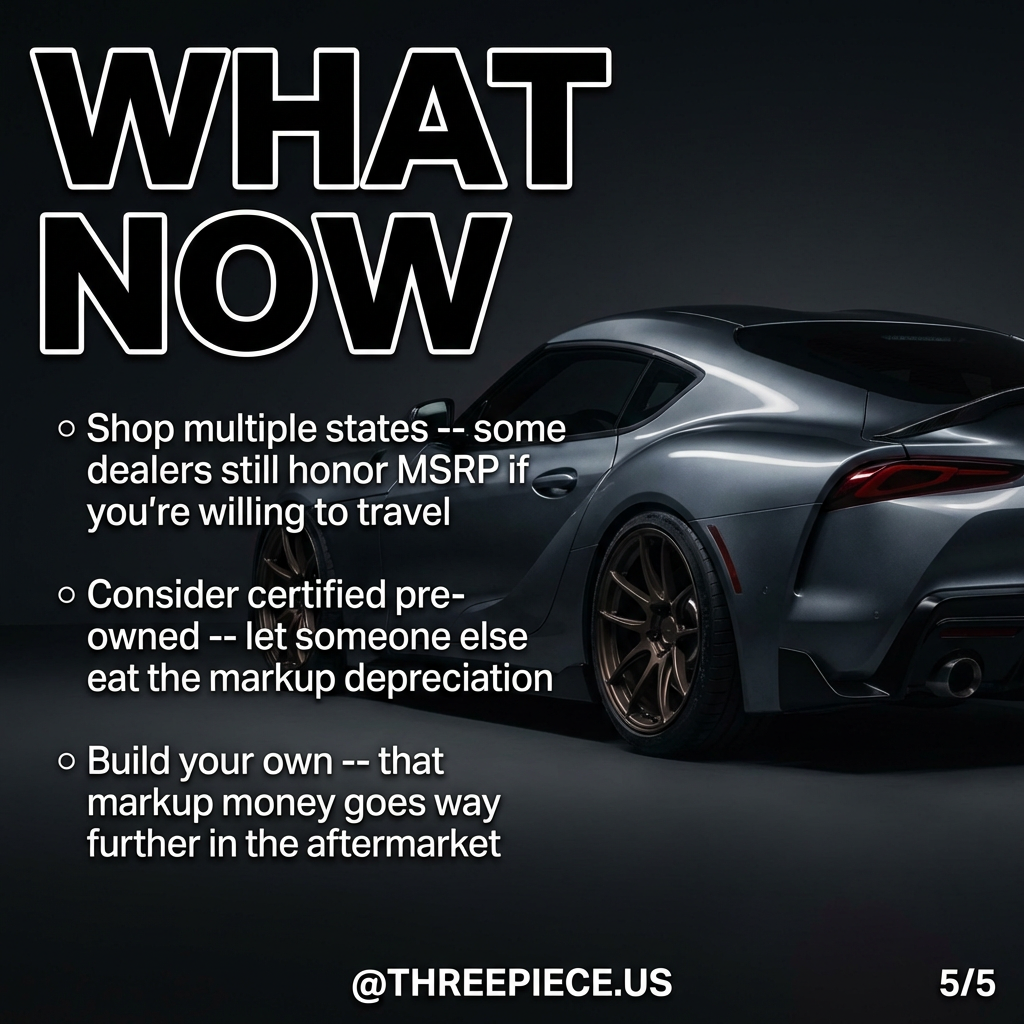
Shop multiple states — some dealers still honor MSRP if you're willing to travel. Consider certified pre-owned and let someone else eat the markup depreciation. Most importantly, build your own — that markup money goes exponentially further in the aftermarket.
A $30,000 markup budget builds a legitimately fast car from a solid platform. Start with a 9th gen Civic Si or Veloster N and invest in quality components. Browse Work Wheels for proper fitment and wheel accessories for finishing touches.
The irony is complete: factory performance becomes luxury-only while aftermarket stays accessible. When OEM markups price out real enthusiasts, the aftermarket wins by default. Save the markup money and build something unique instead of paying dealer ransom for factory mediocrity.