
Posted by THREEPIECE.US on Mar 27th 2026
K24 High Compression Turbo Builds: Why They Grenade & Fixes That Work
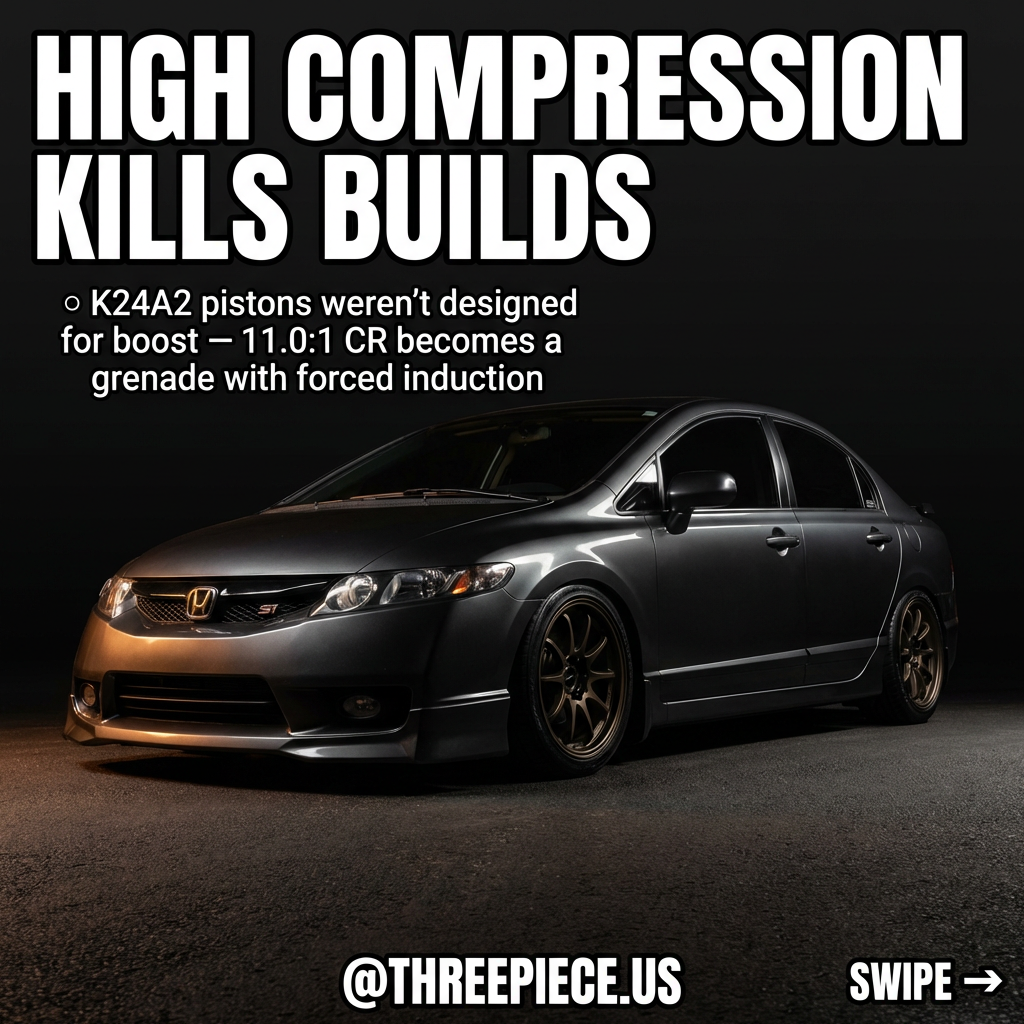
The K24A2 with its 11.0:1 compression ratio wasn't designed for forced induction, yet builders keep strapping turbos to them expecting miracles. The physics don't lie — high compression pistons become grenades under boost, and most tuners treat these motors like built blocks instead of understanding the fundamental limitations of factory internals.
Quick links
- Why High Compression Kills Under Boost
- Ring Seal Failure and Cylinder Pressure
- Timing Window Problems
- Common Tuning Mistakes That Destroy Motors
- Fixes That Actually Work
Why High Compression Kills Under Boost
The K24A2 pistons weren't engineered for the cylinder pressure spikes that come with forced induction. At 11.0:1 compression, you're already pushing the limits of pump gas on a naturally aspirated setup. Add 8-10 psi of boost and you've created a recipe for catastrophic failure.
The math is simple: effective compression ratio under boost climbs exponentially. Your 11:1 motor becomes closer to 15:1 under 10 psi, which exceeds what 91 octane can handle. This is why our K20 turbo vs NA VTEC guide emphasizes starting with lower compression builds.
Ring Seal Failure and Cylinder Pressure
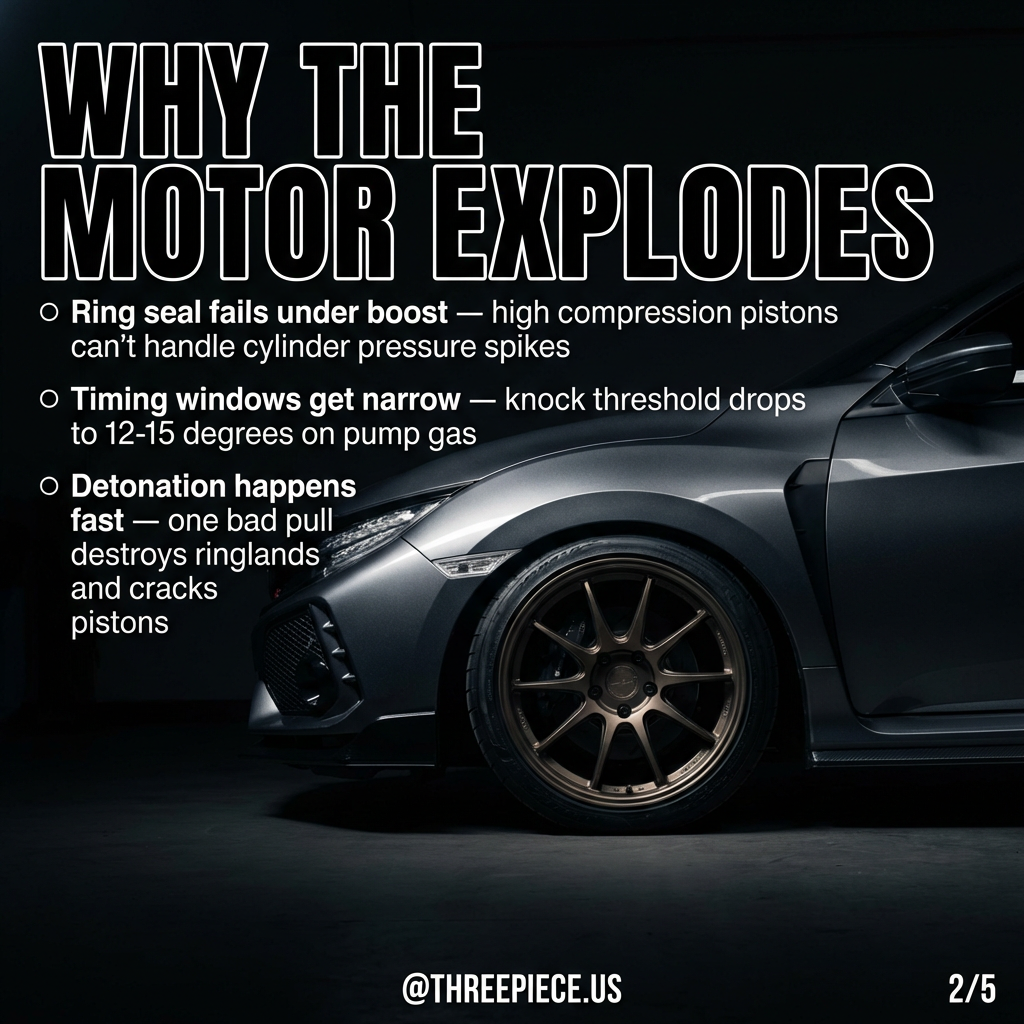
Ring seal becomes critical above 10.5:1 compression ratio because the factory rings can't maintain proper sealing under the extreme pressure differentials. When cylinder pressure spikes beyond design limits, the top ring loses contact with the cylinder wall, allowing combustion gases to blow past and heat-soak the piston crown.
This isn't just theory — builders on Honda-Tech document this failure pattern repeatedly. The ringlands crack first, then the entire piston crown separates. Unlike properly built motors that fail gradually, high-compression boosted K24s tend to grenade catastrophically in a single pull.
If you're planning a K24 build, consider starting with quality assembly hardware for your wheel setup first — at least that won't explode under pressure.
Timing Window Problems
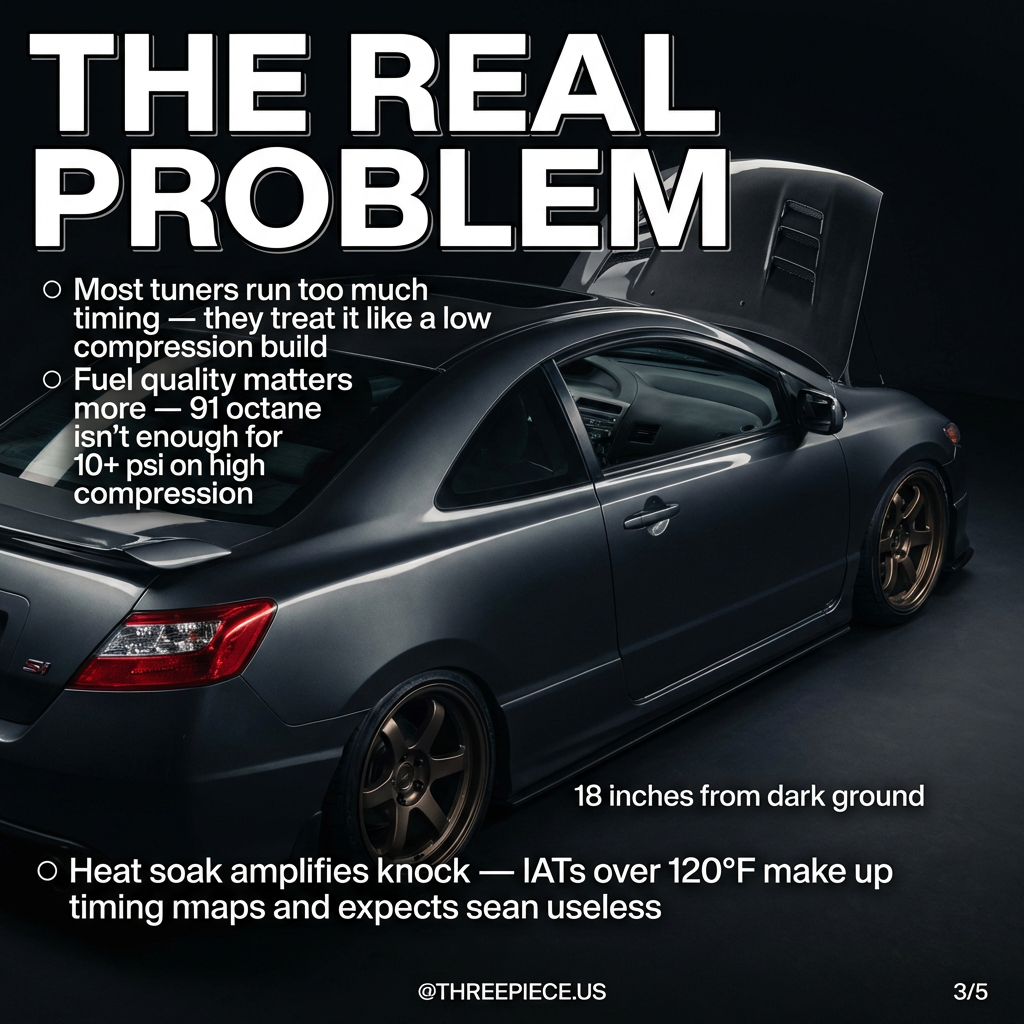
Ignition timing windows shrink dramatically on high-compression boosted builds. Where a built 9.5:1 motor might handle 18-20 degrees of advance under boost, your factory 11:1 K24 starts knocking at 12-15 degrees on pump gas.

The knock threshold drops so low that you're essentially tuning with one hand tied behind your back. Heat soak makes it worse — once intake air temps climb over 120°F, your timing maps become useless. This is why our variable timing guide emphasizes the importance of proper cam timing control.
Common Tuning Mistakes That Destroy Motors
Most tuners approach high-compression K24s like they're tuning a built motor with forged internals. They run aggressive timing maps, ignore knock sensor feedback, and don't account for boost creep on wastegate setups.
The biggest mistake is treating knock sensor pull as acceptable. By the time the ECU detects knock and pulls timing, micro-detonation has already started damaging the ringlands. Unlike forged pistons that can survive brief knock events, factory cast pistons accumulate damage with each occurrence.
Boost creep kills more high-compression builds than bad tunes. Uncontrolled pressure spikes — even brief ones — create cylinder pressures that crack pistons instantly. This is similar to the issues we covered in our FA20 connecting rod failure analysis.
Fixes That Actually Work
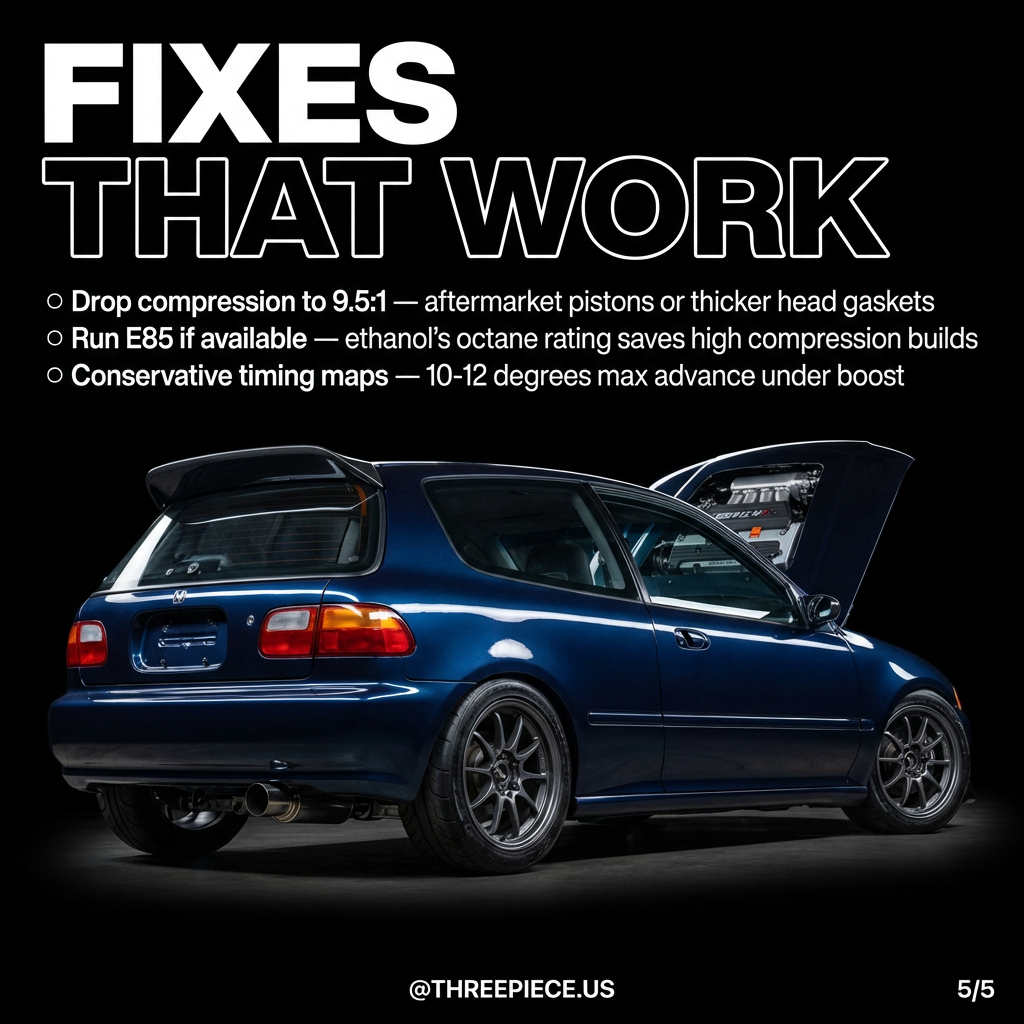
The only real fix is dropping compression to 9.5:1 or lower. This means aftermarket pistons or a thicker head gasket — there's no tuning around the physics of high compression under boost.
E85 ethanol fuel can save high-compression builds if it's available in your area. The 105+ octane rating allows you to run more aggressive timing maps and higher boost levels safely. But even with E85, you're still fighting the fundamental limitations of factory pistons and rings.
Conservative timing maps are non-negotiable. Keep advance under 10-12 degrees maximum under boost, regardless of what the knock sensors say. It's better to leave power on the table than rebuild your motor every few thousand miles.
For the wheel and tire setup on your K24 build, browse our Work Wheels selection — they'll outlast your motor if you ignore these compression warnings. The Work Emotion series pairs perfectly with Honda builds, and you can complete the look with Work VS reproduction center caps at $50 each.
High-compression K24 turbo builds aren't impossible, but they require understanding the physics involved. Most builders who succeed either drop compression first or accept very conservative power levels. The choice is yours — just don't expect factory internals to handle what they weren't designed for.