

Posted by THREEPIECE.US on Mar 23rd 2026
Insurance Companies Blacklisting Modified Cars: Coverage Crisis Explained
Insurance companies are systematically dropping modified car owners, and most enthusiasts don't realize it's happening until their coverage vanishes. What started as occasional policy non-renewals has escalated into industry-wide blacklisting of anything with aftermarket parts — even basic bolt-on modifications like wheels and intakes are triggering automatic coverage denials.

Quick links
- What Changed in Insurance Underwriting
- The Real Financial Hit
- Specialty Insurance Reality
- How to Protect Your Build
- Insurance Alternatives That Work
What Changed in Insurance Underwriting
Major insurers updated their underwriting guidelines to automatically exclude "performance modifications" from coverage. Claims adjusters now actively inspect for aftermarket parts during accident investigations, and even basic modifications trigger policy voids. Cold air intakes, aftermarket exhaust systems starting at $1,863, and bolt-on wheels are all flagged as "racing equipment" under updated policy language.
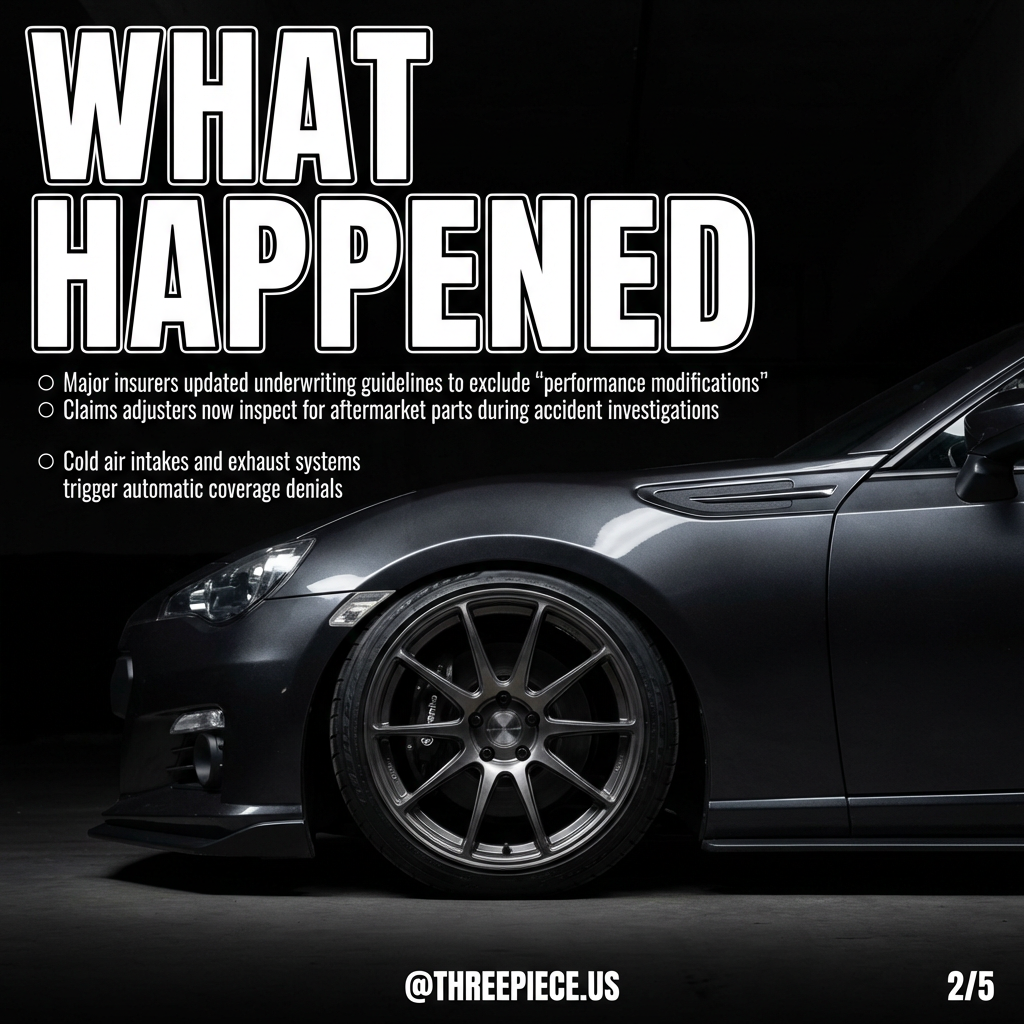
The shift happened quietly — no announcements, just policy renewals with new exclusion clauses buried in fine print. Even factory performance packages from dealers can trigger exclusions now. If you're running Work wheels or any aftermarket setup, traditional insurers see it as automatic risk elevation regardless of the actual safety impact.
The Real Financial Hit
Here's the nightmare scenario: your $40,000 build gets totaled and insurance pays nothing — you eat the entire loss. Liability coverage typically remains active, but collision and comprehensive coverage get voided the moment aftermarket parts are discovered. This means you're still covered if you hit someone else, but your own vehicle becomes worthless from an insurance perspective.
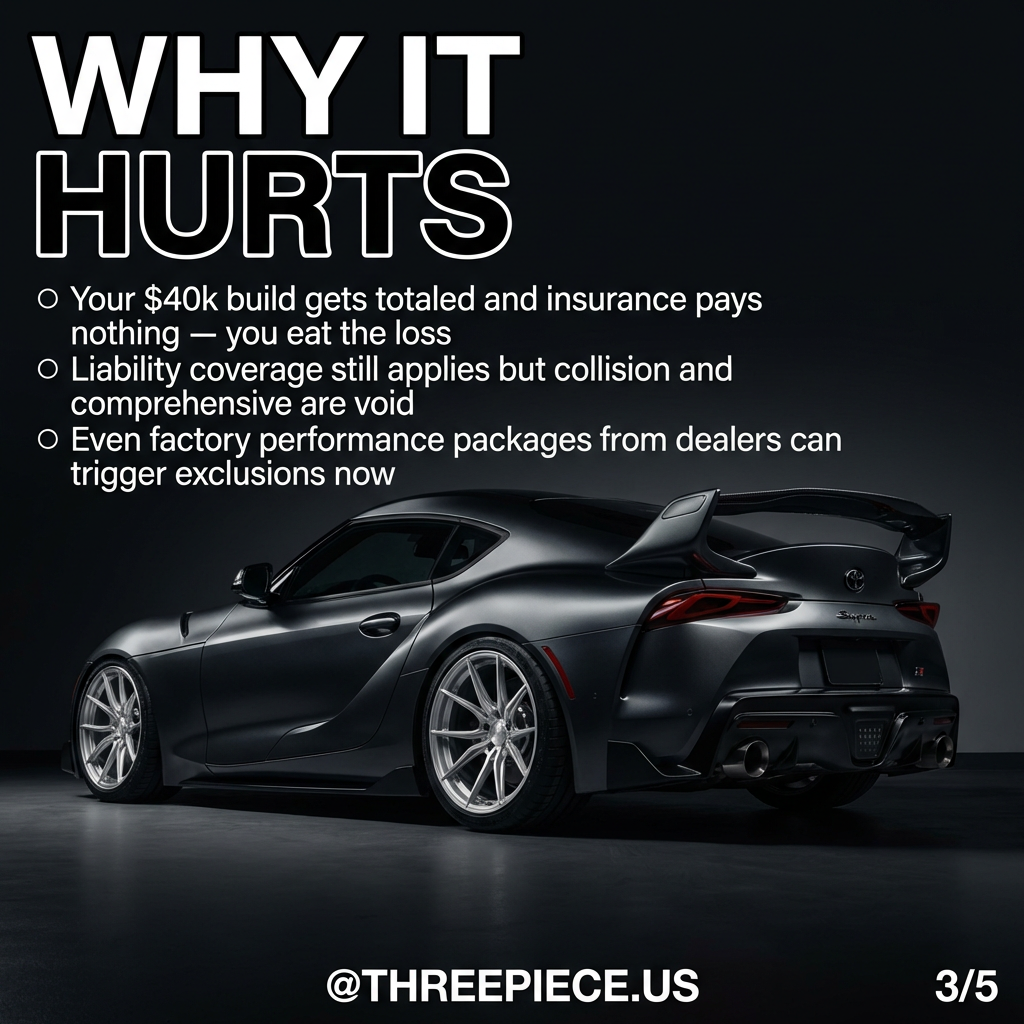
The exclusions are getting more aggressive. Cars with aftermarket exhaust systems like the aFe Takeda setup at $1,541 are being flagged automatically. Even suspension modifications — something as basic as coilovers — can void your entire policy. Check our coilover setup guide to understand what insurers consider "modifications."
Specialty Insurance Reality
Specialty modified car insurance costs 40-60% more than standard coverage, and that's if you can even get approved. Agreed value policies require professional appraisals that cost $500-800 upfront, and some states have zero specialty insurers available — leaving you stuck with Lloyd's of London rates that can exceed $400 monthly for basic coverage.
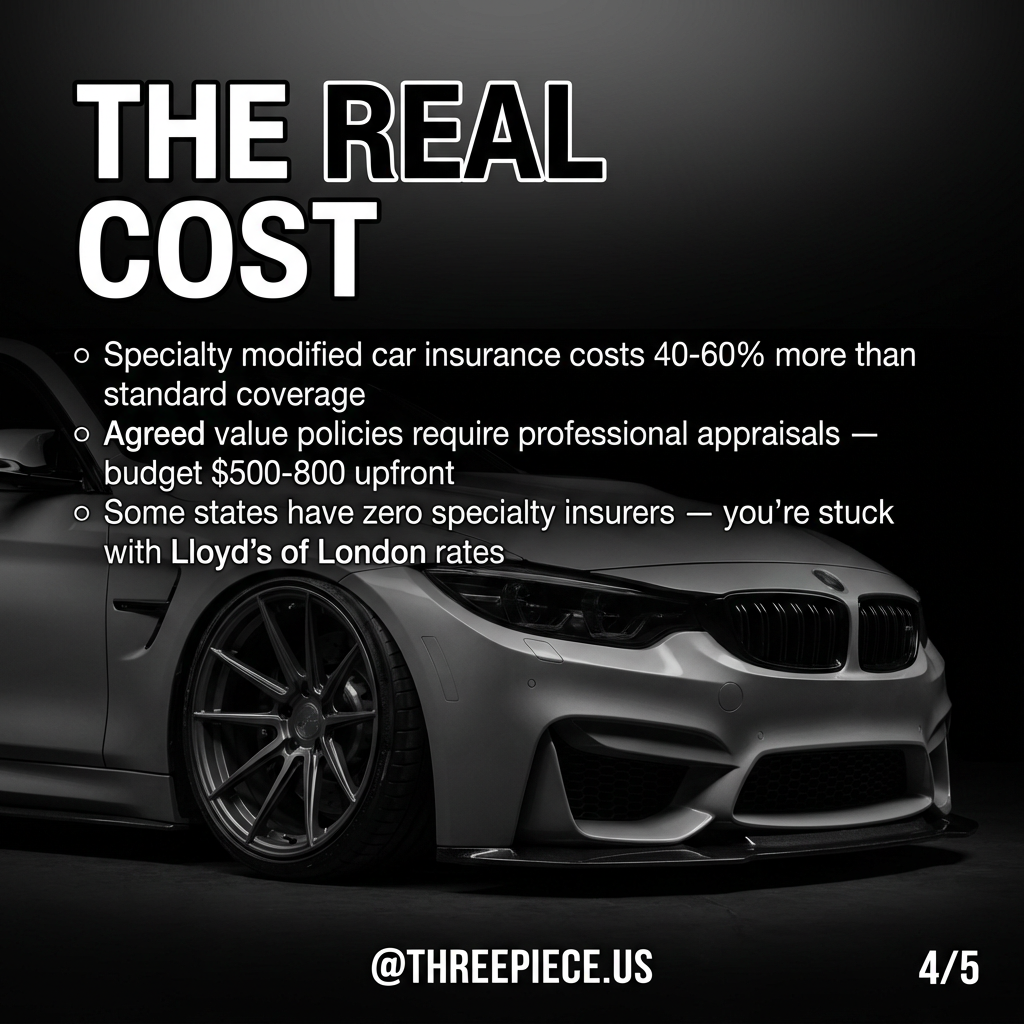
The appraisal process is thorough but expensive. Every modification needs documentation, from your wheel assembly bolts to major engine work. Cars with builds like our GR86 supercharged setup guide require extensive documentation proving the quality and safety of every component.
How to Protect Your Build
Documentation is everything. Photograph your car completely stock before any modifications, keep every receipt, and maintain detailed records of installation. Professional installation receipts carry more weight than DIY work in insurance disputes. Even basic modifications like 90-degree valve stems at $3.80 should be documented.
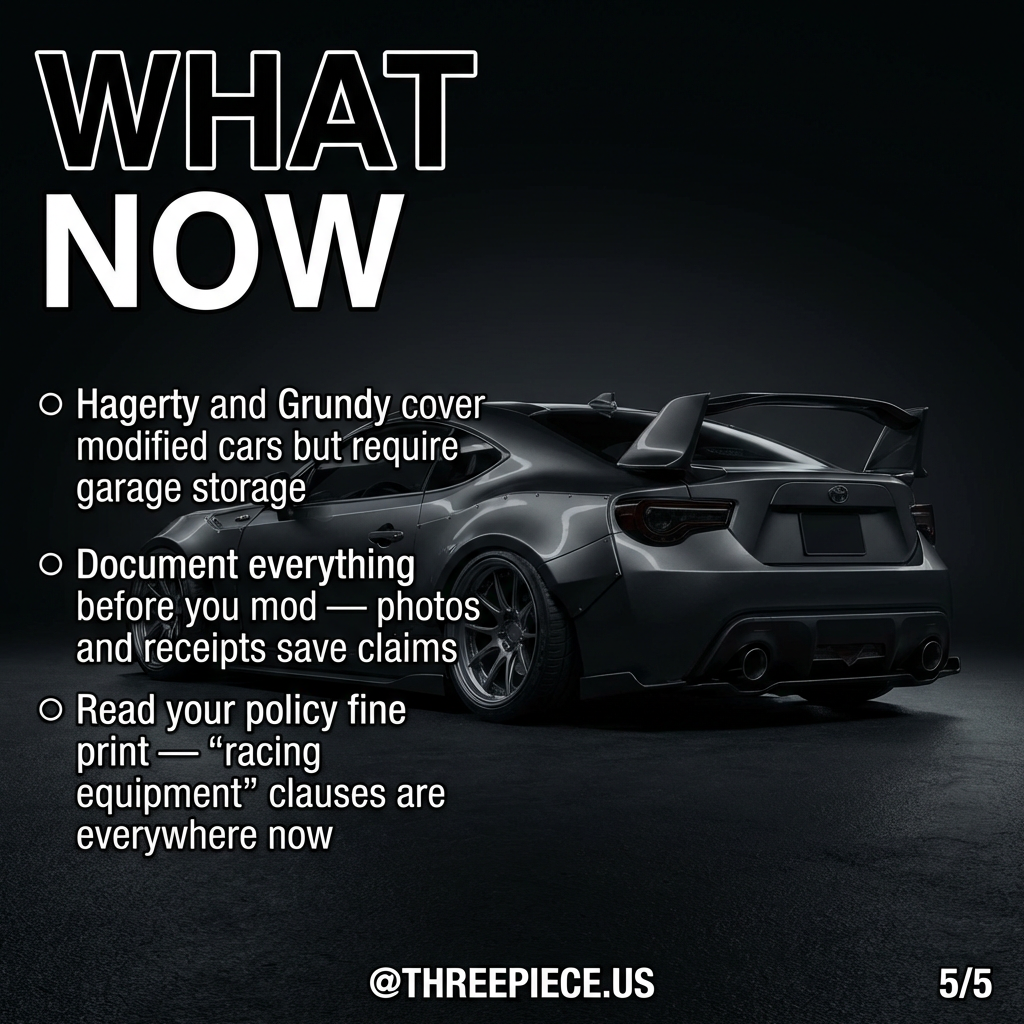
Read your policy's fine print obsessively. "Racing equipment" clauses are everywhere now, and the definition keeps expanding. Some policies exclude anything that "enhances performance," which technically includes lightweight wheels. If you're building something serious like the setups in our FK8 Type R vs FK7 Civic Si guide, specialty insurance isn't optional — it's mandatory.
Insurance Alternatives That Work
Hagerty and Grundy cover modified cars but require garage storage and limited mileage. These aren't daily driver policies — they're for weekend warriors and show cars. For daily-driven modified cars, you're looking at specialty insurers like American Modern or Leland West, with premiums that reflect the actual risk rather than blanket exclusions.
Some enthusiasts are going the self-insurance route — setting aside the premium difference in a dedicated account and accepting the risk. For a $20,000 build, the extra $2,400 annually in specialty premiums adds up quickly. Browse our vehicle gallery to see builds that required specialty coverage from day one.
The modified car insurance landscape changed permanently. Traditional insurers see aftermarket parts as liability, not enhancement. Whether you're running basic center caps or a full build with BMW 335i exhaust systems at $1,646, document everything and shop specialty coverage before you need it. Your build's value depends on having the right protection in place.