
Posted by THREEPIECE.US on Mar 26th 2026
Forged vs Powder-Metal Rods: When 2JZ & RB26 Builds Actually Need Them
Most 2JZ-GTE and RB26DETT builders upgrade their connecting rods way too early. Stock powder-metal rods in both engines handle more power than the internet wants you to believe, while forged rods get treated like a magic bullet when they're really just expensive insurance for specific scenarios. Here's when you actually need them versus when you're wasting $2000 that could build real power elsewhere.
Quick links
- Stock Rod Power Limits
- Manufacturing Differences That Matter
- Real World Failure Points
- When Forged Actually Matters
- Better Places for Your Money
Stock Rod Power Limits
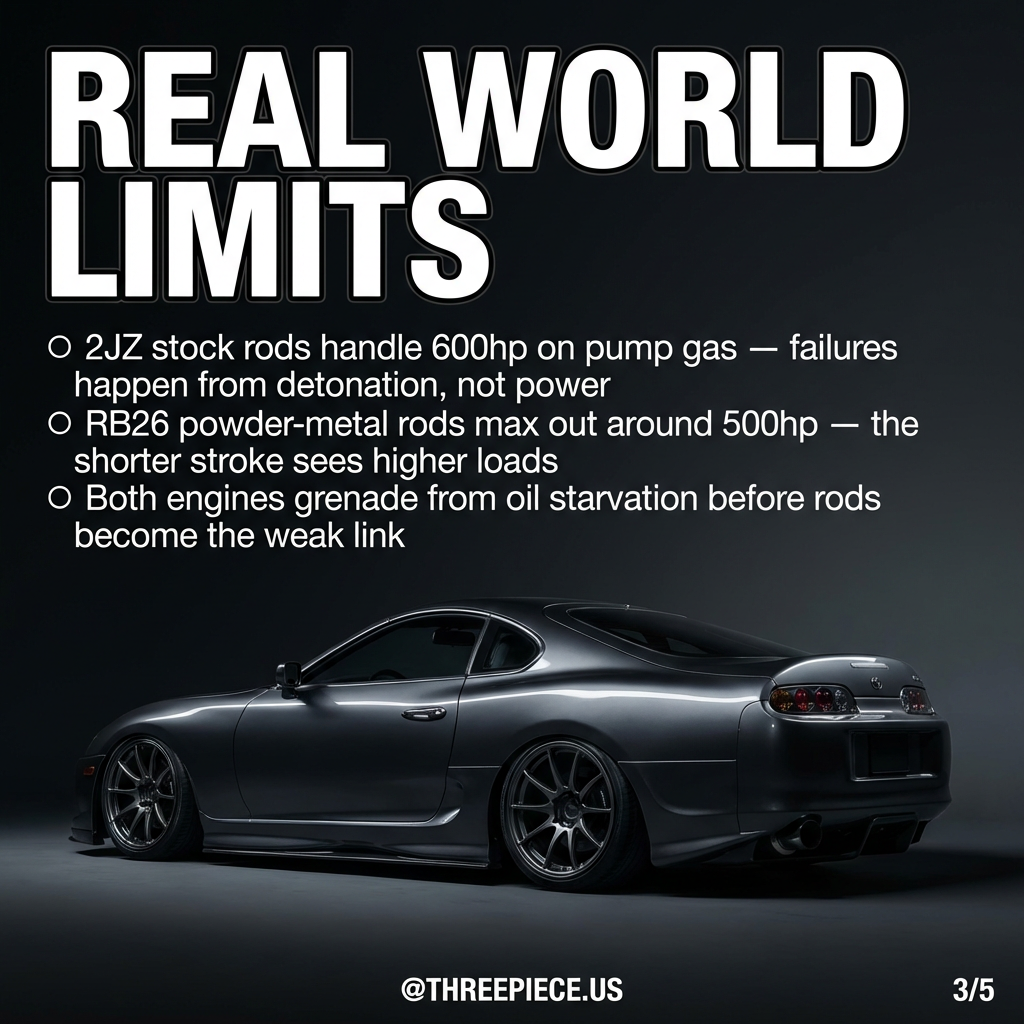
Stock 2JZ-GTE powder-metal rods routinely handle 600 horsepower on pump gas without breaking a sweat. The failures you see on forums aren't from power — they're from detonation, oil starvation, or terrible tuning. Meanwhile, RB26DETT rods max out around 500 horsepower due to the shorter stroke creating higher loads on the connecting rod.
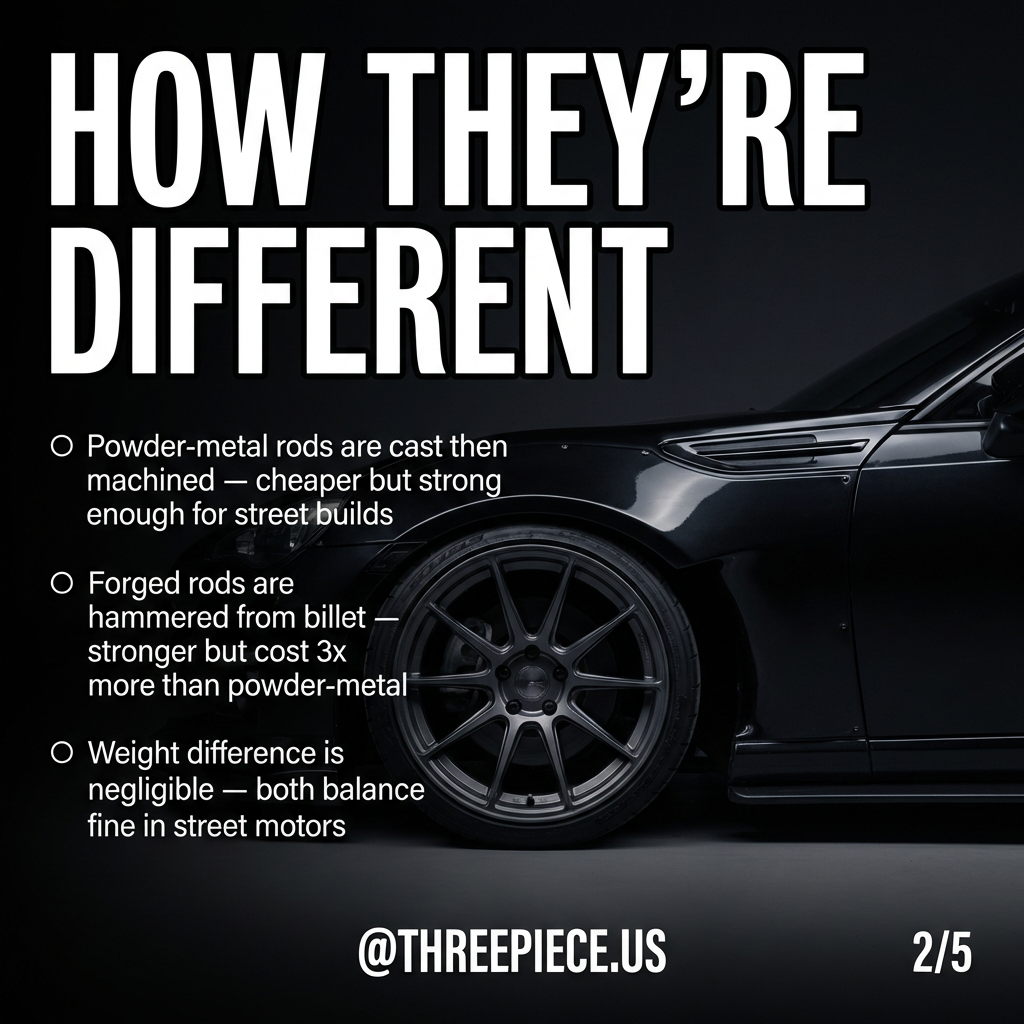
The weight difference between powder-metal and forged rods is negligible for street builds. Both balance fine in stock motors, and the rotating assembly differences won't affect your daily driving experience. If you're building a 400HP 2JZ-GE turbo setup, stock rods are more than adequate for the power level.
Manufacturing Differences That Matter
Powder-metal rods are cast from metal powder then machined to final dimensions — cheaper to produce but surprisingly strong for street applications. Forged rods are hammered from billet steel, creating a denser grain structure that resists fatigue better under extreme loads. The cost difference is significant: forged rods cost 3x more than powder-metal alternatives.
For context on engine internals, check out our guide on FA20 connecting rod failures to see how different engines handle power differently. The manufacturing process matters, but so does the application.
Real World Failure Points
Both engines typically grenade from oil starvation before rods become the weak link. The 2JZ-GTE oil pump struggles above 7500 RPM, while the RB26 has well-documented oil pump issues that kill rod bearings long before the rods themselves fail. Detonation from poor tuning destroys more rods than raw power ever will.
If you're planning a high-RPM build, consider reading about variable timing systems and how they affect engine longevity. The RB26's shorter stroke means higher piston speeds at the same RPM compared to the 2JZ, which explains the lower power threshold.
When Forged Actually Matters
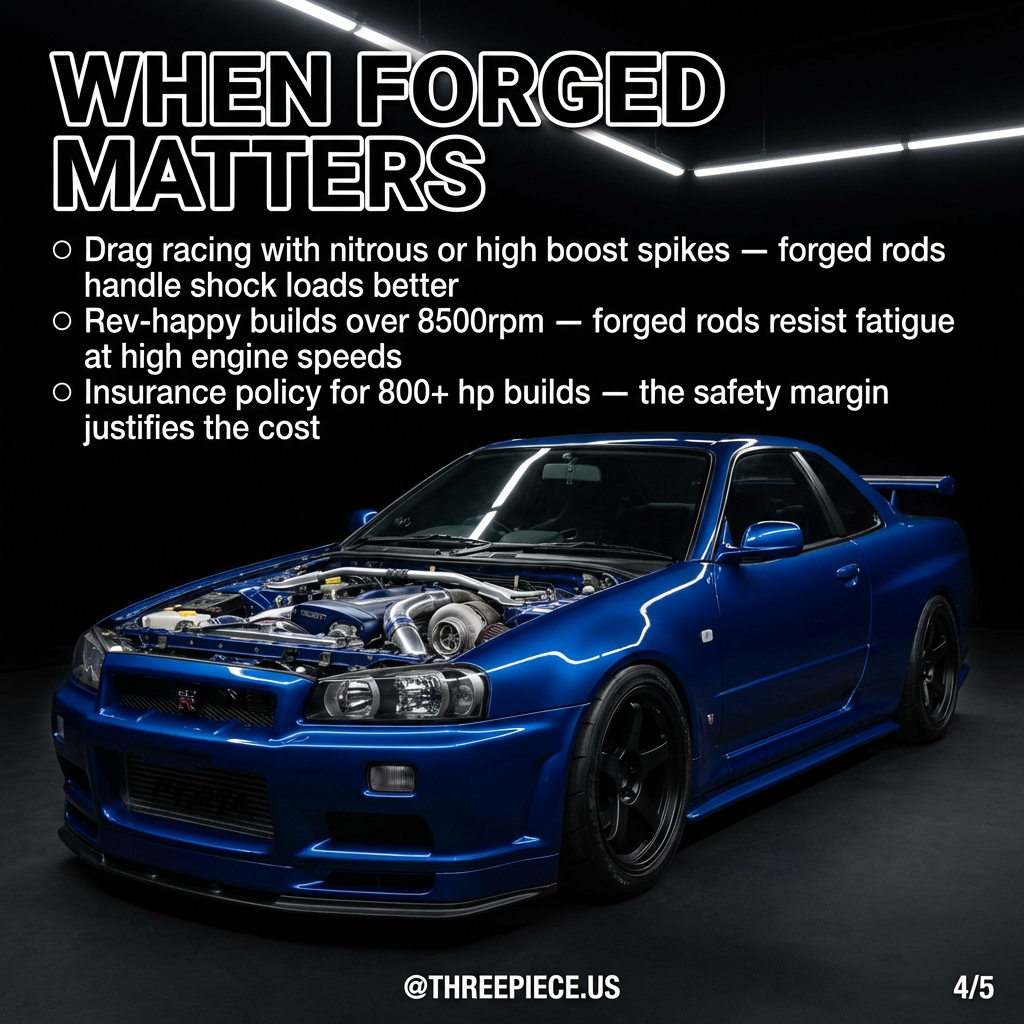
Forged rods shine in three specific scenarios: drag racing with nitrous or high boost spikes, rev-happy builds over 8500 RPM, and insurance policies for 800+ horsepower builds where the safety margin justifies the cost. The shock loads from nitrous or anti-lag systems can snap powder-metal rods instantly, while forged rods handle the abuse.
High-RPM builds benefit from forged rods' fatigue resistance. If you're building a high-RPM canyon killer that sees consistent redline use, forged rods prevent fatigue failures that powder-metal rods might experience over time.
Better Places for Your Money
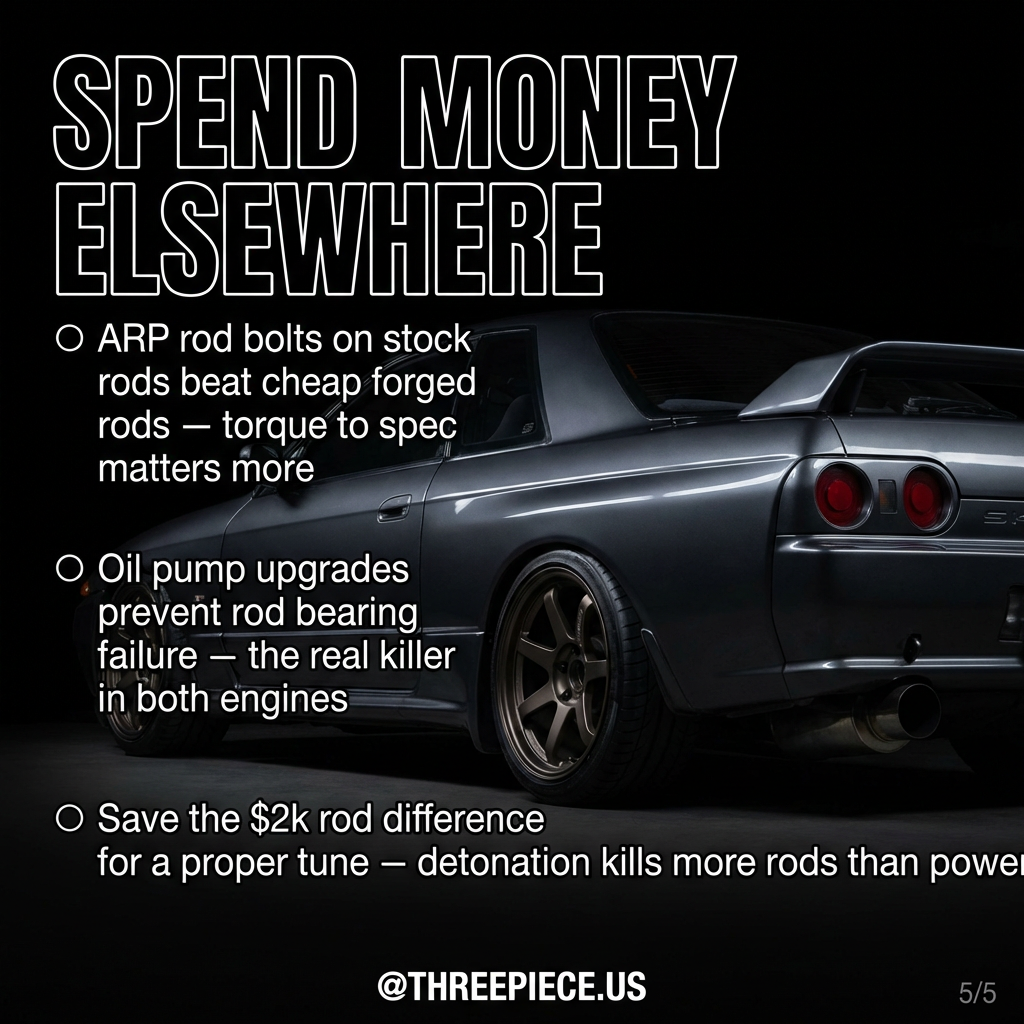
ARP rod bolts on stock rods beat cheap forged rods every time — proper torque specifications matter more than exotic materials. Oil pump upgrades prevent rod bearing failure, which is the real killer in both engines. Save that $2000 rod difference for a proper tune, because detonation kills more rods than power levels ever will.
Focus on supporting modifications first: proper intake systems, fuel system upgrades, and most importantly, professional tuning. A well-tuned 500HP 2JZ on stock rods will outlast a poorly tuned 400HP build with forged internals.
For wheel and tire upgrades that actually improve performance, browse our Work Wheels collection or check out assembly bolts starting at $10 for proper 3-piece wheel maintenance. Your build will thank you when you focus on the modifications that make power first, then worry about forged internals when you actually need them.