
Posted by THREEPIECE.US on Apr 6th 2026
FK8 Civic Type R Buying Guide: K20C1 Maintenance & Used Car Red Flags
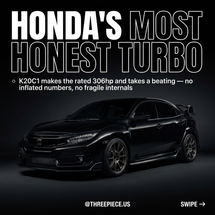
The FK8 Civic Type R represents Honda's last honest attempt at a naturally-aspirated feel in a turbo package. The K20C1 makes its rated 306 horsepower without the inflated dyno numbers plaguing modern hot hatches, but buying used means navigating specific maintenance landmines that'll cost you thousands if ignored. Here's what separates the good FK8s from the grenaded ones.
Quick links
- K20C1 Engine Reality
- What Actually Breaks
- Pre-Purchase Inspection
- Aftermarket & Tuning
- Worth the Premium?
K20C1 Engine Reality: Honda's Most Honest Turbo
The K20C1 is fundamentally different from Honda's previous turbo attempts. It revs to 7000rpm and maintains that aggressive Honda character despite the turbocharger. Unlike the L15B7 in the regular Civic Si, this engine was built from the ground up for boost.
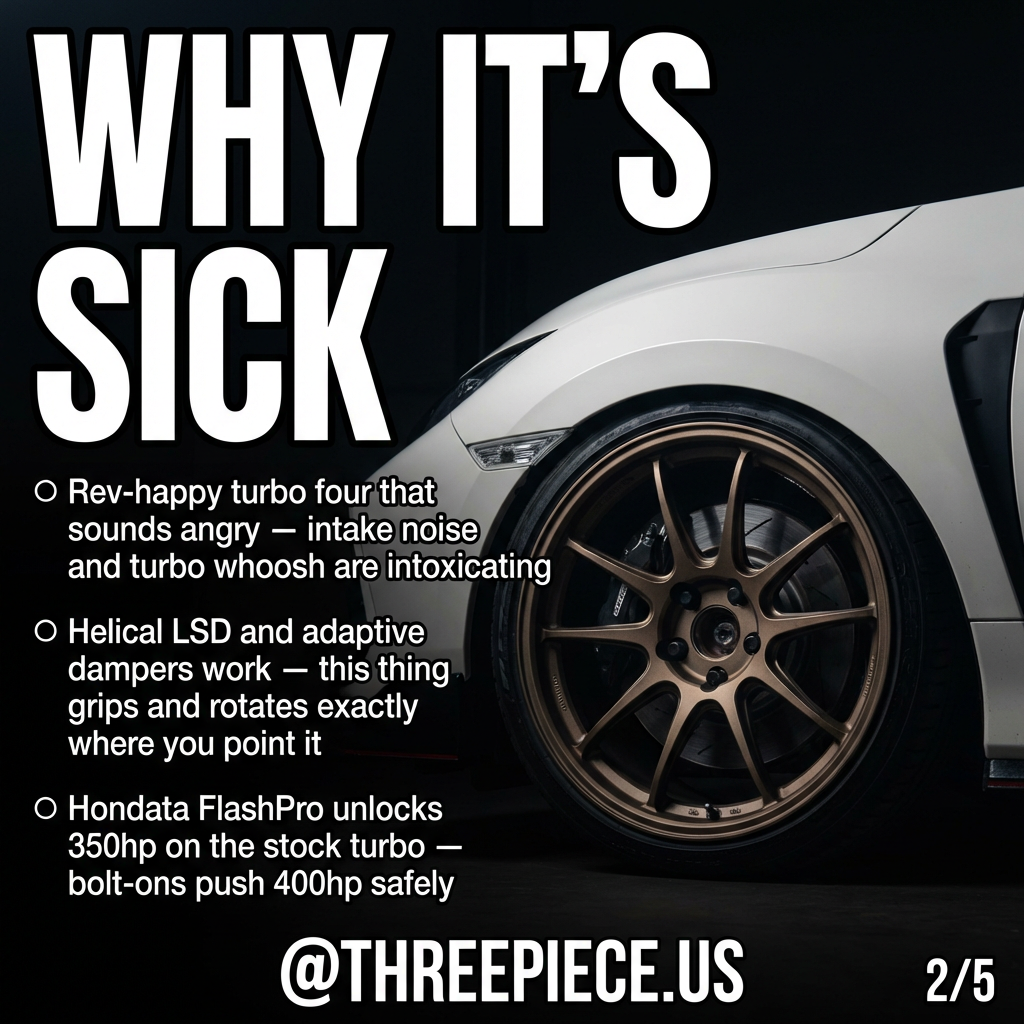
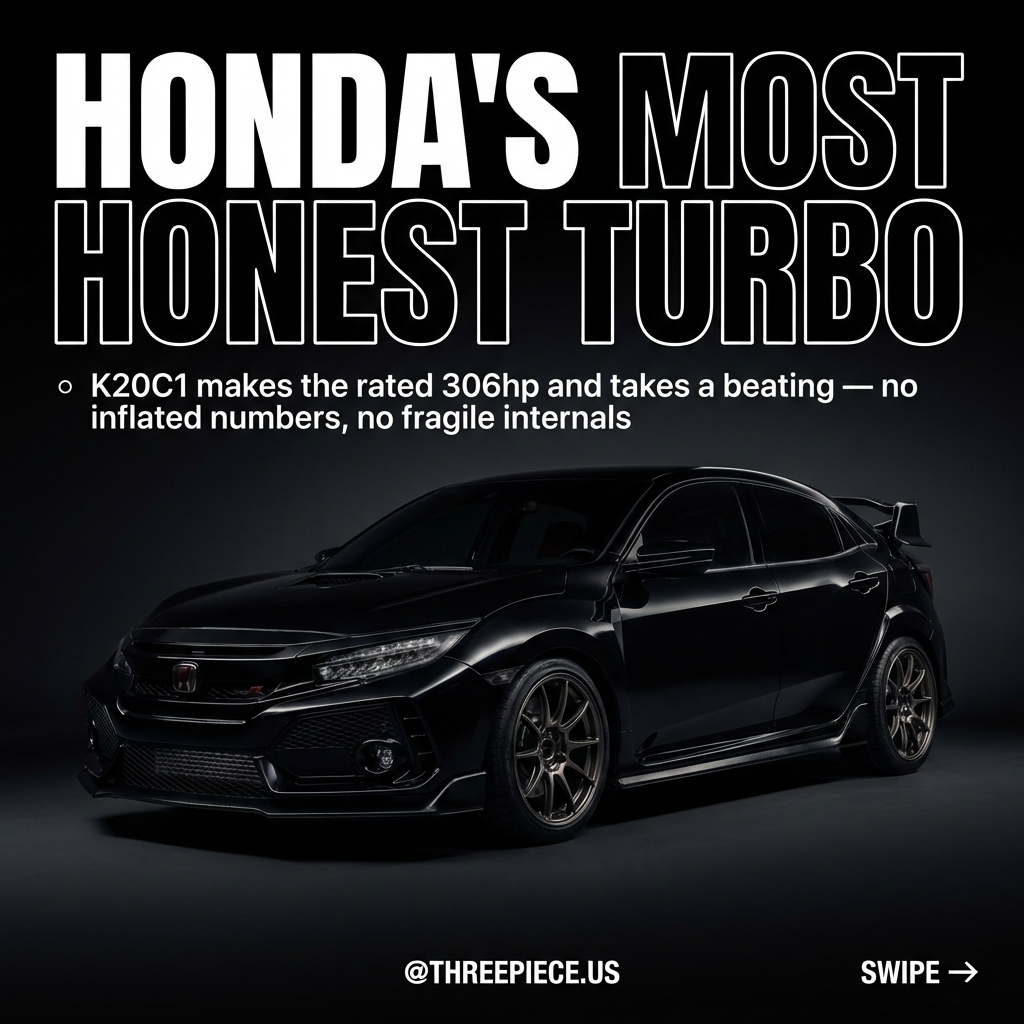
The intake noise and turbo whoosh are intoxicating — this isn't a muffled turbo four. The helical LSD and adaptive dampers work exactly as Honda intended, giving you precise rotation control that most FWD cars can't match. For perspective on how this compares to other hot hatches, check our GTI Mk7 vs Civic Type R track battle breakdown.
Stock power delivery is linear and predictable. With a Hondata FlashPro tune, you're looking at 350+ horsepower on the stock turbo. Add bolt-ons like the AEM Cold Air Intake for $366 and you're pushing 400hp safely — numbers that required built internals in previous Honda generations.
What Actually Breaks: The Expensive Reality
Every FK8 will experience specific failures. Budget for these or walk away from cars showing early symptoms.
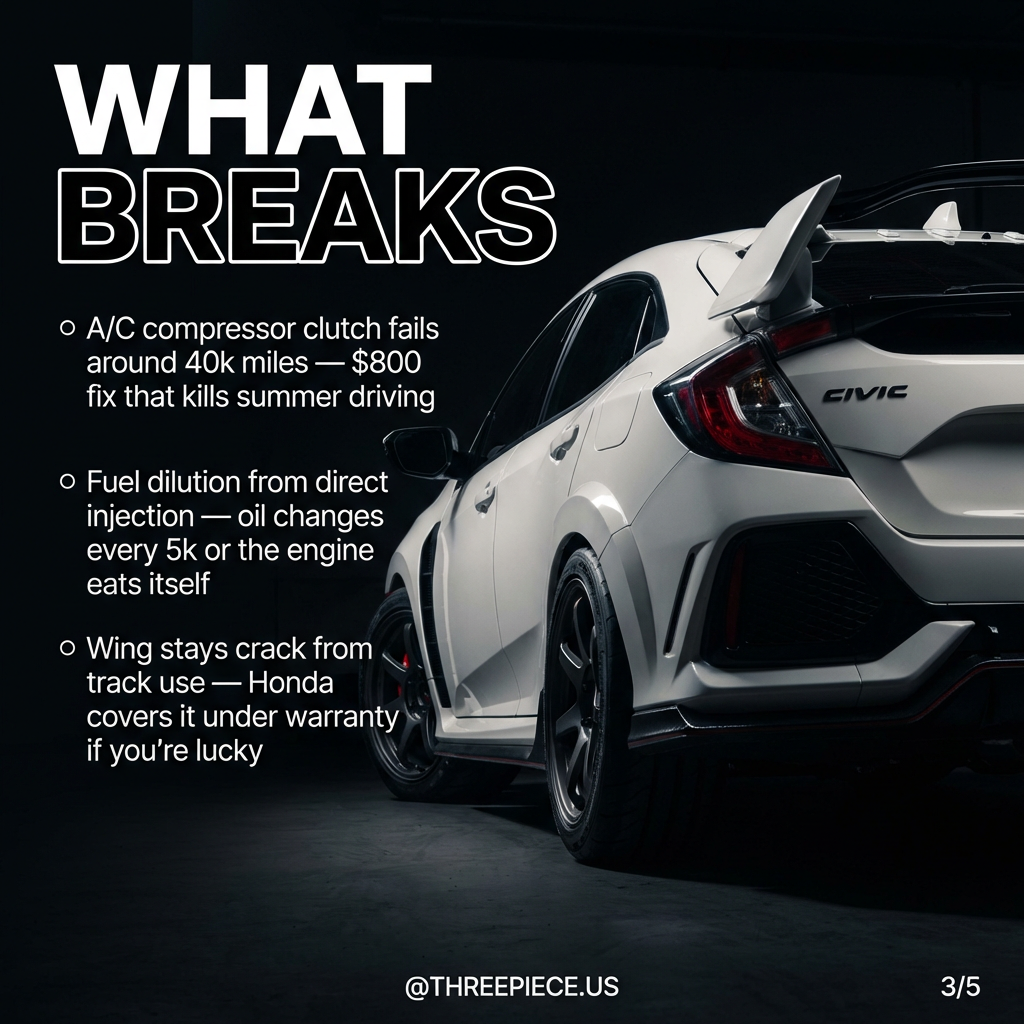
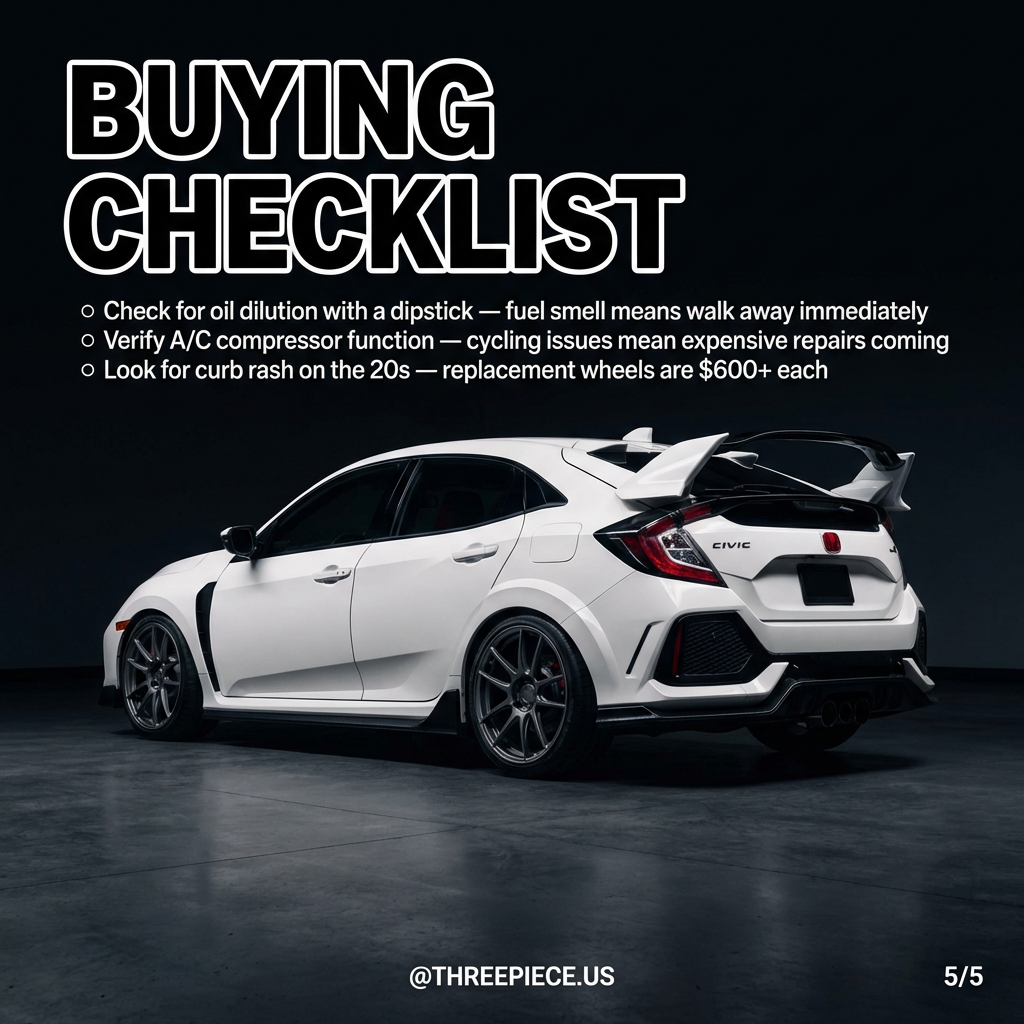
A/C Compressor Clutch: Fails around 40,000 miles like clockwork. The clutch disengages randomly, leaving you with no A/C during summer driving. Repair cost is $800+ at Honda dealers, and aftermarket options are limited. Check that the A/C cycles properly during your test drive — any hesitation means you're looking at this repair soon.
Fuel Dilution: Direct injection causes fuel to wash past the rings into the oil. Check the dipstick for fuel smell — if it's present, the engine is eating itself. Oil changes every 5,000 miles are mandatory, not suggested. This isn't covered under warranty because Honda considers it "normal operation."
Wing Stay Cracking: Track-driven cars develop cracks in the rear wing mounting points. Honda covers this under warranty if you're lucky and can prove it's a manufacturing defect, not abuse. Aftermarket wings require different mounting solutions entirely.
For suspension upgrades that handle track duty better than stock, consider the F2 Function & Form coilover systems designed for Honda platforms.
Pre-Purchase Inspection: Red Flags That Cost Thousands
Used FK8 prices hover around $45,000+ for clean examples, making inspection critical. Here's what separates the good ones from the money pits.

Oil Analysis: Pull the dipstick and smell for fuel contamination. Clean oil should smell like oil, not gasoline. Fuel dilution indicates poor maintenance or excessive short trips. Walk away if present — the damage is already done.
A/C Function Test: Run the A/C for 10+ minutes. The compressor should cycle smoothly without clicking or hesitation. Any irregular cycling means the clutch is failing. Factor $800 into your offer if symptoms are present.
Wheel Condition: The factory 20-inch wheels are $600+ each to replace. Look for curb rash, especially on the inner barrel where it's hardest to repair. Aftermarket options like 20-inch wheels in 5x120 provide better value for replacements.
Modification History: Hondata FlashPro tunes are common and generally safe when done properly. Avoid cars with turbo upgrades, built internals, or methanol injection — these indicate the car was pushed beyond safe limits. For more on Honda tuning approaches, read our turbo K20 vs NA VTEC reality check.
Aftermarket & Tuning: What Actually Works
The FK8's modification potential is significant but requires understanding the platform's limits.
Stage 1 Tuning: Hondata FlashPro with an intake and exhaust nets 350+ horsepower. The stock turbo has headroom, and the K20C1 internals handle this power reliably. This is the sweet spot for street driving.
Turbo Upgrades: Garrett or Precision turbos push 450+ horsepower, but require supporting modifications like upgraded internals, fuel system, and clutch. The ACT XT/Race clutch systems at $1,690 handle this power level in similar applications.
Wheel & Tire Setup: The factory 245/30R20 setup prioritizes looks over performance. Many owners downsize to 18x9.5 wheels with 265/35R18 tires for better ride quality and tire selection. Check our 2023-2024 Civic Type R fitment guide for sizing details on the newer FL5 platform.
For exhaust upgrades, the aFe POWER Takeda exhaust system at $1,541 provides the aggressive sound FK8 owners want without the drone issues of cheaper systems.
Worth the Premium? The $45K Question
FK8 Type R prices have stabilized around $45,000-$55,000 for clean examples. That's serious money for a Civic, but the driving experience justifies the premium if you'll actually use it.
This isn't a car for casual enthusiasts. The ride is harsh, the interior is loud, and the styling screams "I autocross on weekends." But if you want the best FWD experience available and plan to track it regularly, nothing else delivers this combination of capability and reliability.
For comparison context, our WRX STI vs GR Corolla comparison shows how the FK8 stacks against AWD alternatives in the same price range.
The FK8 represents the end of an era — Honda's last naturally-aspirated-feeling turbo car before emissions regulations forced more compromised solutions. If you're shopping used examples, budget for the maintenance realities but don't let them scare you away from what might be Honda's final masterpiece. Browse our vehicle gallery to see how other enthusiasts are building their FK8s.