
Posted by THREEPIECE.US on Mar 28th 2026
400HP Civics Are Slow: Why Dyno Numbers Don't Win Street Races
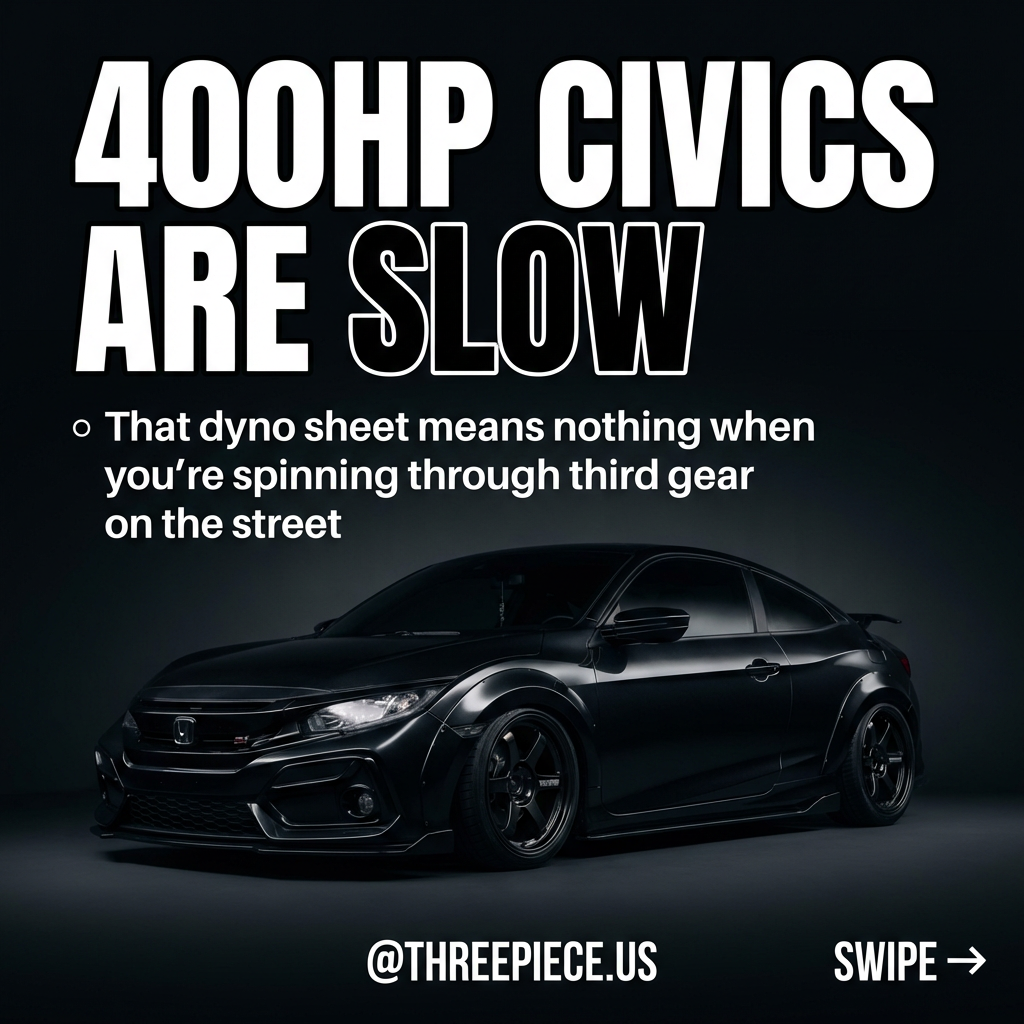
That 400HP Civic just got gapped by a stock BMW 340i at the light, and you're wondering how. The answer is simple: dyno numbers lie when it comes to real-world performance. Peak horsepower at 7,500 RPM means nothing if you can't put it down through the front wheels without spinning through third gear.
Quick links
- The K-Series Hype Machine
- FWD Traction Reality Check
- What Dyno Queens Miss
- The Honest Performance Take
The K-Series Hype Machine
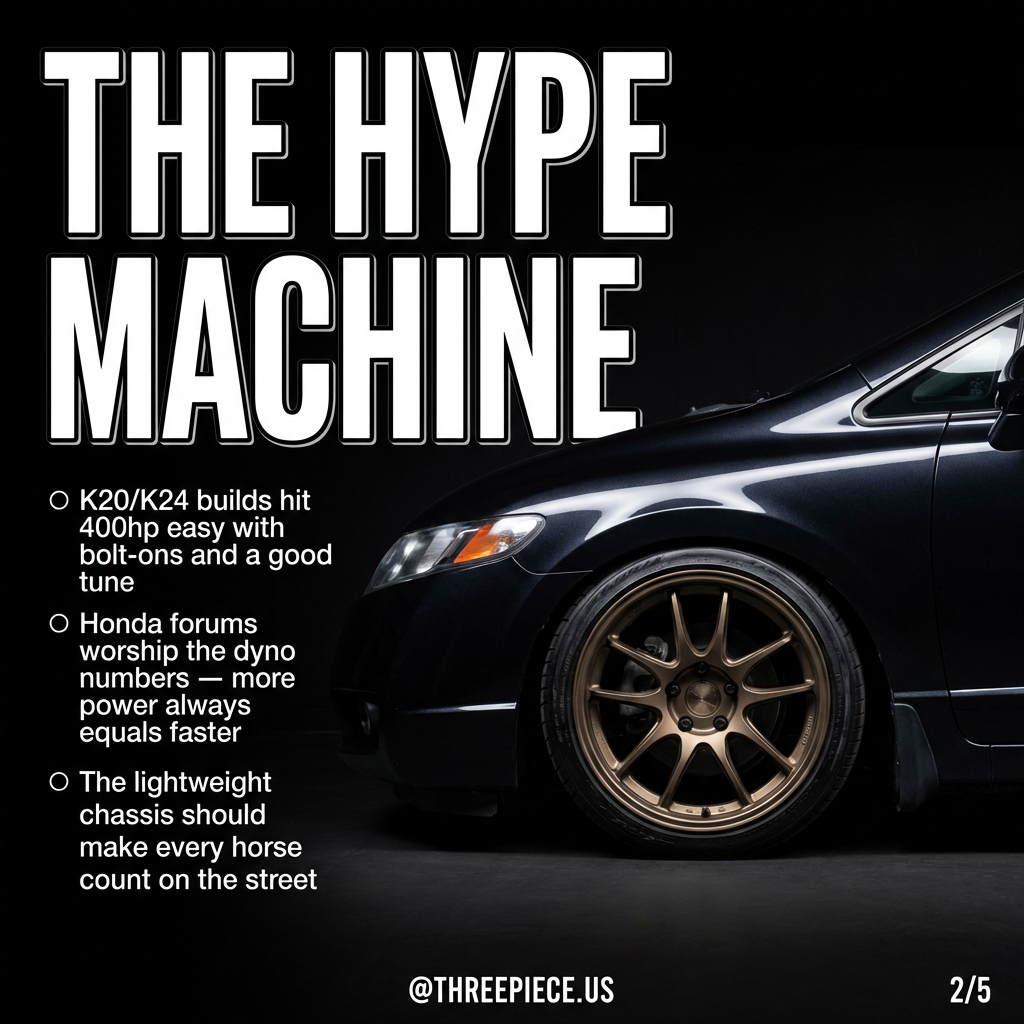
K20/K24 builds hit 400hp easy with bolt-ons and a good tune. Honda forums worship the dyno numbers — more power always equals faster, right? The lightweight chassis should make every horse count on the street. This logic drives the entire FBO (full-bolt-on) culture around these builds.
The problem starts with how these builds chase peak numbers instead of usable power. A K24 turbo setup making 400hp sounds impressive until you realize it only hits that number at redline for a few seconds before heat soak kicks in. Check our K24 turbo build guide for why these setups often grenade under real-world abuse.
Meanwhile, that same money could build a 300hp setup with a better torque curve and proper supporting mods. The suspension upgrades and quality tires get ignored because they don't show up on Instagram dyno posts. For Honda builds specifically, our K20 turbo vs NA VTEC comparison breaks down why boost isn't always better.
FWD Traction Reality Check
FWD means you're traction-limited to about 250hp in most conditions. That dyno sheet means nothing when you're spinning through third gear on the street. Dyno pulls don't have potholes, traffic lights, or real-world grip issues that kill your launches.

That 400hp Civic gets walked by a stock 340i because BMW actually hooks. AWD with 300hp beats FWD with 400hp every single time when it matters — from a dig or rolling in traffic. The physics don't lie, even if your dyno sheet does.
This is why proper wheel and tire setup matters more than peak power. Quality rubber like the tires beat cold air intakes guide explains can transform how your FWD build actually performs. The excessive camber guide for FWD builds shows why alignment matters more than peak horsepower for these setups.
Even the legendary FK8 Type R struggles with torque steer at stock power levels. Adding another 100hp to a front-wheel-drive chassis without addressing the fundamental traction limitations just makes an expensive tire-shredding machine.
What Dyno Queens Miss
Peak power happens at 7,500 RPM — you're never there in traffic. The torque curve matters more than peak numbers for street driving, but dyno sheets only show the sexy peak horsepower number that gets Instagram likes.

Real-world performance happens in the 3,000-6,000 RPM range where you actually drive. A car making 280hp at 5,500 RPM with a fat torque curve will destroy a 400hp peaky setup in every scenario that matters — highway pulls, canyon runs, and traffic light launches.
This is exactly why builds like the Veloster N canyon killer focus on 275hp with proper supporting mods instead of chasing peak numbers. The ND Miata build guide proves the same point — 200hp in a properly set up chassis beats 400hp that can't hook.
Heat soak kills these high-boost setups after one pull anyway. That 400hp becomes 320hp after sitting in traffic for ten minutes, while naturally aspirated builds maintain consistent power. Supporting mods like proper cooling, fuel system, and drivetrain upgrades get skipped because they don't add dyno numbers.
The Honest Performance Take
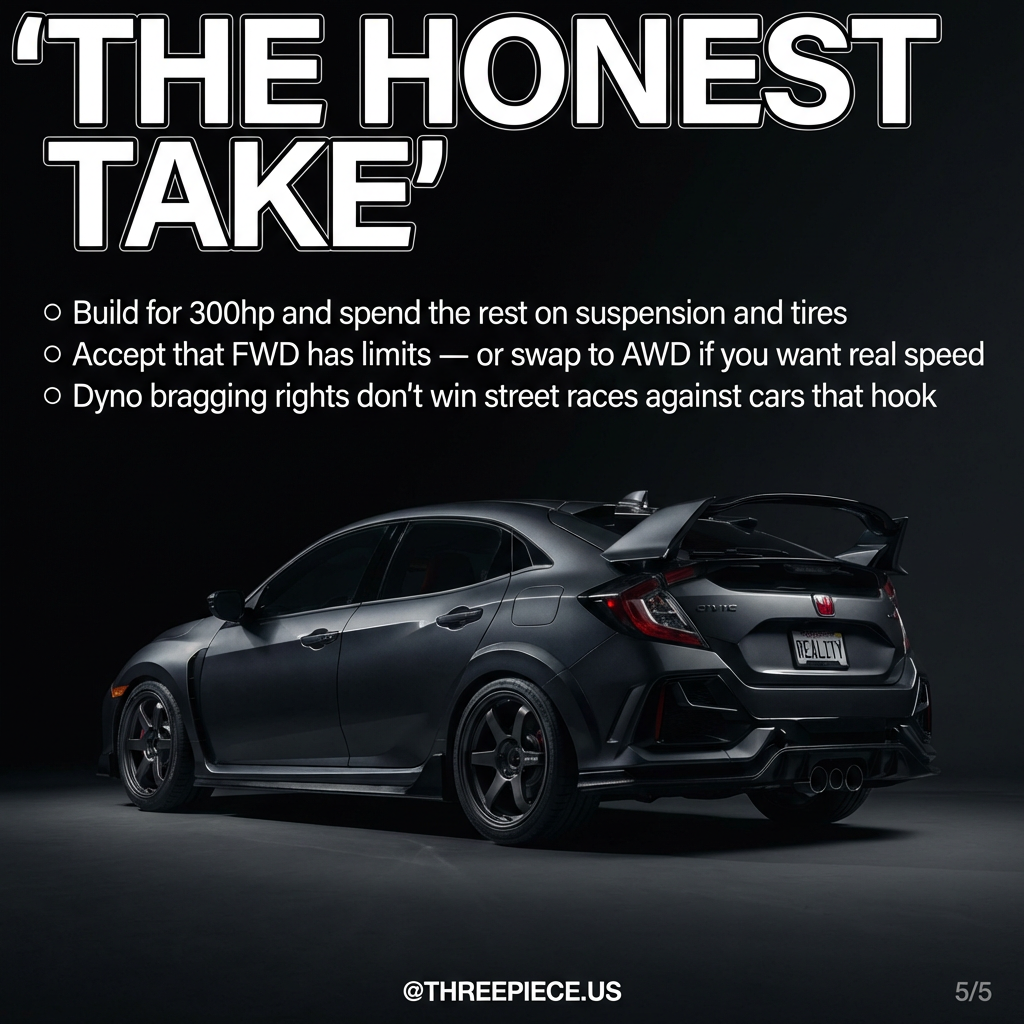
Build for 300hp and spend the rest on suspension and tires. Accept that FWD has limits — or swap to AWD if you want real speed. Dyno bragging rights don't win street races against cars that actually hook up and deliver consistent power.
The smart money goes toward builds like the FK7 Civic Si canyon build that prioritizes handling over peak power. Quality suspension components like the Energy Suspension motor mount at $88 make more difference than another 50hp you can't use.
For wheel setup, focus on lightweight options that don't hurt acceleration. The Work Emotion series offers the perfect balance of strength and weight for these builds. Pair them with 90-degree valve stems at $3.80 for easier access during frequent tire pressure checks — because you'll be checking them often with a high-power FWD setup.
The proper alignment settings matter more than peak horsepower for these builds. Get the suspension geometry right first, then add power gradually. Visit our vehicle gallery to see builds that prioritize function over dyno sheets.
Stop chasing Instagram likes with peak power numbers that don't translate to real performance. Build a 300hp setup that actually works instead of a 400hp setup that only impresses people who don't understand physics.