

Posted by THREEPIECE.US on Feb 28th 2026
2.3L EcoBoost vs Chevy 2.7T: Which Small Turbo Four Wins for Big Single-Turbo Builds?
The Ford 2.3L EcoBoost and Chevy 2.7T TurboMax debate comes down to one question: which platform survives when you delete the factory turbo and bolt on a big single? Both engines displace nearly identical volume at 2.3L and 2.7L respectively, but their internal architecture tells completely different stories about power ceiling and reliability under boost.

Quick links
- Ford 2.3L EcoBoost Internal Strength
- Chevy 2.7T TurboMax Design Philosophy
- Aftermarket Support and Tuning
- Real-World Power Ceiling Comparison
- Weight Savings and Chassis Impact
- The Final Verdict for Your Build
Ford 2.3L EcoBoost Internal Strength
The Ford 2.3L EcoBoost was engineered with motorsport in mind from day one. The iron block construction provides thermal stability that aluminum simply cannot match under sustained boost. Stock internals handle 500 horsepower on a daily basis — proven by thousands of Mustang EcoBoost owners running Garrett GT2860RS and Precision 5558 single turbo setups making 400-450 wheel horsepower.
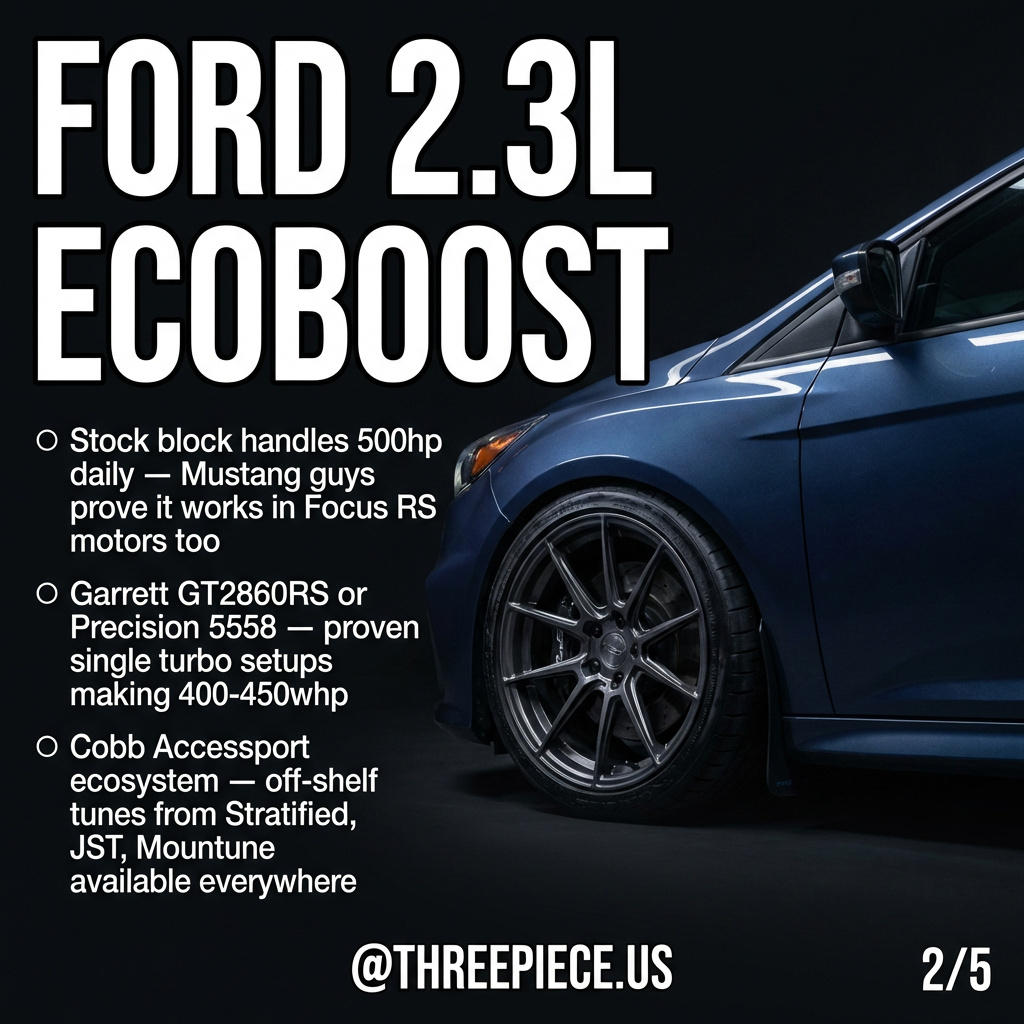
The cylinder head design flows exceptionally well under pressure, and the factory forged crankshaft eliminates the bottom-end concerns that plague other small displacement turbo engines. Focus RS owners have proven the same block architecture works across platforms — the engine doesn't care if it's in a Mustang, Focus, or swapped into something lighter. For builds targeting serious power on pump gas, read our breakdown of whether forged wheels are worth the money — because if you're building this engine properly, you'll need wheels that can handle the power.
Chevy 2.7T TurboMax Design Philosophy
Chevrolet designed the 2.7T TurboMax as a fuel-efficient workhorse first, performance engine second. The aluminum block construction saves 60 pounds over an iron LS block, which matters significantly in lightweight chassis applications. However, this weight savings comes with a critical weakness: head gasket issues above 400 horsepower.
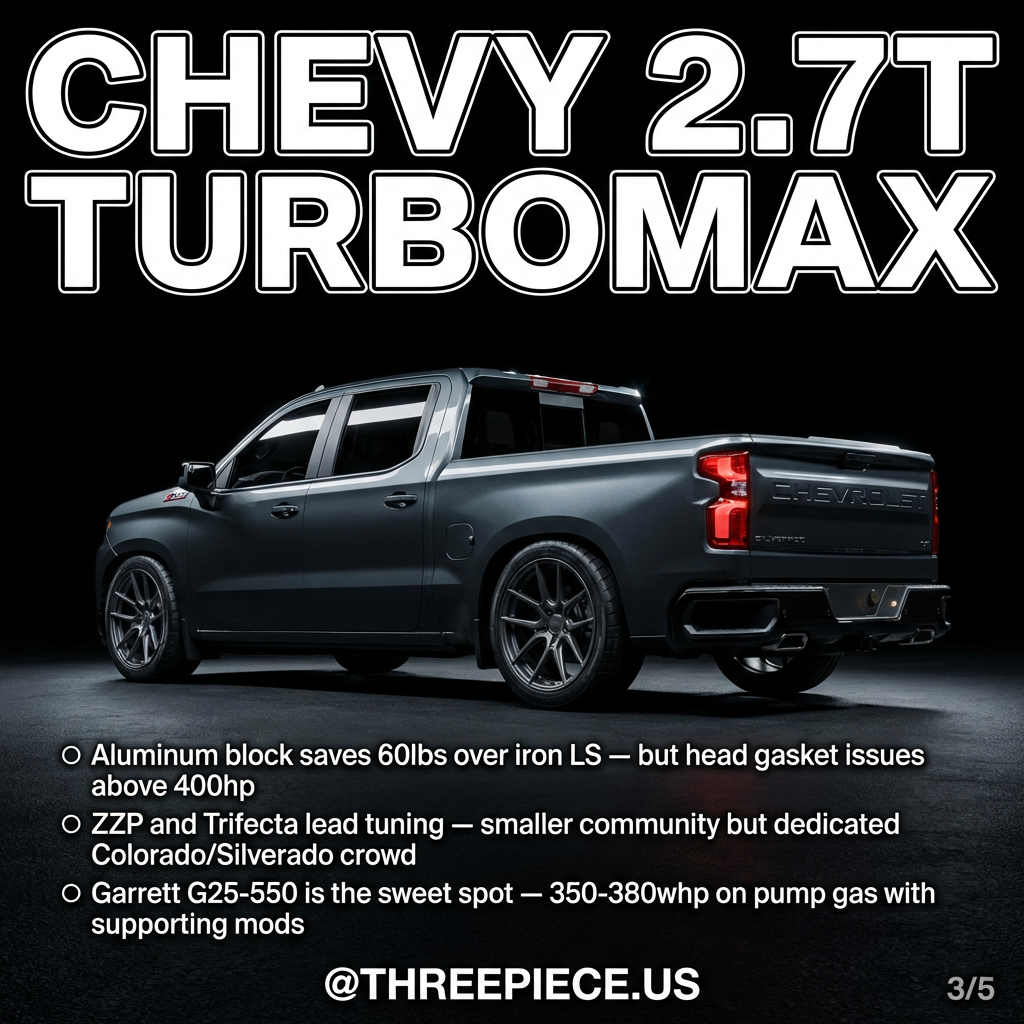
The Garrett G25-550 represents the sweet spot for this platform, delivering 350-380 wheel horsepower on pump gas with supporting modifications. Push beyond this threshold, and you're entering head gasket replacement territory. ZZP and Trifecta lead the tuning development, but the community remains smaller and more specialized around Colorado and Silverado truck applications. If you're considering an engine swap project, check out our guide on whether LS swapping is worth it for comparison with traditional V8 approaches.
Aftermarket Support and Tuning
Ford's EcoBoost ecosystem absolutely dominates aftermarket support. The Cobb Accessport platform provides off-shelf tuning solutions from Stratified, JST Performance, and Mountune — all readily available with proven results. Turbo options range from budget-friendly Garrett GT2860RS setups to high-end Precision 6262 builds pushing 600+ wheel horsepower.
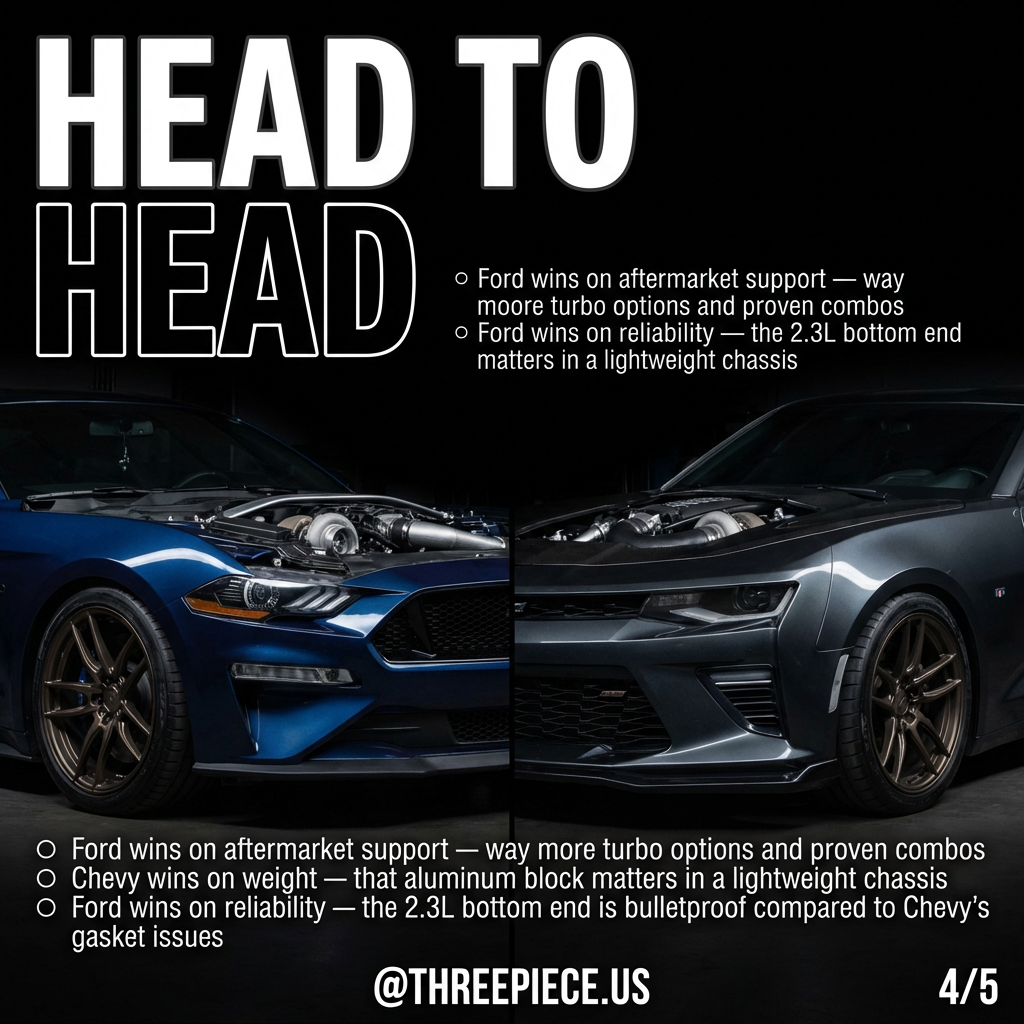
Chevrolet's 2.7T suffers from limited tuning options and a significantly smaller enthusiast base. While ZZP and Trifecta produce quality calibrations, the selection pales compared to Ford's extensive ecosystem. Parts availability follows the same pattern — Ford has dozens of proven turbo combinations, while Chevy builders often pioneer uncharted territory. For wheel fitment on these swapped platforms, our complete wheel sizing guide covers the technical considerations when building a custom setup.
Real-World Power Ceiling Comparison
The numbers don't lie: Ford's 2.3L EcoBoost consistently delivers higher power ceilings with better reliability. Stock block builds regularly exceed 500 horsepower with proper supporting modifications, while the Chevy 2.7T hits a wall around 400 horsepower before requiring significant internal work.

Head gasket failures plague the Chevy platform above moderate boost levels, while Ford's iron block construction handles thermal cycling without issue. The EcoBoost platform also responds better to methanol injection and E85 tuning — critical factors for extracting maximum power from small displacement turbo engines. Consider browsing 18-inch wheels in 5x114.3 for Mustang EcoBoost builds, or 17-inch wheels in 6x139.7 for Colorado applications.
Weight Savings and Chassis Impact
The Chevy 2.7T's aluminum construction provides a genuine 60-pound weight advantage over Ford's iron block EcoBoost. In race-focused builds where every pound matters, this difference becomes significant — especially in lightweight chassis like BRZ/FR-S/GT86 platforms or track-focused builds.
However, weight savings mean nothing if the engine grenades under boost. The aluminum block's thermal expansion characteristics create head gasket sealing issues that iron blocks simply don't experience. For daily-driven performance builds, reliability trumps the weight penalty every time. If you're building a dedicated race car with professional engine management, the Chevy platform becomes more viable — but you'll need to budget for frequent rebuilds.
The Final Verdict for Your Build
Choose the Ford 2.3L EcoBoost for daily-driven power builds. The proven reliability, extensive aftermarket support, and higher power ceiling make it the obvious choice for most enthusiasts. The platform has 5x the aftermarket support of the Chevy alternative, with proven turbo combinations and tuning solutions readily available.
Choose the Chevy 2.7T TurboMax only for dedicated race builds where weight savings justify the reliability compromises and limited aftermarket support. The aluminum block matters when every pound counts, but you'll be pioneering uncharted territory with limited tuning resources.
For either platform, proper wheel selection becomes critical when adding significant power. Browse our complete wheel selection or check out Work Wheels for proven forged options that can handle serious horsepower. Complete your build with quality assembly bolts starting at $10 to ensure your wheels stay attached when the boost hits.