

Jul 30th 2025
Why you should buy a 10th gen Honda Civic
Let's talk about the 10th gen Civic, 2016-2021. This platform has both the normal Civic, which includes the Si, and the larger Type-R, known by the chassis code FK8. These two cars are based on the same platform. They cater to different needs, but both strike a sweet spot where daily practicality meets torque and tuning potential.
The standard Civic gives you MPG, smartphone connectivity, and enough rear leg room to Uber all your friends around.
The Type-R takes the same shell and gives it 306HP, adaptive dampers, Brembos, and a big enough spoiler to look right at home at an airstrip.
Why should you buy a 10th gen Civic?
Maybe you want a daily driver that’s not a soulless appliance. Maybe a weekend track toy that will not grenade your wallet. Or, maybe you’re just sick of everyone telling you to buy a BRZ.
We’re going to look closely at this platform to help you decide if the 10th gen is right for you.
By the end of this article, you’ll know if it has a place in your driveway.
Quick links
10th Gen non-Type-R

Powertrain
You get a 1.5L turbo L15B7 found in the EX, LX, Touring, and Sport, which is everything apart from the Type-R. It makes 174HP on pump gas. All are direct injected. This gives a slight bump in efficiency but comes with more maintenance and less tunability. With the basic supporting mods, you can kit about 220-240WHP.
The Si version of the L15 has a healthy increase in factory output at 205HP. This is because it got higher boost out of a bigger turbo, with lower compression to make it stable.

Either way, you can expect 35MPG on the freeway.
This was the first time a Civic was equipped with a turbo engine from the factory. You get great fuel economy out of the 1.5, but still have the power to overtake traffic when needed. Turbos also give the option to easily increase power.
Handling & chassis tech
These are 25% stiffer torsionally than the 9th gen while being 68 lbs lighter. The suspension is a typical MacPherson-style front and multi-link rear. The rear links are aluminum on higher trim levels, leading to lower unsprung mass.
Like the previous gen, the steering rack is electric (EPS), however, it offers a firm and snappy feel, a lot less rubber-like than the one found on the 9th gen.
Common suspension mods include upgraded sway bars, lowering springs, and some grippy 235 tires. People who do these upgrades swear the car wakes up like it had a quadruple shot of espresso. Body roll nearly disappears with minimal compromises to comfort.
If you wanna know more about the wheels & tires for these cars, check out our fitment guide dedicated to them.
Interior tech & livability
You get a lot of cool gadgets without the German car repair bills.
The 10th gen has a 7” infotainment screen with CarPlay and Android Auto standard on most trim levels. It has Honda Sensing, which has the common safety features like lane detection, assisted braking, etc.
It has a lot of passenger space–even more than an MK8 GTI and even some mid-sized sedans. The sedan has a big trunk, and the hatch is enormous. You can haul Ikea boxes or a set of track wheels without having to borrow a friend’s truck.

Reliability, ownership cost, & mod potential
It’s a Honda Civic, so this kinda speaks for itself–it’s reliable.
There was an oil delusion myth in the early L-series that claimed fuel would seep into the oil in cold climates. Because of this, Honda updated the piston rings in 2018. It’s generally believed that the pre-2018 models SHOULDN’T be avoided; there are really no issues if you regularly change your oil and generally take care of it.
Like the K-series, the L uses a timing chain, meaning it almost never needs service.
Insurance rates are lower than similar turbo cars like the WRX thanks to stellar crash ratings, safety features, and the fact that there are a ton of these on the road.
How is the mod potential? Generally speaking, it’s good; however, it won’t have the same support as older models.
As we alluded to, turbo engines have tons of potential to make more power. You can get a Hondadata or K-tuned, both are plug-n-play ECUs. After a 20 minute install you can tune it for all those bolt-ons.
What are the bolt-ons? PRL makes an awesome intake. RV6 can make it sound more lively with a downpipe or cat-back. Bottom line, there are all types of mods for these.
10 Gen Type-R

Now we get to the extra fun one
Powertrain
The engine is a K20C1. It’s also turbocharged and makes a stock 306HP. It also packs 295 ft/lbs of torque, which comes at 2500 RPM, so it’s not just top-end power. This makes it a blast to drive.
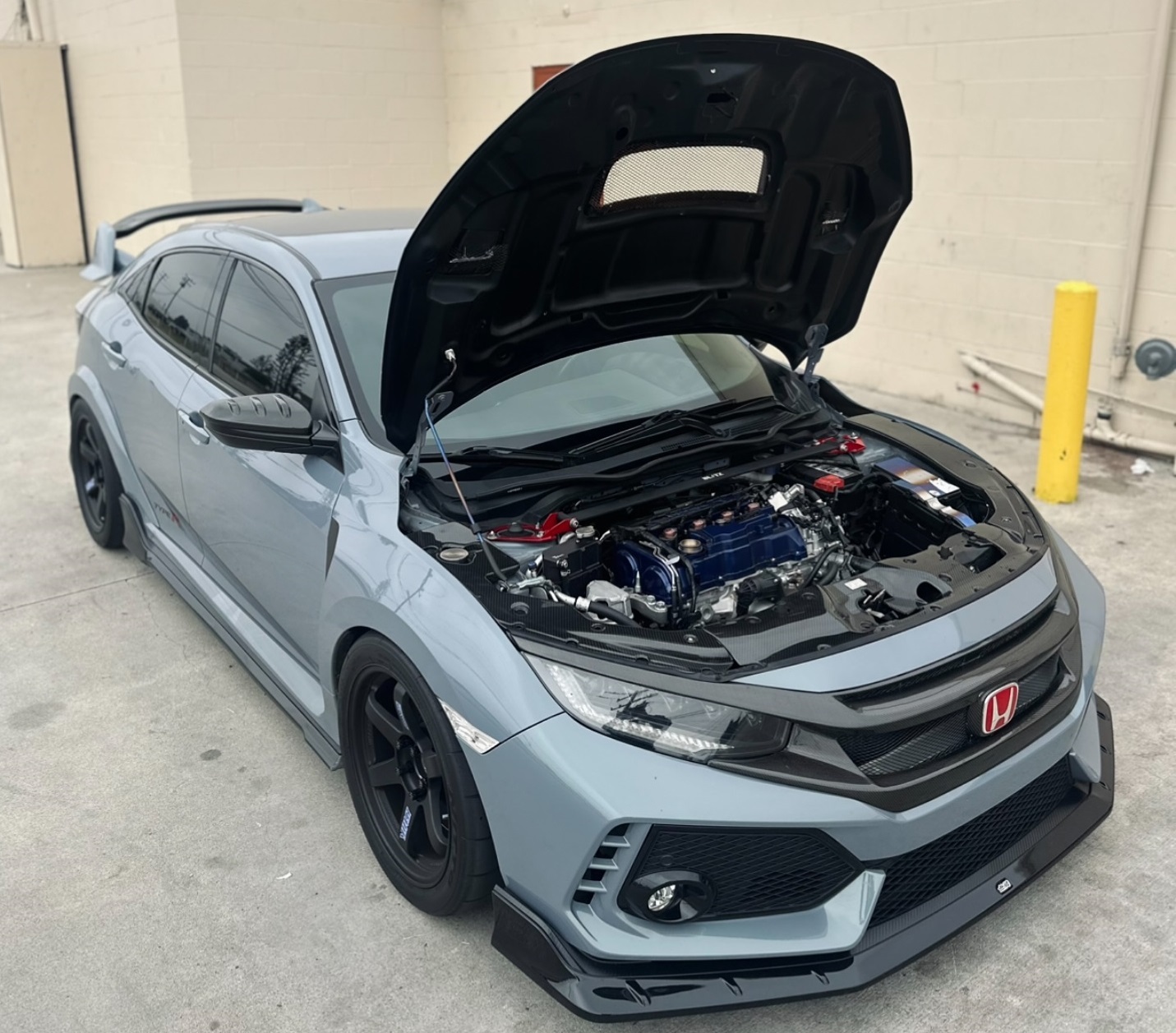
The internals are forged besides the pistons, oddly enough, but they are oil-cooled. The exhaust valves or sodium-filled, helping it rev high. It uses a dual-stage VTEC system which helps spool up the turbo. As you could probably guess, the turbo is noticeably larger than those on the L15, Si or non-Si.
With just an intercooler, Hondata flash, and an intake, you can make an easy 360-380HP. With E85 you can push well into the 400’s.
Handling & chassis tech
Putting all that power to the ground can be challenging with FWD, luckily, Honda gives it a bunch of fancy gizmos to help out.
Dual axis struts help both in cornering and straight-line stability. What are they? They're split spindles that gives an 85% torque-steer drop compared to a regular MacPherson.
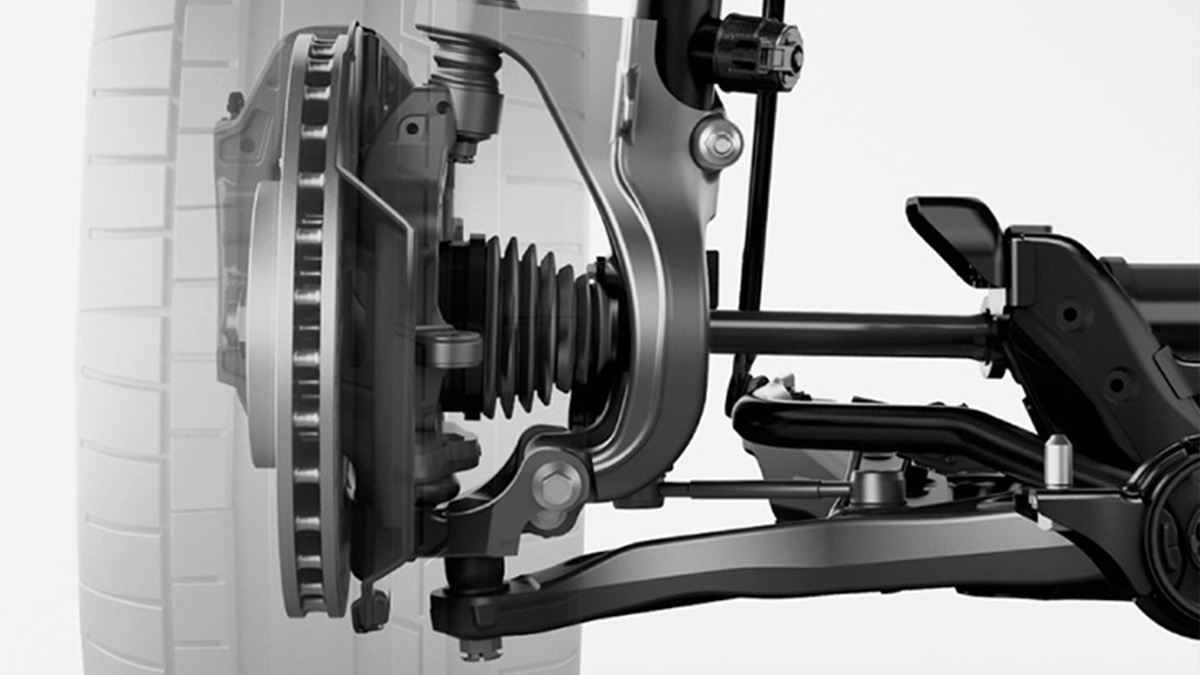
The Brembo brakes can take extra heat, plus have tons of stopping power; 70-0 in 146 feet (which is supercar territory). 2020+ models got 2-piece rotors which shed 10 pounds of unsprung mass. These cars also got a facelift and have a number of other features which make them the one to get–if you have the funds.
Interior tech & livability
Adaptive dampers sample 4 G-sensors every 2 milliseconds. Comfort mode is better than a stock Si, while the ‘R’ mode is track-stiff, meaning you get the best of both worlds.
It’s also quiet. There’s 46dB of road noise at highway speeds. It doesn’t feel like a track car, even though it’s fully capable.
These cars have the same cargo capacity as the regular Civics. If you stay out of ‘race’ mode, you can get 30MPG on the highway, not bad considering the extra displacement and power.

Reliability, ownership cost, & mod potential
Track enthusiasts report no overheating during 20-minute HPDE sessions–rare for a 300HP turbo 2-liter.
Both the L-series and K-series have the exhaust manifold facing the front, as opposed to the bygone era of the B-series. This allows the turbo to be serviced or upgraded with less struggle, however, walnut blasting those intake valves can be expensive as the induction side is toward the firewall–don’t forget: it’s port injected.
If you want racebred handling, 300+ HP, and a hatch that lets you haul a Home Depot run, the FK8 is a swiss army knife. The styling is bold and thieves love them, but there’s nothing else with performance per dollar that also has Honda reliability.
Pros & cons
Turbo Civic 1.5T/Si
Pros
- 35MPG
- 174/205HP
- Good tuning potential, but not like Type-R
- Low insurance rates
Cons
- ‘Base model civic’
- A lot of models have a CVT
Type-R
Pros
- 306HP
- Best tuning potential + aftermarket support
- Adaptive dampers + dual-axis struts
- Holds value well, prospect classic.
Cons
- Tires a pricy
- Theft magnet
- Premium fuel only
Wrap up
So, are these cars worth it? Whether you spend 17K on a base model hatch for daily duty, or drop 40K on a CT-R to hit the track, the 10th gen platform delivers. You get an unrivaled mix of practicality, tuneability, and long-term reliability.
It took Honda a while to embrace forced induction, but when they did, they nailed it. They tossed it in a stiff, yet practical chassis that can embarrass its mid-sized counterparts.
The FK8 adds some engineering wizardry, mostly seen in the suspension. It’s a killer in everything from autocross, to time attack, heck, it can even go pretty fast at the strip.
Either way, Turbo Civic or Type-R, both offer an excellent smile/dollar ratio.