
Posted by THREEPIECE.US on Mar 12th 2026
Why Excessive Camber Kills High-Power FWD Builds: FK8 & K-Swap Setup Guide
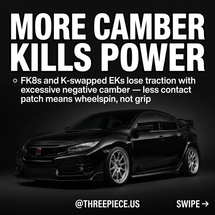
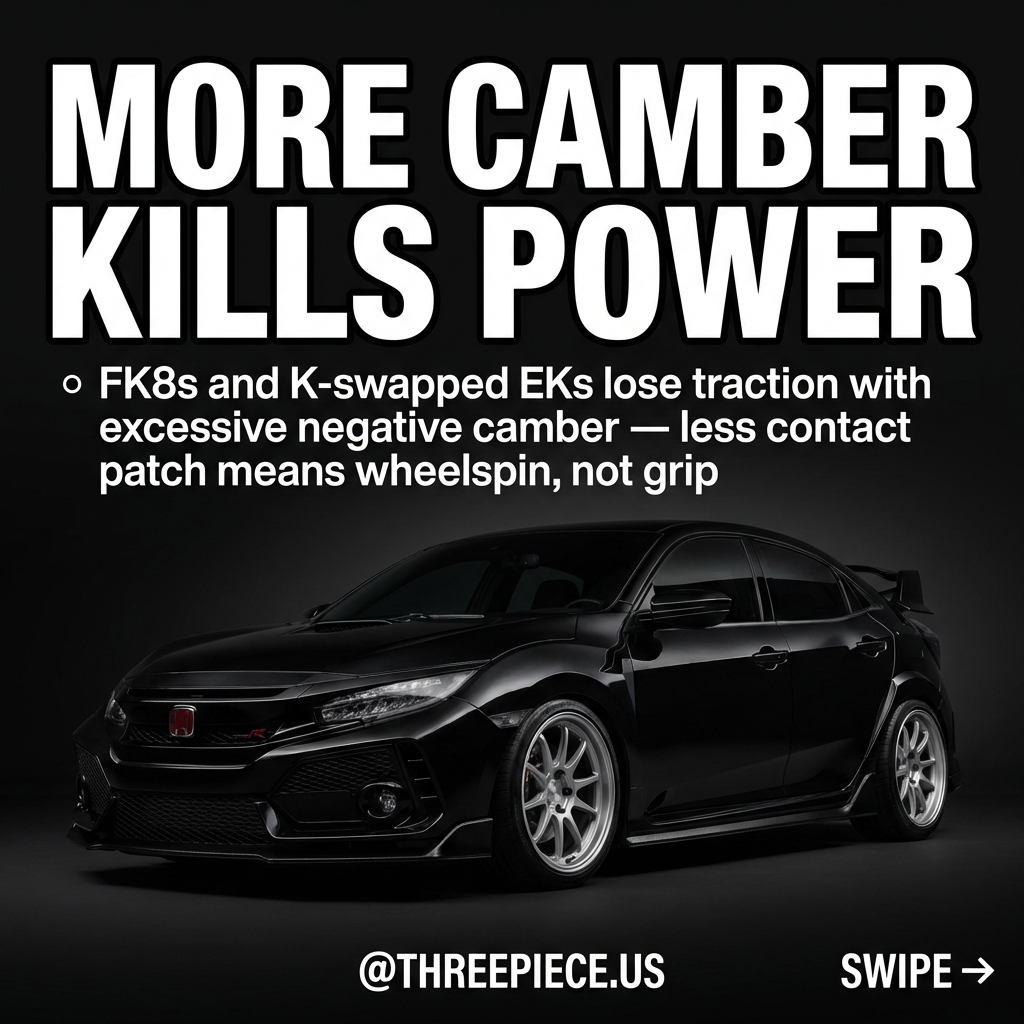
High-power FWD builds are leaving 50+ horsepower on the table because of one Instagram-driven mistake: excessive negative camber. Your FK8 Type R or K-swapped EK isn't making less power — it's just not getting to the ground where you need it most.
Quick links
- How Camber Actually Reduces Traction
- Why FWD Geometry Changes Everything
- The Hidden Cost of Aggressive Camber
- The Actual Setup That Works
- Software vs Hardware Solutions
How Camber Actually Reduces Traction
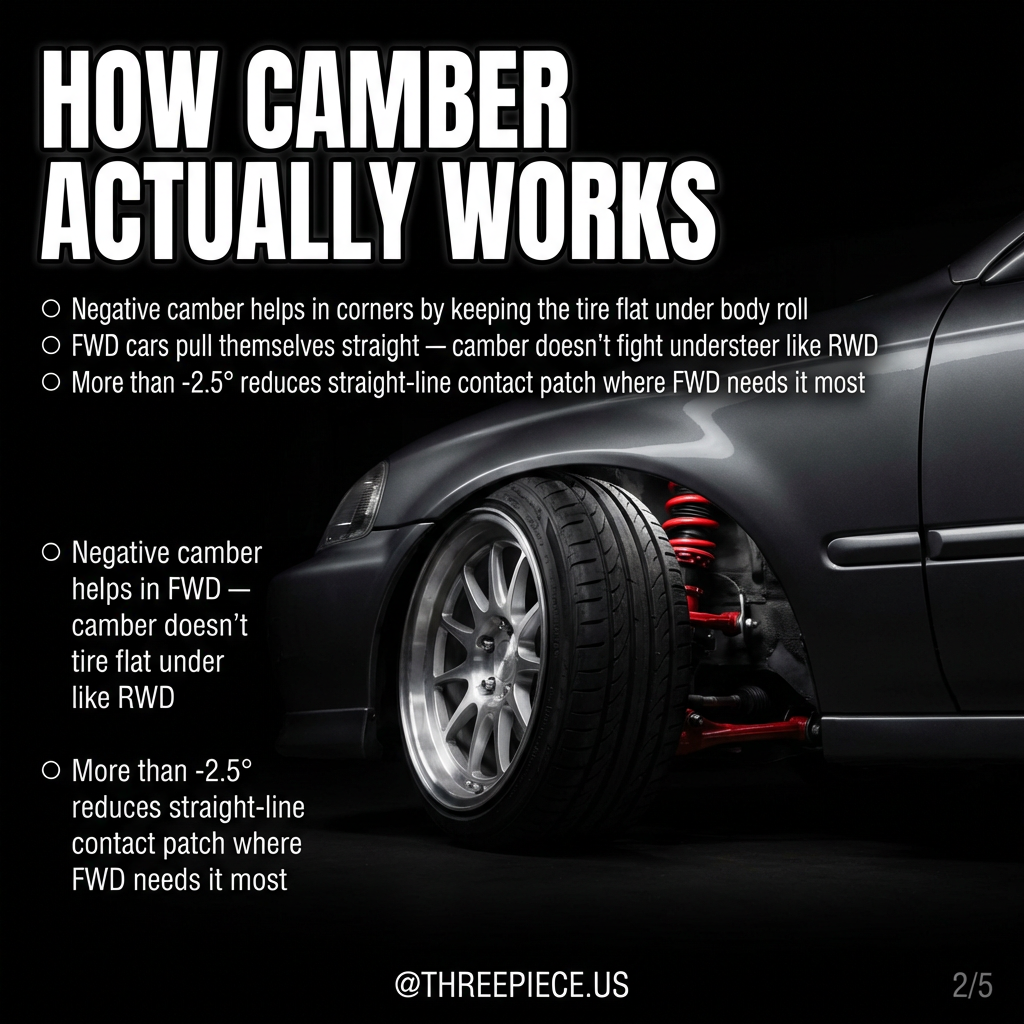
The physics are simple: negative camber reduces contact patch under acceleration. While -1° to -2° helps in corners by keeping the tire flat under body roll, anything beyond -2.5° starts killing straight-line grip where FWD cars need it most. Your 300+ horsepower FK8 or K24 swap needs maximum rubber on the ground for launches and highway pulls, not drift angles.
This is why so many FK8 Type R builds feel slower than they should despite dyno numbers. The K20C1 VTEC system is making power, but aggressive camber is preventing it from reaching the pavement effectively.
Why FWD Geometry Changes Everything
FWD cars fundamentally work differently than RWD platforms. Power goes through the same wheels that steer, which means grip matters more than cornering stance. The K20/K24 torque steer that everyone complains about gets exponentially worse with aggressive camber because there's literally less tire touching the ground to manage that power delivery.
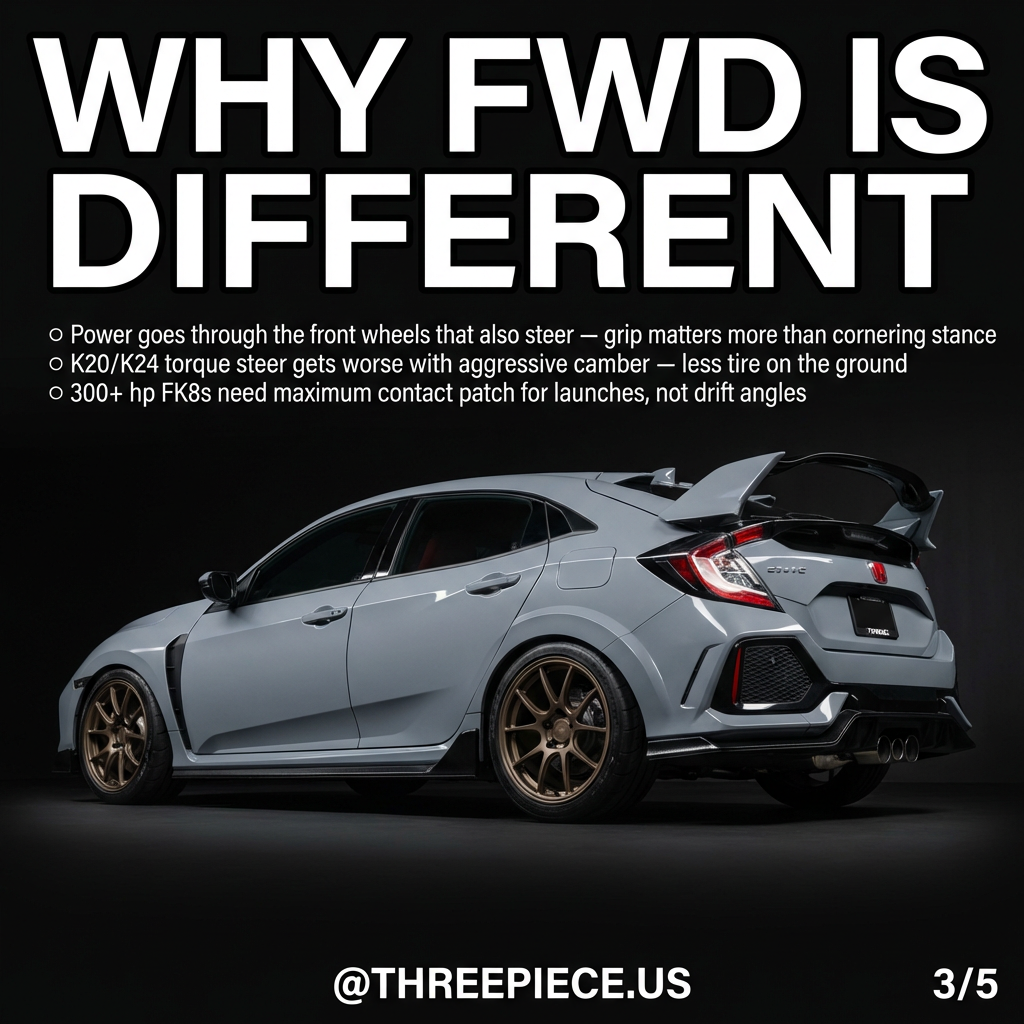
Unlike RWD cars where camber helps fight understeer by keeping the front tires planted in corners, FWD cars pull themselves straight under power. This means the aggressive camber that looks cool in photos is actively working against your car's natural dynamics. Check out our K-series swap donor guide to see which platforms handle power delivery best with proper alignment.
For suspension components that actually improve FWD performance, the Eibach Pro-Alignment Camber Kit for TSX and Accord platforms provides adjustability at $264 without going overboard on negative camber.
The Hidden Cost of Aggressive Camber
-4° camber kills 200TW tires in 8,000 miles — that's $1,200 per year in rubber for a set of quality performance tires. Even worse, that inside edge wear means less grip precisely when you need it most: launches, highway pulls, and emergency braking situations.

Alignment shops keep selling what looks cool on Instagram, not what works for your build goals. The Whiteline Universal Camber Gauge at $255 lets you verify your actual camber settings instead of trusting shop measurements that might be optimized for photos rather than performance.
This tire wear issue becomes even more critical on high-power K-series turbo builds where you're already dealing with increased maintenance costs. Why add unnecessary tire replacement to the equation?
The Actual Setup That Works
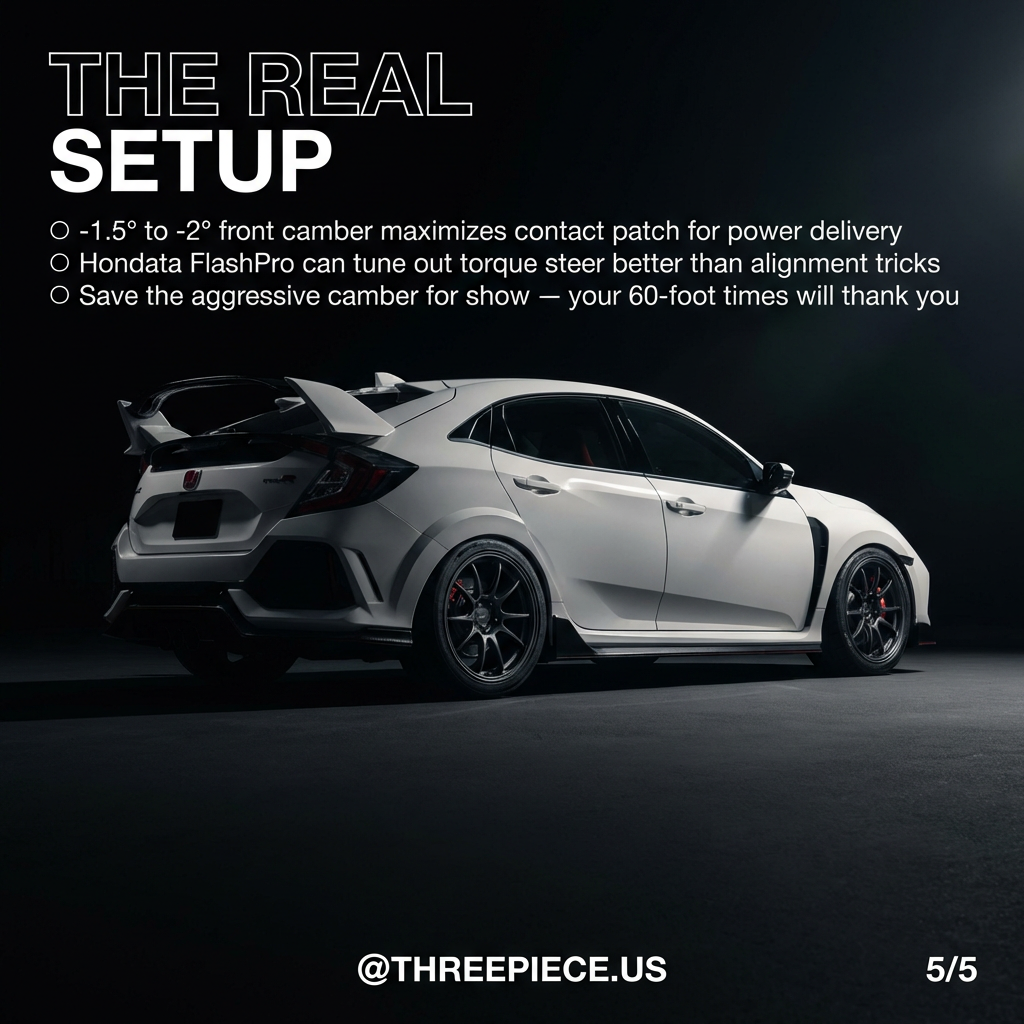
The sweet spot for high-power FWD builds is -1.5° to -2° front camber. This provides enough camber gain under cornering loads while maximizing straight-line contact patch for power delivery. Your 60-foot times and dyno pulls will immediately improve with proper alignment geometry.
For wheel fitment that works with this alignment philosophy, browse our Work Emotion series which offers aggressive looks without requiring excessive camber to clear fenders. The Work VS series is another excellent choice that balances style with functional offset ranges.
Check out our comprehensive 10th gen Civic wheel fitment guide for specific sizing recommendations that work with moderate camber settings. The key is finding wheel specs that look aggressive without requiring alignment settings that hurt performance.
Software vs Hardware Solutions
Here's the real secret: Hondata FlashPro can tune out torque steer better than alignment tricks. Instead of using excessive camber as a band-aid for poor power delivery, address the root cause with proper engine management. Modern FWD platforms respond incredibly well to torque management strategies that smooth power delivery without sacrificing peak output.
The FK8 vs FK7 comparison shows how different power levels respond to various alignment philosophies. Save the aggressive camber for show cars — your lap times, 60-foot numbers, and tire budget will thank you for choosing function over Instagram likes.
For those building serious power, our Civic Si vs GTI build comparison demonstrates how proper alignment philosophy can make a lower-power car feel faster than a poorly set up high-power build. It's not about the numbers on paper — it's about getting those numbers to the ground effectively.
Ready to dial in your suspension properly? Browse our suspension category for alignment tools and components that prioritize performance over aesthetics. Your build deserves better than Instagram camber.