
Posted by THREEPIECE.US on Feb 28th 2026
Tire Pressure for Autocross: Why 32psi Cold Becomes 38psi Hot
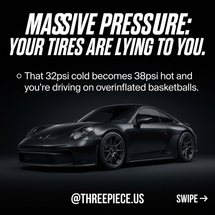
That 32psi you set in your garage becomes 38psi by turn three, and you're driving on overinflated basketballs. Most autocrossers lose seconds because they don't account for heat buildup — your tires gain 6-8psi from cold to hot, completely changing contact patch and grip levels mid-run.

Quick links
The Physics Problem
Every 10°F increase adds 1psi — and autocross tires hit 160°F+ surface temps. That's basic thermodynamics working against your setup. Air expands approximately 2% per 10°F increase, which means your carefully calculated cold pressures become meaningless once you're pushing through slaloms.

Hot pressures shrink contact patch by 15% — less rubber on track means less grip. Your TPMS alerts at 25% below cold setting, making it completely useless for performance driving. The system is designed for highway safety at 35psi, not autocross optimization at 30-32psi hot.
Check out our guide on why proper alignment beats wider tires — pressure management is equally critical for maximizing contact patch.
Why It Kills Lap Times
Overinflated centers wear faster — you're literally driving on the middle of the tire while the shoulders barely touch asphalt. Reduced sidewall flex means harsh ride over curbing, causing the car to bounce instead of gripping through transitions.

Peak grip happens 2-4psi below your cold setting — not what the door jamb recommends. Most manufacturers suggest 32-35psi for highway comfort, but autocross demands different physics. The 200TW compounds everyone runs need specific pressure windows to work properly.
Consider upgrading your 90 degree valve stems at $3.80 for easier pressure checks between runs. Traditional straight stems make gauge access difficult on lowered autocross cars.
The Real Target Numbers
Start 2-3psi below target — 29psi cold hits 35psi hot for most street tires. 200TW tires want 30-32psi hot, so work backwards from there for cold settings. This means starting around 26-28psi cold depending on ambient temperature and tire construction.

Pyrometer tells the truth — even temps across the tread means correct pressure. Inside shoulder 10°F+ hotter than center indicates underinflation. Center 10°F+ hotter than shoulders means overinflation. The camber setup affects these readings significantly.
Different tire compounds need different approaches. The underrated summer tires we covered have varying pressure sensitivity compared to dedicated autocross rubber.
Proper Setup Method
Check pressures after cool-down laps — hot pressures are your real operating pressure. Ignore TPMS completely during competition. It's designed for highway safety, not performance optimization. Set pressures in pit area, not at home.

Take readings immediately after your run, not after waiting in grid for 20 minutes. Tires cool faster than you think — 5 minutes can drop pressures 2-3psi. Record your hot pressures and adjust cold settings accordingly for the next event.
Proper valve stem maintenance prevents pressure loss during competition. Replace old stems when mounting fresh rubber — a $4 part shouldn't cost you tenths.
Essential Tools
Tire temp gun costs $30 — more valuable than any suspension mod for autocross. Digital pressure gauge with 0.5psi accuracy beats the pencil gauge in your glovebox. Infrared thermometer reveals pressure mistakes immediately after runs.
Professional autocrossers use tire warmers between runs, but proper pressure management works better than expensive equipment. Focus on fundamentals before buying gadgets. The chassis mods that actually matter start with getting your contact patch right.
Consider upgrading to quality valve stem caps at $19.99 — they prevent dirt contamination that causes slow leaks during events. Small details matter when chasing tenths.
Save this before your next autocross — proper pressure management is the cheapest way to drop tenths. Start 4-6psi under your target pressure and adjust based on tire temps, not guesswork. Your lap times will thank you.