
Jan 6th 2026
S650 mustang wheel & tire fitment guide
There are tons of opinions about aftermarket wheels for your S650: staggered vs squared, 19” wheels vs 20”, drag vs circuit racing setups–this guide is going to show you a bit of everything.
- 2024+ 7th gen Mustang: EcoBoost, GT, and Dark Horse.
The fitment is the same on all trim levels, that is, unless it’s a Dark Horse ‘R’, which are ridiculously wide. If you have one of these, you probably won’t need aftermarket wheels anyway as the factory ones are literally carbon. For the rest of us peasants who can’t afford a $150K track toy, there are different improvements to be made in the wheel & tire department of the S650.
We’re going to show you some of our favorite setups, but first we’ll start with some of the quirks to fitting wheels on a S650.
Quick links
Basic fitment info
- Lug pattern: 5x114.3
- Lug thread: M14x1.5
- Center bore: 70.5mm
- Lug torque: 150 ft-lbs
These are the basic specs you need when buying or installing wheels, nothing here changed from the last gen.
Staggered vs square S650 fitment
The factory gives us both types: squared or staggered, depending on the trim. Fitment is consistent between the trim levels, so either setup will work on any trim. The correct setup really comes down to how you intend to use your car
Square setups really shine on the track. A truly square setup, where all four corners having the same wheels/tires, will let you rotate tires left to right, front to back, as needed to extend tire life–also good for daily drivers. In addition to rotating tires, you’ll also save some weight.
When does a staggered setup make sense? If you have a power adder like a Whipple, ProCharger, or any other form of forced induction, you’ll definitely want to go staggered in order to run a nice wide tire out back. Not to mention, it looks pretty good too. A typical staggered setup on a S650 will have a 1” wider rear wheel. More than 1” of disparity front to rear can start to add understeer problems.
If you’re not sure, don’t worry, we’ll show plenty of examples of both types.
Wrong tire sizes can cause ABS/traction control issues
A bit of rake goes well with staggered wheels (i.e. taller rear tires), but if you go too crazy, you could upset the modern car tech. The ABS and traction control get a bit grumpy if there’s more than a 3% difference in tire height front to rear.
At the time of making this guide, there doesn't seem to be a good solution to recalibrate or reprogram the issues away. The best thing to do is size your tires within this 3% margin.
Some people unplug the wheel speed sensors and deal with the lack of driver assist, but we wouldn't advise it considering we all know what happens when a Mustang does a pull when leaving the meet…hopefully there’s no crowd around.
Performance Pack brake clearance
Here are the minimum rim diameters you can run on a S650:
- Non-performance pack - some 17” & all 18”
- Performance pack (w/ Brembos) - some 18” & all 19”
Most cars run aftermarket 19’s or 20’s, so unless you’re doing a drag pack, this is probably a moot point. We’ll revisit this in the drag pack section towards the end.
You do, however, need to consider caliper-to-face clearance regardless of which brake package you have–some wheels require spacers to clear.
‘Dark Horse fender flares’
More like fender extenders, these are found on certain trim levels. They add about ½” of width to the front, but otherwise don’t change the fitment. Aftermarket replicas or OE parts can be added to an EcoBoost or GT to emulate the look.
Bottom line, these don’t let you run wider tires, but if you end up with a bit too much poke, they can help dial it back in.
Examples of S650 fitment
Square fitment
|
Fitment Facts |
||
|
|
Front |
Rear |
|
Wheels |
||
|
Tires |
||
|
Notes |
||
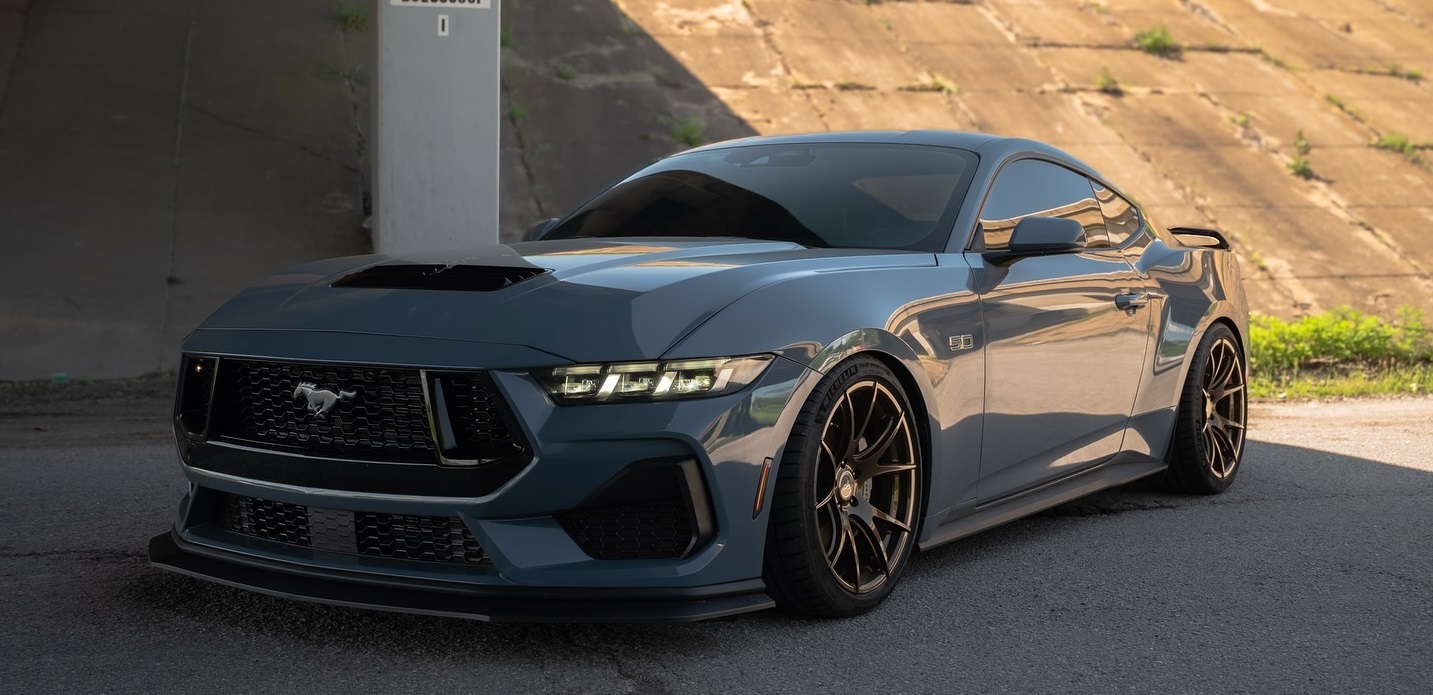
Squared setups aren’t just for EcoBoosts, case in point: this GT. These are 19” wheels, which are more typical on square setups given the weight savings. The offset is a +29, a lot lower than the factory +42.5, meaning these poke an extra inch. It sounds like a lot, but these cars are wide and can eat up aggressive wheels–this car has 0 rubbing issues.
The tires are similar to factory specs, but with a 35 sidewall instead of 40.
|
Fitment Facts |
||
|
|
Front |
Rear |
|
Wheels |
||
|
Tires |
||
|
Notes |
Eibach Sportline Lowering Springs |
|
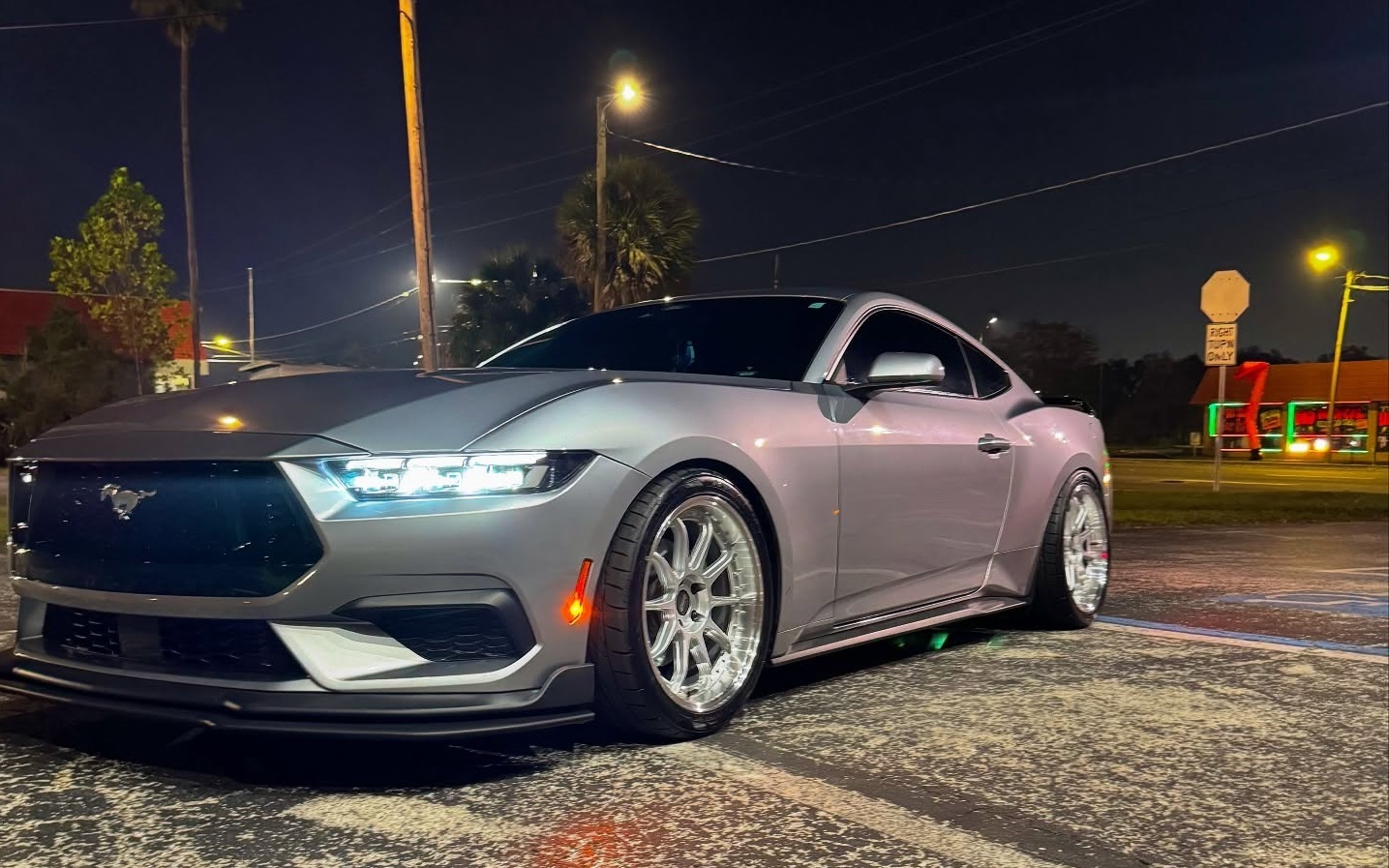
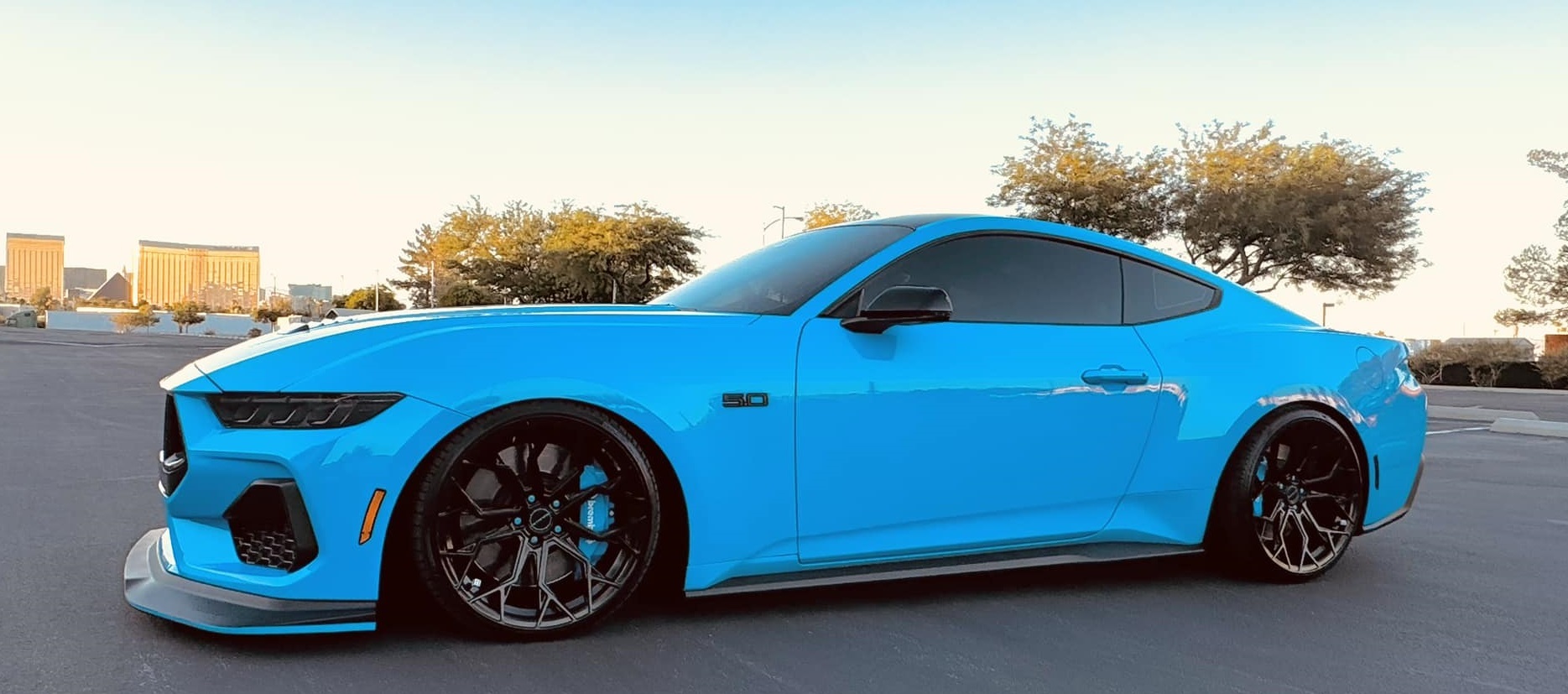
This EcoBoost is running similar specs, but with wider tires and lower offsets. This would be a good candidate for fender extenders, as there’s a bit of front poke.
This car is running Eibach Sportline lowering springs. Even with wider tires, rubbing still isn’t an issue.
|
Fitment Facts |
||
|
|
Front |
Rear |
|
Wheels |
||
|
Tires |
||
|
Notes |
Pedders extreme coilovers |
|
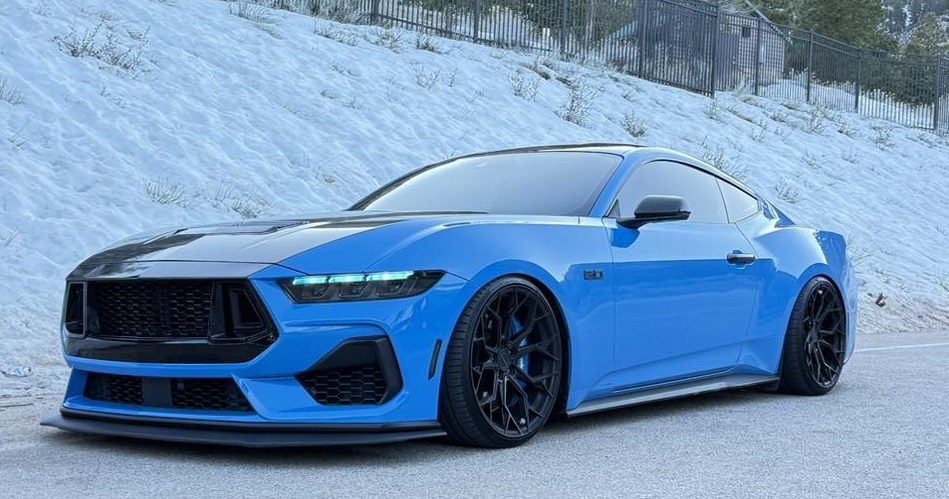
This one goes against the grain for a square setup. Here we see 20” wheels, and they’re extra wide at 10.5”. How does this work without monster truck poke? Well, due to the higher offset, these wheels don’t poke out much more than the last car, the only difference being more inset.
We don’t know the exact alignment specs, but this car looks to have some extra front camber. That would make sense considering it's on Pedder Extreme XA coilovers–most coils give you front camber adjustment.
Note that coilovers will give you more strut clearance for wider fronts, although we found lots of S550’s and 650’s running 10.5” fronts with stock suspension or lowering springs–these cars have tons of clearance.
Staggered fitment
|
Fitment Facts |
||
|
|
Front |
Rear |
|
Wheels |
||
|
Tires |
||
|
Notes |
Stock suspension |
|
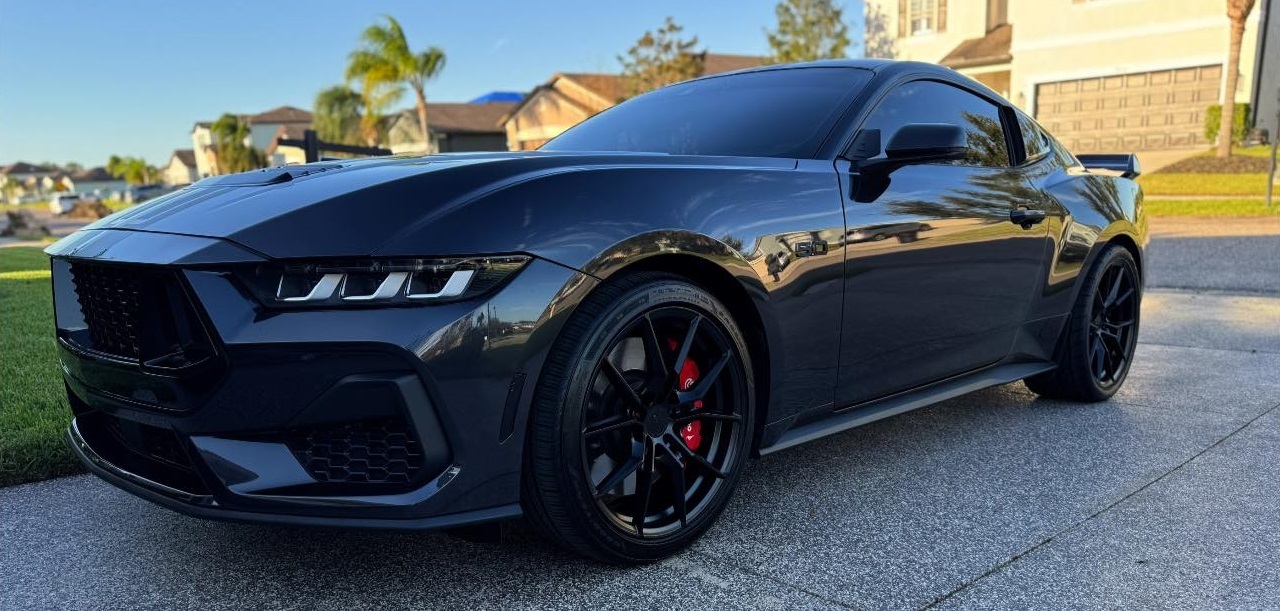
If you’re looking for OE+ fitment on an S650, this is it. This GT is on stock suspension and relatively modest specs by S650 standards. Yes, a 305/30R20 will clear no problem, in fact, they can go a lot wider.
|
Fitment Facts |
||
|
|
Front |
Rear |
|
Wheels |
||
|
Tires |
||
|
Notes |
Steeda progressive lowering springs 5mm space in front |
|
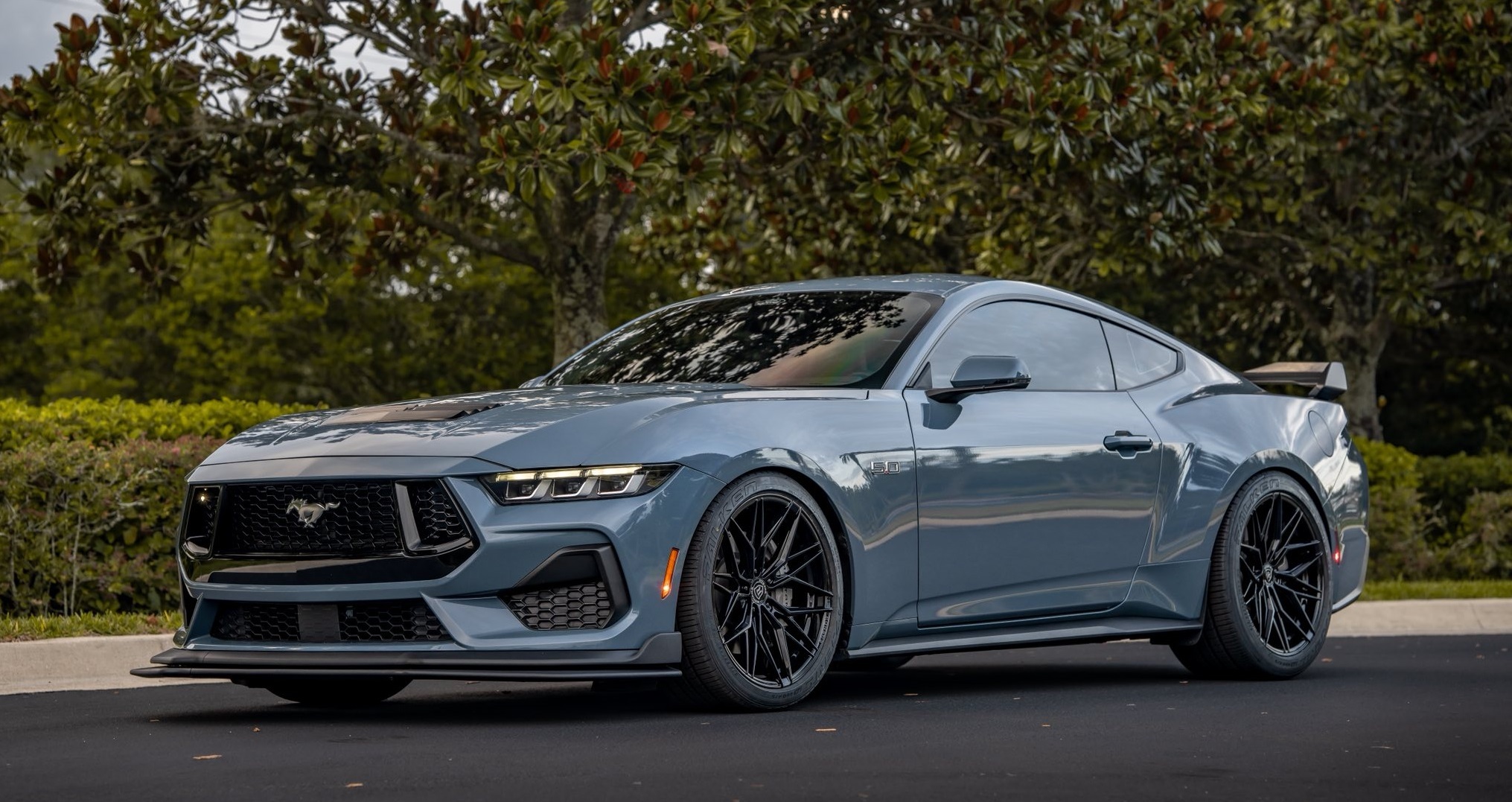
Here are slightly more aggressive specs combined with lowering springs. The rear tires are a 305/35 instead of 305/30. This gives the car a noticeable amount of rake, which looks great, but is very close to that 3% limit we brought up earlier; any smaller in the front or larger in the back would cause issues.

For a more balanced setup, go for a 305/30R20, as seen on the last car.
Note that these wheels need 5mm spacers to clear the front brakes.
|
Fitment Facts |
||
|
|
Front |
Rear |
|
Wheels |
||
|
Tires |
||
|
Notes |
||
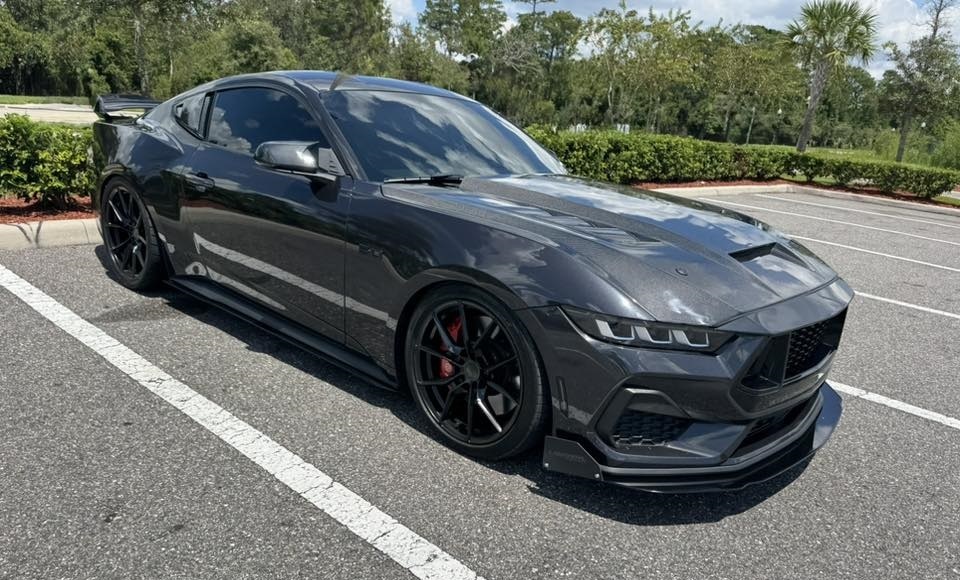
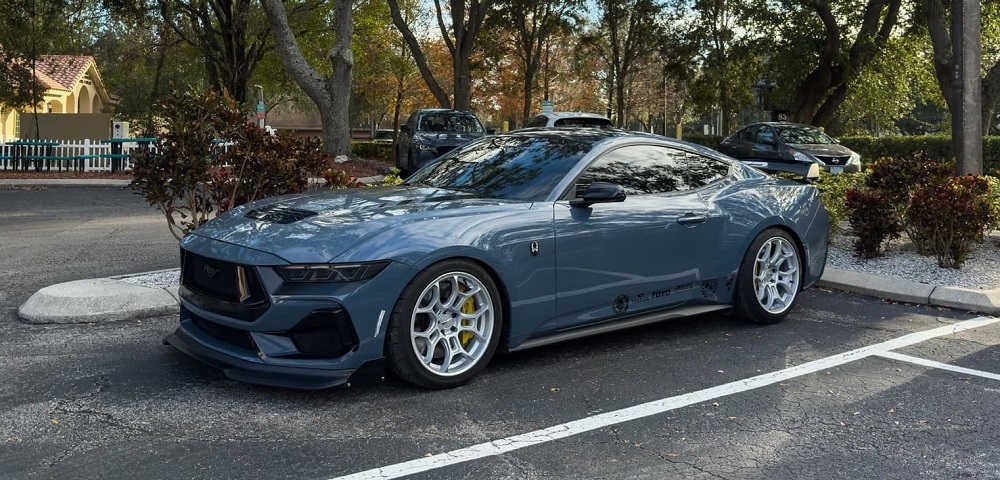
If you want a 315 or 325 rear tire, and don’t want too much poke, here are the specs you need: 11 or 11.5” wide rims, 45-55 offset. This GT is running a 315/35R20 on a 20x11 +53 wheel and also has lowering springs.
Again, be mindful of the front tire size. With a 315/35R20 rear, the fronts will need to be 285/35R20 or larger.
|
Fitment Facts |
||
|
|
Front |
Rear |
|
Wheels |
American Racing GT Street 19x10 +35 |
American Racing GT Street 19x11 +50 |
|
Tires |
||
|
Notes |
Ford performance track springs |
|
And the final boss of tire width is a 325. The owner of this Dark Horse chose 19’s. The final tire specs come out 325/30R19 in the rear and 285/35R19. This car is slightly lowered using Ford Performance track springs.
Drag packs
To keep things simple, we’ll assume you want to retain the factory brakes. In this case, the smallest wheel size you can run on a Performance Pack is an 18”, but not all 18’s will clear. There are some 17’s that work on the rear of non-Brembo cars.
|
Fitment Facts |
||
|
|
Front |
Rear |
|
Wheels |
||
|
Tires |
||
|
Notes |
||
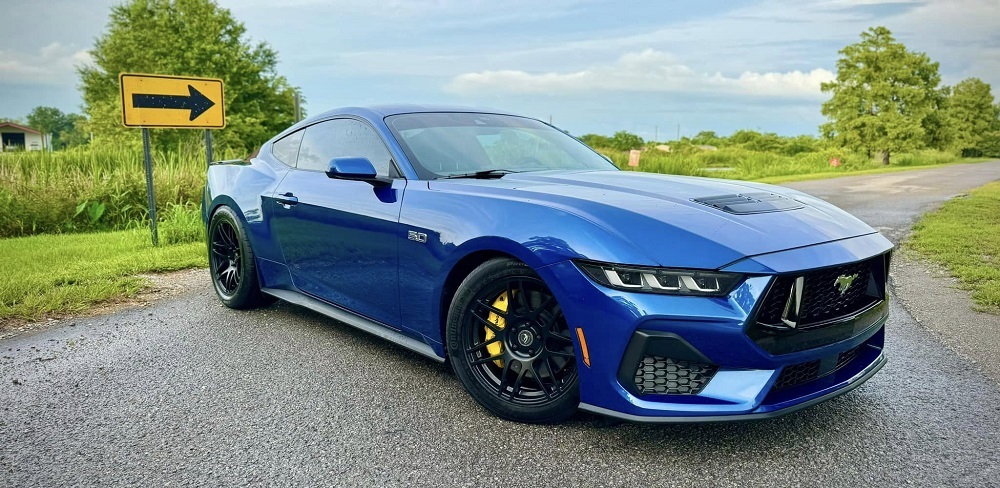
This first one is a drag-n-drive setup (i.e. use the same setup for street and strip use). The Forgestar F14s on the front are about as light as you can get without running skinnies. Really, nothing is too out of the ordinary other than the fact that these are 18’s.
The rear tires are super tall compared to the front. If you copy this setup, don’t be surprised if you have to unplug the wheel speed sensors to keep the traction control from acting up. If you don’t want to go all-in on a drag setup, you could consider 19 or 20” front wheels and appropriate tires (e.g. 275/35R20), or even leave the front stock (we won’t judge you for being on a tight budget).
This GT is equipped with Brembos, so we can confirm that 18” F14s will clear.
|
Fitment Facts |
||
|
|
Front |
Rear |
|
Wheels |
||
|
Tires |
||
|
Notes |
No spacers needed |
|
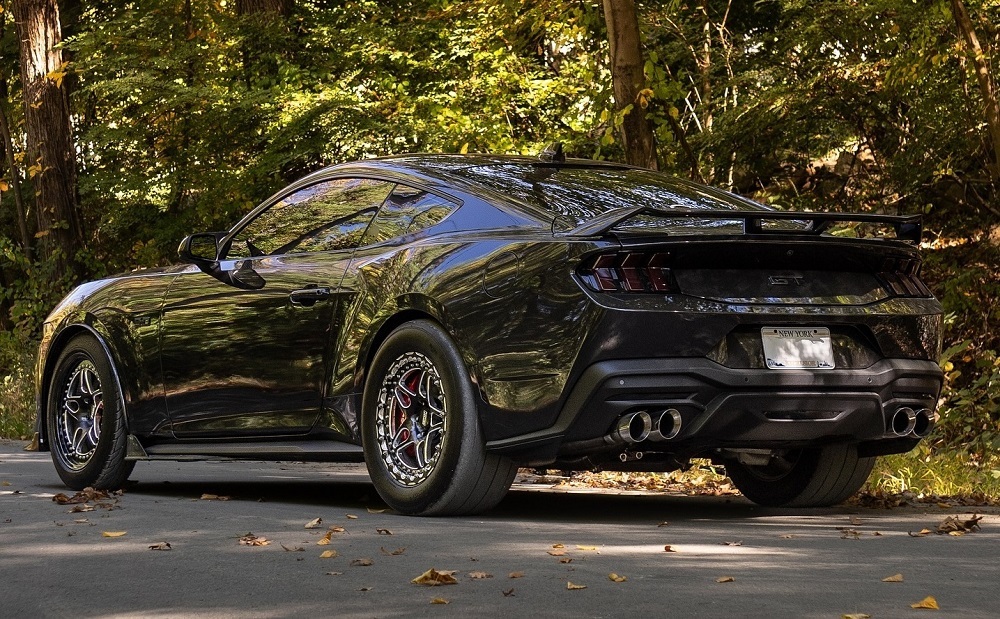
Now for a full drag setup with skinnies. The rear specs are very similar to the last, so we’re mainly looking at the front. Here are the wheels specs: 18x6 with a -20. This is a good offset; if you go too low, you might run into rub when turning or hitting bumps. The tires are 28x6”, which works out to roughly 3% smaller than the rear.
Wrap up
We tried to cover every type of fitment in one guide, from daily drivers, to track use, to drag packs. Both the 6th and 7th generation Mustangs are super wide. If you’re worried about your setup having too much poke, it probably won’t, and if it does, you can always throw on fender extenders or add some camber to reel it back in.
Whatever specs you choose for your S650, we want to see it in our fitment gallery. Upload your ride to show it off and help others nail their fitment.