

Posted by THREEPIECE.US on Mar 3rd 2026
FK8 Type R vs FK7 Civic Si: Which $3K Build Actually Wins?
The FK8 Type R and FK7 Civic Si represent two different philosophies wrapped in the same 10th-gen Civic shell. Both respond beautifully to $3,000 in bolt-ons, but they're solving completely different problems. The Type R is already dialed from factory — your money goes toward making a weapon even sharper. The Si is begging you to wake it up, and that same budget transforms its entire personality.

Quick links
- FK8 Type R: $3K Power Path
- FK7 Si: Waking the Sleeper
- Real World Performance
- The Right Choice for You
FK8 Type R: $3K Power Path
The FK8 Type R comes alive with the right modifications. A Hondata FlashPro tune, cold air intake, and downpipe nets 330whp — that's a solid 50whp gain over stock. The turbo responds immediately to these changes, transforming the already aggressive powerband into something genuinely violent.
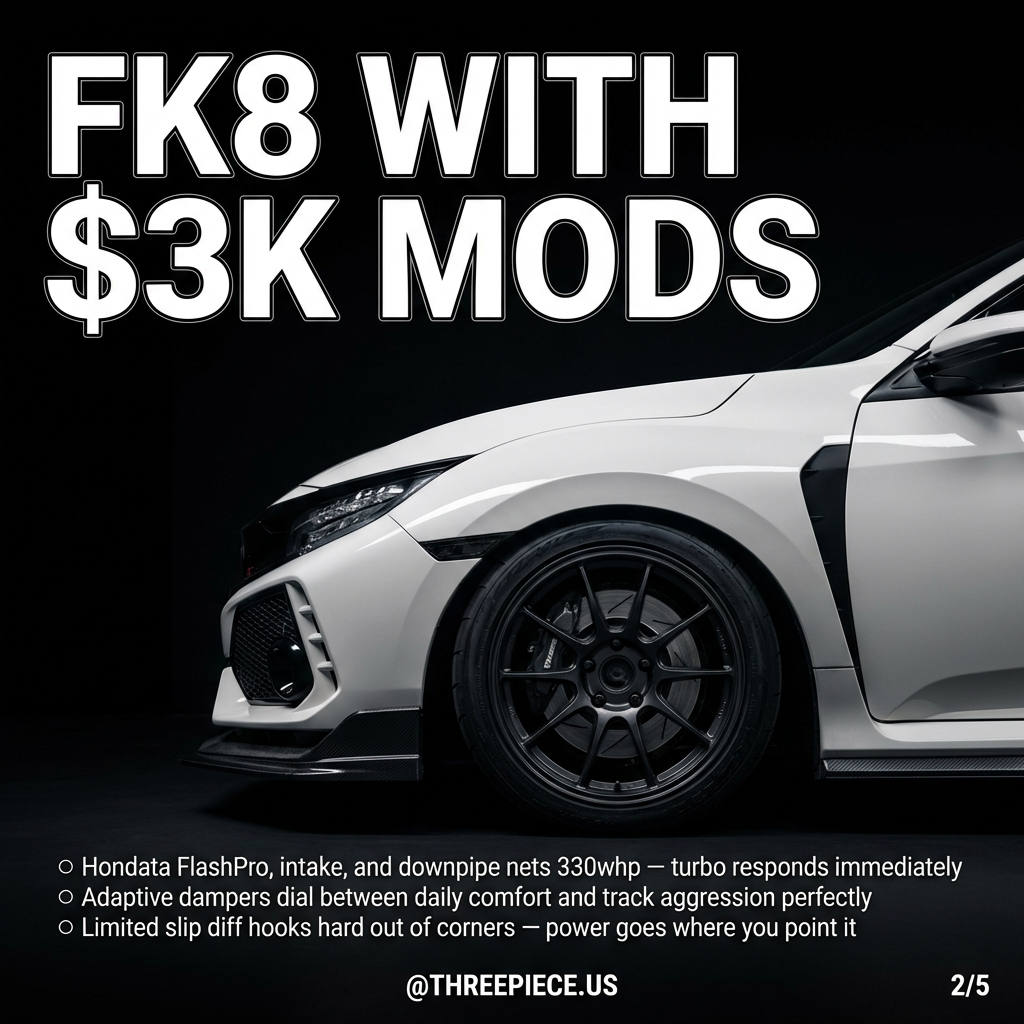
What separates the FK8 from its Si sibling is Honda's adaptive damper system. It dials between daily comfort and track aggression perfectly — something you can't retrofit to the Si. The factory limited slip differential hooks hard out of corners, putting power exactly where you point the car. For FK8 owners looking to complement their build, check out our 10th gen Civic fitment guide for proper wheel sizing.
The downpipe upgrade is crucial for the FK8's character. Consider the Invidia catted 70mm downpipe at $1,044 — it maintains emissions compliance while freeing up the exhaust flow that transforms the L15B7 turbo response.
FK7 Si: Waking the Sleeper
The FK7 Civic Si tells a different story entirely. Hondata tune, intake, and exhaust bring 220whp from the naturally aspirated K20C1 — that's only 15whp over stock, but the character change is dramatic. Natural aspiration response is pure, linear, and rewards you for keeping the engine on boil.

The game-changer for the FK7 is the helical LSD retrofit. Honda cheaped out on the Si's differential, but aftermarket solutions transform the chassis completely. It finally puts power down cleanly instead of spinning the inside tire through every corner. The Si weighs 400 pounds less than the FK8 — momentum carries through tight sections effortlessly when you're not fighting wheelspin.
For exhaust upgrades, the aFe Takeda dual-exit cat-back at $1,541 delivers the aggressive sound the K20C1 deserves. Pair it with the aFe axle-back with carbon tips at $882 for a more budget-friendly option that still transforms the exhaust note.
Real World Performance
Numbers tell only part of the story. The FK8 wins every stoplight and track day — turbo torque is undeniable. 330whp in a chassis this sorted feels genuinely fast, not just quick. The adaptive suspension means you're never compromising between comfort and capability.
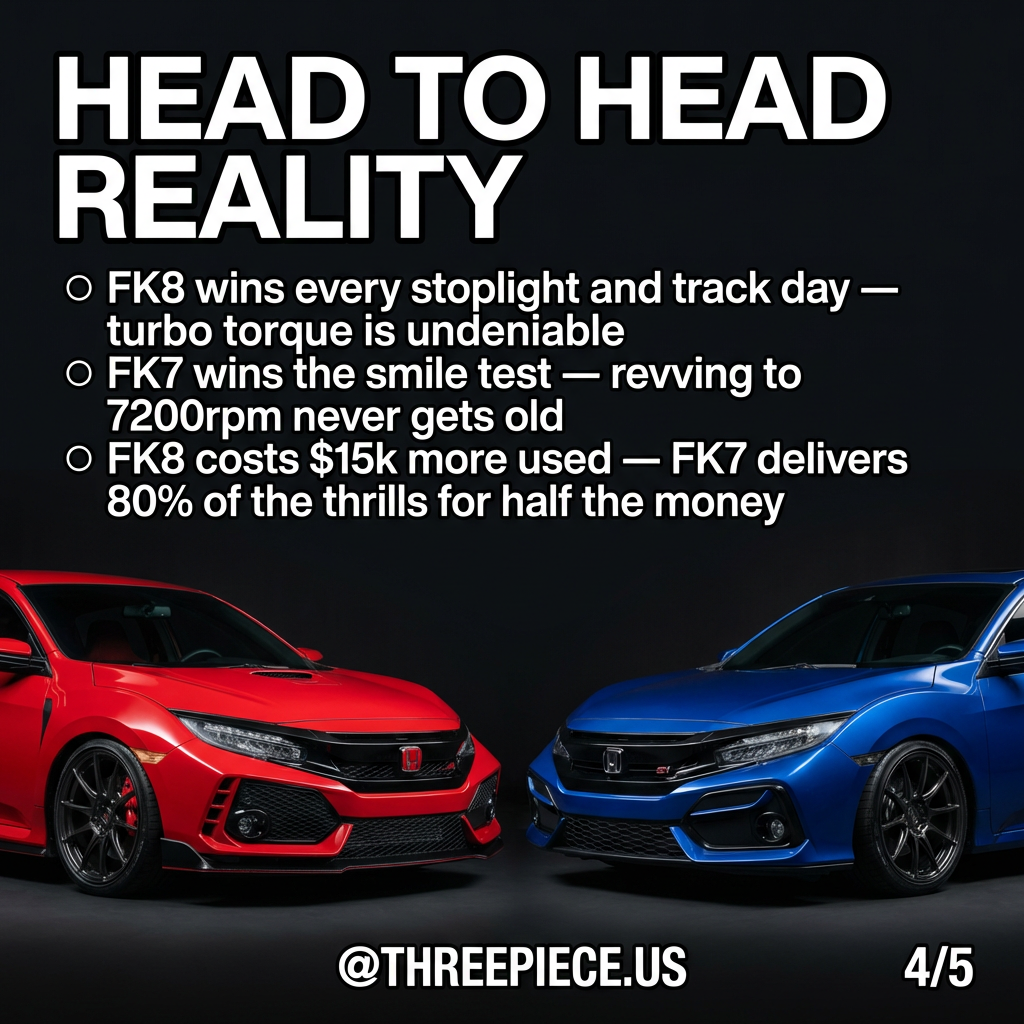
But the FK7 wins the smile test. Revving to 7,200rpm never gets old, and the weight difference is noticeable in every corner. The Si rewards driver skill more than the Type R rewards right foot application. Plus, the FK8 costs $15,000 more used — the FK7 delivers 80% of the thrills for half the money.
For those considering the Type R route, our FK8 tire guide covers the rubber that actually makes a difference. The Si crowd should read our chassis modifications guide — the LSD is just the beginning.
Both platforms benefit from proper wheel setups. Browse 18-inch wheels for 5x120 bolt pattern, or check out our Work Emotion series for authentic Japanese forged options that complement either build perfectly.
The Right Choice for You
Track days and highway pulls — the FK8 is the obvious answer. The turbo torque, adaptive suspension, and factory LSD create a complete package that's hard to fault. It's faster, more capable, and requires fewer compromises.
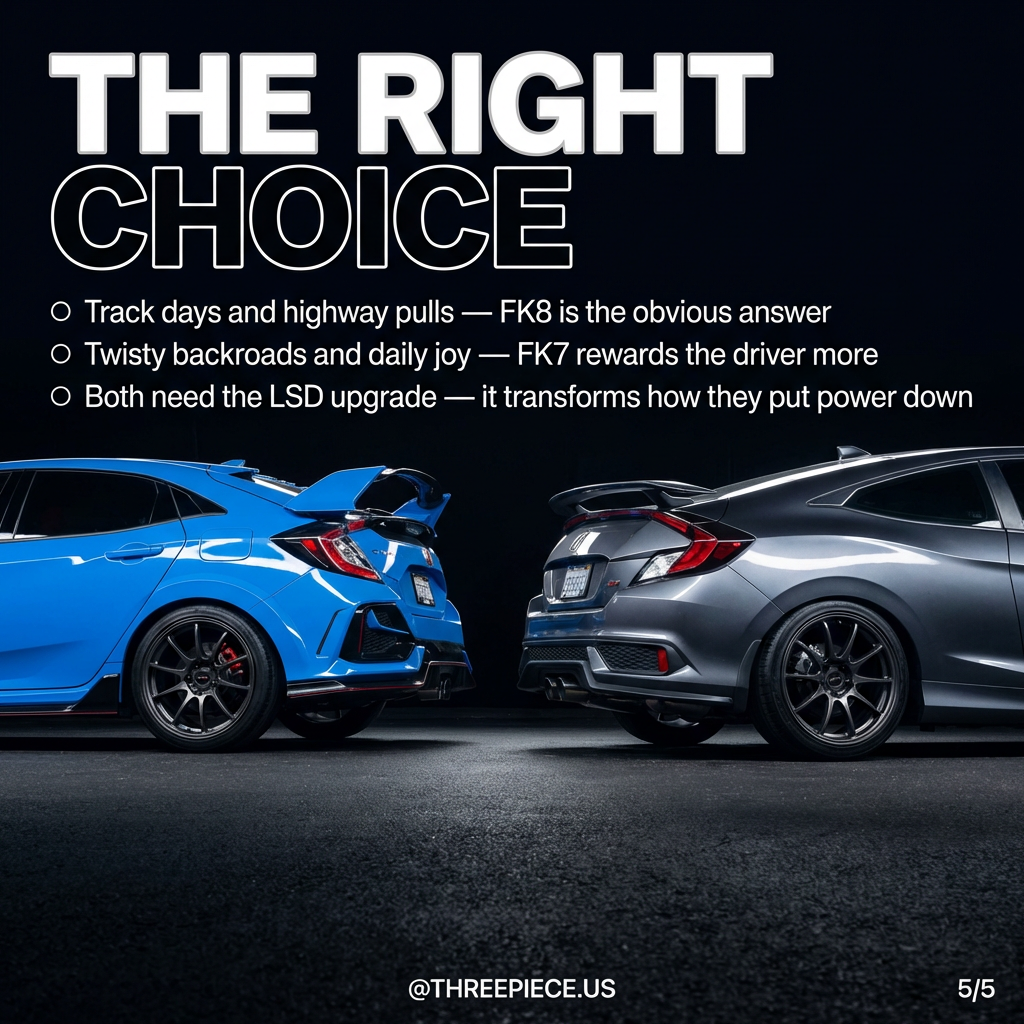
Twisty backroads and daily joy — the FK7 rewards the driver more. The naturally aspirated response, lighter weight, and lower buy-in create a different kind of satisfaction. It's the enthusiast's choice over the spec sheet winner.
Both need the LSD upgrade to truly shine. The FK8 benefits from it, the FK7 requires it. Consider the BLOX Racing tuner lug nuts at $94 for proper wheel security on either platform.
The answer isn't about which is "better" — it's about whether you want to perfect something great or build something from scratch. Both paths lead to satisfaction, just different kinds. Check out more comparisons in our GR86 vs K-swapped Miata analysis, or browse our complete selection of performance wheels to complete either build.