
Posted by THREEPIECE.US on Mar 14th 2026
FK8 Type R vs FK7 Civic Si Canyon Battle: Which $3K Build Wins?
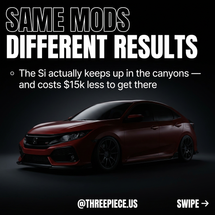
The FK8 Type R costs $15,000 more than an FK7 Civic Si, but after identical suspension and brake mods, which one actually dominates canyon roads? We built two 10th gen Civics with the same coilovers, brake pads, and summer tires, then sent them up our local mountain to settle this debate once and for all.
Quick links
FK8 Type R Factory Advantages
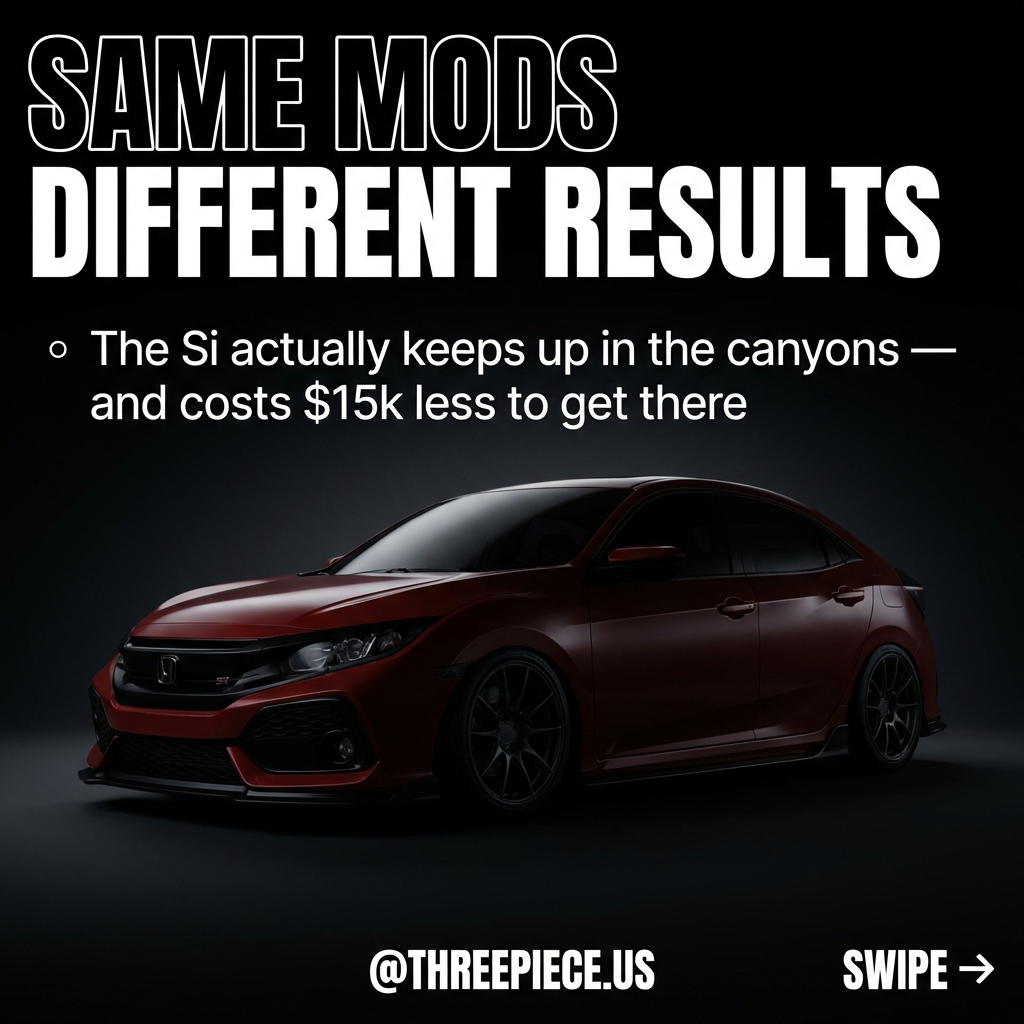
The Type R's factory equipment creates lasting advantages even after modifications. Those Brembo 4-piston calipers and 350mm rotors provide superior initial bite compared to upgraded Si brakes. The adaptive dampers dial between comfort and aggressive track settings — something aftermarket coilovers can't replicate with the same flexibility.
Most importantly, the Type R's helical limited-slip differential hooks harder out of tight corners. The Si spins its inside wheel under power, losing precious momentum that the LSD prevents. This advantage becomes more pronounced on technical canyon roads with tight switchbacks.
FK7 Si Unexpected Strengths
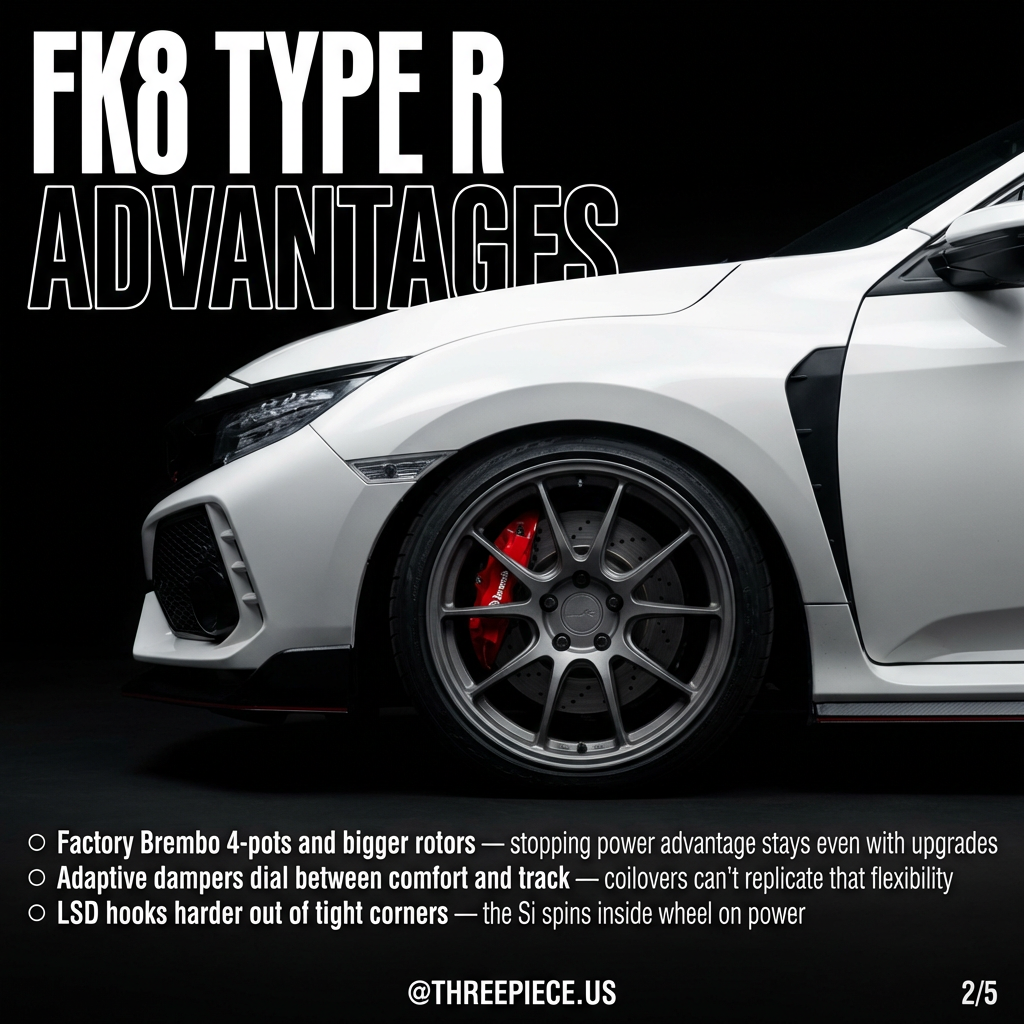
The Si's 1.5T L15B7 engine makes identical power to the Type R's K20C1 after tuning. A Hondata FlashPro tune gets you 220-230whp from both platforms — the power difference disappears with bolt-ons. More importantly, the Si weighs 200 pounds less than the Type R, creating better power-to-weight after modifications.
The manual transmission connects you directly to the drivetrain without the rev-hang that plagues the Type R's six-speed. This makes heel-toe downshifts cleaner and more predictable in canyon driving. For enthusiasts who prioritize engagement over outright speed, the Si delivers a more involving experience.
Performance Breakdown
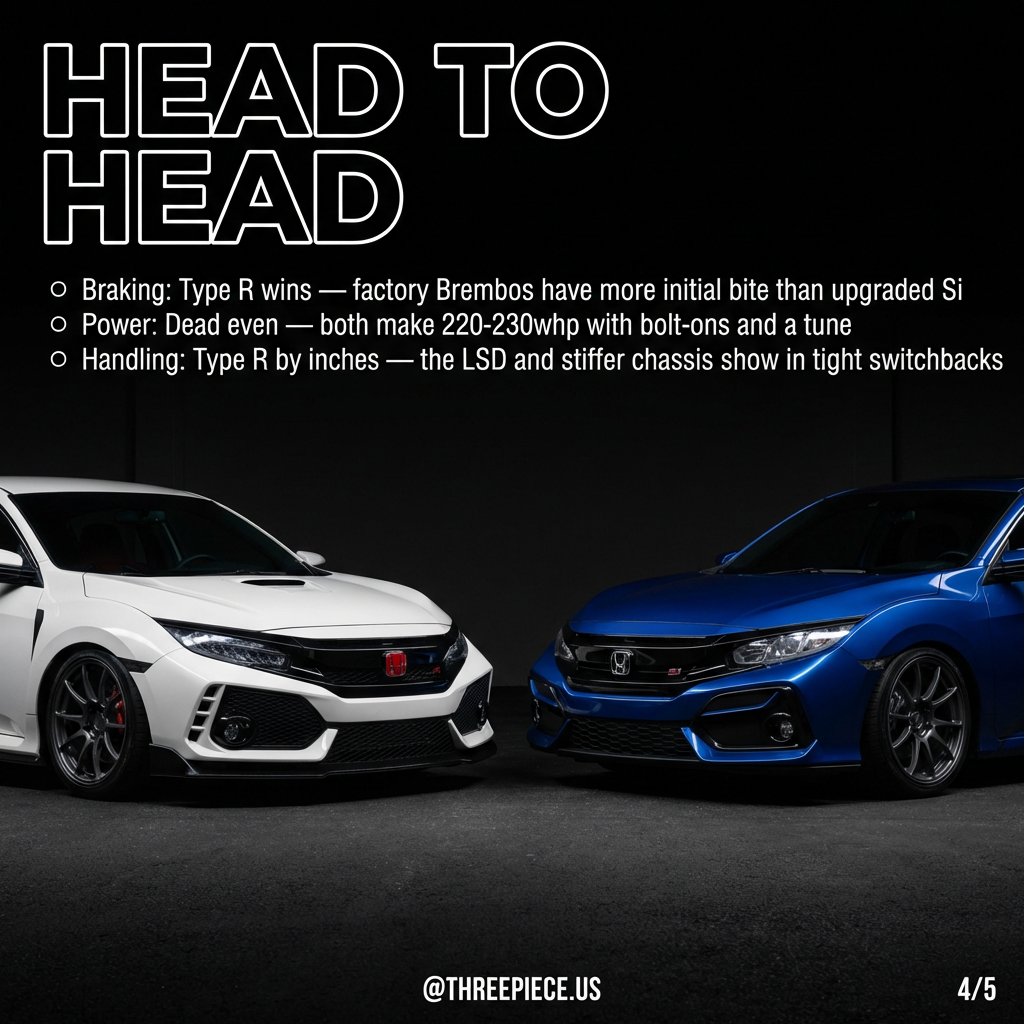
Braking: Type R wins decisively. The factory Brembos have more initial bite than any upgraded Si brake setup. Even with identical pads and fluid, the larger rotors and stiffer calipers provide superior stopping power.
Power: Dead even after modifications. Both platforms make 220-230whp with intake, downpipe, and tune. The Si's lighter weight actually gives it a slight advantage in power-to-weight ratio.
Handling: Type R by inches. The LSD and stiffer chassis show their worth in tight switchbacks. The Si stays competitive on flowing corners but loses ground when traction becomes critical.
Both cars benefit from proper wheel fitment for canyon duty. The 18x8.5 +45 factory Type R setup works well, but the Si needs upgrades to 18x8.5 +35 for optimal performance. Check our 10th gen Civic fitment guide for complete sizing specs.
The Canyon Verdict
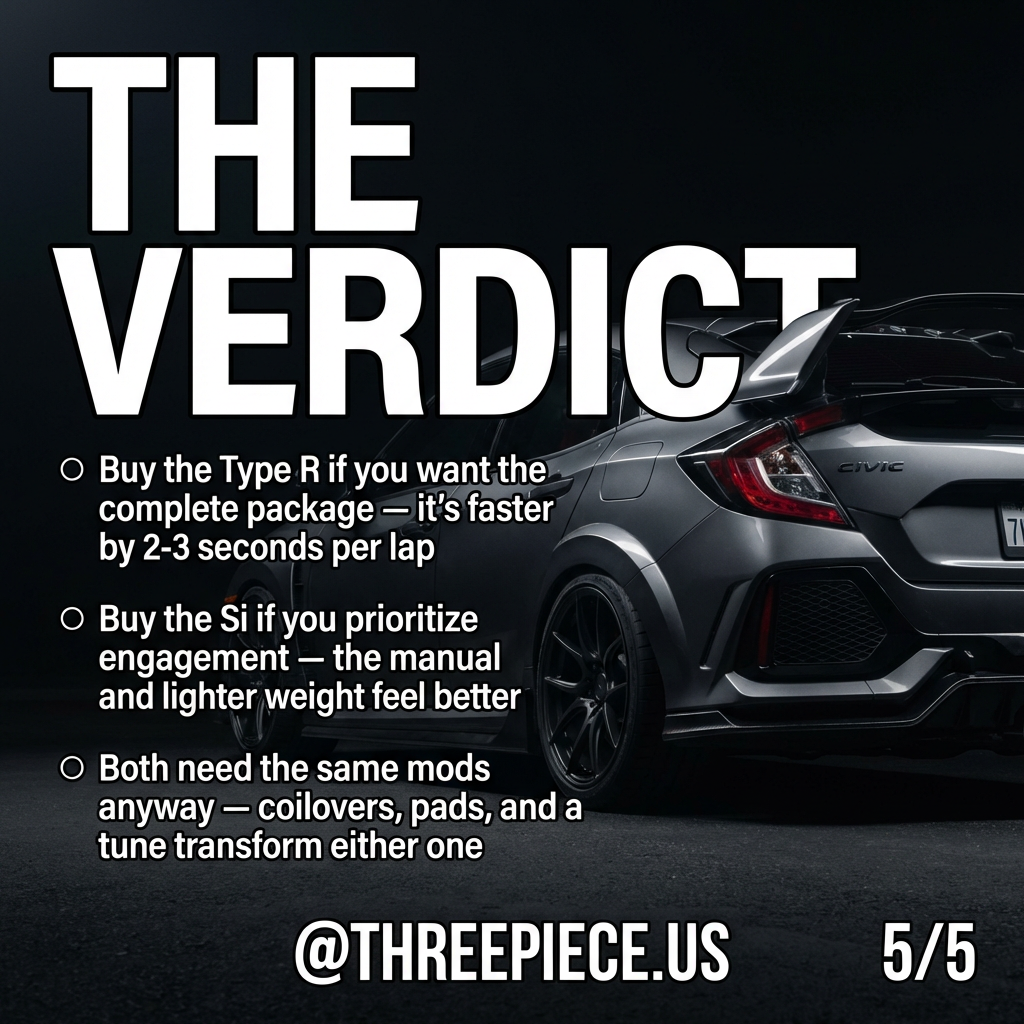
Buy the Type R if you want the complete package — it's faster by 2-3 seconds per lap on technical canyon roads. The LSD and brake advantages create measurable performance gaps that modifications can't fully eliminate.
Buy the Si if you prioritize engagement over outright speed. The manual transmission and lighter weight feel better during spirited driving, even if the stopwatch favors the Type R. Both cars need identical modifications anyway — coilovers, brake pads, and a tune transform either platform.
For suspension upgrades, consider quality coilovers that match your driving style. The Type R benefits from stiffer spring rates to control its extra weight, while the Si can run softer settings for better compliance. Learn more about proper setup in our coilover spring rates guide.
Both platforms shine with proper wheel selection. Browse our Work Emotion series for lightweight options that complement either car's character. For Type R owners looking to optimize their setup further, check out our FK8 micro-mods guide and K20C1 tuning breakdown.