
Posted by THREEPIECE.US on Feb 28th 2026
Enkei RPF1 vs Konig Hypergram: Worth the $800 Premium for Street Use?
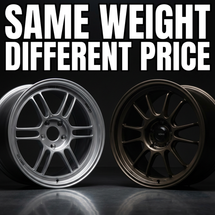
The Enkei RPF1 costs $200 more per wheel than the Konig Hypergram, but they weigh exactly the same at 19.8 pounds in 18x9.5 sizing. Both wheels hit that magic sub-20-pound target that track enthusiasts obsess over, but one carries the Enkei tax and the other doesn't. For street drivers dropping serious money on lightweight wheels, the question becomes whether RPF1's reputation justifies an $800 premium for a set of four.

Quick links
- Manufacturing Process Reality
- Offset Options Matter More Than Brand
- Resale Value Analysis
- Street Driving Verdict
Manufacturing Process Reality
The RPF1 uses Enkei's MAT (Most Advanced Technology) process — a flow-forming technique that's been track-proven since 2000. This creates a wheel that's technically stronger than standard flow-forming through better grain structure alignment. The Hypergram uses conventional flow-forming, which achieves the same weight reduction but without MAT's enhanced strength characteristics.

Here's the reality: for street driving, both manufacturing processes deliver identical performance. You're not generating the sustained loads that would reveal MAT's advantages. The difference matters on track days with 2+ hour sessions and repeated heat cycles, but your daily commute won't stress either wheel beyond its limits. If you're building a street car that sees occasional autocross, read our guide on flow-formed vs forged wheels to understand why expensive manufacturing doesn't always translate to street benefits.
Offset Options Matter More Than Brand
The RPF1's biggest advantage isn't build quality — it's fitment options. The 18x9.5 +38 offset fits most platforms properly without spacers or fender work. The Hypergram only comes in 18x9.5 +35, which pushes the wheel 3mm further outward. That sounds minimal, but it's the difference between clearing fenders and requiring modifications on cars like the E92 335i or FK8 Type R.

For popular platforms, this offset limitation kills the Hypergram's value proposition. Browse 18x9.5 wheels in 5x120 to see how limited your options become when you need specific offsets. The RPF1 also offers 18x9.5 +45 for cars that need more clearance, while Konig forces you into their single offset. Check our perfect daily wheel spec guide to understand why offset flexibility matters more than brand prestige.
If you're running a square setup on a RWD coupe, read our analysis of square vs staggered fitment to see why proper sizing beats wider rears for corner grip.
Resale Value Analysis
RPF1s hold 70% of retail value after years of use, while Hypergramas drop to 40-50%. This isn't just brand recognition — it's market demand from enthusiasts who understand the RPF1's track heritage. A used set of 18x9.5 RPF1s sells for $800-900 on enthusiast forums, while equivalent Hypergramas struggle to hit $500.

The math is straightforward: RPF1s cost $800 more upfront but retain $400 more in resale value. Your actual cost difference shrinks to $400 over the ownership period. For long-term builds, this makes the RPF1 a smarter financial choice. However, if you're the type to run wheels into the ground or frequently change setups, the Hypergram's lower entry cost makes more sense.
Consider pairing either wheel with proper hubcentric rings to prevent bearing damage — a $15 investment that protects resale value on both options. Our guide on why hubcentric rings save wheel bearings explains the engineering behind this critical accessory.
Street Driving Verdict
For pure daily driving, the Hypergram saves $800 with zero performance penalty. Both wheels deliver identical weight savings, similar strength, and the same aesthetic appeal. The manufacturing differences won't manifest in street use, where sustained high loads and heat cycling aren't factors.

The RPF1 makes sense when fitment flexibility matters more than price. If your platform needs that specific +38 offset or you value strong resale for future builds, the premium becomes justified. Track use tips the scales further toward the RPF1, where MAT process strength and heat dissipation provide measurable advantages during extended sessions.
For budget builds focused on weight reduction, the Hypergram delivers 90% of the RPF1's benefits at 60% of the cost. Spend the saved $800 on suspension components, tires, or other modifications that provide bigger performance gains. Check out our recommendations for underrated chassis mods that transform your car's feel more than expensive wheels.
Bottom line: buy RPF1s for fitment needs and resale value, buy Hypergramas to maximize your modification budget. Both wheels accomplish the same goal — getting unsprung weight under 20 pounds without compromising strength. For most street builds, that $800 difference buys a lot of other performance upgrades.