

Posted by THREEPIECE.US on Mar 5th 2026
Civic Si vs GTI: Which $3K Build Dominates Twisty Roads?
After $3,000 in bolt-ons, the 10th gen Civic Si and Mk8 Golf GTI take completely different approaches to the same backroad. The Honda rewards precision and commitment with its naturally-aspirated K20C4, while the VW demolishes everything with low-end torque from the EA888 turbo. Both start around $25,000 used, but their philosophies couldn't be more different once you start modifying.

Quick links
Civic Si Gets Surgical
The K20C4 engine in the 10th gen Si responds beautifully to bolt-ons. A Hondata FlashPro, cold air intake like the AEM Cold Air Intake System at $366, and cat-back exhaust nets 220 horsepower — not huge numbers, but the engine revs to 7,200 RPM and delivers power in a completely linear fashion. This is where Honda's naturally-aspirated philosophy shines on technical roads.
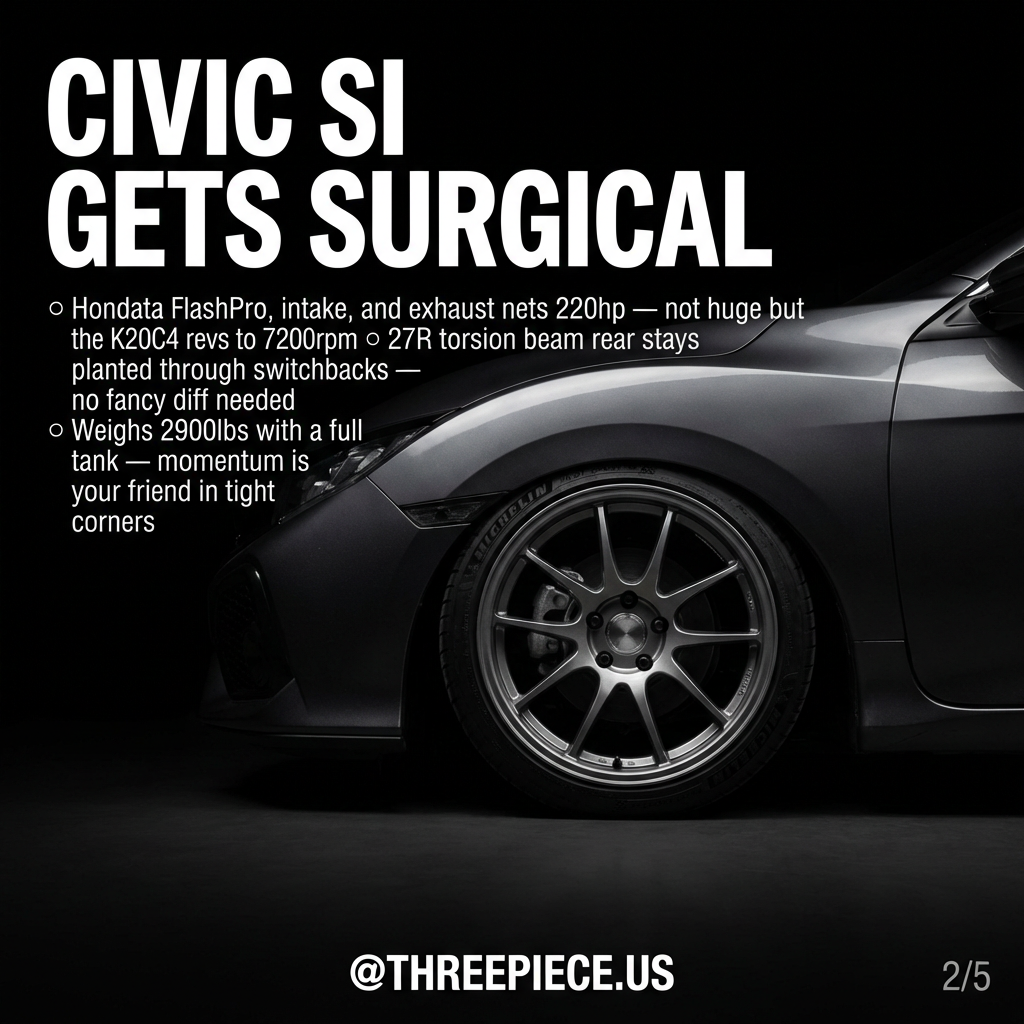
The 27R torsion beam rear suspension stays planted through switchbacks without needing a fancy limited-slip differential. At 2,900 pounds with a full tank, momentum becomes your friend in tight corners. The Si's lightweight construction means you can carry more speed through technical sections where the GTI would need to brake harder. For wheel fitment, check our comprehensive 10th gen Civic wheel fitment guide to maximize performance.
GTI Brings the Hammer
The Mk8 GTI with an IS38 turbo upgrade, intercooler, and tune pushes 350 horsepower — that's 130 more than the Si. The EA888 Gen 4 engine fills every gap between corners with torque, making it brutally effective on faster sweepers. An aFe turbocharger inlet pipe at $210 helps the turbo breathe better for consistent power delivery.
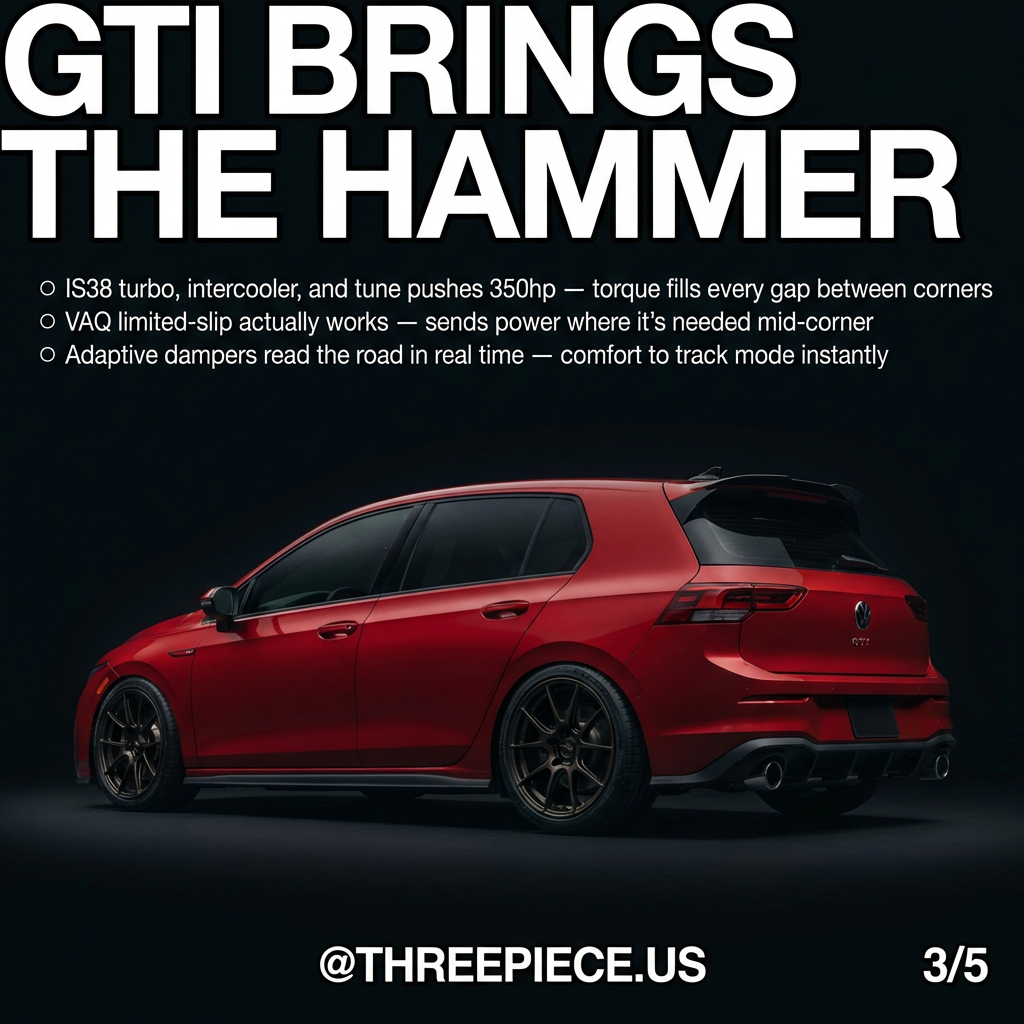
The VAQ limited-slip differential actually works, sending power where it's needed mid-corner. Combined with adaptive dampers that read the road in real-time, the GTI transforms from comfort to track mode instantly. This electronic sophistication makes the GTI feel almost AWD-like in its grip levels. The downside? All this technology adds weight and complexity that shows on tight, technical roads where pure agility matters more than power.
Where Each Platform Wins
The Si owns tight technical roads where lighter weight and higher revs reward precision driving. Every input matters, and mistakes are immediately felt. The naturally-aspirated engine encourages you to keep it on the boil, rewarding commitment through corners. For optimal performance, consider 18x8.5 wheels in 5x120 to maintain the Si's agility advantage.
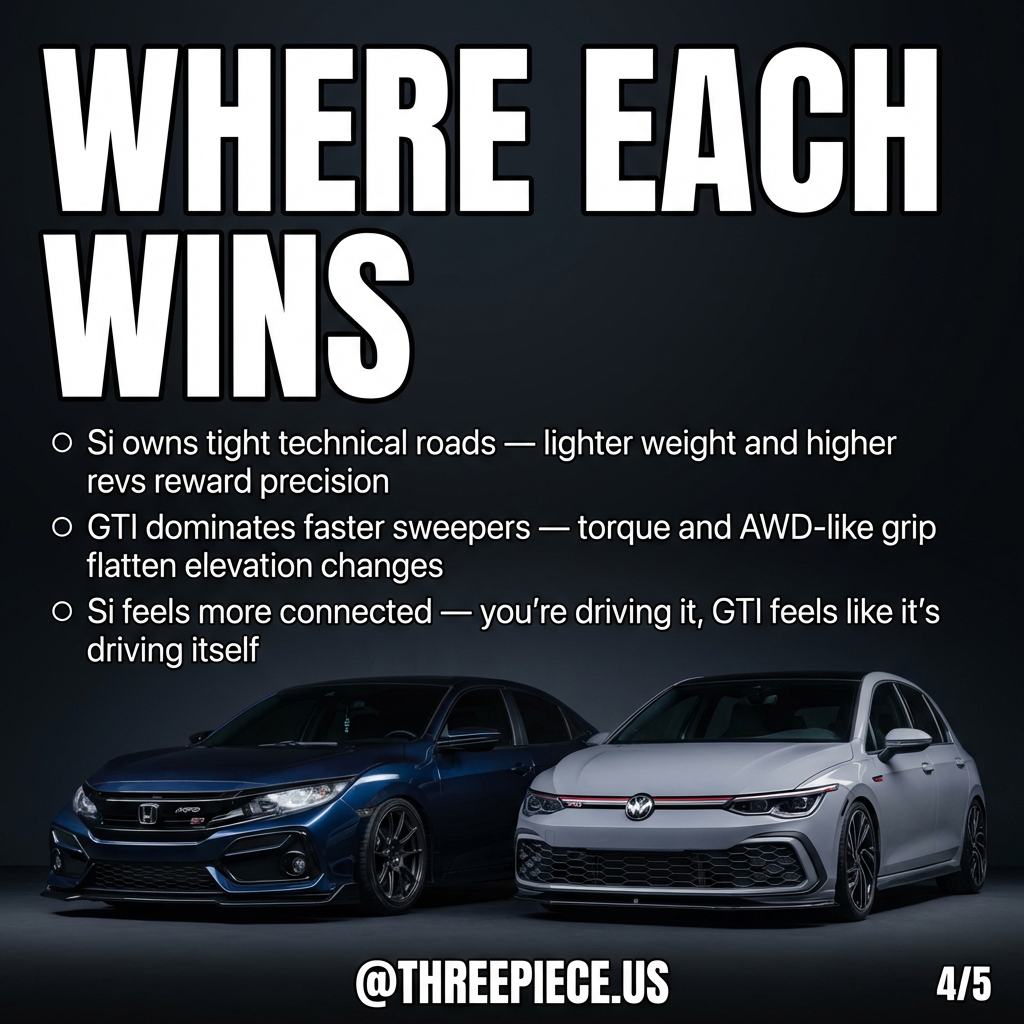
The GTI dominates faster sweepers where torque and AWD-like grip flatten elevation changes. The turbo's low-end punch means you can be lazy with gear selection and still make rapid progress. Adaptive dampers and electronic aids make it incredibly confidence-inspiring for average drivers. However, this comes at the cost of pure driving engagement — the GTI feels like it's driving itself rather than you driving it.
The Final Verdict
Choose the Si for pure driving engagement — every input matters, mistakes are immediate, and the connection between driver and machine is unfiltered. The naturally-aspirated engine and lighter weight make it more rewarding on technical roads where skill matters more than power. Plus, the Si ages better with simpler platform architecture, cheaper maintenance, and more modification potential long-term.
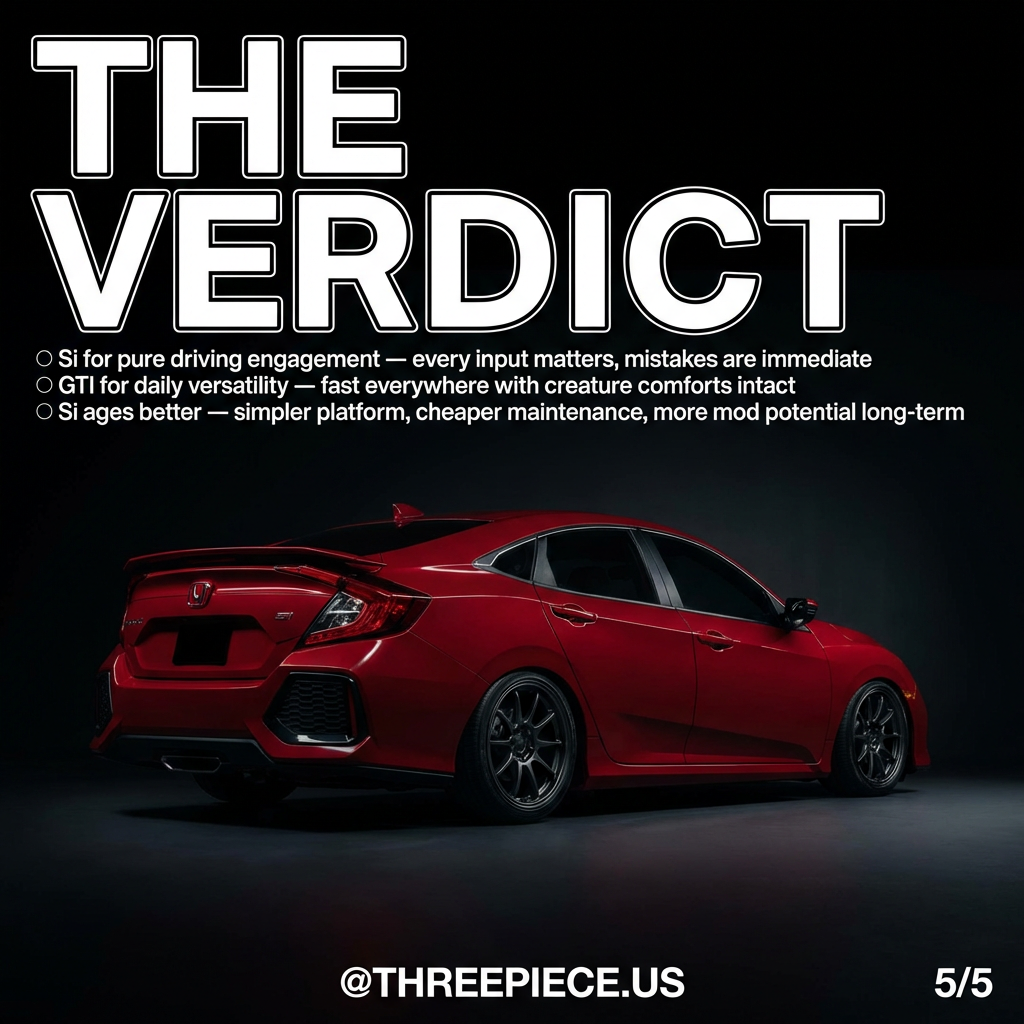
Choose the GTI for daily versatility — it's fast everywhere with creature comforts intact. The turbo torque and electronic aids make it more forgiving for less experienced drivers, and the interior quality is noticeably better. However, you'll pay more for maintenance and lose some of that raw driving connection that makes cars truly special.
For either build, proper wheel fitment is crucial. Browse our Work Emotion series for lightweight options that complement both platforms. Complete your setup with Work center caps starting at $45 and explore more comparisons in our FK8 Type R vs FK7 Civic Si analysis. Visit our vehicle gallery for build inspiration on both platforms.