
Posted by THREEPIECE.US on Mar 15th 2026
Chevy Camaro ZL1 Buying Guide: 650HP LT4 Reality Check 2026
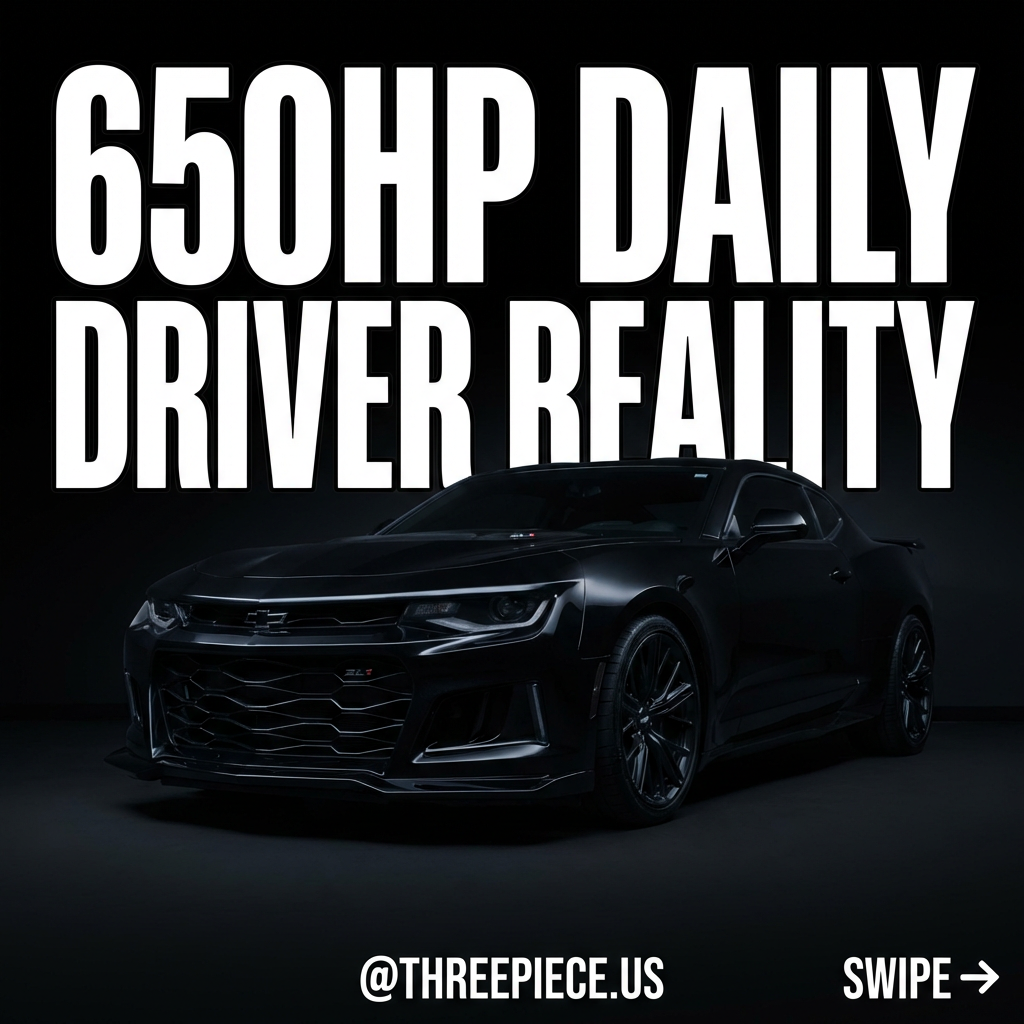
The Chevy Camaro ZL1 delivers 650 horsepower and 650 lb-ft from its supercharged LT4 V8, putting it in legitimate supercar territory for half the price. But owning one daily means dealing with heat soak, supercharger coupler failures, and transmission overheating that dealers won't tell you about upfront.
Quick links
- Why the ZL1 Actually Matters
- What Breaks and When
- Essential Cooling Upgrades
- Pre-Purchase Inspection Guide
- Daily Driver Reality
Why the ZL1 Actually Matters
While everyone argues Mustang vs Camaro, the ZL1 sits above that conversation entirely. The supercharged LT4 engine produces more power than most people will ever need, with 650 horsepower available from 6400 RPM and 650 lb-ft of torque hitting at just 3600 RPM. This isn't just a bigger engine in a Camaro body — it's GM's answer to the Hellcat that actually handles corners.
The Magnetic Ride Control system actually works, providing daily comfort while maintaining track-ready handling characteristics. Unlike the Hellcat's suspension that feels like a compromise, the ZL1's adaptive dampers transform the car's personality completely. For comparison with other American muscle options, check our ZL1 vs GT350 comparison to see how it stacks against Ford's track weapon.
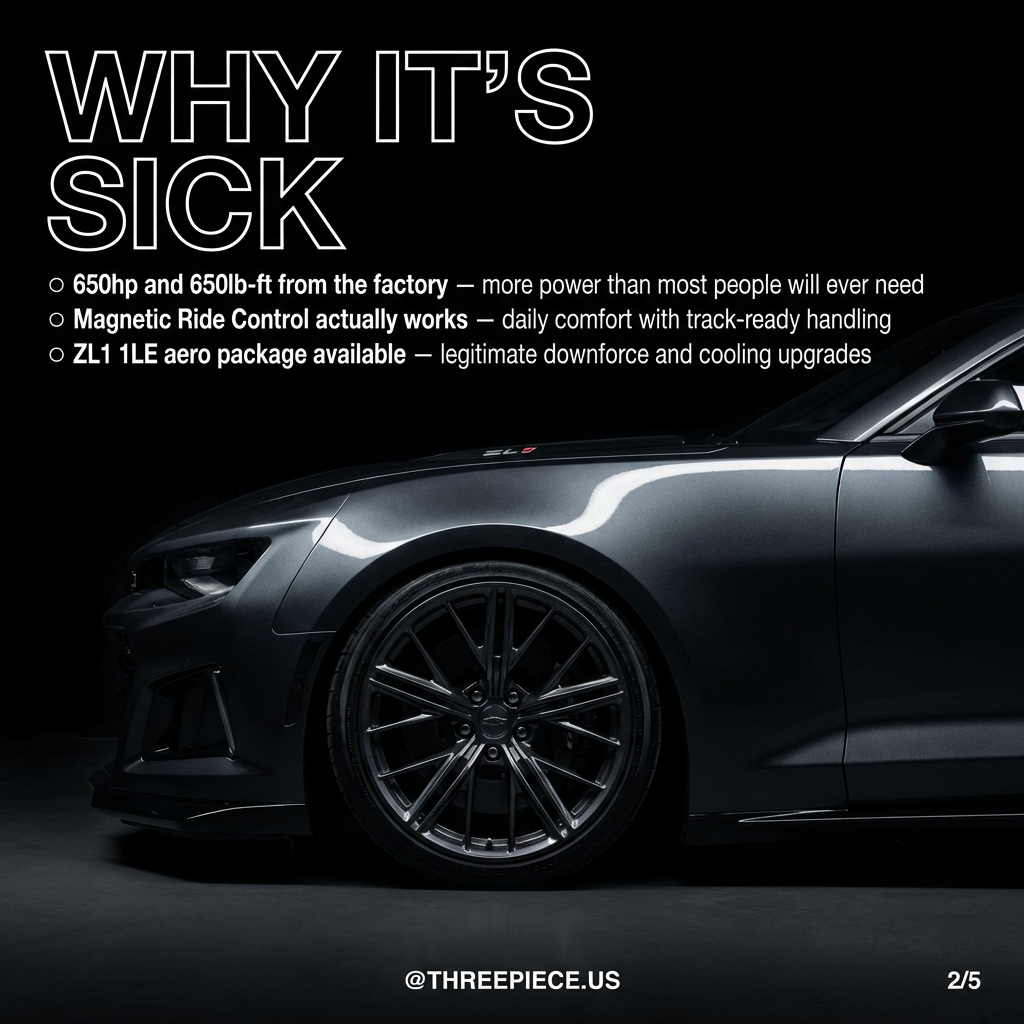
The ZL1 1LE package adds legitimate aerodynamics and cooling upgrades that transform track performance. This isn't cosmetic — the front splitter, dive planes, and rear wing generate real downforce while the additional heat exchangers help combat the cooling issues that plague stock cars. If you're considering suspension upgrades, the ISC Track/Race coilover kit provides adjustable damping for serious track work.
What Breaks and When
The ZL1's biggest weakness is heat management. After 15 minutes of hard driving, heat soak kills power as the stock intercooler and radiator system can't handle sustained abuse. The supercharged LT4 generates massive heat, and the stock cooling system prioritizes packaging over performance.
The supercharger coupler fails around 30,000 miles — it's an $800 part that requires engine removal for replacement. This isn't a wear item you can plan for; when it goes, you're stranded. The coupler connects the supercharger to the crankshaft, and when the rubber deteriorates, you lose all boost instantly.
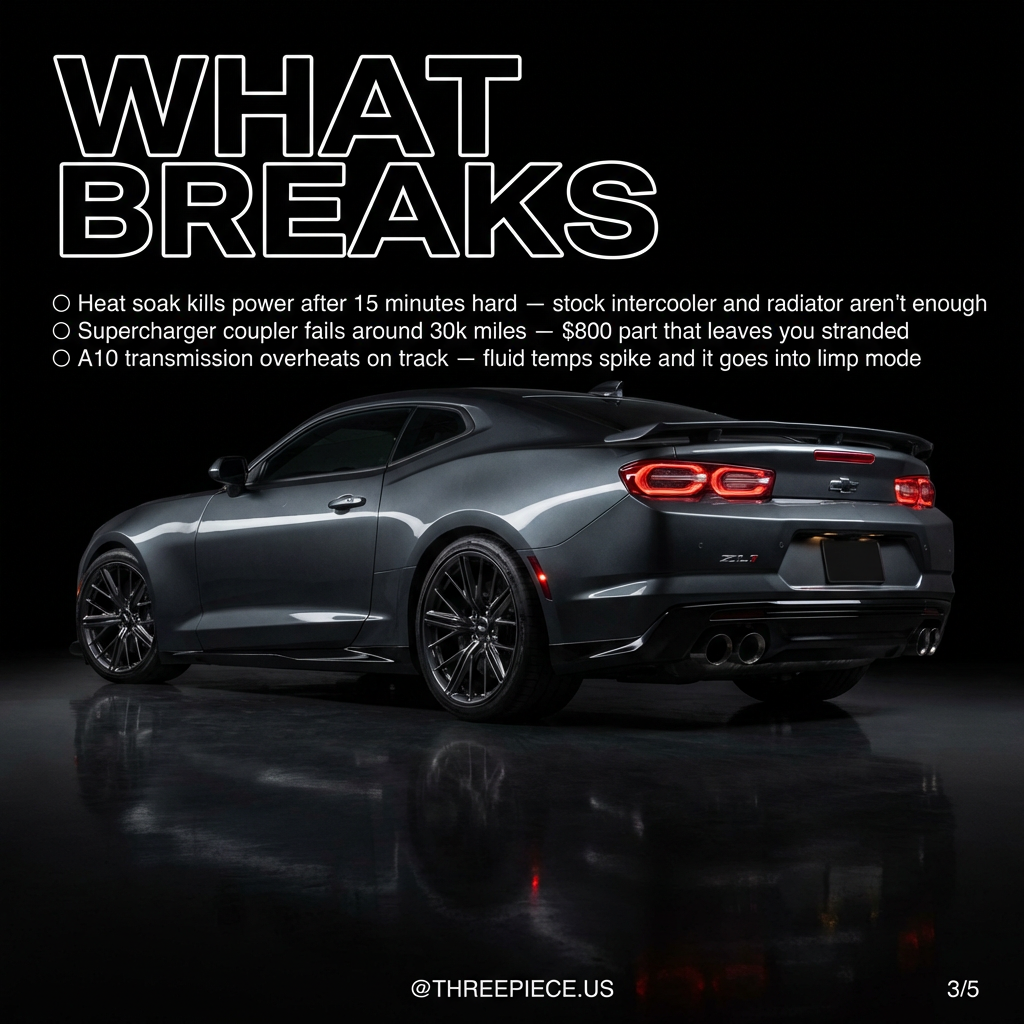
The A10 automatic transmission overheats on track, with fluid temperatures spiking into limp mode territory during sustained high-speed runs. The 10-speed's complexity creates more heat than the cooling system can handle, making it less suitable for track use than the manual option. For transmission cooling improvements, consider upgrading the cooling system with performance radiators like the CSF performance radiator at $395 for similar applications.
Other ZL1 owners report issues with the Magnetic Ride Control sensors failing around 40,000 miles, costing $1,200 per corner to replace. The system's complexity is its weakness — when it works, it's brilliant, but repairs are expensive and dealer-only.
Essential Cooling Upgrades
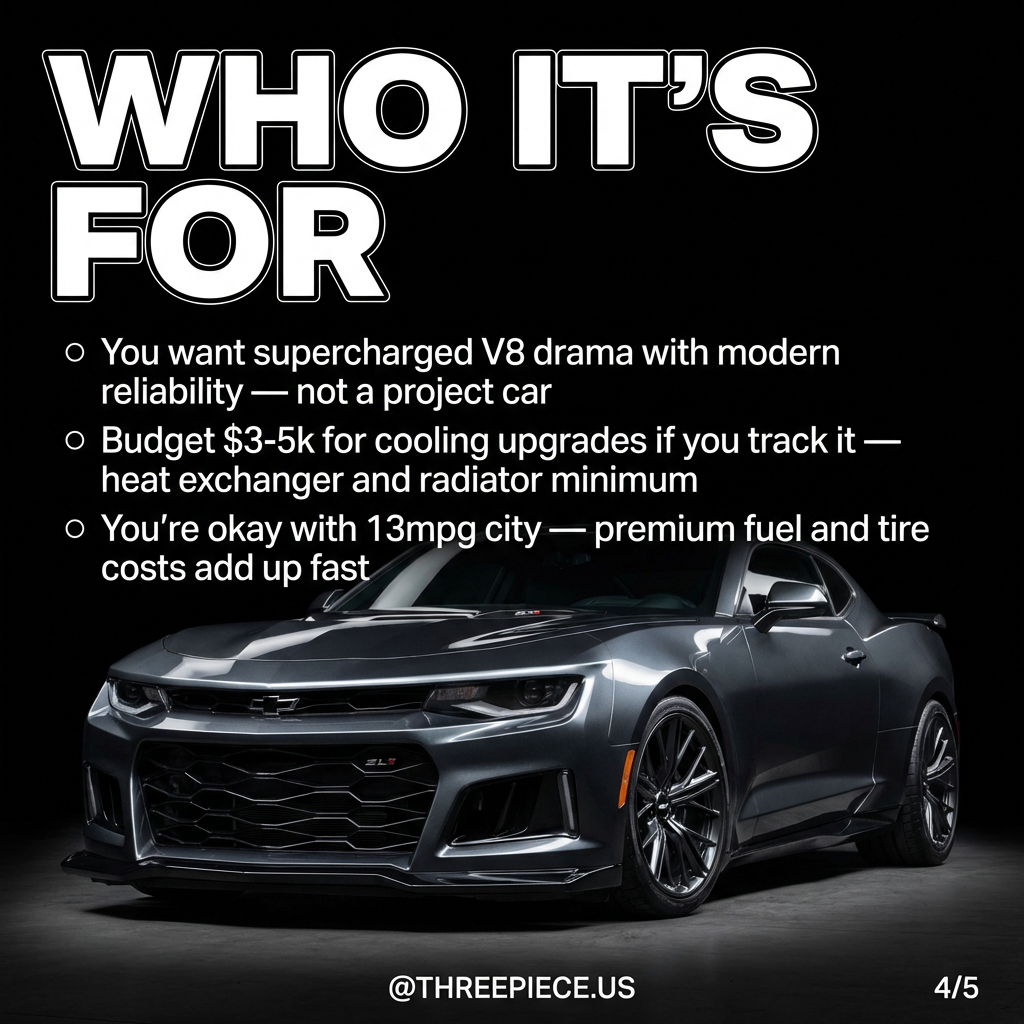
If you plan to track your ZL1, budget $3,000-$5,000 for cooling upgrades immediately. The stock heat exchanger and radiator are the minimum viable product for street driving but completely inadequate for sustained performance.
A performance heat exchanger for the supercharger intercooler is the first priority — it drops intake air temperatures by 40-50 degrees under load. Combined with a larger radiator and improved airflow ducting, these mods prevent the power loss that kills lap times after the first few minutes on track.
Transmission cooling is equally critical for A10-equipped cars. An auxiliary transmission cooler with dedicated airflow prevents the fluid overheating that triggers limp mode. Manual transmission ZL1s avoid this issue entirely but sacrifice the A10's lightning-fast shifts on track.
For supercharger reliability, consider upgrading to performance pulleys and bypass valves. The VMP Performance bypass valve at $217 improves supercharger longevity with aftermarket modifications, while their 3.1-inch supercharger pulley for $156 provides additional boost for serious builds.
Pre-Purchase Inspection Guide
Before buying any used ZL1, inspect the supercharger coupler for cracks or deterioration. This requires removing the supercharger belt and checking the rubber coupling — if there are any signs of cracking, walk away or negotiate the $2,000+ repair cost into the price.
Look for cars that already have cooling modifications done. A ZL1 with a performance heat exchanger, upgraded radiator, and transmission cooler saves you $5,000 in immediate upgrades and indicates the previous owner understood the car's limitations.
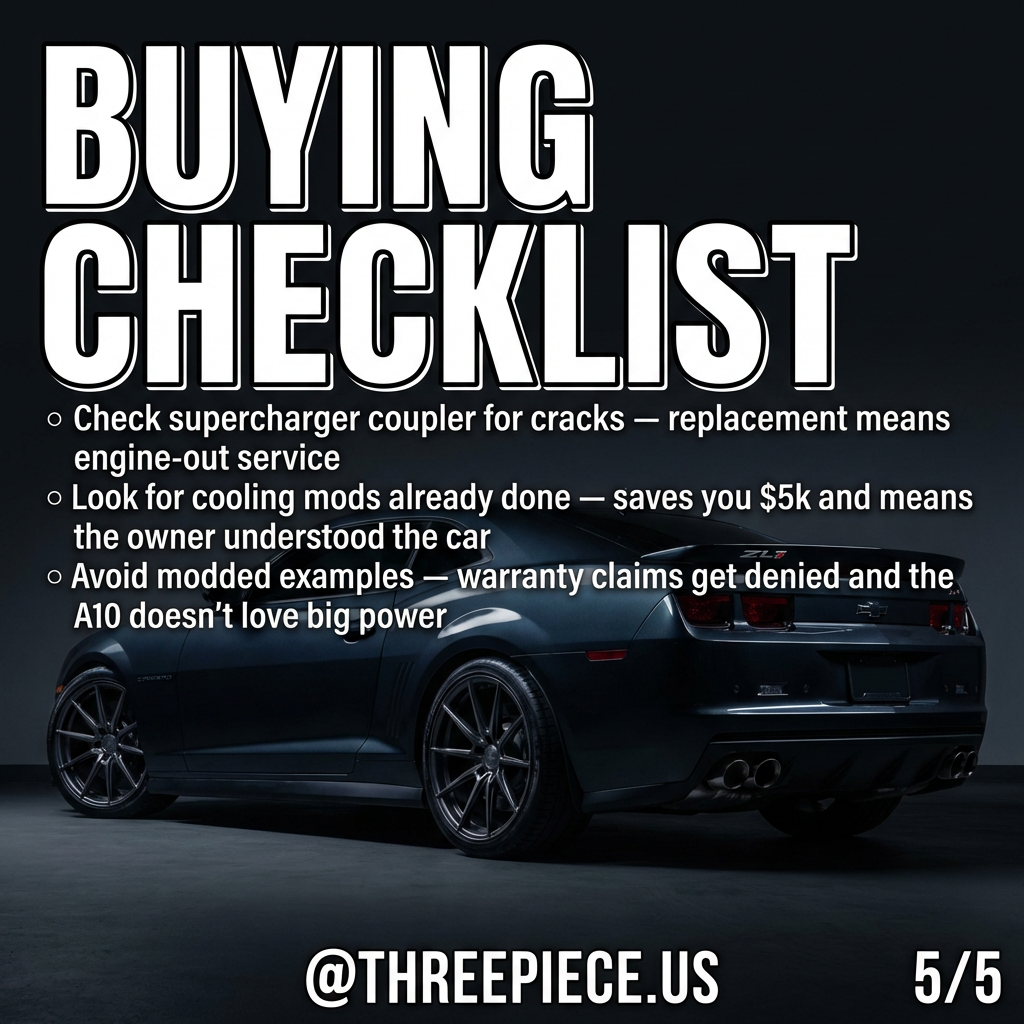
Avoid heavily modified examples unless you're prepared for warranty denial. GM will void coverage for any supercharger-related failures if they find evidence of tuning or pulley changes. Stock ZL1s with cooling upgrades represent the sweet spot for reliability and performance.
Check the Magnetic Ride Control system by cycling through all drive modes. Any error messages or inconsistent damping behavior indicates expensive sensor failures. The system should respond immediately to mode changes without hesitation or warning lights.
For wheel and tire upgrades, browse our 20-inch wheels in 5x120 to see options that fit the ZL1's aggressive brake package. The car's Brembo brakes require significant wheel clearance that eliminates many aftermarket options.
Daily Driver Reality
Living with 650 horsepower daily means accepting 13 MPG city fuel economy and premium fuel requirements. At current gas prices, expect $80+ fill-ups every 250 miles of city driving. The ZL1 drinks fuel like a truck but delivers supercar performance when you need it.
Tire costs add up quickly with 295/30ZR20 rear and 285/30ZR20 front sizes that limit options to expensive performance rubber. A set of replacement tires costs $1,200-$1,800 depending on compound choice, and they'll last 15,000-20,000 miles with spirited driving.
The ZL1 works as a daily driver if you accept its compromises. The ride quality on Magnetic Ride's comfort setting is surprisingly good, and the supercharged V8 provides endless entertainment in traffic. Just budget for the higher operating costs and inevitable cooling system upgrades.
Insurance costs reflect the car's performance — expect $200-$300 monthly for full coverage depending on your driving record and location. The ZL1's theft rate and repair costs make it expensive to insure compared to regular Camaros.
The ZL1 Verdict
The Camaro ZL1 delivers legitimate supercar performance for $60,000-$70,000 used, but it's not a casual purchase. Budget an additional $5,000 for cooling upgrades if you plan to use the performance, and understand that maintenance costs exceed regular Camaro ownership significantly.
For enthusiasts who want 650 horsepower with modern reliability and don't need a project car, the ZL1 makes sense. It's GM's most successful attempt at building a Hellcat competitor that actually handles, even if the cooling system needs immediate attention. Browse our vehicle gallery for ZL1 build inspiration, or check our Camaro SS 1LE buying guide if you want 90% of the performance without the supercharged complexity.