
Posted by THREEPIECE.US on Mar 24th 2026
Are Cold Air Intakes Overrated? The Dyno Data Truth in 2025
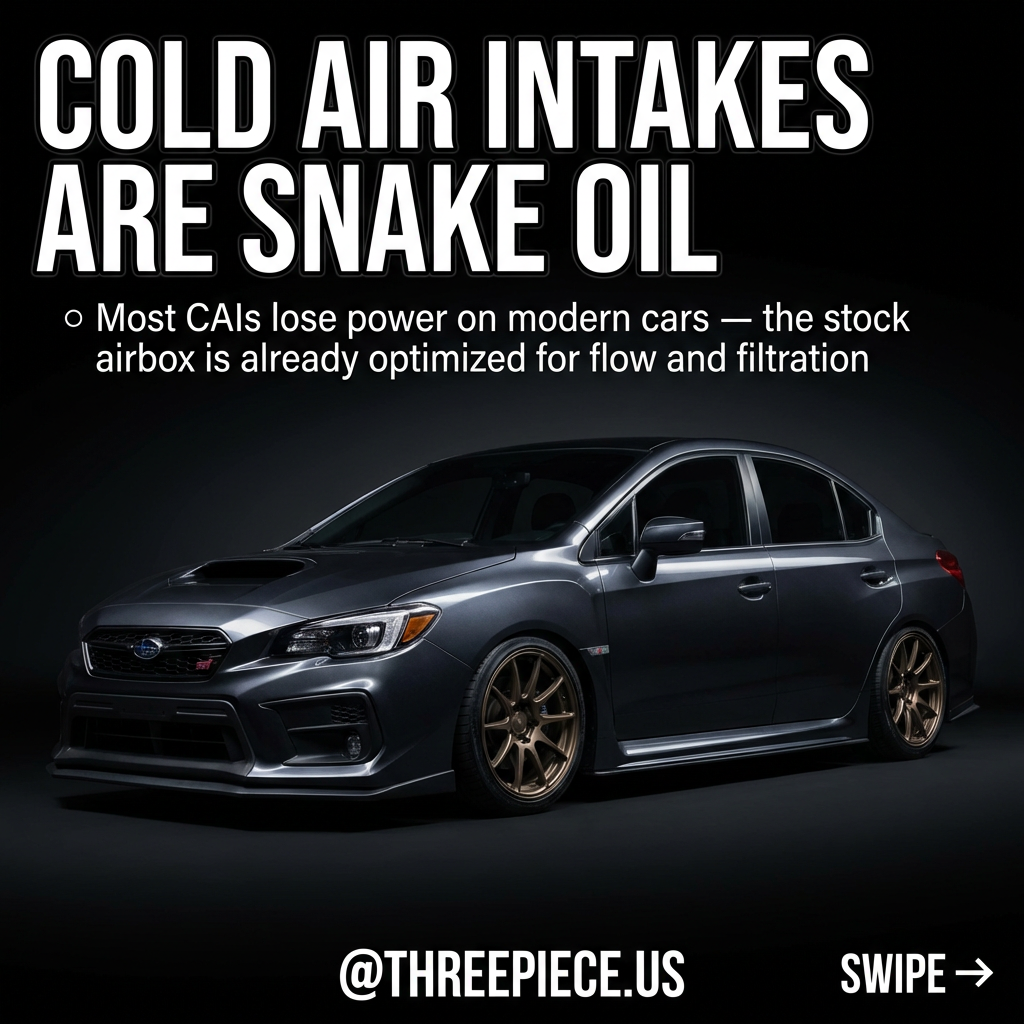
Cold air intakes are the most oversold modification in the enthusiast game, and the dyno sheets prove it. While marketing promises 15-25hp gains, reality delivers 2-5hp on most naturally aspirated builds — barely enough to overcome margin of error. The sound improvement is real, but your money is better spent elsewhere.
Quick links
- The Marketing Promise vs Reality
- What the Dyno Actually Shows
- What Actually Makes Power
- When Cold Air Intakes Make Sense
- Better Modifications for Your Money
The Marketing Promise vs Reality
Every intake manufacturer promises the same thing: 15-25hp gains from "cold, dense air" and "improved airflow." The reality is that modern OEM airboxes are already optimized for flow and filtration. Engineers aren't idiots — they know how to move air efficiently.

The problem starts with testing methodology. Most manufacturers test their intakes against a dirty OEM filter, not a fresh one. They also cherry-pick the best runs and ignore variables like ambient temperature, humidity, and dyno correction factors. When independent shops test these same intakes with proper controls, the gains disappear.
For perspective on real modifications that work, check our guide on why tires beat cold air intakes every time. The difference in lap times is measurable, unlike intake gains.
What the Dyno Actually Shows
Independent dyno testing reveals the truth about bolt-on intakes. On naturally aspirated engines, gains typically fall between 2-5hp — well within dyno variance. Some intakes actually lose power by disrupting the carefully engineered airflow path.
The "cold air" marketing is particularly misleading. Most intakes relocate the filter to the engine bay, where temperatures are actually higher than the stock airbox location. True cold air requires ducting from outside the engine bay — something most bolt-on kits don't provide.
Turbo cars see slightly better results, but not for the reasons manufacturers claim. The gains come from increased intake volume, not temperature. A larger intake tract allows the turbo to spool more efficiently, but this only matters at higher boost levels where the stock system becomes restrictive.
What Actually Makes Power
Instead of chasing intake gains, focus on modifications that deliver real results. Drop-in high-flow filters like K&N or AFE provide the airflow benefits without the downsides of relocating the entire intake system.
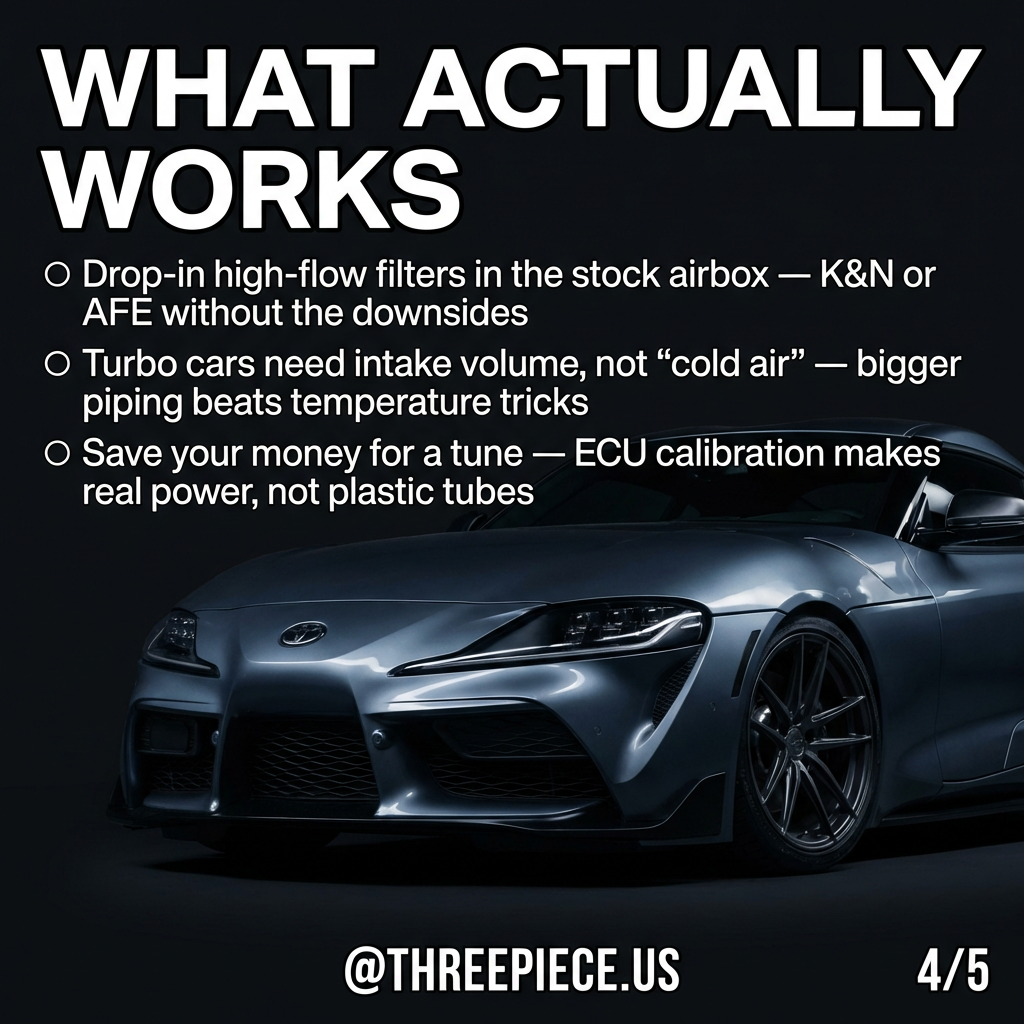
For turbo cars that need intake volume, bigger piping beats temperature tricks every time. The stock airbox becomes a restriction only on heavily modified builds with big turbos pushing serious boost. Our MK7 GTI IS38 build guide shows how to prioritize modifications that actually add power.
The biggest power gains come from ECU tuning, not hardware. A proper tune optimizes timing, fuel delivery, and boost curves — modifications that can add 30-50hp on turbo cars. Save your $400 intake budget for a professional tune instead.
Browse our wheel accessories section for modifications that improve handling and appearance — areas where you'll actually notice the difference.
When Cold Air Intakes Make Sense
Cold air intakes aren't completely useless, but they only make sense in specific scenarios. Heavily modified builds with big turbos can outflow the stock airbox, making a larger intake system worthwhile. Track cars that can route ducting to genuine cold air sources also benefit.
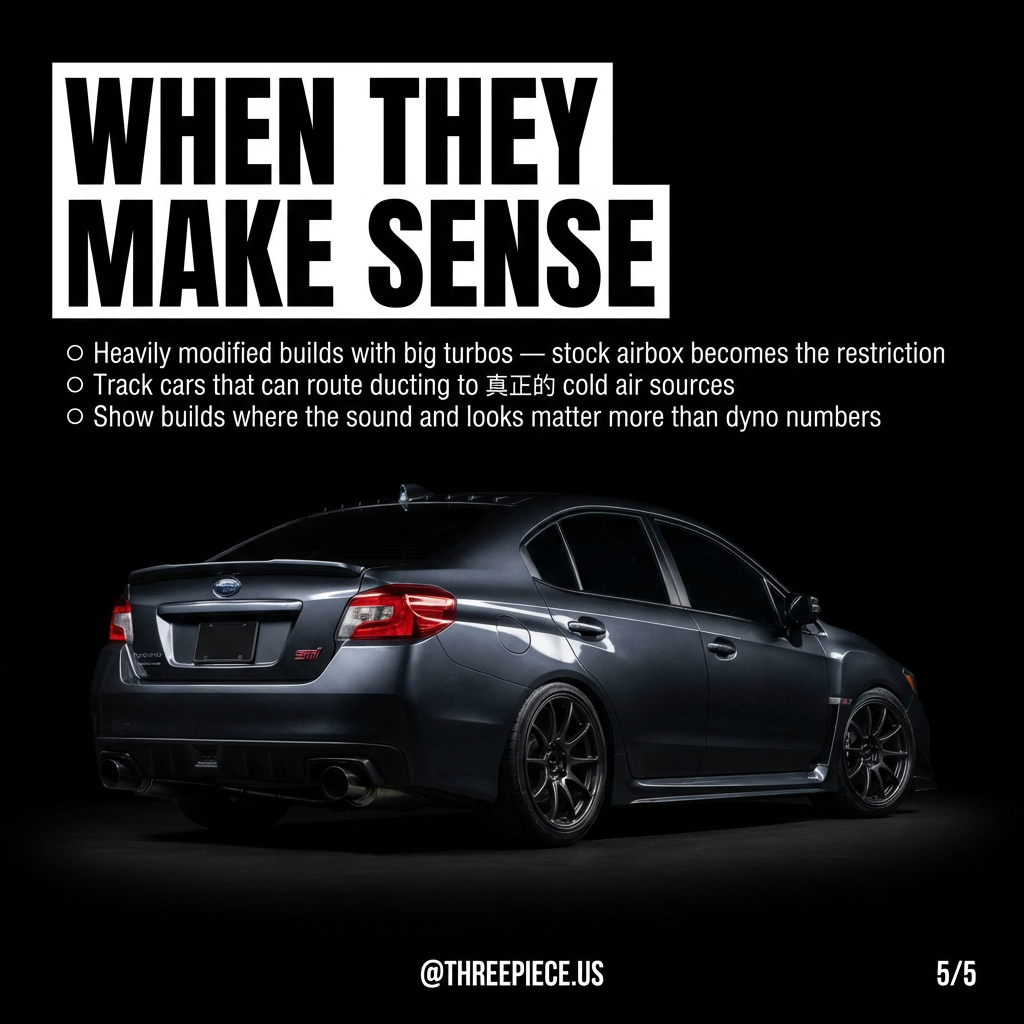
Show builds represent another valid use case. If the sound and appearance matter more than dyno numbers, an intake delivers the audible and visual impact you're after. The intake noise on a turbo car is genuinely addictive, even if power gains are minimal.
High-flow builds with supporting modifications can also justify intake upgrades. When you're running aggressive tunes, upgraded turbos, and race fuel, every restriction matters. But these are 500+hp builds, not bolt-on street cars.
For most enthusiasts building street cars, focus on proven modifications first. Our coilover setup guide shows how suspension modifications deliver real performance gains you can feel.
Better Modifications for Your Money
That $400 intake budget goes much further on modifications that actually improve your car. Quality tires transform handling and lap times in ways no intake ever will. A set of 200-treadwear summer tires costs the same as a cold air intake but delivers measurable performance gains.
Suspension modifications offer another high-impact upgrade path. Quality coilovers or sway bars improve cornering, reduce body roll, and enhance driver confidence. The difference is immediately noticeable, unlike intake modifications that require a dyno to detect.
For turbo cars specifically, focus on supporting modifications that enable more boost. Upgraded intercoolers, downpipes, and fuel system components deliver real power gains when paired with proper tuning. Our downpipe guide explains why these modifications actually work.
Wheels and tires represent the best performance-per-dollar modification for most cars. Lighter wheels reduce unsprung weight, improving acceleration, braking, and handling. Browse our Work Wheels collection for options that deliver real performance benefits alongside improved aesthetics.
Before buying any cold air intake, consider whether your money would be better spent on modifications that actually move the needle. In most cases, the answer is yes.