
Posted by THREEPIECE.US on Feb 28th 2026
Are 700HP Hellcats Overrated? Why Dodge's HEMI Monsters Aren't Street Kings
The Dodge Hellcat's 707 horsepower dominates dyno sheets and Instagram feeds, but real-world driving tells a different story. That supercharged 6.2L HEMI sounds incredible and the power is intoxicating, but there's more to consider before dropping $80K+ on what might be an expensive flex machine rather than a genuine performance king.

Quick links
- The Hellcat Hype is Real
- The Reality Hurts Performance
- Better Alternatives Exist
- When Hellcats Make Sense
- Final Verdict
The Hellcat Hype is Real
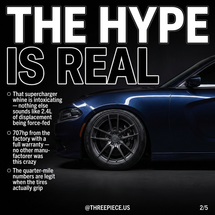
Let's be honest — that 2.4L supercharger whine is absolutely intoxicating. Nothing else sounds like that much displacement being force-fed, and the factory warranty backing 707 horsepower was unprecedented when Dodge launched this monster in 2015. The quarter-mile numbers are genuinely impressive when the tires actually hook up on a prepped surface.
The psychological impact is undeniable. Rolling up in a Hellcat commands instant respect at car meets, and the straight-line acceleration feels otherworldly when you finally get traction. For pure horsepower bragging rights, nothing else from the factory comes close at this price point. If you're building a dedicated drag car, that supercharged HEMI provides the strongest factory block available.
For supercharger upgrades, check out the VMP Performance Low-Vacuum By-Pass Valve at $217 for aftermarket cam setups, or the VMP Boost-Lok Supercharger Gasket Seal for $87 to prevent boost leaks.
The Reality Hurts Performance
Here's where the Hellcat fantasy meets physics. All that power is essentially useless on the street — you'll experience wheelspin through third gear even on 305mm rear tires. The car weighs over 4,400 pounds, which kills any hope of meaningful acceleration until you're already breaking every speed limit.

Heat soak becomes a major problem after just two hard pulls. The intercooler simply can't keep up with the thermal load, and power drops significantly as intake air temperatures climb. You're paying for 707 horsepower but only seeing it for brief moments before the car starts pulling timing.
The fuel economy is genuinely painful — 11 mpg combined means $100 fill-ups every 300 miles in current gas prices. Insurance companies treat these cars like the high-risk propositions they are, adding hundreds to monthly premiums. For context on better performance alternatives, read our analysis of why the CTS-V makes more sense at $45K — similar power with better chassis dynamics.
Better Alternatives Exist
The C7 Z06 makes similar power with actual grip and track capability. A tuned Coyote Mustang costs half as much and hooks better with drag radials. Even a stock GT350 will walk a Hellcat on any road with turns — the chassis dynamics aren't even close.
For forced induction builds, consider the VMP Performance 2024+ Mustang 5.0L 3.0L Supercharger Kit at $10,041 — expensive, but you're building on a lighter, better-handling platform. The new S650 platform addresses many of the weight and chassis issues that plague the Hellcat.
Even within the MOPAR ecosystem, a built 392 Scat Pack with forced induction makes more sense for most enthusiasts. You get 90% of the experience at 60% of the cost, with better daily drivability. Check our S650 Mustang fitment guide for wheel options on the newer Ford platform.
When Hellcats Make Sense
The Hellcat absolutely makes sense if you want the most antisocial daily driver possible — forget about the neighbors. The supercharger whine at 6 AM will wake the entire block, and that's exactly the point for some owners. If straight-line bragging rights matter more than lap times or fuel economy, the Hellcat delivers.
For dedicated drag builds, that supercharged HEMI provides the strongest factory foundation available. The block can handle serious power increases, and the aftermarket support is extensive. The VMP Performance TVS Supercharger 3.1in Pulley at $156 helps optimize boost delivery for track applications.
MOPAR loyalty is real, and if you're committed to the Chrysler ecosystem, the Hellcat represents the pinnacle of factory performance. The emotional connection and community around these cars shouldn't be underestimated. Just understand what you're buying — it's a statement piece first, track weapon second.
For wheel setups on heavy muscle cars, browse our wheels collection for options that can handle the weight and torque. The Work Emotion series offers forged strength at reasonable prices.
Final Verdict
The Hellcat isn't overrated if you understand exactly what it is — a factory hot rod built for straight-line dominance and maximum antisocial behavior. The problem comes when buyers expect it to be something it's not: a balanced performance car that works well on backroads or tracks.
707 horsepower doesn't automatically make the Hellcat the king of the street when that power can't be effectively used in real-world conditions. Weight, traction limitations, and heat soak conspire against the impressive dyno numbers. Sometimes the "slower" car is actually faster where it counts.
If you want the ultimate MOPAR experience and understand the limitations, the Hellcat delivers an experience no other factory car can match. Just don't expect it to be the best choice for actual performance driving — there are better options for less money that will embarrass it on any road with corners.
Looking to build something more balanced? Check out our forgotten performance sedans guide for alternatives that prioritize handling over horsepower, or browse the vehicle gallery for build inspiration that focuses on complete performance packages rather than just peak power numbers.