
Posted by THREEPIECE.US on Mar 1st 2026
2GR-FE VVT-i Tuning Guide: How Toyota's V6 Changes Mid-Rev
The Toyota 2GR-FE V6 isn't just another grocery-getter motor—its VVT-i system fundamentally reshapes the powerband mid-pull, creating what feels like two different engines in one. Most tuners treat VVT-i as set-and-forget, but understanding when and how this system transitions is crucial for extracting real power from this platform.

Quick links
- How VVT-i Actually Works
- Why This System Changes Everything
- Common Tuning Mistakes
- How to Tune It Right
- The Bottom Line
How VVT-i Actually Works
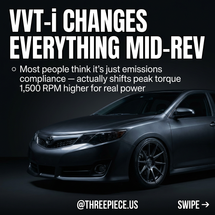
Most people think VVT-i is just emissions compliance—it's actually what makes the 2GR-FE rev like a sports car instead of a truck. The system advances intake cam timing by 50 degrees under load, opening valves earlier for dramatically more airflow at higher RPM.

The ECU triggers VVT-i around 4,200 RPM—that's why you feel the second powerband kick in during pulls. Oil pressure actuates the cam phaser, which is why oil changes matter more than you think. Running dirty oil or the wrong viscosity kills VVT-i response, especially under boost if you're running forced induction.
For performance builds on this platform, check out our guide on Acura TL Type-S builds which share similar VVT-i principles. The AEM cold air intake for TL/TL-S at $435 works with VVT-i timing maps rather than against them.
Why This System Changes Everything
Stock tune makes 268hp at 6,200 RPM—VVT-i is why it doesn't fall flat up top like older naturally aspirated V6s. Without VVT-i, the 2GR makes torque like a truck. With it activated, it revs like a sports car with a completely different character above 4,200 RPM.
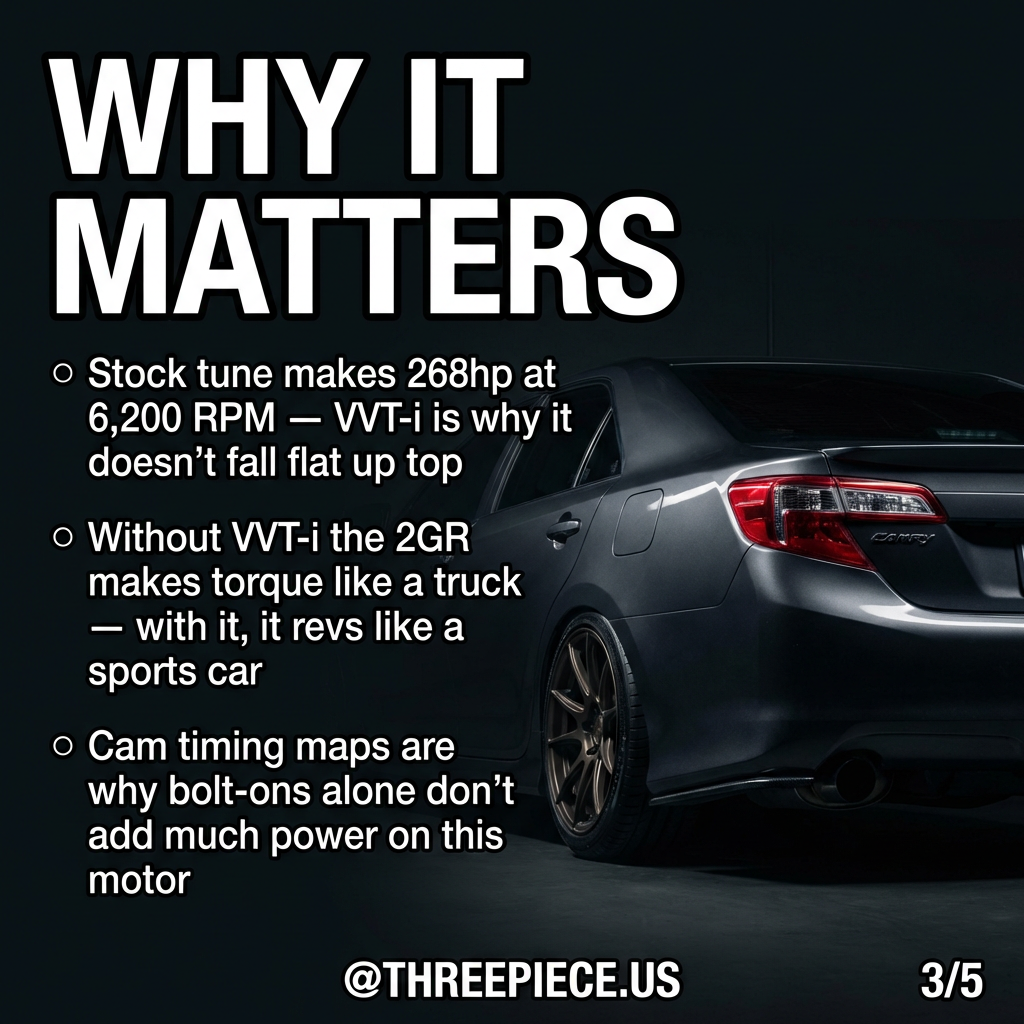
This is why bolt-ons alone don't add much power on this motor—the cam timing maps are optimized for the stock airflow. Installing a cold air intake without adjusting VVT-i timing leaves power on the table. The AEM RX-8 intake at $466 shows how proper MAF calibration works with variable cam timing systems.
Headers are the sweet spot for this platform because they work with VVT-i rather than against it. The BBK Coyote headers at $616 demonstrate proper header design for variable cam timing motors—tuned length primaries that complement the cam timing changes.
Common Tuning Mistakes
Advancing timing without VVT-i mapping causes knock—the ECU pulls power to protect itself. Most tuners treat this like a traditional V6 and wonder why timing advances don't work. The system is already optimizing cam timing dynamically.
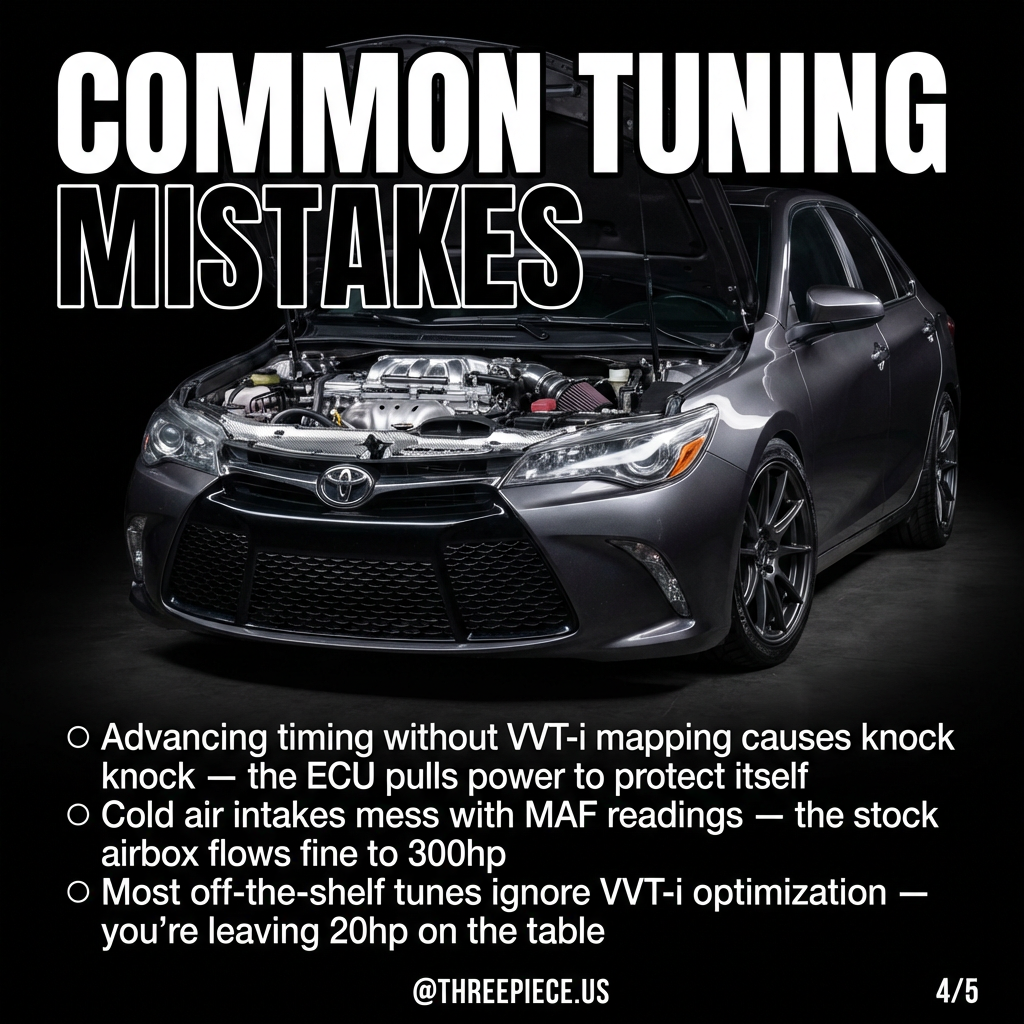
Cold air intakes mess with MAF readings more than you'd expect. The stock airbox flows fine to 300hp—focus on exhaust and tuning first. Most off-the-shelf tunes ignore VVT-i optimization completely, leaving 20hp on the table.
This is where proper ECU tuning becomes critical. The Haltech Elite 1500 at $2,077 gives you complete control over VVT-i mapping. For less involved builds, the Dynojet Power Vision at $428 shows how modern tuning tools handle variable cam timing.
Understanding wheel and tire dynamics helps too—check our wheel weight physics guide for how rotational mass affects acceleration with these torquey V6s.
How to Tune It Right
Custom VVT-i maps unlock 15-20hp over generic tunes—find a 2GR specialist who understands the system. Headers plus tune is the sweet spot, making 285hp to the wheels on pump gas while maintaining daily drivability.

Oil viscosity matters more than most realize. 0W-20 keeps VVT-i response crisp, especially under boost. Thicker oils slow the cam phaser response, creating a lazy transition that kills the dual-personality feel this motor is known for.
For supporting mods, proper wheel setup matters. Browse Work Wheels for lightweight options that complement the 2GR's torque delivery. The Work license plate frame at $15 and Work umbrella at $30 show attention to detail that serious builders appreciate.
Check out our underrated chassis mods guide for suspension upgrades that work with the 2GR's power delivery. The coilover setup guide explains how proper suspension tuning complements engine modifications.
The Bottom Line
The 2GR-FE's VVT-i system isn't marketing fluff—it's what makes this motor special. Understanding how it works and tuning with the system rather than against it unlocks the real potential of this platform. Find a tuner who gets VVT-i mapping, focus on headers and proper oil maintenance, and you'll have a motor that pulls hard from 3,000 RPM to redline.
Browse our vehicle gallery for 2GR build inspiration, or check the forgotten performance sedans guide for other overlooked platforms with similar potential. The Work Royal installation kit at $300 ensures your wheel setup matches the quality of your engine build.