
Posted by THREEPIECE.US on Mar 15th 2026
2016-2019 Mustang EcoBoost Manual: 310HP Turbo Reality Check
The 2016-2019 Mustang EcoBoost manual delivers 310 horsepower from Ford's 2.3L turbo four — more than the old GT's 5.0L V8 — while flying under insurance radar. While V8 purists debate "real" Mustangs, smart buyers are scooping up these turbo manuals that combine actual handling with surprising power for half the price of a GT.
Quick links
- Real World Power Numbers
- $1,500 in Smart Modifications
- Common Failure Points
- Pre-Purchase Inspection Guide
- Perfect First Sports Car
Real World Power Numbers
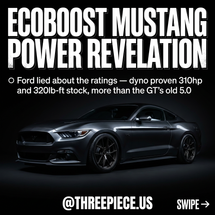
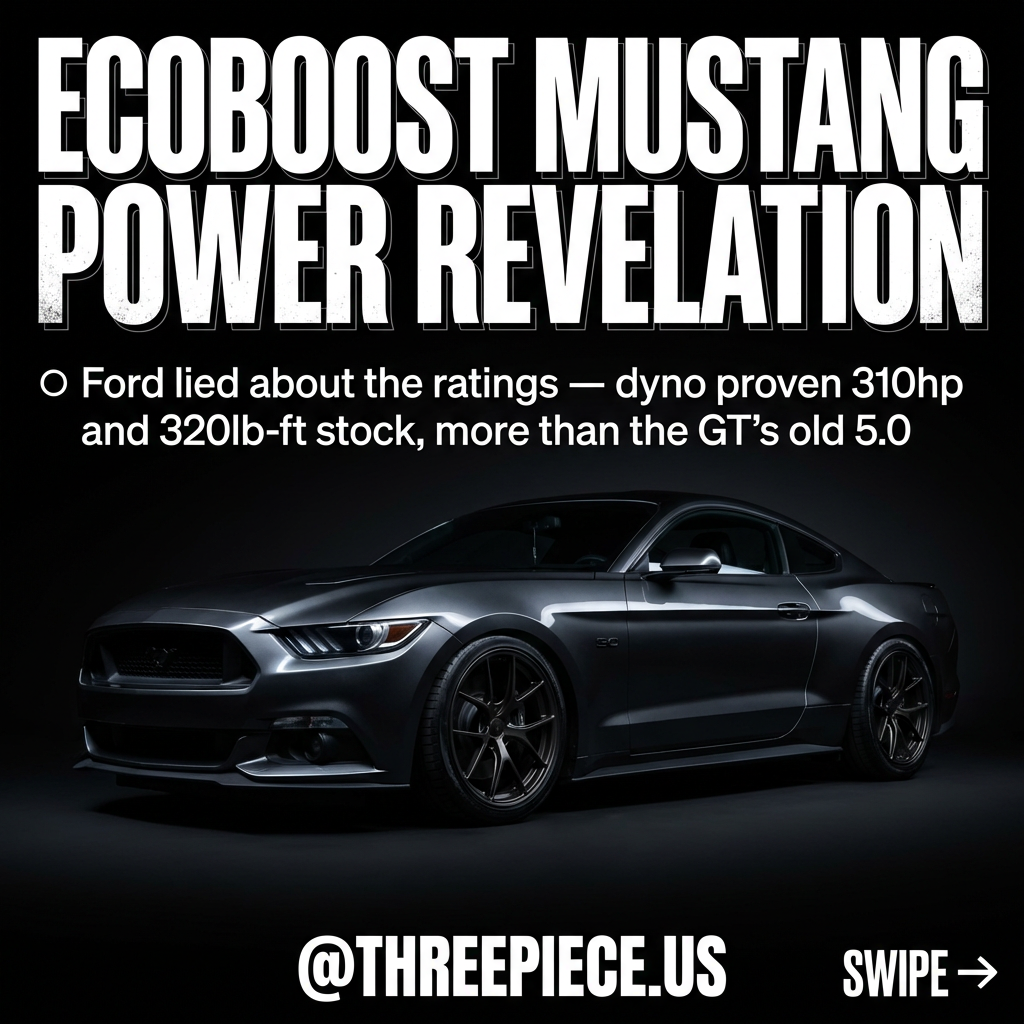
Ford understated the 2.3L EcoBoost ratings. Dyno testing consistently shows 310 horsepower and 320 lb-ft at the wheels on stock cars — significantly more than the advertised 270hp/310 lb-ft. That's more torque than the previous generation GT's naturally aspirated 5.0L V8 produced.
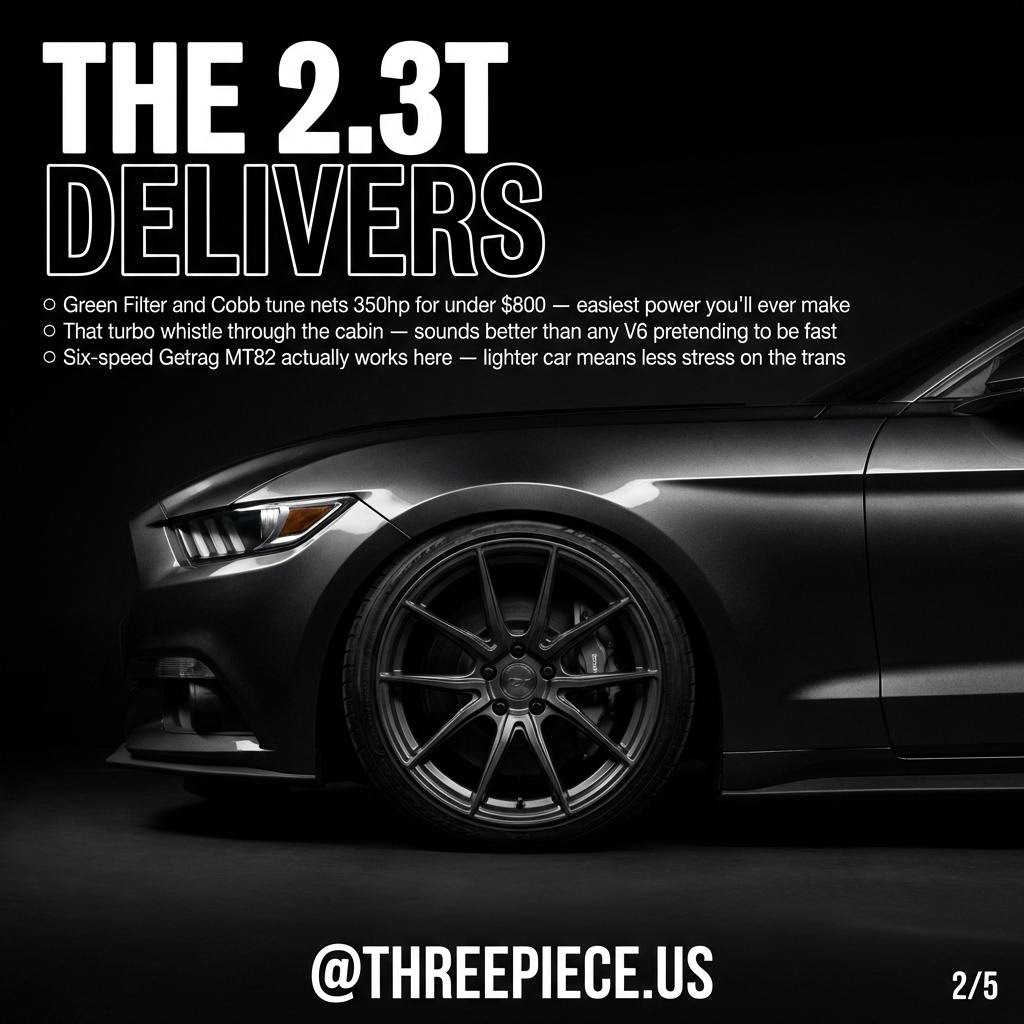
The turbo whistle through the cabin sounds better than any V6 pretending to be fast. The six-speed Getrag MT82 transmission actually works well in the lighter EcoBoost — less stress on the trans compared to the GT's torque output. For context on manual transmission reliability across platforms, check our FK8 Type R vs FK7 Civic Si comparison that covers clutch longevity in high-performance applications.
The 2.3T responds incredibly well to basic modifications. Unlike naturally aspirated engines that require extensive work for meaningful gains, turbocharged platforms like this benefit from simple breathing improvements and tuning.
$1,500 in Smart Modifications
The EcoBoost platform delivers the easiest power you'll ever make. A Green Filter and Cobb AccessPORT tune nets 350 horsepower for under $800 total — that's a 40hp gain from two bolt-on parts.
Essential modifications for the platform include:
- Cold air intake — $300-400 for significant airflow improvement
- AccessPORT with custom tune — $400-500 for optimized fueling and timing
- Catted downpipe — $600-800 for better exhaust flow
For more insight on downpipe selection, read our guide on catted vs catless downpipes — high-flow cats make more sense for street cars. Total investment of $1,300-1,700 transforms the car's character while maintaining daily drivability.
The platform's turbo lag below 2,500rpm isn't instant like the Coyote V8, but the midrange punch more than compensates. Peak torque arrives early and stays flat through the rev range.
Common Failure Points
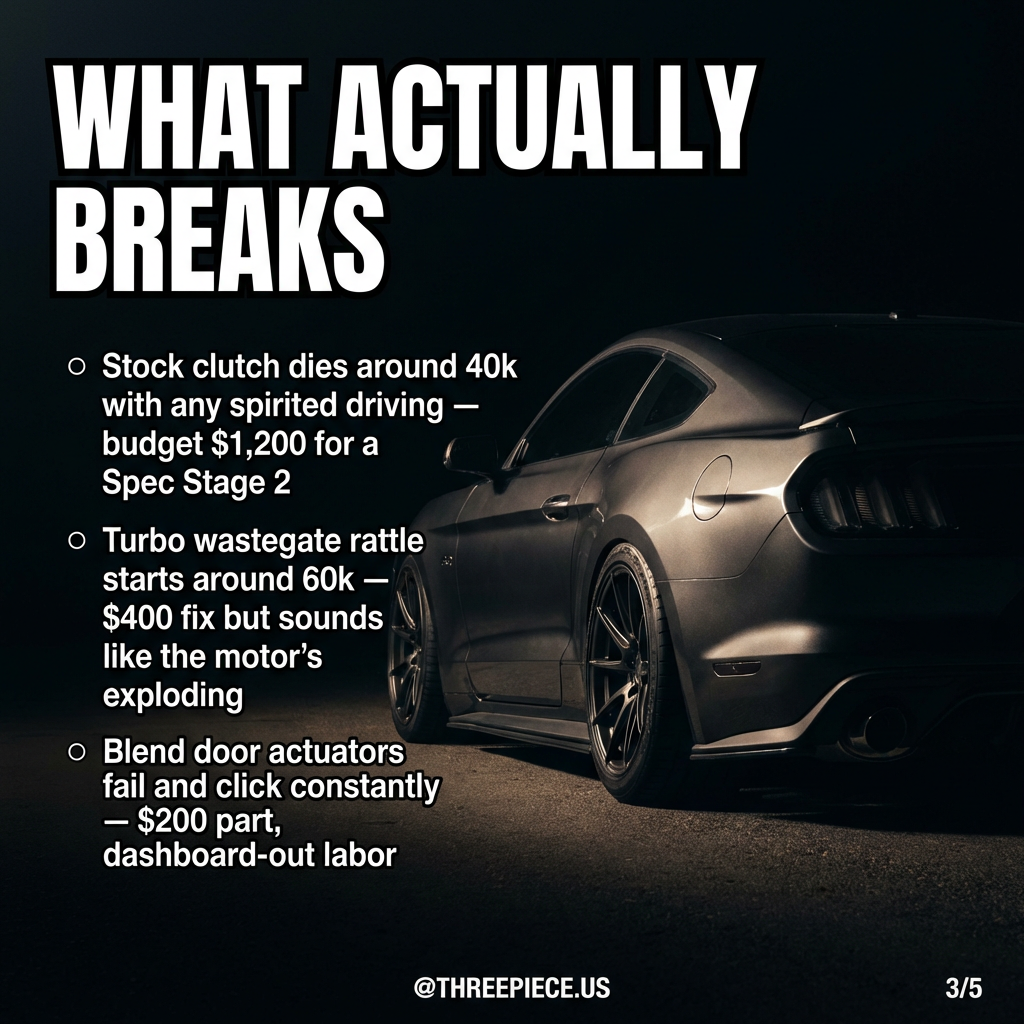
The stock clutch represents the biggest weakness. Expect failure around 40,000 miles with any spirited driving — budget $1,200 for a Spec Stage 2 replacement. The ACT HD/Performance Street clutch kit at $627 offers a more affordable alternative for street use.
Turbo wastegate rattle starts around 60,000 miles — sounds like the motor's exploding but costs only $400 to fix. The wastegate actuator rod wears and creates metallic ticking on cold starts. Not catastrophic, but annoying.
Blend door actuators fail and click constantly behind the dashboard. $200 part but requires dashboard removal for labor. Common Ford issue across multiple platforms. For comparison with other common issues in performance cars, see our BMW F80 M3 maintenance reality check.
The 2.3L EcoBoost doesn't suffer from the carbon buildup issues that plague direct-injection engines like the FA20DIT in Subaru WRX models. Ford's port and direct injection system keeps valves cleaner.
Pre-Purchase Inspection Guide
Test the clutch engagement point during your drive. If the engagement point sits at the floor, the clutch is cooked and needs immediate replacement. Healthy clutches engage in the middle third of pedal travel.
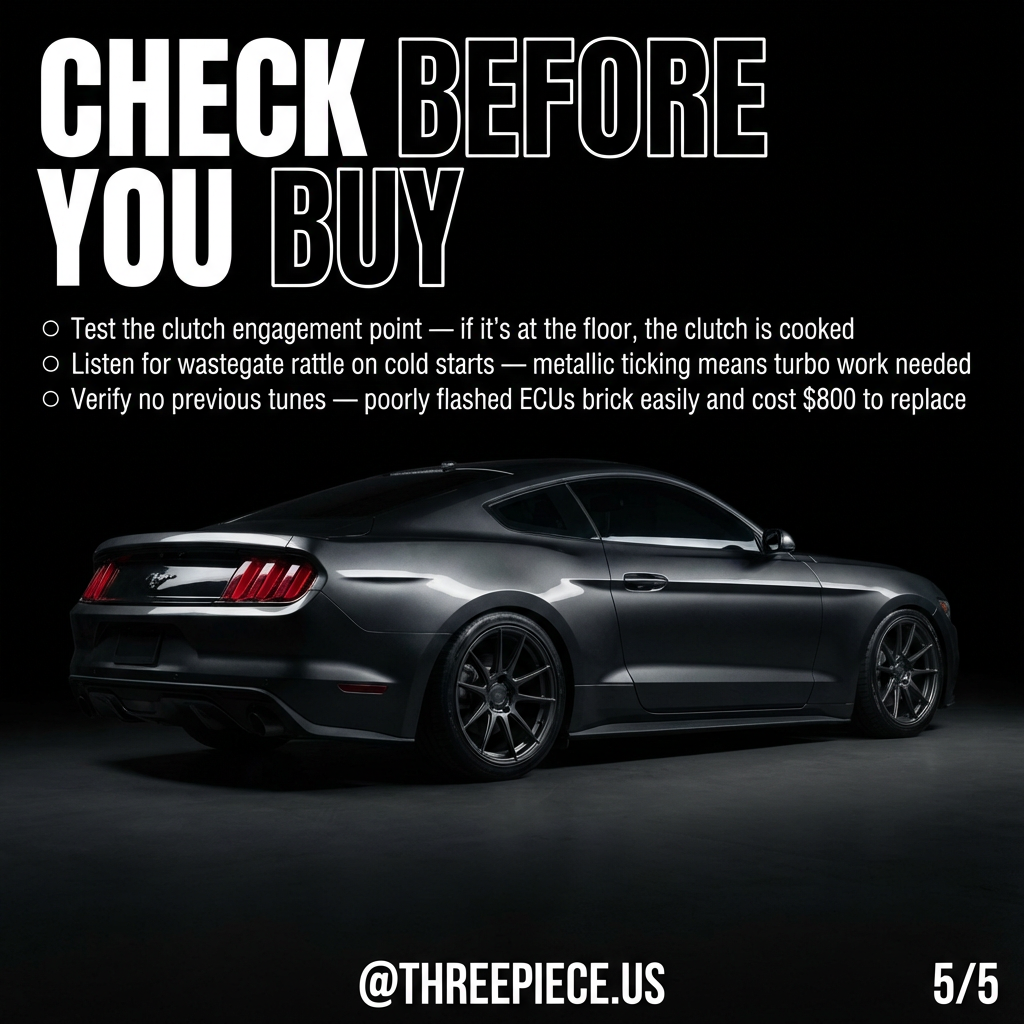
Listen for wastegate rattle on cold starts — metallic ticking indicates turbo work needed. Not a deal-breaker but negotiate accordingly.
Verify no previous tunes by checking for AccessPORT mounts or aftermarket intake systems. Poorly flashed ECUs can brick and cost $800 to replace. Ask for documentation of any modifications.
Check service records for oil change intervals. The 2.3T requires 5W-30 synthetic every 7,500 miles maximum. Extended intervals kill turbochargers.
For wheel fitment on your potential purchase, the S550 platform runs 5x114.3 bolt pattern. Browse 18" wheels in 5x114.3 for OEM+ sizing or check our S550 Mustang GT build guide for aggressive fitment specs that work on EcoBoost models too.
Perfect First Sports Car
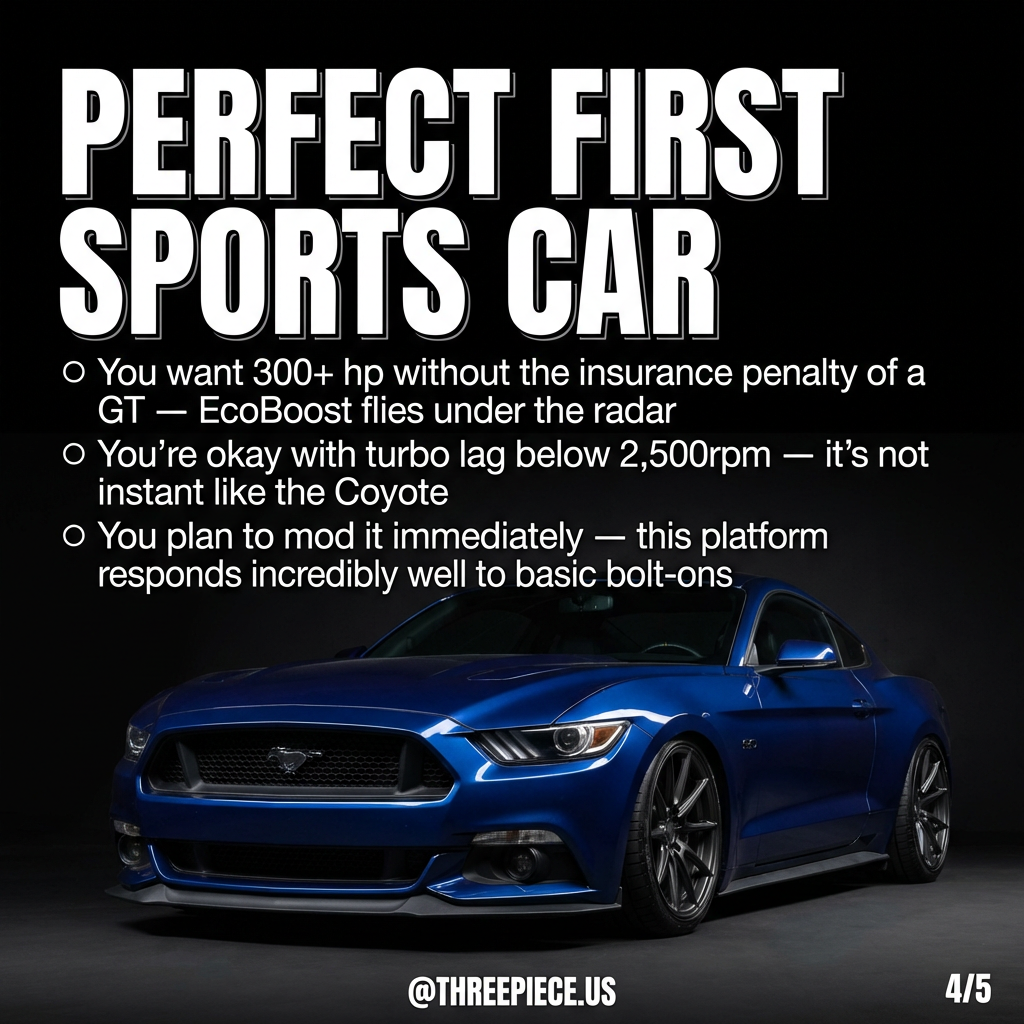
The EcoBoost manual hits the sweet spot for enthusiasts wanting 300+ horsepower without the insurance penalty of a GT. You're getting genuine performance that responds incredibly well to modifications while maintaining daily drivability.
This platform works if you're okay with turbo lag below 2,500rpm and plan to modify immediately. The 2.3T transforms with basic bolt-ons in ways naturally aspirated engines simply can't match.
For wheel upgrades, consider the Work Emotion series that complements the EcoBoost's sporting character. Complete the look with proper Work center caps starting at $45.
The 2016-2019 EcoBoost manual represents the most underrated Mustang of the last decade. While others chase V8 badges, smart buyers recognize the turbo four's potential for half the acquisition cost. Check out more builds in our vehicle gallery for inspiration.