
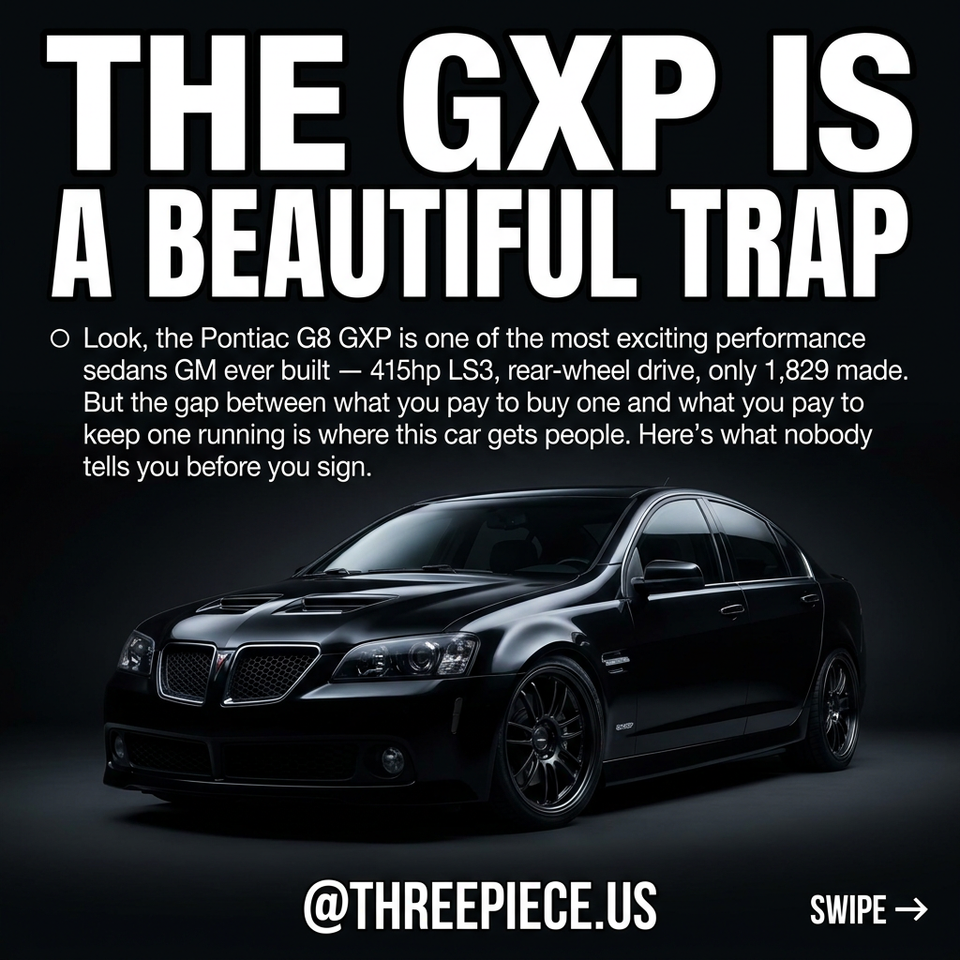
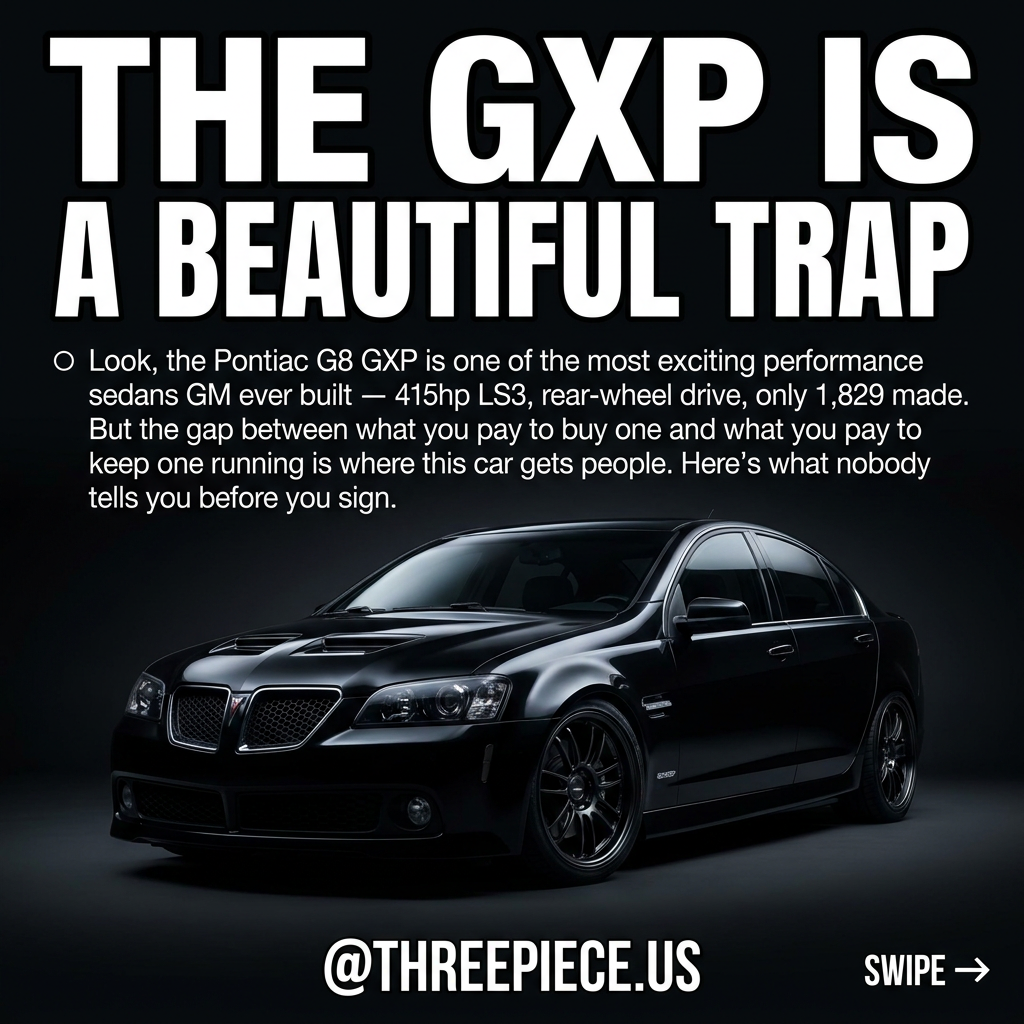
The Pontiac G8 GXP is one of the most romanticized performance sedans on the used market right now — 415 hp from a 6.2L LS3, rear-wheel drive, available six-speed manual, and only 1,829 units ever built. On paper, it's everything an enthusiast wants. In practice, the gap between what you pay to buy one and what you pay to keep one running is where this car wrecks people. Clean examples are pulling $40,000–$55,000 in 2025, but the ownership reality behind those prices tells a very different story. Here are three documented reasons you should think twice before signing.
Quick links
- The LS3 oil pump problem nobody warns you about
- The manual transmission bites back
- Rarity costs you twice
- Suspension wear and wheel fitment
- What to buy instead
- Final verdict
The LS3 Oil Pump Problem Nobody Warns You About
The LS3 has a reputation as a bulletproof motor, and in most applications it earns that. But the G8 GXP has a specific, well-documented oiling system weakness that can end the engine without warning. The oil pump pressure relief valve on 2008–2009 models can stick, causing an immediate and catastrophic drop in oil pressure. GM acknowledged this with TSB PIP4158C, but if the previous owner never addressed it, you're gambling every time you turn the key.
How bad can it get? One G8Board owner reported 0 psi oil pressure at just 16,000 miles — the stock pump had sheared itself off the crankshaft, damaging the crank, cam, and bearings in the process. That's not a high-mileage failure. That's a design flaw showing up on a nearly new car. The pump was replaced under warranty with a Melling unit, but the internal damage had already spread. Another recurring failure involves an improperly seated O-ring at the crank pickup tube, which causes oil starvation to the top end, collapsing lifters and wrecking the valvetrain.
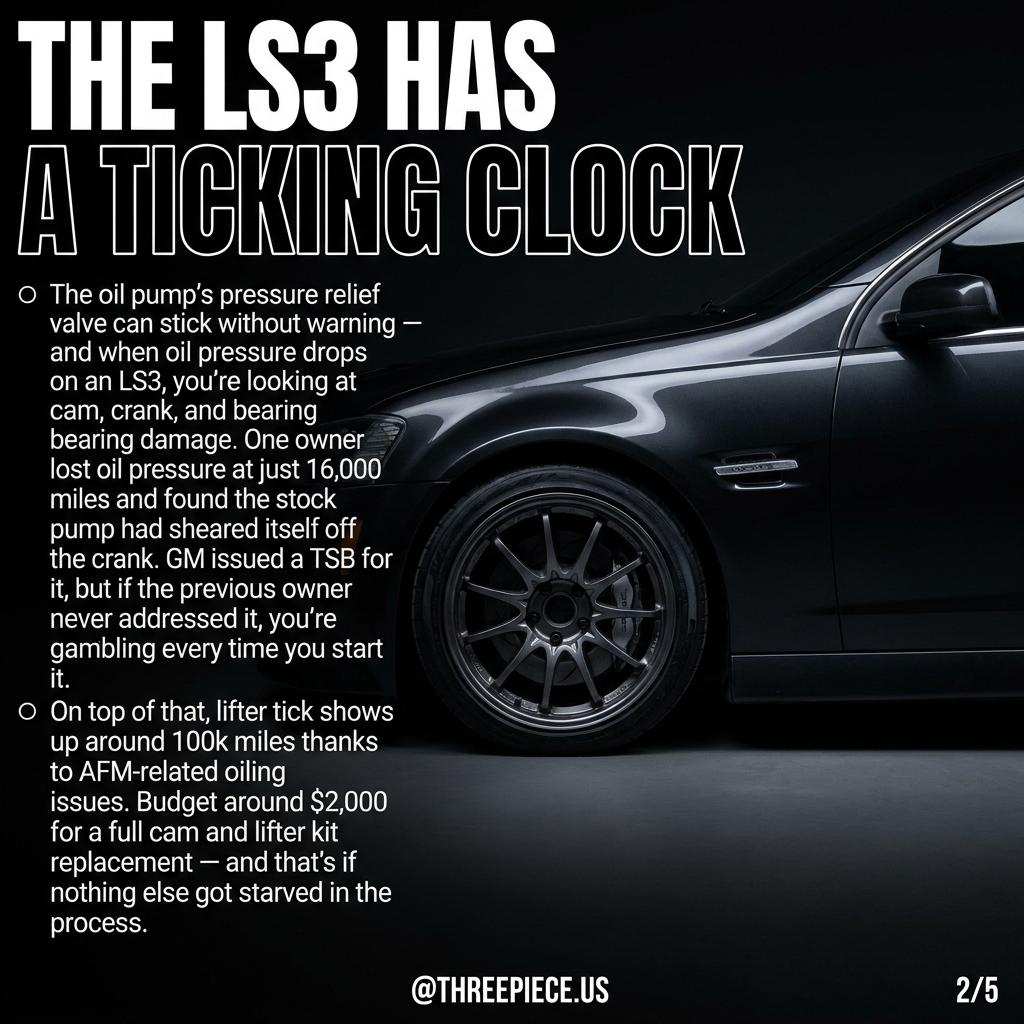
Even if the pump doesn't outright fail, lifter tick is extremely common around 90,000–120,000 miles, largely thanks to the LS engine's Active Fuel Management (AFM) system. AFM oiling passages clog with sludge over time, starving lifters and causing timing chain tensioner issues. Budget around $2,000 minimum for a full cam and lifter kit replacement — and that's if nothing else got starved in the process. Oil pump replacement alone is listed at 13.5+ hours of shop time, putting total repair costs between $1,500 and $2,700 depending on your shop rate. If you're researching LS engine reliability issues in other platforms, our breakdown of 6th Gen Camaro SS problems covers similar oiling and AFM concerns.
The Manual Transmission Bites Back
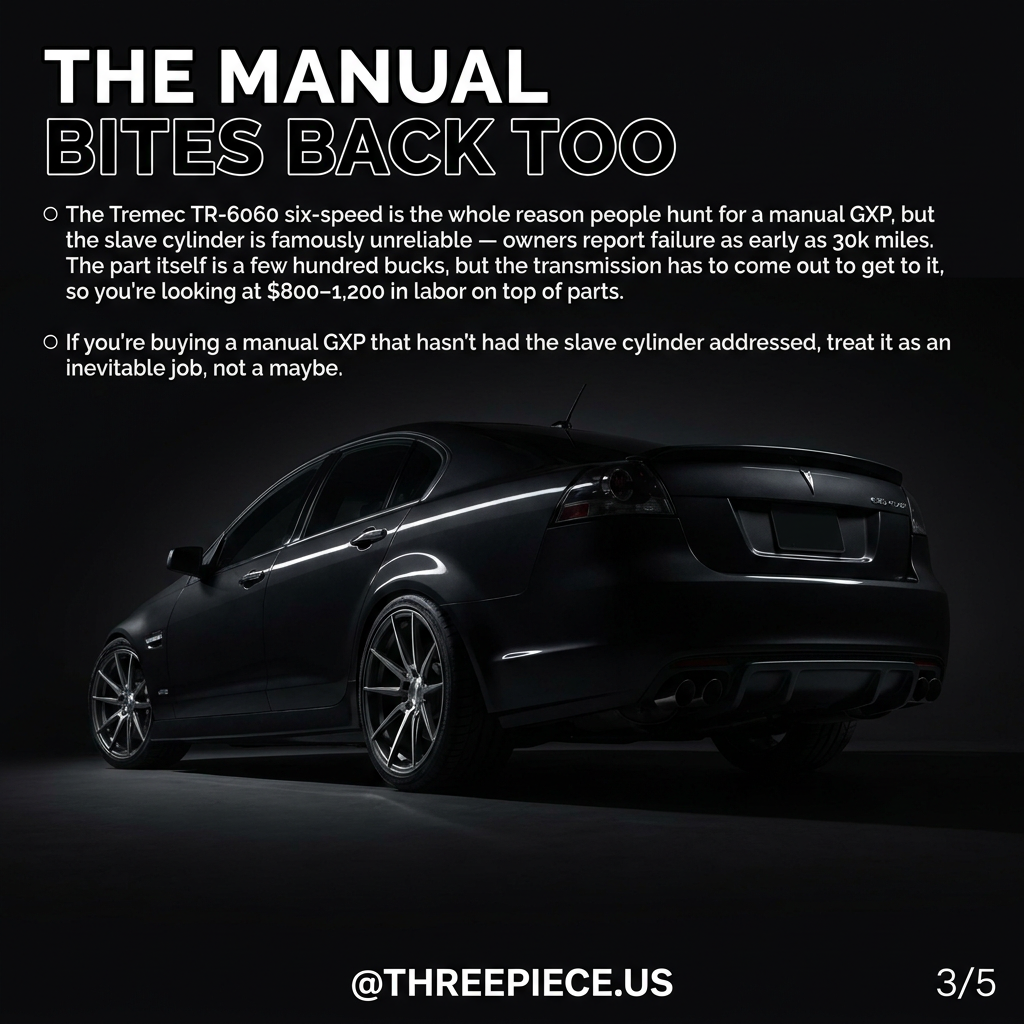
The Tremec TR-6060 six-speed manual is the single biggest reason people hunt for a GXP over a G8 GT. It's the whole point. But the clutch hydraulics on this car are a known weak spot that turns a dream drivetrain into an inevitable repair bill.
The slave cylinder is famously unreliable. Owners on G8Board and multiple forums report failure as early as 30,000–60,000 miles. Symptoms include a spongy clutch pedal, hydraulic fluid leaking under the bellhousing, and clutch slip. The part itself runs $300–$500, but here's the catch — the transmission has to come out to access it. That means $800–$1,200 in labor on top of parts. If you're buying a manual GXP that hasn't had the slave cylinder addressed, treat it as an inevitable job, not a maybe.
This is the kind of hidden cost that separates a car that looks like a deal from one that actually is. If you're shopping manual sports cars under $20K, the G8 GXP's price has climbed well past that threshold, but the drivetrain reliability hasn't scaled with it. And if you're cross-shopping other V8 sedans, our best V8 car under $20K guide covers alternatives that deliver similar thrills without the hydraulic headaches.
Rarity Costs You Twice
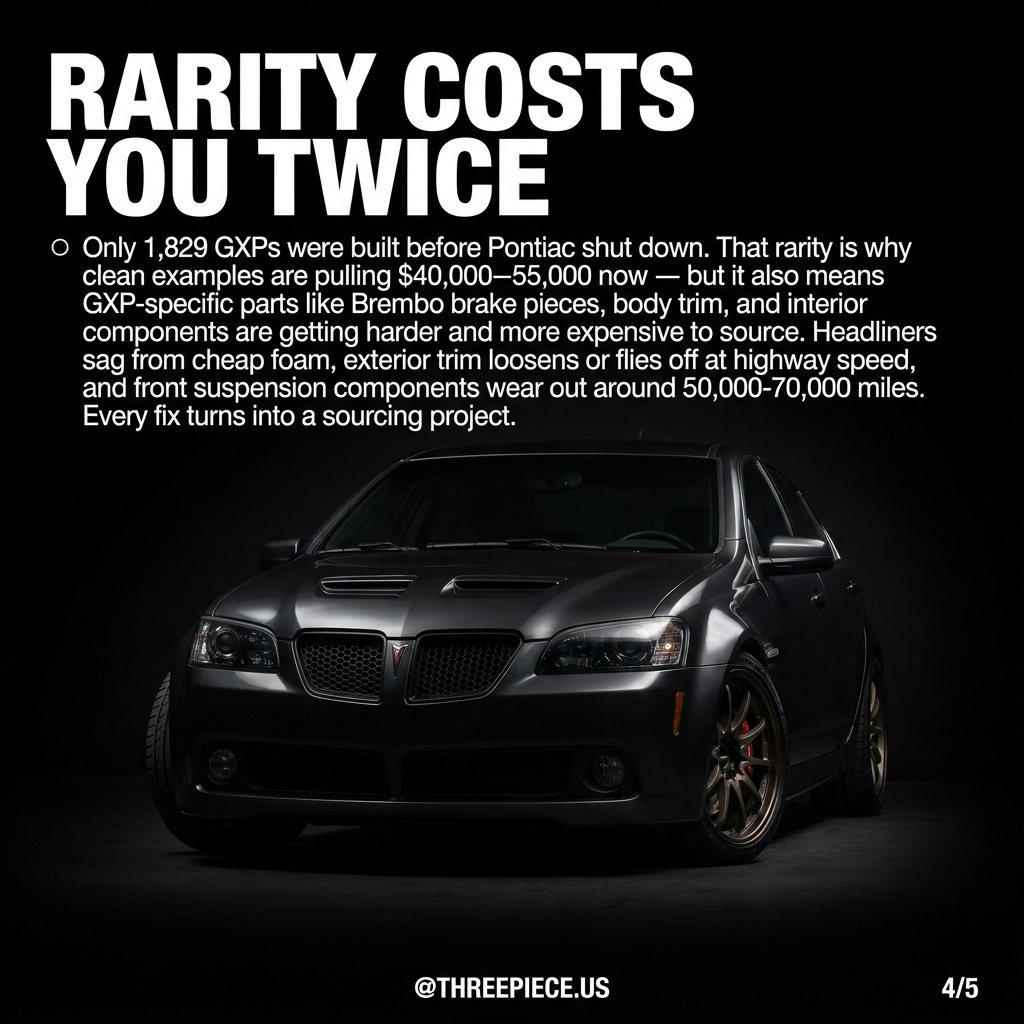
Only 1,829 GXPs were produced before Pontiac was shut down. That scarcity is exactly why clean examples command $40,000–$55,000 today. But rarity doesn't just inflate the purchase price — it inflates every single repair and maintenance cost after you sign.
GXP-specific parts like Brembo brake components, body trim, interior pieces, and even headliner material are getting harder and more expensive to source every year. The headliner foam quality is notoriously poor — sagging headliners are widespread across the model. Exterior trim pieces like hood scoops, front grilles, and rear spoilers loosen or fly off at highway speed. Every fix turns into a sourcing project, not just a repair. If you've dealt with parts scarcity on other discontinued platforms, you know the drill — but the GXP is worse because the production run was so short that the aftermarket never fully developed for it.
This is the same dynamic we covered in our Lexus SC400 problems breakdown — a car that's desirable on paper but punishing in practice once parts dry up. The difference is the SC400 never commanded GXP money. Compare that to the CT4-V Blackwing, which offers the same GM performance sedan DNA with full factory parts support and a modern dealer network.
Suspension Wear and Wheel Fitment
The G8 GXP's Zeta platform is a genuinely good chassis, but the front suspension components take a beating from the weight of the LS3 up front. Lower control arms, ball joints, and tie rods are common replacements around 50,000–70,000 miles. Steering rack leaks and driveshaft carrier bearing wear are also documented, especially on cars that have been driven hard or daily-driven on rough roads.
If you're building a GXP properly — or just trying to keep one alive — coilovers are one of the smartest investments you can make. They replace worn factory components while giving you adjustability the stock suspension never offered. ThreePiece.us carries several G8-specific options: the BC Racing BR-Series Coilovers for 08-09 Pontiac G8 at $1,195 is one of the most popular entry points, while the BC Racing DS-Series at $1,395 adds remote reservoirs for more aggressive use. The D2 Racing RS Series Coilover Kit at $1,200 is another solid option if you want 36-level damping adjustment. For the best ride quality on a daily-driven GXP, the Silvers Neomax 1-Way Coilovers at $1,399 or the Function and Form Type 4 Coilovers at $2,180 are worth considering. For more on why rear camber arms matter on lowered cars, check our dedicated guide.
The G8 GXP runs a 5x120 bolt pattern with factory 19-inch wheels. If you're looking at aftermarket options, 19-inch wheels in 5x120 is the natural search. For a slightly more aggressive setup, 20-inch 5x120 wheels clear the Brembo calipers with room to spare. If you're running 3-piece wheels on this platform, make sure your hub-centric rings are properly sized — the GXP's hub bore is 70.3mm, and any vibration at speed on a 4,000+ lb sedan gets amplified fast. Browse the hubcentric ring selection to find the right fit.
What to Buy Instead
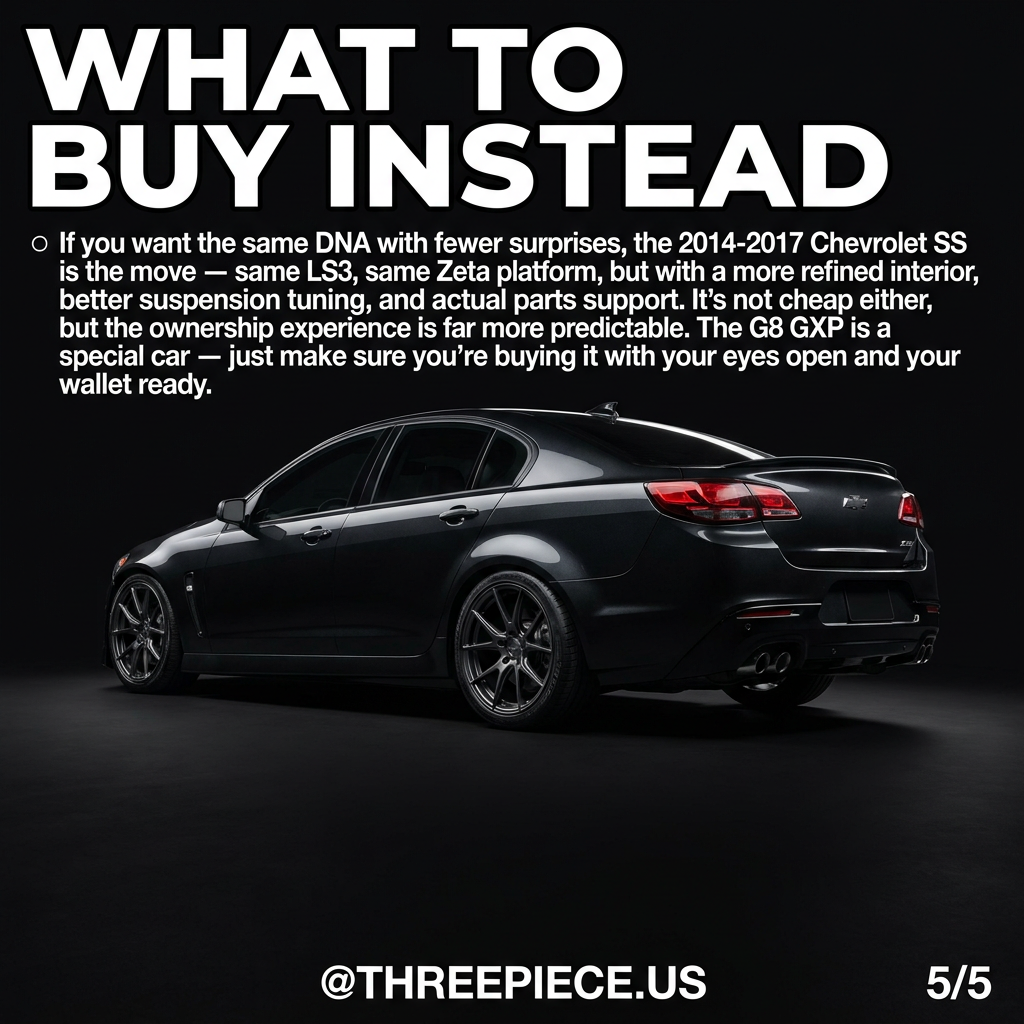
If you want the same Zeta-platform DNA with fewer surprises, the 2014–2017 Chevrolet SS is the move. Same LS3 (later cars got the LS3's successor), same rear-wheel-drive architecture, but with a more refined interior, better suspension tuning, and — critically — actual parts support through the Chevrolet dealer network. It's not cheap either, but the ownership experience is far more predictable.
If you're shopping V8 performance sedans on a budget, our best V8 car under $15K guide covers platforms that deliver real power without the GXP's parts-sourcing headaches. And if you're specifically after a manual V8 experience, the Dodge Challenger SRT 392 offers a similar power level with a much deeper parts ecosystem. The G8 GXP is a special car — just make sure you understand that "special" applies to the repair bills too.
Final Verdict: Know What You're Getting Into
The Pontiac G8 GXP isn't a bad car. It's a misunderstood car — and the misunderstanding is almost always about cost of ownership, not the driving experience. The LS3 oil pump issue is a genuine engine-ending risk if it hasn't been addressed. The manual transmission's slave cylinder is a when-not-if failure. And the rarity that makes the GXP desirable is the same thing that makes it expensive to maintain. If you're buying one, do it with service records in hand, a pre-purchase inspection that includes oil pressure testing, and a realistic budget for the inevitable repairs. Visit our vehicle gallery for build inspiration, and browse our full wheel catalog if you're planning to finish your GXP — or your Chevy SS — the right way.