
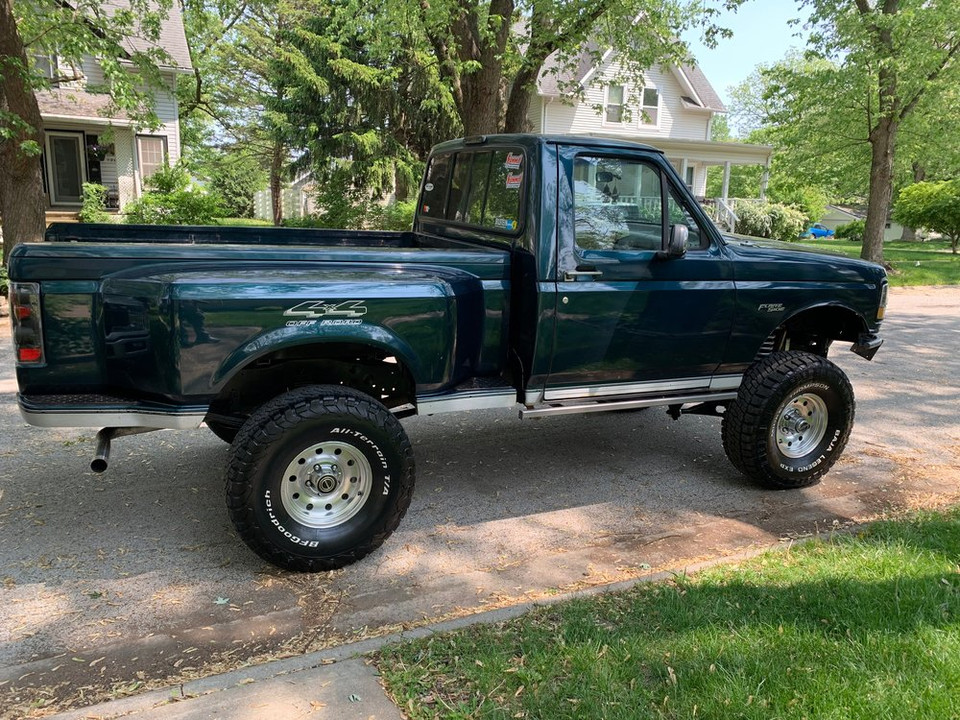
Many trucks don't need new upper control arms for a 2-inch level or lift. The factory arms handle it fine. Once you push the front to 2.5 to 3 inches or more, aftermarket UCAs start earning their keep by fixing ball-joint angle, alignment range and clearance. If your lift kit instructions call for them, or the truck won't align after the lift, buy the arms.
What is an upper control arm?
Upper control arms live on independent front suspension (IFS) trucks. The UCA is the top link that connects the frame to the knuckle, also called the spindle. It has bushings at the frame end and a ball joint at the wheel end.
Where that arm sits decides where the top of the wheel sits. That sets your caster and camber. Caster is the forward or back tilt of the steering axis, and it helps the truck track straight. Camber is the in or out tilt of the tire when you look at it from the front.
One thing to clear up right away: upper control arms do not lift a truck. The height comes from the leveling kit, coilovers, springs or spacers. The arms only fix what that extra height does to the geometry.
What does a lift do to the factory arms?
Raising the front changes the operating angle of the control arms and ball joints. Factory UCAs are built for factory ride height. They aren't designed for aftermarket suspension that lifts the truck. A mild level stays inside their comfort zone. A bigger lift doesn't, and three things start to go wrong.
- Ball joint angle. Standard ball joints have about 45 degrees of articulation. On a lifted truck they hit that limit quickly. The wear piles up on one side of the bearing surface and the boot tears. That's why upper ball joints are often the first thing to fail on lifted trucks.
- Alignment range. Modern IFS trucks don't have much alignment adjustment to begin with. Once you lift more than 1 inch, that gets tight. If caster and camber run out of adjustment, the truck wanders and eats tires.
- Clearance. The lift swings the arm down and in. Then it can hit the coil spring, the strut or another suspension part.
Why strut spacers are the sneaky one
A strut-type leveling spacer leaves the strut extended about 2.5 inches longer than it should be at full articulation. At full droop (wheel hanging all the way down), the upper arm swings down and in past spec. That can max out the ball joint. On many models it also rests the arm on the strut's coil spring.
Plenty of guys run 2.5-inch spacer levels on stock arms with no trouble. But if a leveled truck is going to have UCA problems, this is where they show up.
How much lift before you need UCAs?
There's no single number that fits every truck. These are the rules of thumb we go by.
| Setup | Typical height | Factory UCAs? | What to watch |
|---|---|---|---|
| Leveling kit or mild spring lift | Around 2" | Usually fine on many trucks | Alignment, ball joint angle |
| Strut-type leveling spacer | Around 2.5" | Often fine, sometimes not | Ball joint maxing out and arm touching the spring at full droop |
| Spring or spacer lift | 2.5" to 3" | Aftermarket UCAs help | Ball joint position, alignment range, clearance |
| Cradle drop / drop-bracket kit | Most are 4" or more | Built around factory-geometry arms | Follow the kit instructions |
| Cradle drop plus spring lift | 4" drop + 2" spring = 6" | No, needs lifted arms | The spring-lift portion changes arm angle |
The drop-bracket row surprises people. Those kits lower the whole suspension cradle, so the arms keep roughly factory angles. The spring or spacer part of a lift is what tips the arms. Our Tundra lift kit guide and Sierra 1500 lift kit guide show how the two styles play out on real trucks.
Stock-geometry or lifted arms?
Already shopping for arms? Here's a quick way to pick between stock-geometry and lifted-geometry versions:
- Measure from the wheel center to the fender.
- Subtract the factory ride height. The answer is the spring-lift or leveling height.
- On a cradle drop, also subtract the cradle drop offset.
If you end up at 0, run stock-geometry arms. If it's more than 0 (say, 2), run lifted control arms.
Signs your truck needs aftermarket UCAs
Forget the inch count for a second. These are the real tells:
- The lift kit instructions call for them.
- The truck won't align correctly after the lift.
- The factory ball joint is running at a steep angle.
- The upper control arm hits another suspension part.
- You want to use more of the available suspension travel off-road.
- The factory arms or ball joints are already worn.
Same lift, different outcomes is normal here. One Ram owner leveled three 2500s with a 2-inch kit, shock relocation brackets and stock arms, and put close to 100K miles on the first truck without a problem. Another owner had ball joints pull out within six months of putting leveling spacers in. Check for the signs above instead of assuming.
Mistakes we see people make
- Buying arms for height. They add zero lift. If you want more height, look at leveling kits for the F-150 or a full lift instead.
- Shopping by looks. A beefy, aggressive-looking arm can carry a ball joint that's barely good enough for a mild lift. A weak or badly placed joint binds at full droop, loses travel, and wears out early under bigger tires. Judge the joint, not the paint.
- Adding arms "later." If the kit requires UCAs, put them in as part of the original install. Don't drive on the lift without them.
- Skipping the alignment. New arms change caster and camber. Get the truck aligned after the install, every time.
- Ignoring wear. Replace the arms if the ball joints, bushings or arms themselves show wear or damage. If only the bushings are tired, look at control arm bushings first.
- Putting lifted arms on a drop-bracket kit. Those kits are built around factory-geometry arms.
What to look for in aftermarket upper control arms
These are the things that matter when you're comparing arms:
- Ball joint articulation. Stock joints have about 45 degrees. Good aftermarket joints go up to 90.
- Service life. Lifted trucks on factory parts often need new ball joints every 20,000 to 40,000 miles. Arms with 90-degree joints and greaseable bushings stretch that to 60,000 miles or more.
- Built-in caster. Good lifted arms put caster back. Some arms built for lifted daily drivers add an extra degree of caster.
- Clearance. Look for an arm shape that clears the spring bucket or coilover strut.
- Replaceable ball joints. When the joint wears, you rebuild it instead of buying a whole arm.
Two arms in stock show what this looks like on actual trucks.
Whiteline KTA357 for the Ford Ranger
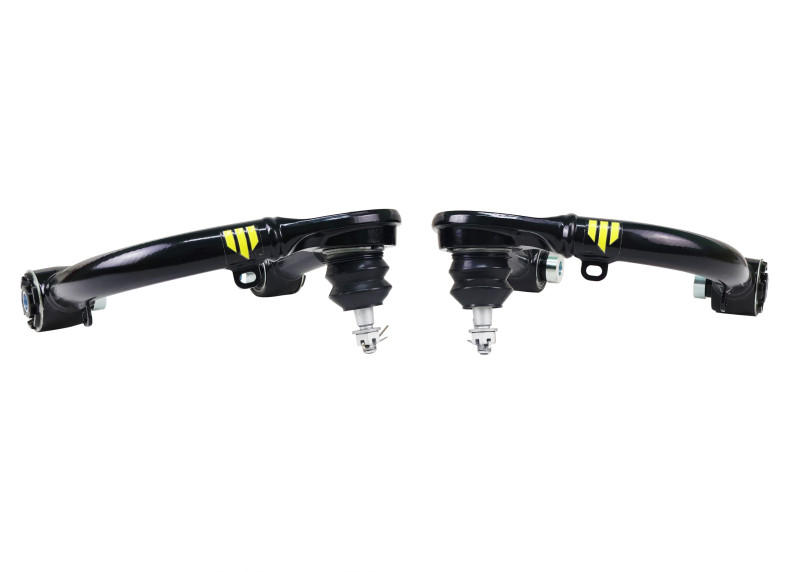
Whiteline 19-23 Ford Ranger Front Upper Control Arm - KTA357
- Fits: 2019-2023 Ford Ranger (Lariat, XL, XLT)
- Part number: KTA357
$522.87 · View details
This is a fixed-offset upper arm for the 2019-2023 Ranger (Lariat, XL, XLT), built for trucks lifted up to 3 inches (76 mm). It adds +2.0 degrees of caster with minimal camber change, based on a roughly 2-inch lift. It also gives more clearance to the coilover strut, and its GIIRO bushings are maintenance-free and allow more arm articulation.
It's a pair with a 3-year warranty. Expect about 2 hours to install, though it's a tricky job and can run long if you're not experienced. A wheel alignment is required afterward.
SPC Performance 35470 for the Toyota Tacoma
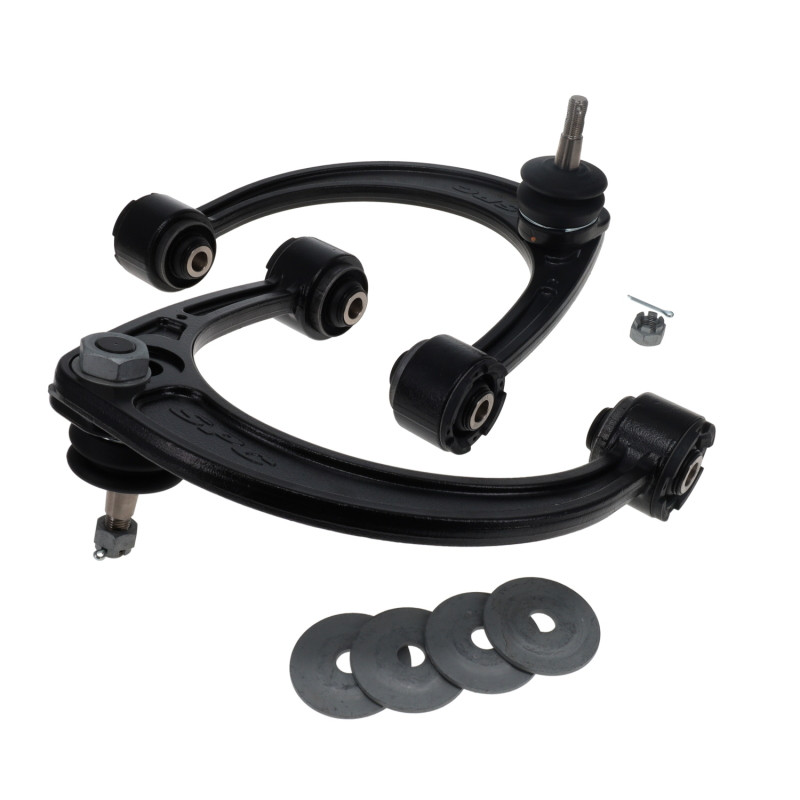
SPC Performance Toyota Tacoma Upper Control Arm (PAIR) - 35470
- Part number: 35470
$816.23 · View details
This forged steel pair for the Tacoma has positive caster built in to bring back alignment angles and stop the wandering a lifted truck can pick up. The ball joint offers a full 80 degrees of articulation, and the arm shape clears the spring bucket. It's also designed to center the tire in the wheel well for oversized tires.
Pair it with our Tacoma leveling kit picks if you're planning the whole front end.
| Arm | Truck | Built for | Ball joint / bushings | Caster | Price |
|---|---|---|---|---|---|
| Whiteline KTA357 | 2019-2023 Ford Ranger (Lariat, XL, XLT) | Lifts up to 3" | GIIRO maintenance-free bushings | +2.0 degrees | $522.87 |
| SPC Performance 35470 | Toyota Tacoma | Lifted trucks, oversized tires | 80-degree ball joint | Positive caster built in | $816.23 |
What we'd do
- If you're leveling a daily-driven half-ton about 2 inches, we'd keep the factory arms, get an alignment and move on.
- At 2.5 to 3 inches, we'd buy upper control arms with the lift and install everything at once. Do it once, align it once.
- On a strut-spacer level, cycle the suspension to full droop. If the ball joint is maxed out or the arm sits on the spring, get arms.
- Whatever the lift height, if the alignment shop can't get caster into spec, the arms aren't optional anymore.
- If you're shopping arms anyway, pay for the ball joint, not the looks. Higher articulation and greaseable or maintenance-free bushings pay you back in miles.
Planning tire size at the same time? Our Silverado 1500 wheel and tire guide walks through what fits from stock to 6 inches.
FAQ
Do I need upper control arms for a leveling kit?
Usually not. Many trucks run a 2-inch leveling kit on the factory upper control arms just fine. You need them if the kit instructions call for them, the truck won't align, the ball joint is at a steep angle, or the arm contacts the spring or strut. Strut-type spacers are the ones to check closest at full droop. Our Silverado leveling kit guide covers popular options.
Are aftermarket upper control arms worth it?
On a lift of 2.5 inches or more, yes. They put the ball joint back at a healthy angle, restore caster, open up alignment range and add clearance. Arms with high-articulation ball joints and greaseable bushings can push service intervals to 60,000 miles or more. Lifted trucks on factory parts often need ball joints every 20,000 to 40,000 miles. On a mild level, save your money.
Do upper control arms lift your truck?
No. Upper control arms add zero height. The lift comes from the leveling kit, springs, coilovers or spacers. The arms correct what that new height does to ball-joint angle, caster, camber and clearance. If someone sells you arms as a lift, they're wrong. Look at our F-150 lift kit picks if height is the goal.
Do I need an alignment after installing upper control arms?
Yes, every time. New arms change caster and camber on purpose, so the truck has to go on the rack afterward. Fixing alignment is half the reason to buy lifted arms in the first place. Skip it and you'll chew through tires and the truck may wander on the highway. Budget the alignment into the install.
How long do ball joints last on a lifted truck?
On a lifted truck running factory parts, ball joints often need replacing every 20,000 to 40,000 miles. Upper joints often go first, because the lift pushes their angle past the design limit. Stock joints have about 45 degrees of articulation. Moving to arms with 90-degree joints and greaseable bushings can stretch that to 60,000 miles or more.
Ready to sort your front end? Browse our upper control arms, or check the full control arms lineup, including front lower control arms.