
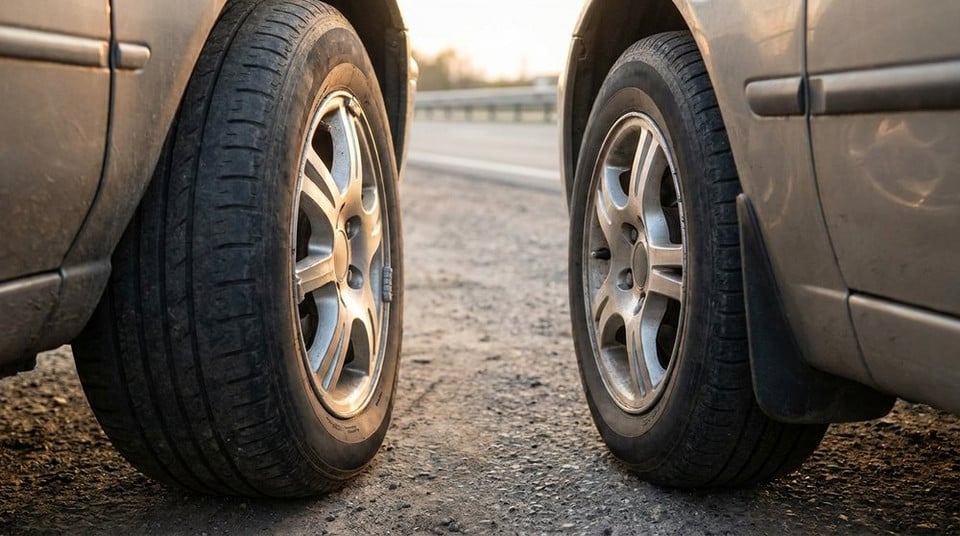
If your steering wheel shakes once you hit about 50-70 mph and smooths out above or below that window, the most likely cause by far is an out-of-balance front wheel. If a fresh balance doesn't kill it, check for a bent wheel, a damaged or out-of-round tire, or a wheel that isn't seated and centered on the hub. A shake that only shows up under braking points to the brakes. A shake that comes on suddenly or comes with a pull means you get off the highway and look at your tires now.
Why you feel it in the steering wheel first
Everything that spins gets faster as you speed up: wheels, tires, brake rotors, axles and driveshaft. A tiny imbalance you'd never notice around town gets amplified at highway speed.
Your front wheels are tied to the steering wheel through the steering rack and column. That's why a front-end problem shows up in your hands before you feel it anywhere else. A vibration that lives mostly in the steering wheel, in a set speed band around 55-70 mph, is the classic sign of front wheel imbalance.
How to read the shake
When and how it shakes tells you a lot. Here's the cheat sheet we'd use before spending a dime.
| What you feel | Typical speed | Likely cause |
|---|---|---|
| Shake in a narrow speed window, then it smooths out | 50-75 mph | Unbalanced tires |
| Constant wobble once you're at speed | 50-75 mph | Bent or damaged rim |
| Shake that balancing won't fix, tire looks lumpy rolling | 55-75 mph | Tire belt separation |
| Shake that starts around 50 mph and up | 50+ mph | Worn tie rods or ball joints |
| Shake only when slowing down from highway speed | - | Brake rotors or calipers |
| Gets worse as you accelerate | - | Axle or other drivetrain part |
| Started right after a pothole or curb hit | - | Alignment or wheel damage |
| Comes and goes with the weather | - | Ice, snow, or tires flat-spotted from sitting in the cold |
One rule of thumb: if the vibration keeps getting worse the faster you go, think wheel balance or a bent wheel first.
Balance: the usual suspect
Improper balance is one of the most common reasons a steering wheel shakes at high speed. You may not feel it at all at lower speeds, then it shows up hard between 50 and 70 mph.
It usually starts right after a tire replacement, when a wheel weight falls off, or when mud and junk pack up inside the wheel barrel. Off-road guys and anyone who just drove a muddy job site know that last one well. Wash the inside of the wheels before you blame anything else.
Bent wheels and bad tires
A pothole or curb hit can bend a rim. A bent rim or an out-of-round tire can cause a shake that balancing alone won't fully fix. The balancer can get the weights to "zero out" on a tire that still isn't round, so the car still shakes.
Belt separation is the one you can't ignore. It can show up as a bulge on the tire or a tread that looks lumpy as it rolls. A bulge or bubble on the sidewall makes the tire unsafe at highway speed, period.
Stop running a tire if it has:
- Cuts, cracks, bulges or other physical damage
- Irregular wear or damage from running low on air or overloading
- Tread worn to the minimum on the penny test
Cupping, separated belts and uneven wear all make the list of shake causes too. While you're down there, check your tread depth:
| Tread depth | What it means |
|---|---|
| 6/32" | Below this, California won't treat it as a snow tire in a chain control area |
| 4/32" | Quarter test: you can see the top of Washington's head |
| 2/32" | Replace now. Wear bars are flush, and the penny test shows the top of Lincoln's head |
| 1/32" | California's absolute legal minimum in any two adjacent grooves |
And no, the spare is not a fix for a worn tire. Don't use it to replace one.
Shake after new wheels? Hub-centric vs lug-centric
This is the one we hear about most. Someone bolts on a fresh set, and suddenly there's a shimmy at 65 that was never there before. Usually the wheels aren't the problem. How they're centered is.
Hub-centric wheels have a center bore that fits snug around the hub. Factory wheels are almost always built this way, and that tight fit cuts the chance of an imbalance you'd feel in the steering wheel or seat.
Lug-centric wheels have a center hole bigger than the hub, so one wheel can fit lots of vehicles. Some aftermarket wheels are made this way. If one isn't seated exactly on the lugs and tightened precisely, you get wobble and vibration. If you're fuzzy on the parts of a wheel, our guide on the difference between a hubcap, rim and wheel clears it up.
The fix is a hub-centric ring (also called a centering ring), a spacer ring that fills the gap between the hub and the wheel's bore. They come in plastic or aluminum. Installed right, a lug-centric wheel with rings rides just as stable, precise and smooth as a hub-centric one. With correctly installed wheels you shouldn't feel any wobble in the steering wheel or floorboard.
Two things people get wrong about rings:
- "Without rings it will always shake." Not always. Skipping rings makes off-center mounting more likely, but careful install technique can still center the wheel.
- "The ring holds the car up." It doesn't. The ring's job is holding the wheel dead center while the lugs get torqued down. That's where the smooth ride comes from.
Our take: rings are cheap insurance. If there's a gap between your hub and the bore, run them.
What to look at on a wheel spec sheet
The number that matters for centering is the hub bore. Compare it to your vehicle's hub. If the wheel's bore is bigger, you want a ring sized for that gap.
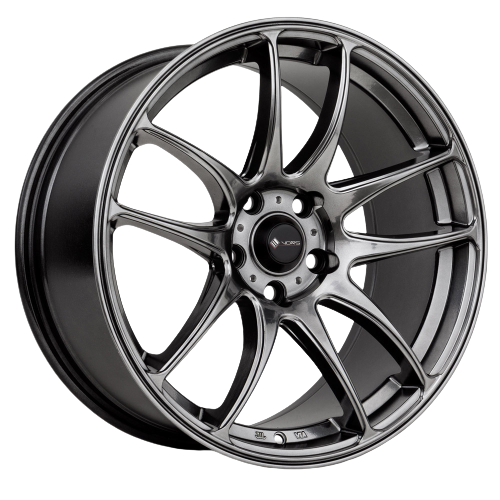
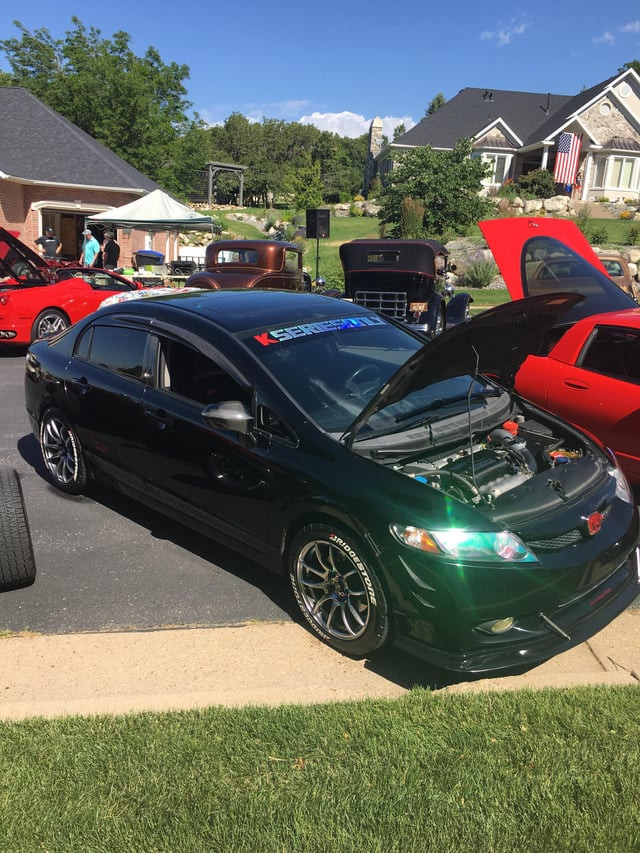
Take the Vors TR4 19x9.5 +22 in Hyper Black. It's a cast monoblock drilled 5x112 with a 73.1 mm hub bore, 6.1" of backspacing and a 690 kg load rating. On any car with a hub smaller than 73.1 mm, a ring closes that gap so the wheel goes on centered.
That TR4 set is from our customer gallery. For more on fitment, see our 8th Gen Civic wheel fitment guide.

Moto Metal MO970 6X135/6X139.7 18X9 +18 GLOSS BLACK WITH MILLED LIP
- Size: 18x9, 6x135, 18 mm offset
- Finish: Gloss Black With Milled Lip
- Build: Cast monoblock
$277.00 · View details
Truck wheels show the same idea. The Moto Metal MO970 18x9 +18 is dual-drilled for 6x135 and 6x139.7. One wheel, two bolt patterns. On any hub smaller than the wheel's bore, the ring is what does the centering.
| Wheel | Size / Offset | Bolt pattern | Hub bore | Price |
|---|---|---|---|---|
| Vors TR4 Hyper Black | 19x9.5 +22 | 5x112 | 73.1 mm | $288.55 |
| Moto Metal MO970 Gloss Black Milled Lip | 18x9 +18 | 6x135 / 6x139.7 | - | $277.00 |
| Heritage Wheel EBISU MonoC White | 18x8.5 +35 | 5x114.3 | - | $309.00 |
For the Heritage EBISU MonoC 18x8.5 +35, confirm the center bore and ring size with the maker for your exact vehicle before you mount it.
Loose or wrong lug nuts
Improper lug nut torque and a wheel that isn't seated right both land on the shake list. Wrong seat type, a missed lug, or nuts run on crooked with an impact gun can all leave a wheel sitting slightly off.
Torque every nut to your vehicle's spec. If you're running aftermarket wheels, make sure the lug nuts match the wheel's seat. A set like McGard lug nuts is a solid place to start. Adding locks? Read how wheel locks work first.
Steering, suspension, brakes and drivetrain
- Worn tie rods or ball joints: show up from about 50 mph on.
- Alignment: can be knocked out by an impact. It belongs on the list, just not at the top.
- Brakes: usually don't cause a constant vibration. They can shake the wheel when you're slowing from highway speed. Brake-related runout is a less common reason for a shake that only appears above 60.
- Axles and drivetrain: if it gets worse as you accelerate, look here.
Mistakes we see all the time
- Balancing over and over. If a balance didn't fix it, stop re-balancing. Check for a bent wheel or a damaged, out-of-round tire.
- Ignoring a sidewall bubble. That tire is done for highway use.
- Blaming alignment for everything. Alignment is not always the answer to a shake.
- Skipping hub rings on new wheels. Then chasing a "bad balance" that's really an off-center wheel.
- Throwing the spare on as a long-term fix. Don't.
What this means when you're buying wheels and tires
Know your hub bore, bolt pattern and offset before you order. Our wheel fitment calculator and offset and backspacing calculator handle the clearance side. Our guides on what ET numbers mean and wheel sizing cover the rest.
On tires, read the sidewall. Most passenger tires sold in the U.S. carry UTQG ratings for treadwear, traction and temperature resistance right there on the side.
What we'd do
- Shake in the steering wheel around 55-70 mph? Get the front wheels balanced first, and clean the mud out of the barrels.
- Still shaking after a balance? Have the wheels and tires checked for bends, bulges and out-of-round before you balance again.
- Just put on aftermarket wheels? Run hub-centric rings if there's any gap at the bore, and torque the lugs to spec.
- Violent shake, sudden shake, or a shake with a pull? Slow down and inspect the tires right away. That can be a tire failing.
FAQ
Why does my steering wheel shake at high speed?
Most of the time it's an unbalanced front wheel. Every spinning part goes faster as you speed up, so a small imbalance gets amplified, and the front wheels feed it straight up the steering column into your hands. If balancing doesn't fix it, check for a bent wheel, an out-of-round tire, belt separation, or worn tie rods and ball joints.
Why does my car shake at 60 mph?
The most likely cause by far is unbalanced wheels, especially up front. Unbalanced tires usually shake in a narrow window somewhere between 50 and 75 mph and smooth out on either side. A bent rim tends to wobble constantly at speed instead. A shake that a fresh balance won't touch can point to tire belt separation.
Why does my steering wheel shake when I brake but not when I drive?
That points to the brakes, not the wheels. Brake problems don't usually cause a constant vibration, but rotors or calipers can shake the steering wheel when you're slowing down from highway speed. If it shakes both while cruising and braking, check balance and wheel condition first, then the brakes.
Can new wheels make my steering wheel shake?
Yes, if they're not centered. Some aftermarket wheels are lug-centric, with a center bore bigger than the hub. If the wheel isn't seated exactly on the lugs and tightened precisely, it can wobble. Hub-centric rings hold it centered while you torque the lugs, and installed right, the wheel should ride as smooth as a factory one.
Is it safe to drive with a shaking steering wheel?
A mild shake in one speed band is usually balance, so get it fixed soon. A violent shake, one that comes on suddenly, or one that comes with a pull needs attention right away because it can be a failing tire. Any bulge or bubble on the sidewall makes the tire unsafe at highway speed.
Will an alignment fix steering wheel shake?
Sometimes, but don't assume it. Alignment can get knocked out by a pothole or curb, and that can cause a shake. But assuming every shake is alignment is a common mistake. Check balance, wheel straightness and tire condition first, since those cause highway shake far more often.
Ready for a fresh set that goes on straight? Start with the wheel fitment calculator, then grab matching lug nuts to finish the job.