
A shock is a damper and nothing more. It controls spring motion but does not hold up the car. A strut is a damper built into a structural suspension member that carries the coil spring, takes side loads and sets part of your suspension geometry. That's why struts cost more, take longer to swap and need a wheel alignment after replacement, while shocks usually don't.
People use the two words like they mean the same thing. They don't. Both shape ride and handling, but they do it in different ways, and mixing them up leads to the wrong parts in your cart.
What does a shock absorber actually do?
A shock is basically an oil pump. A piston on the end of the piston rod pushes against hydraulic fluid inside a pressure tube. That fluid gets forced through small holes in the piston, called orifices. The restriction slows the piston, which slows the spring and the rest of the suspension.
The biggest myth we hear is that shocks soak up bumps and potholes. They don't. The springs, coil or leaf, absorb the hit. The shock's job is to damp the energy stored in that spring so the car doesn't keep bouncing down the road like a pogo stick.
A conventional shock also doesn't support the vehicle's weight. Pull one off and the car still sits on its springs. You could technically drive it, but it wouldn't be safe or comfortable.
Why shocks push back harder one way
A typical car or light truck shock resists more on extension than on compression. The compression stroke controls unsprung weight: the wheel and tire moving up and down. The extension stroke controls the heavier sprung weight, which is the body sitting on the springs. Shocks and struts are also velocity sensitive. They're valved so resistance changes with how fast the suspension moves, so a sharp pothole gets a different response than a lazy highway dip.
What are struts?
A strut is a major structural part of the suspension. It replaces the upper control arm and upper ball joint you'd find on a conventional setup. In other words, it acts as a suspension pivot point, so it directly controls suspension geometry. A shock doesn't.
A typical strut includes three main pieces:
- A coil spring that supports the vehicle's weight
- A strut housing that gives the whole assembly rigid structural support
- A damping unit inside the housing that works just like a shock
The bottom of the strut body bolts to the steering knuckle, and the knuckle connects to a lower control arm through a lower ball joint. Pull a strut and that corner has nothing holding it up. The car collapses and can't be driven.
So a strut does two jobs. It damps motion like a shock, and it carries much of the side load on the suspension. That's why a strut affects ride comfort, handling, braking, steering, wheel alignment and wear on everything around it.
Struts are common on independent-suspension front-wheel-drive cars and show up on some rear-wheel-drive cars too. Carmakers like them because they're lighter and take up less space than a conventional shock-and-control-arm layout.
Shocks vs struts side by side
| Question | Shock | Strut |
|---|---|---|
| What is it? | An individual damping part | Structural assembly: damper, coil spring and housing |
| Supports vehicle weight? | No | Yes, through its coil spring |
| Carries side loads? | No | Yes, much of the side load |
| Acts as a suspension pivot point? | No | Yes, replaces the upper control arm and upper ball joint |
| Controls suspension geometry? | No | Yes |
| Drivable if removed? | Technically, but unsafe and uncomfortable | No, the corner collapses |
| Alignment after replacement? | Usually not needed | Expect one |
| Rebuildable? | - | No, but some take a replaceable cartridge |
| Cost and complexity | Lower | Usually higher |
Which does your car have?
Every wheel gets one or the other: a shock or a strut. How they're mixed depends on the car. Plenty of modern cars run struts at one end and shocks at the other. Some cars have no struts at all. Others have no separate shocks, because the damping lives inside the struts.
Your service manual or the parts lookup for your exact year, model and trim settles it. Don't assume front and rear match.
What both of them do for you
Shock or strut, the damping side of the job is the same. A healthy damper:
- Controls excessive body and tire movement
- Cuts bounce, body roll and sway
- Reduces brake dive (the nose diving under hard braking) and acceleration squat (the rear sinking when you get on it)
- Keeps handling and braking consistent
- Helps hold wheel alignment
- Helps prevent early wear on tires and other suspension parts
Good dampers help reduce tire wear, shorten braking distance and keep the ride comfortable. Tired ones let the tire move too much, and that shows up as cupping: a scalloped, uneven wear pattern. Wrong air pressure, other worn suspension parts and bad steering alignment can cause uneven wear too, so look at the whole picture before you blame the dampers.
The mistakes we see people make
Replacing one side only
Always replace shocks or struts in pairs on the same axle. A fresh unit on one side and a worn one on the other gives you uneven damping. The car moves differently left to right, handling gets weird, the new part overcompensates and wears out faster, and other suspension parts can fail early.
Skipping the alignment after struts
Because a strut is part of the suspension geometry, pulling and installing one can knock alignment out. Some vehicles are affected more than others, and some struts have adjustment slots built in. Every strut affects alignment in some way. Check your vehicle's service manual and specs, then book the alignment shop. Shocks usually don't require removing anything that touches alignment, which is a big reason a shock swap is the easier job.
Reusing tired mounts and boots
When the struts come out, replace the strut mounts and strut boots too. A new mount gives you smooth steering response and less vibration. New boots keep dirt, dust, salt and road debris off the strut shaft. Reusing a crusty mount on a fresh strut is like putting old shoelaces in new boots.
Trying to rebuild or refill a strut
Struts can't be refilled or rebuilt. Some do take a replaceable cartridge, and you can spot those by a large hex nut at the top of the strut body. Struts are usually gas-charged and the coil spring is under load, so this is a job for a qualified tech with the right tools, not a driveway experiment.
What it means when you're buying
Once you know whether a corner has a shock or a strut, the shopping gets simpler.
- Want the easiest strut swap? Go with complete strut assemblies. KYB complete strut assemblies come pre-loaded with the correct spring, top mount and insulators for quick installation. No spring compressor drama.
- Keeping your springs and mounts? Look at strut inserts, or replaceable strut cartridges if your housing has that big hex nut up top.
- Doing struts the right way? Grab fresh strut mounts in the same order.
- Chasing stance? Lowering struts and air struts change ride height and damping in one part.
- Going up instead of down? Start with our lift kits or leveling kits, and see our F-150 leveling kit picks for a real-world example.
Adjustable dampers: a good example
For enthusiast cars, adjustable dampers let you tune the ride instead of living with the factory setting. KYB's AGX line covers both shocks and struts. One knob or screwdriver turn raises rebound and compression damping together, up to 125% over the OEM design, with no special tools. Depending on the application you get an eight-position knob or a four-position screwdriver slot, and both offer the same overall range. The KYB AGX rear for the 240SX covers the 1989-1994 cars, and there's a matching AGX rear for the 1990-1996 300ZX.
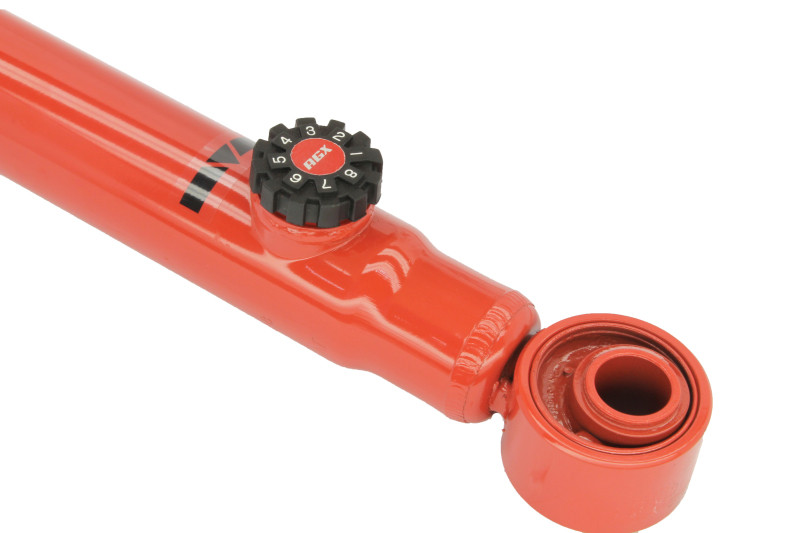
KYB Shocks & Struts AGX Rear NISSAN 240SX 1989-94 - 741017
- Fits: 1991-1993 Nissan 240SX (Base); 1991-1992 Nissan 240SX (LE); 1989-1994 Nissan 240SX (SE); 1989-1990 Nissan 240SX (XE)
- Part number: 741017
$140.06 · View details
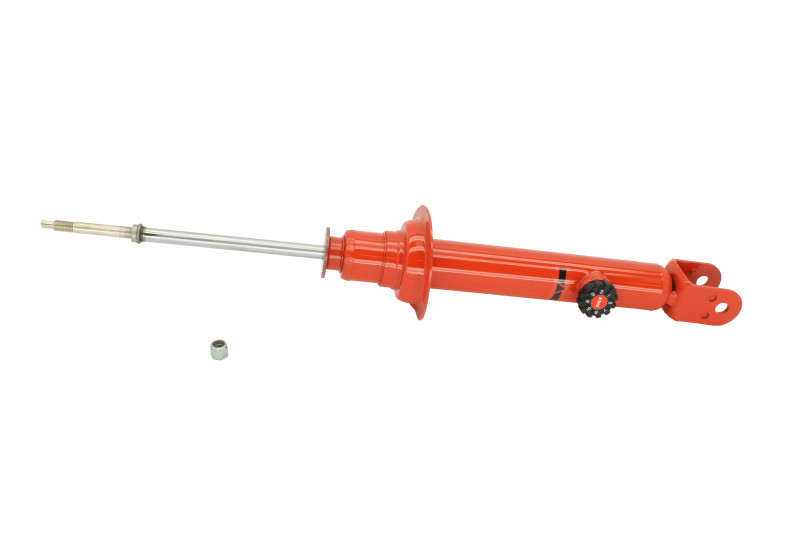
KYB Shocks & Struts AGX Rear NISSAN 300ZX 1990-96 - 741028
- Fits: 1990-1996 Nissan 300ZX (2+2, Base, Turbo)
- Part number: 741028
$184.66 · View details
On the strut side, the Koni Sport (Yellow) front strut for the 986 Boxster is the kind of part you'd choose when the front of the car runs struts and you want a sportier damper than stock.
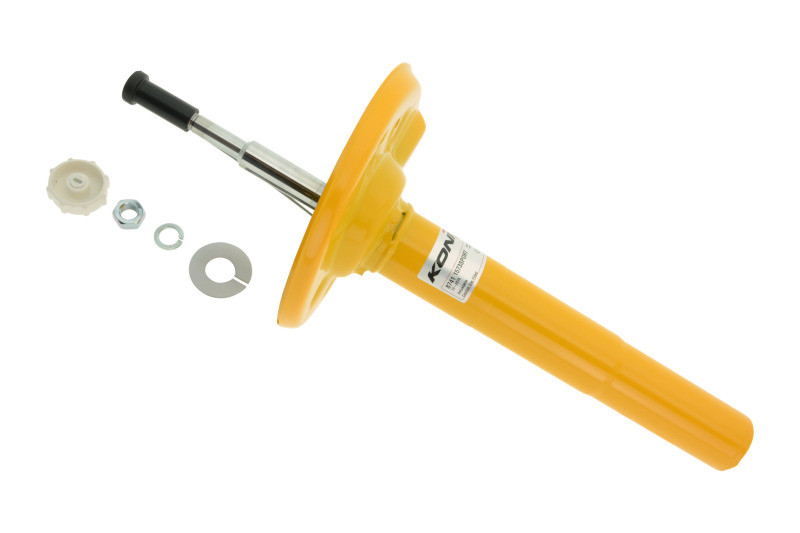
Koni Sport (Yellow) Sport Shock 96-04 Porsche Boxster 986 Front Strut - 8741 1573SPORT
- Fits: 1997-1999 Porsche Boxster (Base); 2004 Porsche Boxster (Base, S, S Special Edition); 2000-2003 Porsche Boxster (Roadster, Roadster S)
- Part number: 8741 1573SPORT
$404.12 · View details
| Part | Position | Fits | Price |
|---|---|---|---|
| KYB AGX 741017 | Rear | 1989-1994 Nissan 240SX (SE 1989-94; XE 1989-90; LE 1991-92; Base 1991-93) | $140.06 |
| KYB AGX 741028 | Rear | 1990-1996 Nissan 300ZX (2+2, Base, Turbo) | $184.66 |
| Koni Sport (Yellow) 8741 1573SPORT | Front | 1997-1999 Boxster (Base); 2000-2003 Boxster (Roadster, Roadster S); 2004 Boxster (Base, S, S Special Edition) | $404.12 |
Remember the pairs rule: one per side, same axle, same part number.
What we'd do
- Figure out what's on each corner before you shop. Front and rear often differ.
- Always buy in left-and-right pairs. No exceptions, not even on a budget build.
- On a daily with tired struts, we'd go complete assemblies plus an alignment and call it done. Fewer parts to reuse, fewer surprises.
- If you're keeping your springs, budget for new mounts and boots anyway.
- On a weekend car or a track build, we'd spend the extra on adjustable dampers so you can soften them for the street and firm them up before you send it.
FAQ
What are struts?
A strut is a structural suspension assembly that combines a damper, a coil spring and a rigid housing. It replaces the upper control arm and upper ball joint, acts as a suspension pivot point, supports the car's weight and carries side loads. That's why a car can't be driven without its struts, and why replacing them affects alignment.
Struts vs shocks: what's the main difference?
A shock only damps spring motion and doesn't hold the car up. A strut damps motion too, but it's also part of the suspension structure: it carries the spring, takes side loads and controls geometry. Inside, a strut's damping unit works just like a shock. The structural job is what makes struts pricier and more involved to replace.
Shocks vs struts: which is more expensive to replace?
Struts, almost every time. They're usually more complex and cost more as parts, the job takes more work because the assembly is load-bearing, and you'll want an alignment afterward. Shocks are individual parts that generally come off without disturbing anything that sets alignment, so they're the quicker, cheaper swap.
Do you need an alignment after replacing struts?
Plan on it. Every strut affects alignment in some way because it's part of the suspension geometry, though some vehicles are affected more than others and some struts have adjustment slots. Check your service manual and specs, then get it aligned. Skipping it risks uneven tire wear.
Can you replace just one shock or strut?
Don't. Replace them in pairs on the same axle. Mismatched damping side to side makes the car handle unevenly, makes the new unit overcompensate and wear out faster, and can kill other suspension parts early. Buy two of the same part number and do both sides at once.
Do shocks and struts absorb bumps?
No, that's the springs' job. Coil or leaf springs absorb the energy from bumps and potholes. Shocks and struts damp that spring energy so the car settles instead of bouncing. Worn dampers let the tire keep moving after a hit, which hurts control and can leave a cupped wear pattern on your tires.
Ready to swap? Start with our strut assemblies if your car runs struts, or browse the adjustable picks above for your build.