
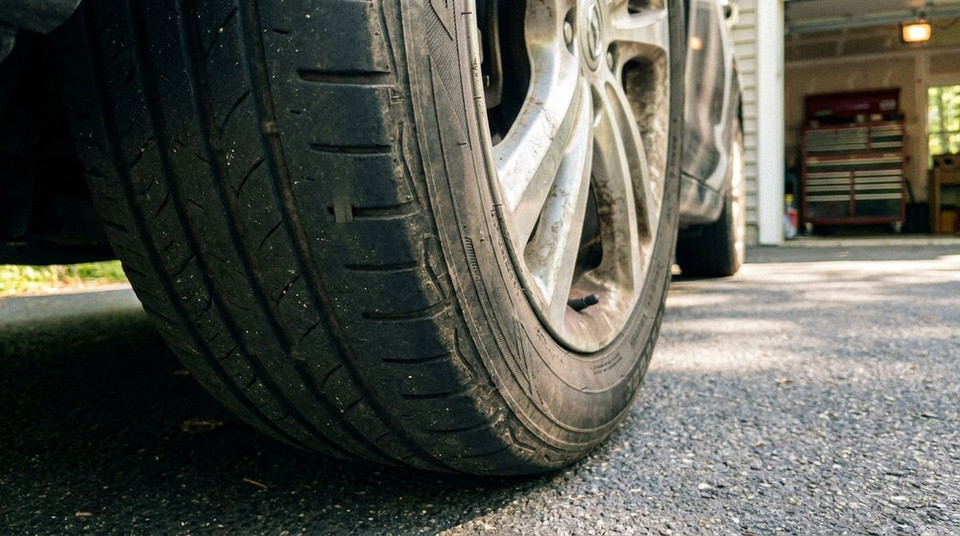
If you drive a typical 12,000-15,000 miles a year, your tread will wear out in about three to four years, well before the rubber itself gets old. Age is the second clock. Vehicle and tire makers put the outer limit at 6 to 10 years from the date of manufacture, even if the tread looks fine. Any tire worn down to 2/32 inch of tread is done, whatever its age.
Miles or years: which runs out first?
No single number covers every tire. How long a set lasts depends on the tire's design, how you drive, your climate, your roads and how well you maintain it.
For a daily driver, the tread clock almost always wins. Put average miles on a car and you'll be shopping for tires in three to four years, long before age is a factor.
The age clock matters for vehicles that barely move: the weekend car, the garage queen, the trailer that sits all winter and the spare under your truck bed. Those tires can look perfect with deep tread and still be too old to trust.
When is the tread worn out?
Every tire sold here has treadwear indicators molded into the tread at 2/32 inch. Federal tire standards require them. That depth was chosen because a tire's traction drops off fast below it and the tire becomes unsafe. When the tread is flush with those little bars across the grooves, the tire is finished.
No gauge? Use the penny test. Put a penny in the tread with Lincoln's head upside down. If you can see the top of his head, it's time for new tires. Check several spots on every tire, because tread doesn't always wear evenly.
The feds set the wear bar height, but your state decides when a worn tire legally has to come off the road.
How long are tires good for by age?
There's no federal rule on when an old tire has to be retired, so the advice comes from the companies that build cars and tires. That's why you see a range instead of one number. The tire industry itself argues the five-to-six-year figure is arbitrary.
| Who | Age recommendation | Applies to spare? |
|---|---|---|
| Many carmakers and tire experts | Replace 5-6 years from manufacture | - |
| Some vehicle manufacturers | Replace after 6 years regardless of tread wear | Yes |
| Tire manufacturers | Remove from service 10 years after manufacture | - |
| Michelin | Yearly professional inspection after 5 years of service; replace at 10 years from manufacture regardless of tread or looks | Yes |
| Fire apparatus standard | Replace at least every 7 years, sooner if tread is worn past legal limits | - |
If your car still has its factory tires, follow the replacement advice from the carmaker in your owner's manual. For everything else, treat six years as the point where you start paying close attention and ten years as the hard stop.
How do you check tire age?
Look for the DOT Tire Identification Number on the sidewall. It's the letters DOT followed by eight to thirteen letters and numbers. On any tire built since 2000, the last four digits give the week and year it was made.
| Last four digits | What it means |
|---|---|
| 5107 | 51st week of 2007 |
| First two digits | Week of manufacture |
| Last two digits | Year of manufacture |
The full TIN only has to appear on one sidewall. If you can't find the date code, it's probably facing the inside of the wheel. Grab a flashlight or crawl under the car.
What makes tires age faster?
Tire aging is the rubber and other materials inside the tire changing over time from use, storage and environment. You can't see it by looking. A tire can have full tread and a clean sidewall and still be breaking down inside.
- Heat. Tires age faster in warm climates. Engineers simulate aging by baking tires at 149°F (65°C) for five weeks, which closely matches the material of a 4-6 year old tire.
- Sun and salt air. Sunlight exposure and coastal climates also speed things up.
- Sitting doesn't help. Tires age whether they're driven or not. A low-mile tire on a parked car keeps getting older.
The risk is real. Old tires can develop cracks that lead to tread separation and loss of control. With tires built before current standards (FMVSS 139), aging was linked to an estimated 90 deaths and over 3,200 injuries a year in crashes where it was the likely cause or a possible major factor.
Warning signs it's time to replace
Check your tires at least once a month and before any long road trip. Replace or get them looked at if you see:
- Tread at 2/32 inch, or wear bars flush with the tread
- Uneven wear, such as one shoulder bald or feathered edges
- Cuts, punctures, scrapes or cracks in the tread or sidewall
- Bulges or bumps anywhere on the tire
- A tire that keeps losing pressure
- New noise or vibration you can't explain
Pressure loss, noise and vibration are all reasons to have a tire pro put eyes on it. Don't just top it off and hope.
How to make tires last longer
Underinflation is the leading cause of tire failure, and it's the easiest thing to fix. Proper inflation can extend the average life of a tire by 4,700 miles.
- Use the right number. Run the pressure on your door placard or in the owner's manual. The number on the sidewall is the tire's maximum, not your target.
- Check it cold. Measure at least three hours after driving so heat doesn't throw off the reading.
- Rotate, balance and align. All three even out wear and keep you from chewing through a set early.
Changing sizes? Run the numbers through our tire size calculator first. The wrong diameter throws off your speedometer and can cause rubbing that eats sidewalls.
Mistakes we see all the time
- Trusting looks. Deep tread on a 12-year-old tire means nothing. Read the date code.
- Forgetting the spare. Spares age like everything else and almost never get replaced. Check its date when you check the others.
- Daily-driving the full-size spare. A full-size spare is for emergencies like a flat, not a stand-in for a worn tire.
- Filling to the sidewall number. That's max pressure. Your door placard has the right one.
- Assuming low miles means young. The weekend toy with 3,000 miles on its tires can still be due for new ones.
What it means when you're buying
If tread life is your priority, look at the UTQG treadwear grade on the sidewall. It's a relative number: a control tire is rated 100, and a tire graded 200 should wear twice as long. Higher means slower wear on paper.
The Ironman All Country A/T is a good example. It carries a 460 treadwear grade (460AB), so it should wear about 4.6 times as long as the control tire. It's a 245/70R16 XL all-terrain rated 111T, good for 2,403 lbs per tire and 118 mph.
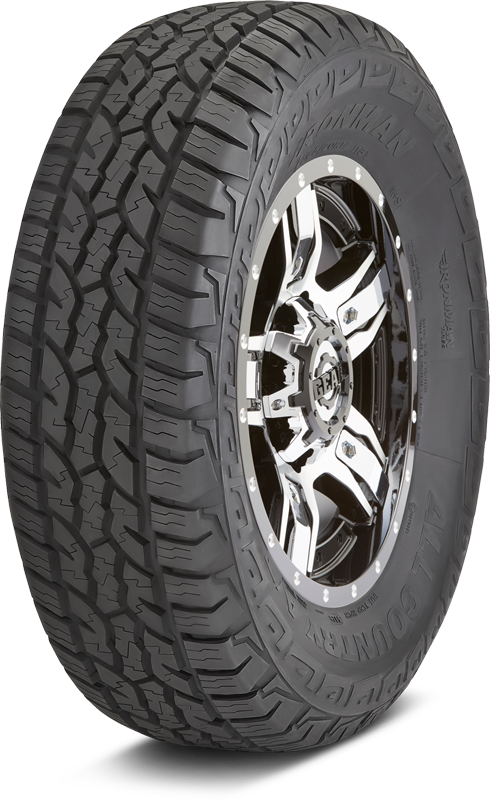
Ironman IRON All Country A/T 245/70R16XL
- Size: 245/70R16XL (111T)
- Tread depth: 13.4/32 in
- Load range: XL
$175.00 · View details
If you tow or haul, load rating matters as much as tread life, and so does pressure. Heavy loads on soft tires build heat, and heat ages rubber. The Pirelli Scorpion All Terrain Plus in LT265/70R17 is a Load Range E (10-ply) light truck tire rated 121/118S. That works out to 3,197 lbs per tire single or 2,910 lbs per tire as duals, with a 112 mph speed rating.
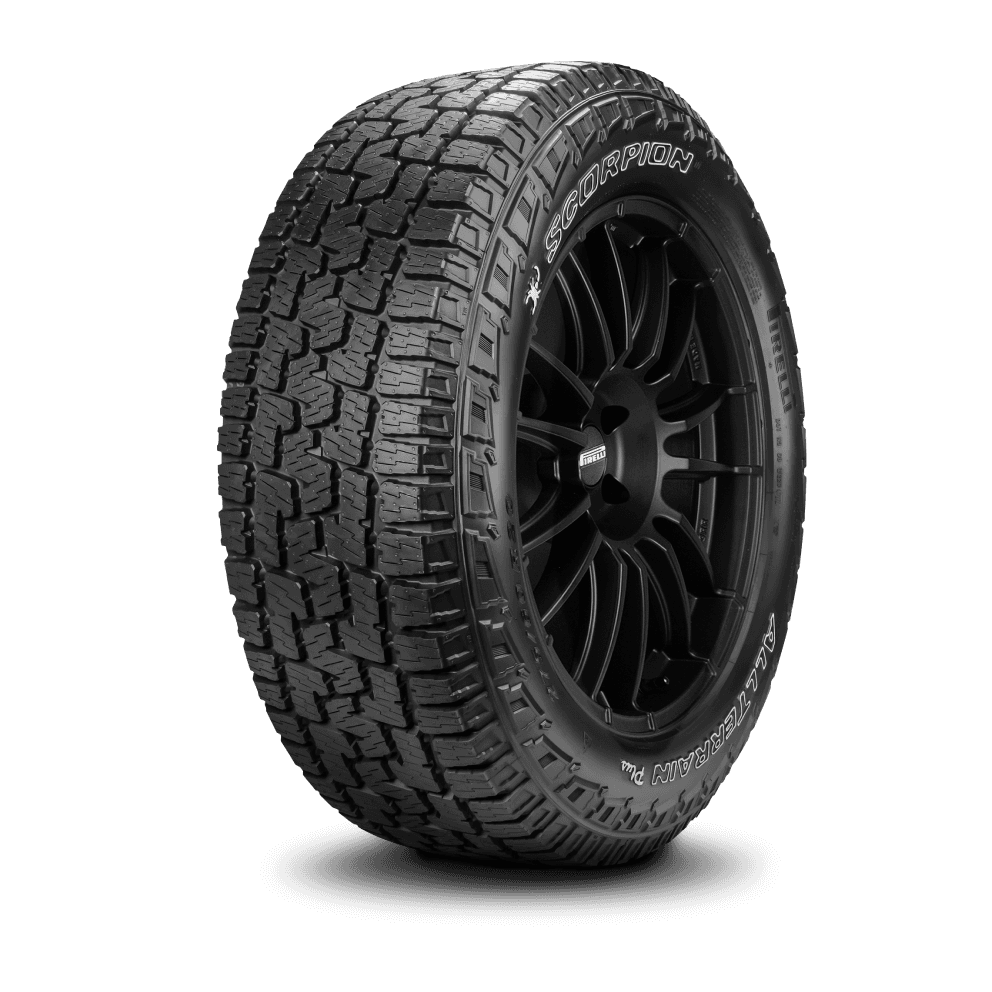
Pirelli PIR Scorpion All Terrain Plus LT265/70R17/10
- Size: LT265/70R17/10 (121/118S)
- Tread depth: 15/32 in
- Load range: E (10 Ply)
$332.00 · View details
| Tire | Size | Service description | Max load (single) | Treadwear | Price |
|---|---|---|---|---|---|
| Ironman All Country A/T | 245/70R16XL | 111T | 2,403 lbs | 460 | $175.00 |
| Pirelli Scorpion All Terrain Plus | LT265/70R17 (E) | 121/118S | 3,197 lbs | - | $332.00 |
| Versatyre X TERRAIN | 285/55R20 | 122S | 3,307 lbs | - | $320.00 |
Not sure which tread style fits how you drive? Our breakdowns of all-season vs all-terrain tires and all-terrain vs mud-terrain tires cover the tradeoffs. If you're choosing between big brands, read our Continental vs Pirelli comparison.
What we'd do
- On a daily driver, go by tread. Do the penny test monthly and replace at 2/32 inch. You'll hit that long before age is a problem.
- On anything that sits, go by the date code. We'd start yearly inspections at five years and replace by ten, no exceptions.
- Check pressure cold, set it to the door placard, and rotate on schedule. It's the cheapest tread life you'll ever buy.
- Read the date on your spare today. If it's older than the car's other tires by years, it's not really a spare.
When it's time for a fresh set, check your size on our tire size chart or compare options with the tire size comparison tool. Then browse all-terrains like the Versatyre X TERRAIN line, Lexani Terrain Beast AT or AMP Terrain Pro A/T.
FAQ
How long do tires last?
Driven a typical 12,000-15,000 miles a year, most tires wear out their tread in about three to four years. If the tread doesn't go first, age does. Makers recommend replacement somewhere between 6 and 10 years from the date of manufacture, and Michelin sets 10 years as the limit no matter how much tread is left.
How long should tires last?
It depends on the tire's design, your driving habits, climate, roads and maintenance, so there's no single mileage number. Proper inflation can extend the average life of a tire by 4,700 miles. For a rough idea of wear rate, compare UTQG treadwear grades: a 200-rated tire should last twice as long as a 100-rated one.
How long do car tires last?
On a daily-driven car, expect the tread to wear down to the 2/32-inch wear bars in about three to four years. A car that only comes out on weekends will likely age out first. Treat six years as the point where you inspect closely and ten years as the hard stop, spare included.
How long are tires good for if they're not used?
Tires age whether you drive them or not. Heat, sunlight and coastal air all speed up aging, and you can't spot it by looking. A low-mile tire sitting on a parked car or a spare rack still needs replacing by about 10 years from its build date. Have it inspected yearly after five.
How do I check tire age?
Find the DOT code on the sidewall. On tires made since 2000, the last four digits are the week and year of manufacture, so 5107 means the 51st week of 2007. The full code only has to appear on one side, so if you don't see it, check the inner sidewall.