
All-Terrain vs Mud-Terrain Tires: How to Choose
For the vast majority of drivers — including those who tow, camp, hit gravel forest roads, and want confidence in light snow — an all-terrain (A/T) tire is the smarter pick. It rides quietly, lasts longer, and handles pavement far better while still crawling over dirt and rock. Save the mud-terrain (M/T) tire for rigs that spend serious time in deep mud, loose sand, or on sharp rock, where its aggressive, self-cleaning tread earns its keep. The single deciding factor: what percentage of your miles are actually off-pavement. If it's under roughly 20–30%, choose all-terrain.
All-Terrain explained
An all-terrain tire is a do-everything design that balances on-road manners with off-road traction. Its tread uses moderately sized blocks and a tighter void ratio (less open space between blocks) than a mud tire, so more rubber stays in contact with pavement. That means quieter cruising, more even wear, and better braking on dry and wet roads. Many modern A/Ts add sipes — tiny slits in the tread blocks — that bite into snow and ice, and a good share carry the three-peak mountain snowflake (3PMSF) rating for severe snow service. A/Ts suit daily drivers, overlanders, tow rigs, and anyone splitting time between highway commutes and the occasional trail.
Mud-Terrain explained
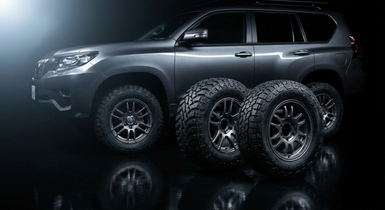
A mud-terrain tire is an aggressive off-road design with large, chunky tread blocks and a very open (high void ratio) pattern. Those wide gaps let mud, clay, and rocks fling out as the wheel spins — the "self-cleaning" action that keeps the tread biting instead of packing up. Reinforced sidewalls with lugs add protection and grip when aired down on rock. The trade-off is real: on pavement M/Ts are louder, transmit more vibration, and generally wear faster because there's less rubber touching the road. They're built for Jeeps, off-road trucks, and dedicated wheeling rigs that live in the dirt.
Head-to-head
Dry & wet grip
All-terrains win here. More contact area and tighter siping give shorter, more predictable stops and steadier cornering on both dry and wet roads. Mud-terrains, with their open tread and stiffer construction, feel less planted and can hydroplane sooner in standing water.
Winter & snow
Advantage all-terrain, especially 3PMSF-rated models — their siping generates the biting edges snow traction depends on. Some aggressive M/Ts carry the snowflake rating too, but the big blocks are less effective on packed snow and ice. Neither replaces a dedicated winter tire.
Off-road
Mud-terrains dominate in deep mud, loose sand, and gnarly rock, where the self-cleaning tread and tough sidewalls shine. A/Ts handle dirt, gravel, and mild trails well but can clog in slick mud.
Tread life, noise & price
All-terrains typically last longer and run quieter thanks to their denser tread. On price, A/Ts span a very wide range — roughly $119 up to well over $1,300 for large premium fitments — while mud-terrains generally start higher, around $207 and climb past $760, reflecting their heavier LT construction and specialized sizing.
Which should you buy?
Match the tire to your real routine, not your aspirations. If most of your driving is highway or city with weekend trail runs, an all-terrain is almost always the better all-around choice — quieter, longer-wearing, and safer in rain and light snow. If you live in a snowy region, lean toward a 3PMSF-rated A/T. Choose a mud-terrain only if you routinely tackle deep mud, sand, or sharp rock and are willing to accept more road noise and a shorter tread life. For mixed use, a hybrid or "rugged" A/T splits the difference. Fitment, load rating, and local climate all matter, so confirm the size and rating for your vehicle before buying.
Our top All-Terrain
Shop All-Terrain at ThreePiece
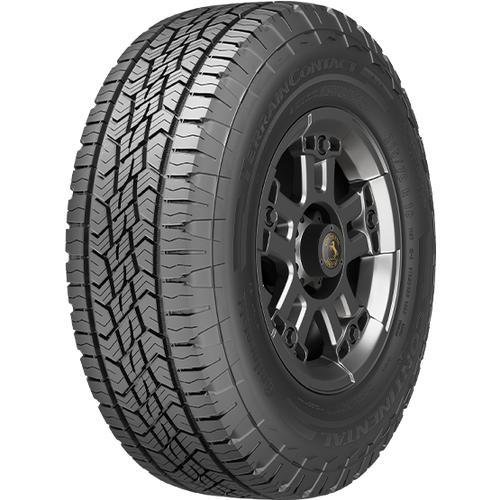
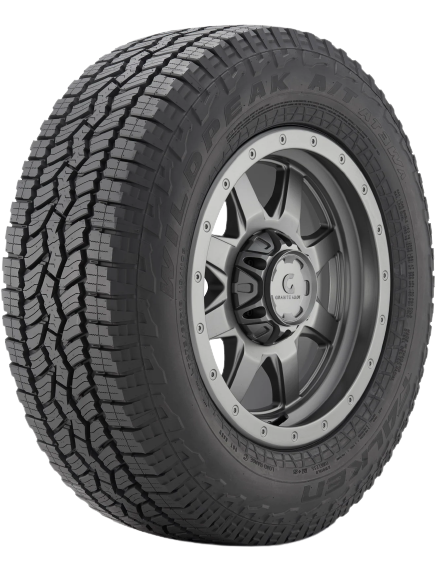

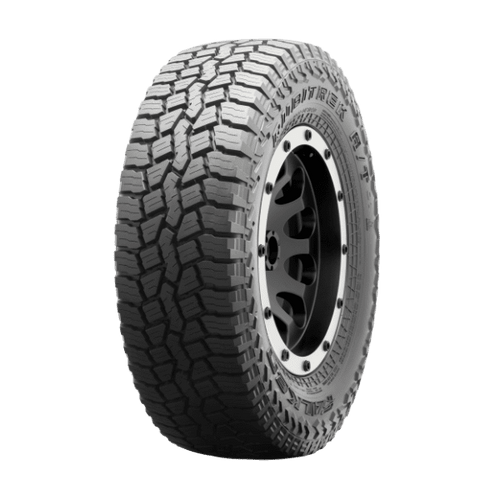
Strong, widely trusted all-terrains include the Continental TerrainContact A/T for road-biased comfort, the Falken Wildpeak A/T3WA and lighter-duty Wildpeak A/T Trail for balanced capability, plus the Falken Rubitrek A/T and the compact-friendly General Grabber A/TX. The Toyo Open Country A/T III and Nitto Recon Grappler A/T are also popular picks. Browse the full all-terrain lineup for your size.
Our top Mud-Terrain
Shop Mud-Terrain at ThreePiece

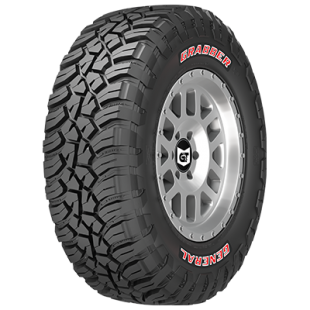
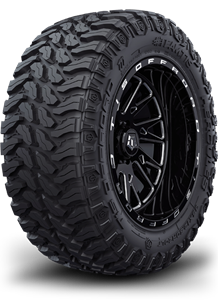
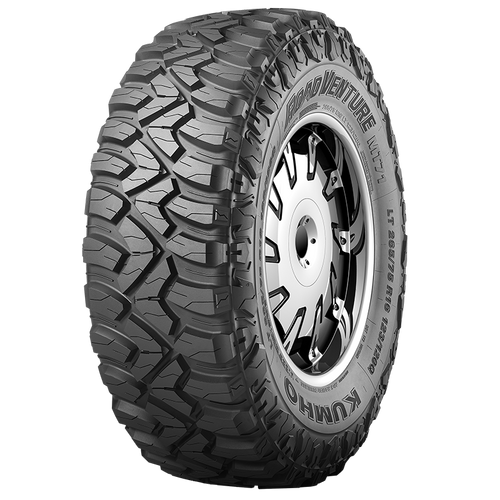
For serious dirt, consider the Falken Wildpeak M/T MT01, the General Grabber X3, the Hercules TIS Offroad TT1, the Kumho Road Venture MT71, and Nexen's Roadian MTX or lighter Roadian MT. See more in the mud-terrain category or compare across all tires.
Frequently Asked Questions
Are mud-terrain tires good in snow? Some carry the 3PMSF rating, but their large, open blocks are generally less effective on packed snow and ice than a well-siped all-terrain. Neither type replaces a dedicated winter tire.
Do all-terrain tires last longer than mud-terrains? Typically yes. All-terrains have more rubber in contact with the road and a denser tread pattern, which usually promotes more even, longer wear than an open mud-terrain design.
Why are mud-terrain tires louder? The wide gaps between their large tread blocks that clear mud also create more air turbulence and vibration on pavement, producing a noticeable hum that increases with speed.
Which is more expensive? Mud-terrains generally start higher — around $207 versus about $119 for entry all-terrains — because of their heavier construction and specialized sizes, though premium large-diameter all-terrains can reach much higher prices.