
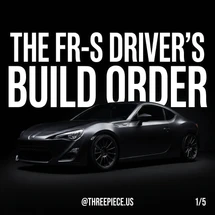
Scion FR-S Build Guide: The Right Order (2012-2016)
The Scion FR-S punishes you for building it in the wrong order more than almost anything else you can buy for ten grand. Toyota and Subaru handed you a 2,758 lb chassis with a roughly 53/47 weight balance, a factory Torsen out back, and a hood you can actually see over. The chassis is the expensive part — and it's already done. Everybody skips straight to the one thing that's cheapest to fix later, which is why the paddock is full of boosted ZN6s getting walked by stock-motor cars on used coilovers and good tires. This is the FR-S build order that actually works.
Quick links
- Step 1: Buy a manual with paperwork, not mods
- Step 2: Suspension is the real mod
- Step 3: Square fitment, light wheels
- Step 4: Power comes last, actually
- The build order, in one line
Step 1: Buy a manual with paperwork, not mods
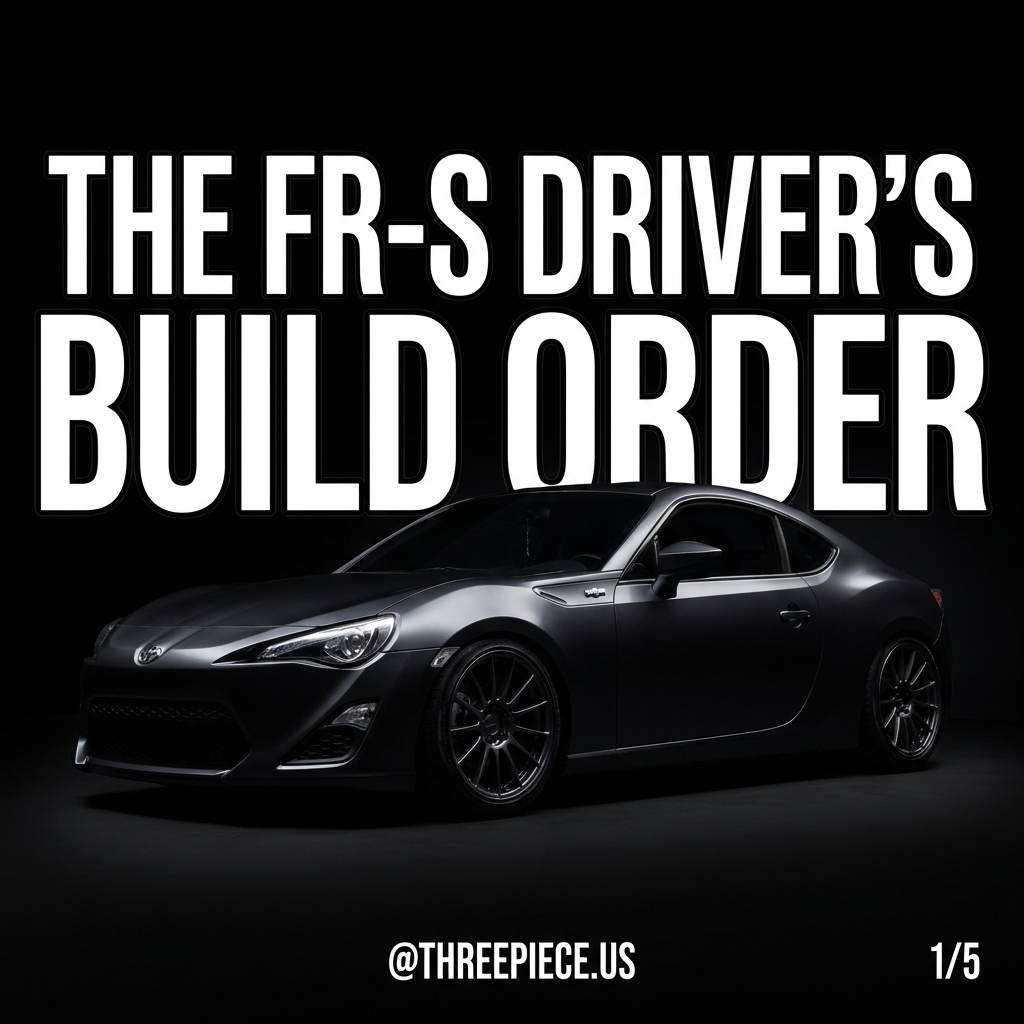
The automatic ZN6 is a different car wearing the same badge, and you'll resent it inside a month. Walk away from a clean automatic and buy a rougher six-speed. The manual, the light chassis, and the factory limited-slip are the entire reason this platform exists — everything else on the car is replaceable.
Buy on service history, not on the mod list. Somebody else's half-finished build is the most expensive FR-S on the market: mismatched coilovers with blown top hats, a tune from a shop that no longer exists, and a rear subframe full of hardware that's been in and out three times. If you've read our BRZ ZC6 build guide, the same buying logic applies — the ZC6 and ZN6 are the same car with different bumper covers and slightly different suspension tuning from the factory.
For context on what a well-sorted example looks like in the wild, our vehicle gallery is full of ZN6 and ZC6 builds where the money clearly went into the chassis before the engine bay.
Step 2: Suspension is the real mod
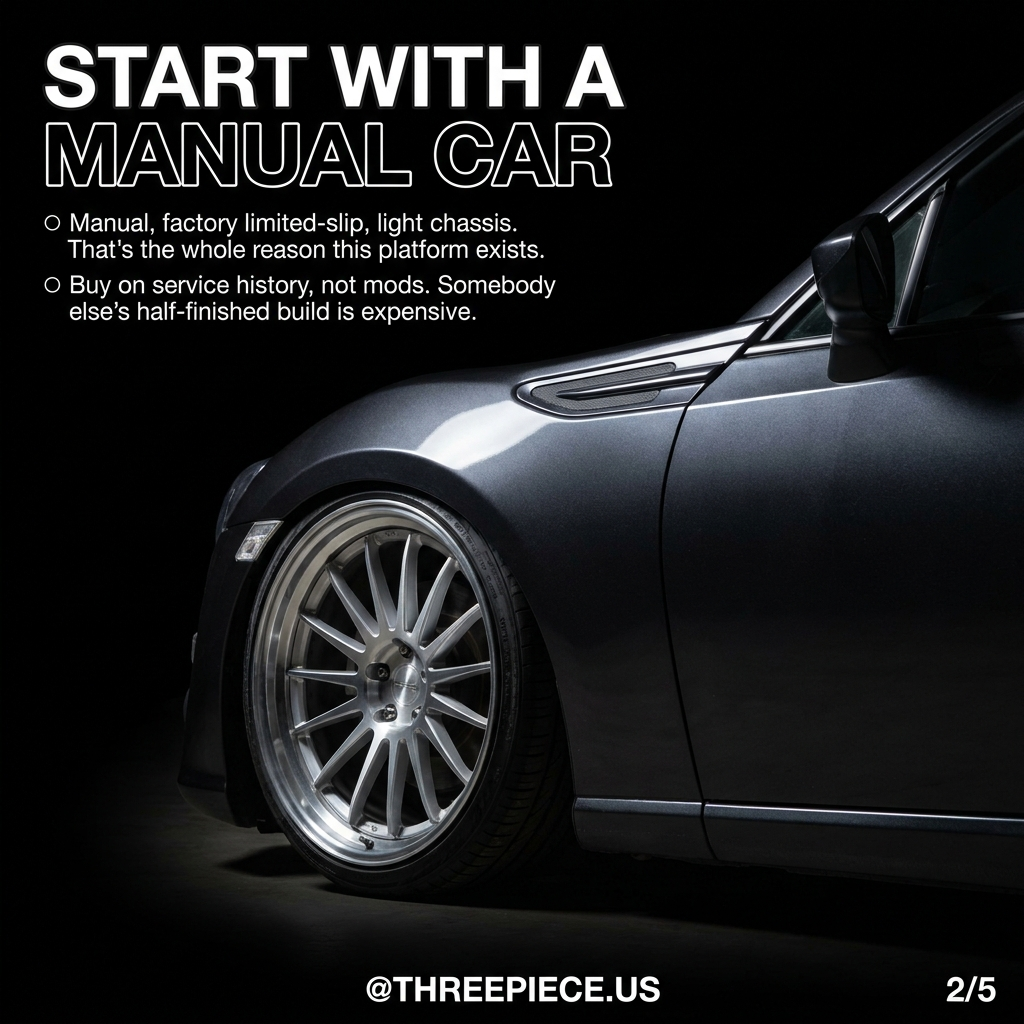
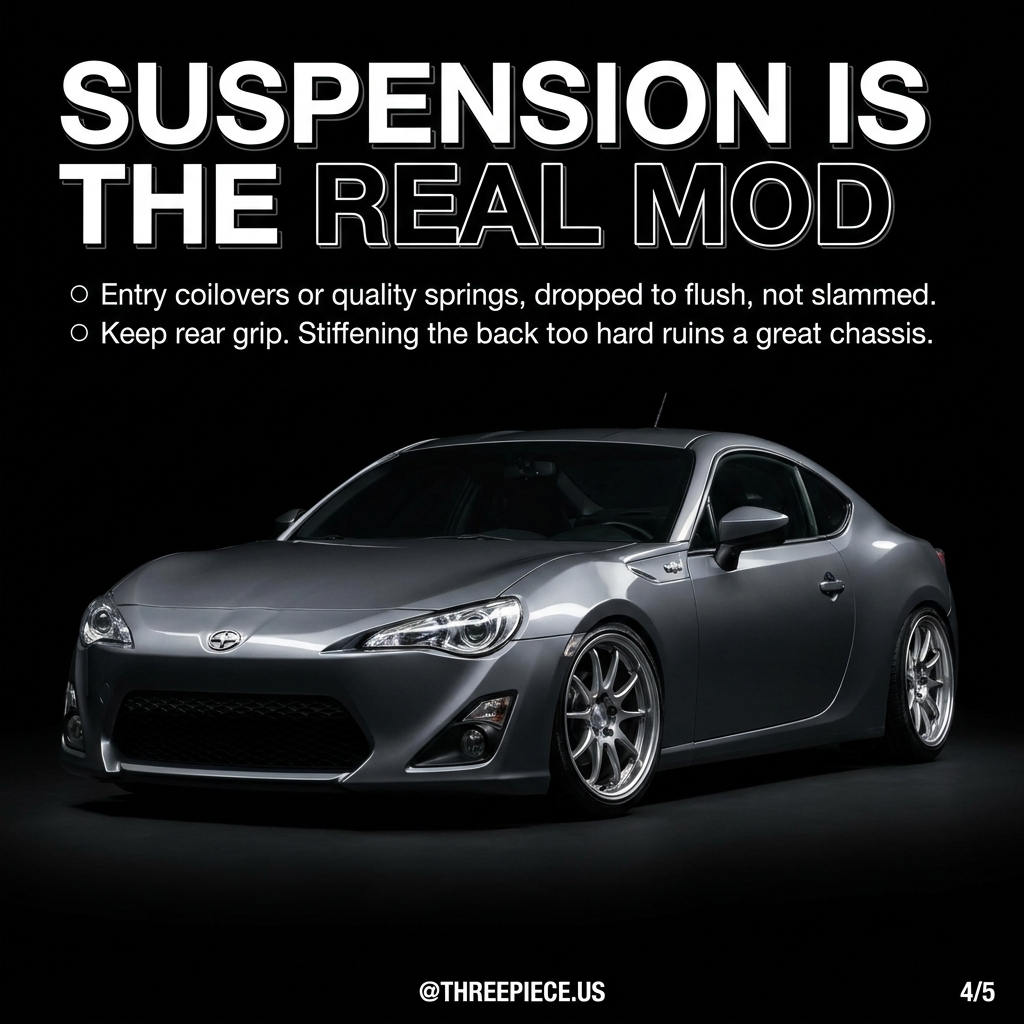
This is the mod that changes how the car talks to you. Everything else changes numbers; this changes the conversation. Entry-level coilovers or a quality spring-and-damper package, dropped to flush and not slammed, plus an alignment done with intent — that's the single biggest step-change available to a ZN6 owner.
The BC Racing DS-Series for 12-23 FR-S/BRZ/GR86 at $1,395 is the standard street-and-occasional-track answer, and the BC Racing RM-Series at $1,495 gets you the inverted monotube setup if you're running a lot of track days. Want more adjustability without jumping to a 3-way? The ER-Series with external reservoirs at $1,935 and the HM-Series at $2,535 cover the serious end. If you'd rather have a softer-riding single-adjustable, the Silvers NEOMAX 1-Way for the 2013-2016 FR-S at $1,399 is a genuinely comfortable street setup. Browse the full suspension catalog if you're cross-shopping.
The mistake almost everybody makes: over-stiffening the rear. This chassis rewards a rear end that rotates on throttle, and hammering the back with the stiffest spring rate on the shelf plus a giant bar turns a communicative car into one that snaps without warning. Keep rear grip. Let the front do the work. And go read our breakdown of coilover install mistakes that ruin ride quality before you touch a spanner — preload, top-hat torque, and bump-stop length ruin more builds than spring rate ever has.
Step 3: Square fitment, light wheels
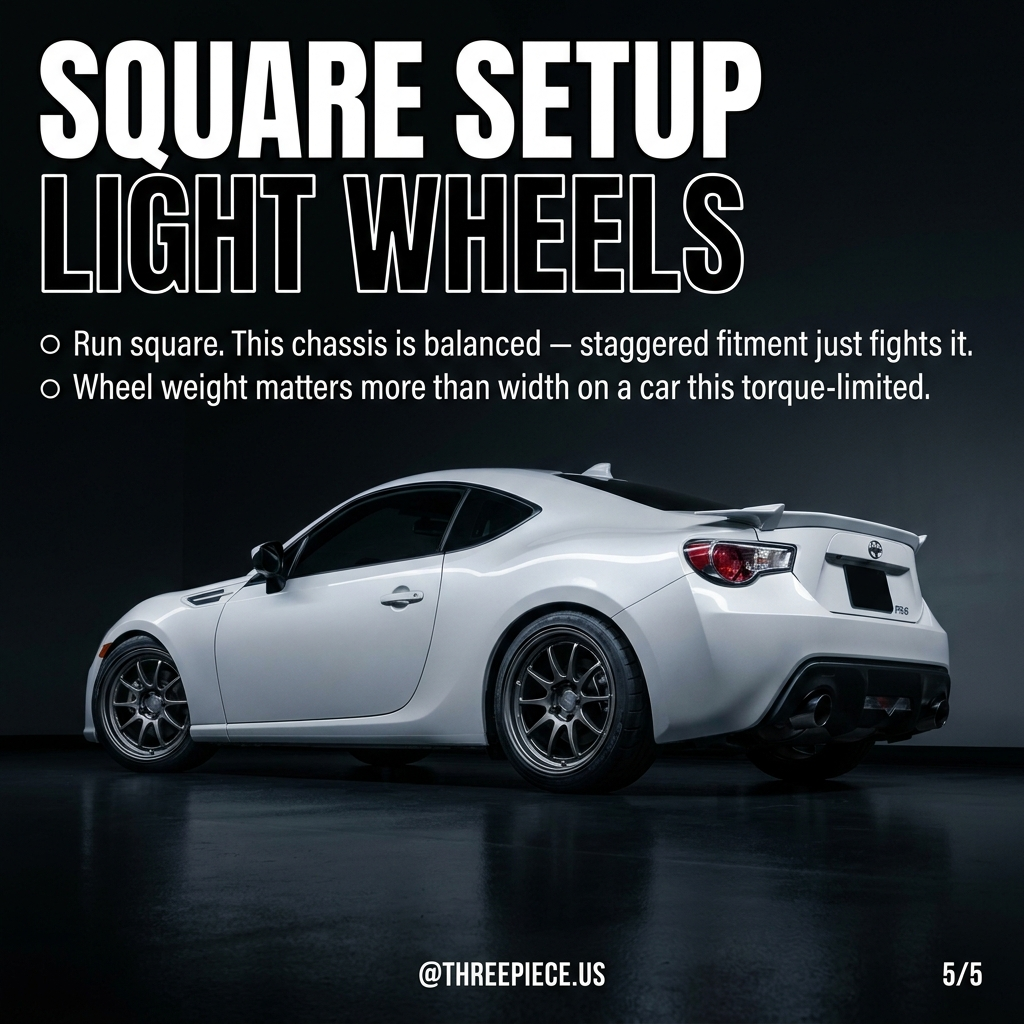
Here's where FR-S owners fumble hardest. The ZN6 runs 5x100 with a 56.1mm hub bore and came from the factory on a modest 17x7 +48. The move is square. Staggered fitment on a car making 200 hp and 151 lb-ft is cosplay for a power level the FA20 never had — you're adding rear grip the engine can't use while giving up the balanced, rotate-on-demand behavior that makes the chassis special in the first place. If you want the full square-vs-staggered argument, our E46 M3 square vs staggered guide lays out the same logic on a different chassis.
Two setups cover 95% of ZN6 builds:
- 17x9 +35 to +45 with a 255/40R17 — the track-day answer. Lightest, cheapest tires, best sidewall.
- 18x9.5 +38 with a 255/35R18 — the street answer. Expect a fender roll and some negative camber up front at a real drop.
Shop 17x9 wheels in 5x100 or 18-inch 5x100 wheels, then pair them with 255/40R17 tires or 255/35R18 tires.
Weight matters more than width on a car this torque-limited. You feel every pound of unsprung mass in the steering, in the brake feel, and in how fast the car changes direction. That's why flow-formed and forged options are worth the ladder climb here more than on almost any other platform. The Work Emotion CR Kiwami at $270 is the classic entry point, the Work Emotion T7R at $432 and Work Emotion D9R at $414 are the split-spoke picks, and if you're going endgame, the Work Emotion CR 3P at $895.50 is where this chassis finally looks like the car it always was. The full Work Emotion series and new wheels catalog are worth a scroll.
Don't skip the small stuff: hubcentric rings for that 56.1 bore and proper lug nuts are non-negotiable, and 90-degree valve stems at $3.80 make life easier behind a deep-lip face.
Step 4: Power comes last, actually
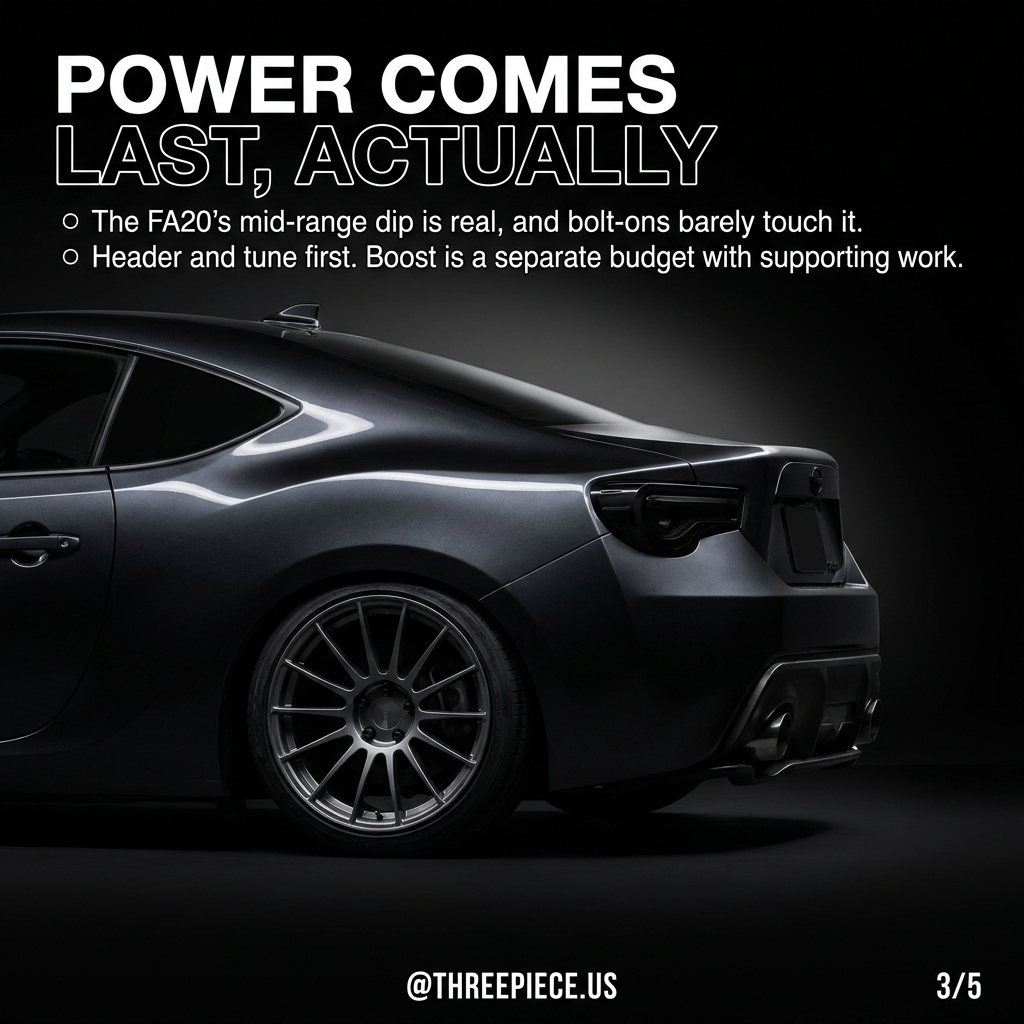
The FA20's mid-range dip around 4,000 rpm is real, and it's also not what's costing you seconds on a backroad. Bolt-ons barely touch it. An unequal-length header with a tune is the one naturally aspirated combination that meaningfully smooths the curve, and even then you're talking about a driveability improvement more than a stopwatch improvement.
Boost is a separate budget with supporting work — fueling, cooling, clutch, and a rear end that can put it down. Plan it as a second build, not a step in this one. If you want the counterpoint on what's worth spending on this platform, our GR86 mod rankings apply almost directly to the ZN6, and the Focus RS mod ranking and Mazdaspeed3 build order show how differently a torque-rich turbo platform wants to be built.
Before power: brake fluid, pads, a seat that actually holds you, and about six sets of tires. That's the cheapest speed on earth and nobody posts about it.
The build order, in one line
Manual → suspension → square wheels and tires → brakes and seat → power, if you still want it. Half of you will get to step four and realize you never wanted step five. That's not a failure, that's the FR-S doing exactly what it was designed to do: make you a faster driver instead of an owner of a faster car. It's the cheapest path to that Toyota has sold in twenty years, and the people who built theirs in this order are the ones still driving them.
Start where it counts. Grab FR-S coilovers, then get the fitment right with a set of Work Emotion T5Rs at $396 or something with a lip from the wheel parts side of the house. Still figuring out sizing? Our Kansei KNP review and NA Miata buyer's guide cover the same light-car, square-fitment philosophy on smaller chassis.
So — what's the order you actually built yours in, and which step did you regret skipping?