
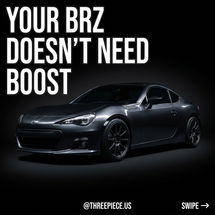
Subaru BRZ ZC6 Build Guide: Skip Boost, Fix Fitment
The Subaru BRZ ZC6 build that actually works starts with an admission nobody in the group chat wants to make: this car was never going to win a straight line, and every dollar you spend pretending otherwise is a dollar that didn't go into contact patch. The FA20 makes 200hp and 151 lb-ft in a 2,800lb chassis with a low crank centerline and near 50/50 balance. That's not a problem to solve with boost. That's a gift Subaru handed you and then hobbled with 215-section tires and an understeer-biased factory setup. Fix those two things and you have a car that embarrasses double the horsepower on any road with corners.

Quick links
- Buy a manual ZC6 and check the recall
- The FA20 isn't the point
- Fix balance, not ride height
- BRZ ZC6 wheel fitment: the actual build
- The build order that works
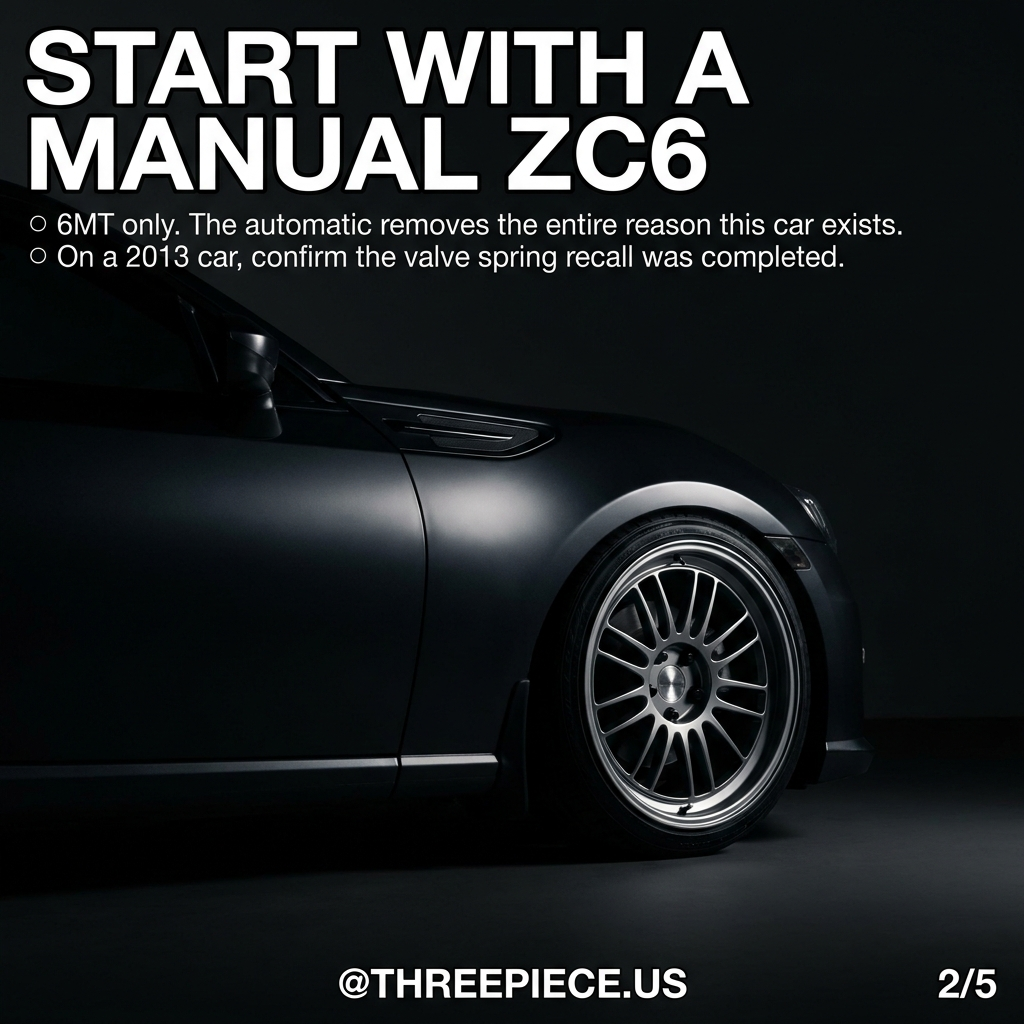
Buy a manual ZC6 and check the recall
6MT only. The automatic ZC6 is a different car and no mod list rescues it — the whole appeal of this chassis is the interaction between your right foot, a short shifter, and a rear axle that's always slightly interested in rotating. An auto removes the reason the car exists. Walk.
On any 2013 car, confirm the valve spring recall was completed before money changes hands. Early FA20s went out with valve springs that could fracture, and the fix is a full teardown — not something you want to discover as a new owner. A VIN check with a dealer takes five minutes and is the single highest-value pre-purchase step on this platform. Cars that saw hard track use with the factory oil cooling arrangement deserve extra scrutiny too; the FA20 is not fragile, but it isn't a bottomless well of abuse tolerance either.
Price-wise, the ZC6 sits in the same conversation as an NA Miata for people who need a back seat, and it's aging into the same kind of appreciation curve. If you're cross-shopping, the honest comparison isn't a WRX — read our Subaru WRX STI generation rankings and notice how different the goals are.
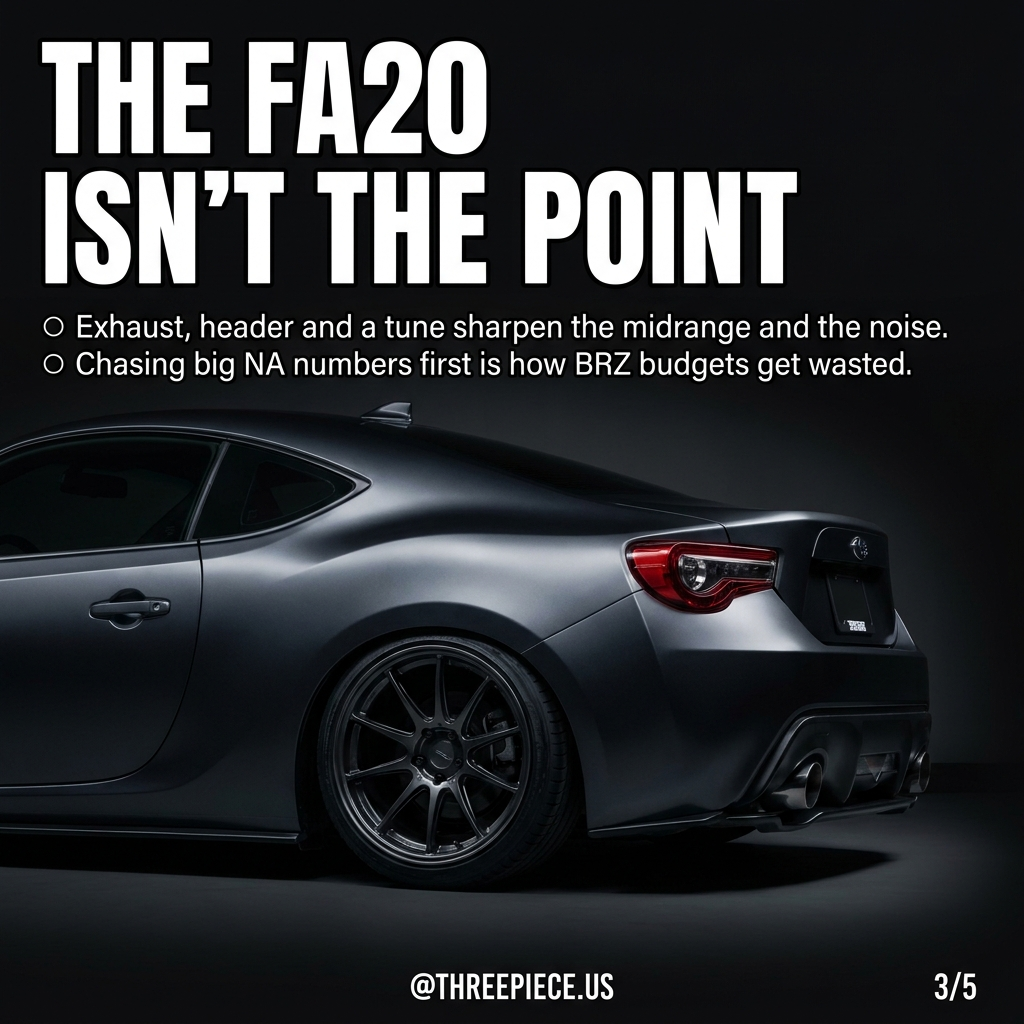
The FA20 isn't the point
Everyone knows about the torque dip around 4,000rpm. What people get wrong is what to do about it. A header, a cat-back, and a tune won't rewrite the dyno chart in any dramatic way — realistically you're looking at 10-15whp and a flatter midrange. What they do is stop the car from going soft in the exact rev range you live in on a canyon road, and they give the flat-four an actual voice instead of the factory shop-vac impression.
That's the whole NA program. Header, exhaust, tune, decent oil. If you're logging or building toward track use, an AEM RTD Exhaust Gas Temperature Sensor Kit at $183.95 is a smarter $200 than another intake claiming ten wheel horsepower.
Chasing big naturally aspirated numbers first is how ZC6 budgets evaporate. High-compression NA builds and cams get expensive fast and return less per dollar than tires do. Forced induction is a legitimate endgame, but it's an endgame — it belongs after suspension and fitment, not instead of them. Our breakdown of every GR86 mod ranked from genius to money pit covers the same logic on the second-gen car, and most of it carries straight back to the ZC6.
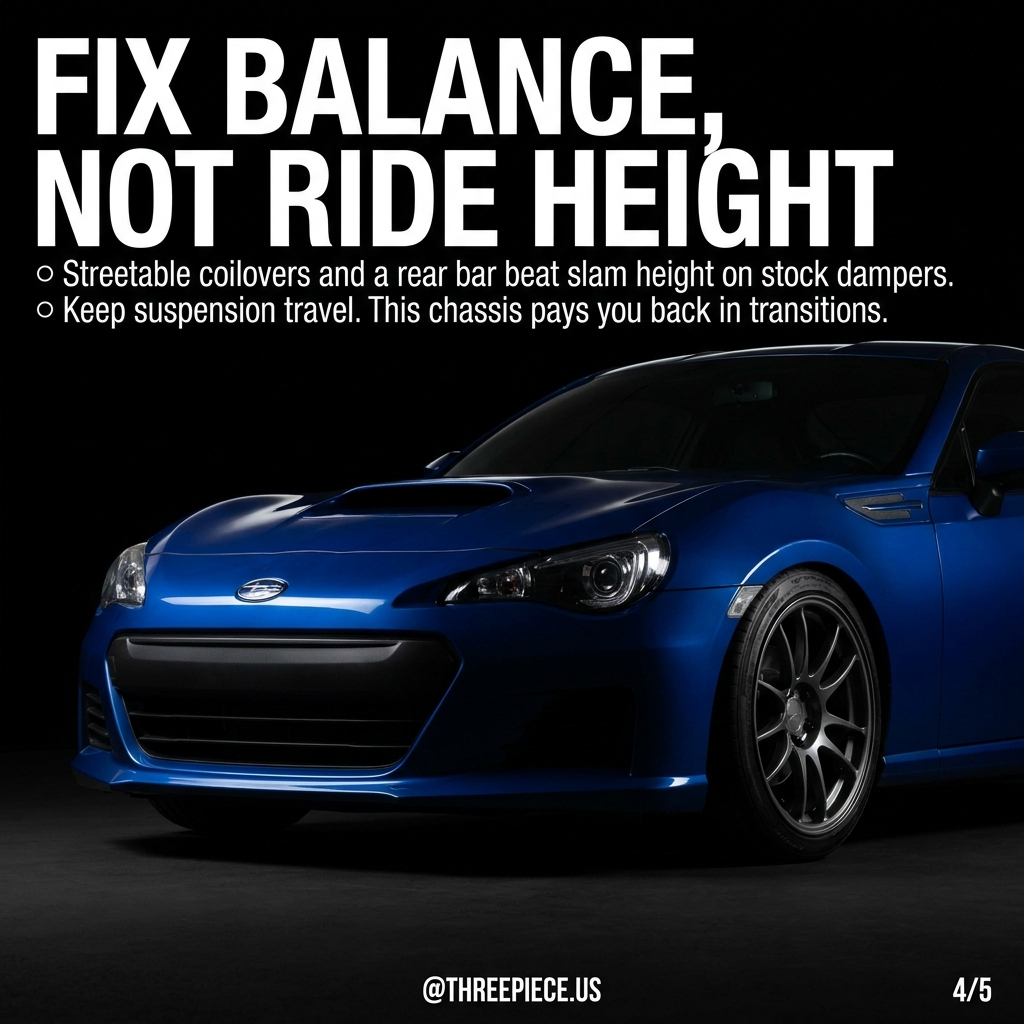
Fix balance, not ride height
The factory ZC6 understeers on purpose. That's a liability decision, not an engineering one, and you undo most of it with a rear sway bar one setting stiffer than you think you want. Do that before you touch anything else in the suspension — it's the cheapest handling change on the platform and it changes how the car turns in more than any spring rate you'll pick.
Then coilovers, set for damping and travel rather than for how the fender gap photographs. Slamming a ZC6 on stock dampers or short springs takes away the suspension travel that makes this chassis so good in transitions. Keep the travel and the car pays you back every time you flick it from left to right.
Good options for the ZC6, all built for this chassis specifically:
- F2 Function & Form Subaru BRZ 12+ Type 2 Coilovers — $980. The entry point that doesn't ruin the car. 32-way damping, streetable.
- Function and Form ZC6 Type 3 Coilovers — $1,590. Inverted, separate ride height and preload adjustment.
- Fortune Auto 500 Series ZC6 Coilovers — $1,918.36. Rebuildable, revalvable, custom spring rates. The buy-once option.
- Fortune Auto 500 Super Low Series — $2,199 if you want the aggressive ride height without giving up shock body travel.
- Fortune Auto 510 Series — $2,399, external reservoirs, for cars that see real track time.
Whatever you install, get the corner balance and alignment right afterward. The mistakes people make here are universal — our writeup on coilover install mistakes that ruin ride quality applies word for word to a ZC6. Browse the full suspension catalog if you want to compare rates and build sheets side by side.
BRZ ZC6 wheel fitment: the actual build
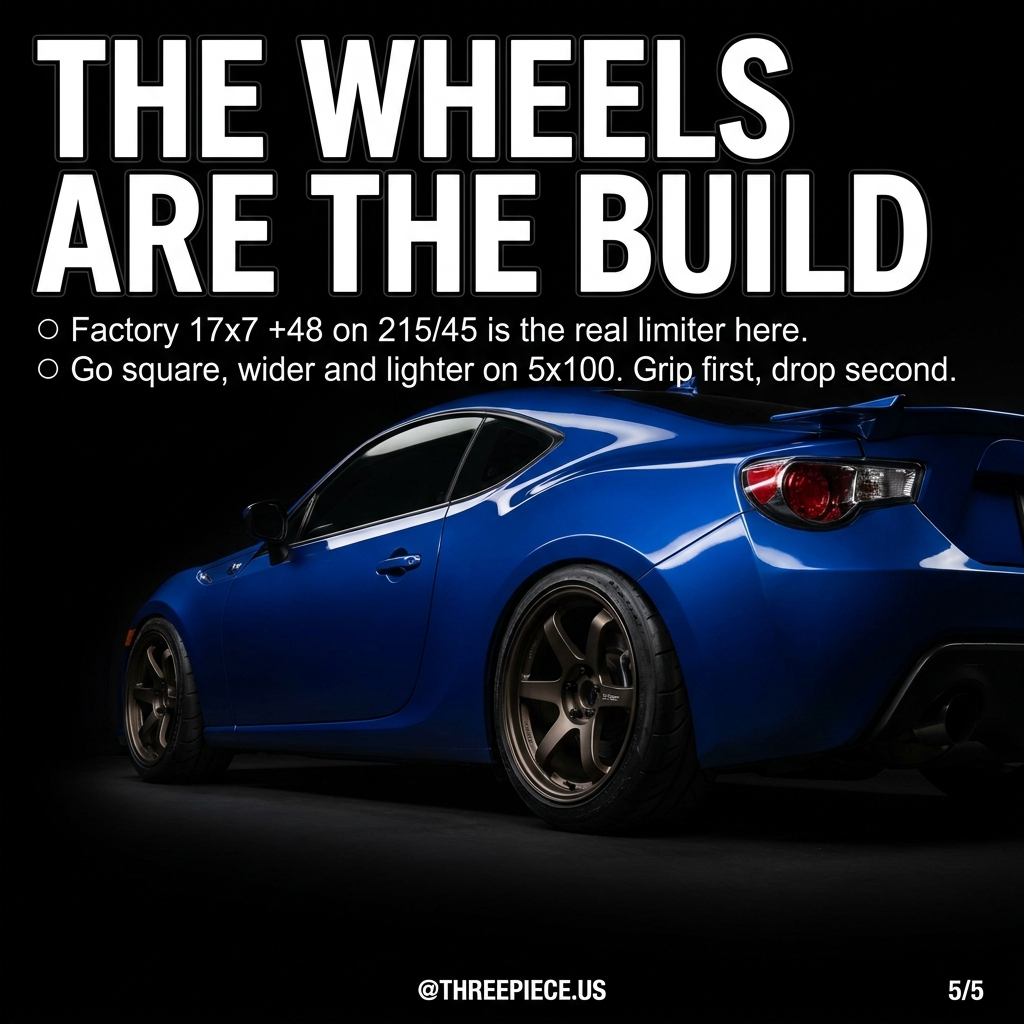
Here's the real limiter. The Limited ZC6 shipped on 17x7 +48 wrapped in 215/45R17; base and Premium cars got 16x6.5 on 205/55R16. That is a tire package sized for fuel economy and a price target, bolted to a chassis that deserves far better. The bolt pattern is 5x100 with a 56.1mm hub bore — shared with older Subarus and a lot of Toyota product, which narrows the aftermarket but not painfully.
Two setups worth your money:
Track and backroad: 17x9 +42 on 245/40R17. This is the sweet spot. Seventeens keep tire cost sane, 200-treadwear rubber is plentiful in that size, and the added width transforms turn-in. Shop 17x9 wheels in 5x100 and pair them with 245/40R17 tires.
Street and stance: 18x9.5 +38 on 255/35R18. More presence, more sidewall control, notably more expensive to consume. Start with 18x9.5 in 5x100 and 255/35R18 tires.
Either way, roll the rear fenders. The ZC6's rear lip is roughly 25mm of folded metal and it does not negotiate with a 245 on a squatting car. Go square, not staggered — this platform rewards a balanced contact patch, and square lets you rotate tires. If you want the argument for and against, our square vs staggered breakdown covers the reasoning.
For wheels themselves, the Work Emotion series is the obvious landing spot on 5x100 — the Work Emotion CR Kiwami starts at $270 per wheel and is the lightweight flow-formed answer, while the Work Emotion T7R at $432 gives you the deeper-face look. Step up to the Work Emotion T7R 2P at $531 or the Work Emitz at $711 when the build earns it. If you're going multi-piece, keep spare M7x32 assembly bolts at $10 and silicone sealant at $10.99 on the shelf. Finish with hubcentric rings — 56.1mm bore is small, and running without them on a lightweight rear-drive car is how you chase a phantom vibration for a month.
The build order that works
Manual ZC6 with a clean recall record. Rear sway bar. Tires and wheels. Coilovers set for travel. Header, exhaust, tune when you want the noise. That's it — and it lands under what a supercharger kit costs before installation, with a car that's faster on every road that isn't an on-ramp.
The ZC6 is quietly becoming the affordable modern classic the way the Z33 did, and the clean stock-motor cars on real tires are the ones people remember. If you want fitment references before you commit, our 2022+ GR86 and BRZ offset guide covers the second-gen numbers, and the vehicle gallery is full of builds worth stealing ideas from. Browse the full wheel catalog when you're ready to fix the one thing actually holding your ZC6 back.
So settle it in the comments: 17x9 +42 on 245s and cheap track tires, or 18x9.5 +38 on 255s and a tire bill you feel every spring — which side is your ZC6 on, and did you roll the fenders or find out the hard way?