
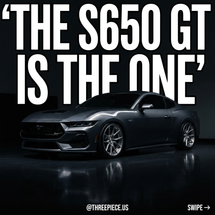
S650 Mustang GT: 3 Reasons It Deserves More Respect
The S650 Mustang GT is catching strays from every direction — too heavy, too digital, not enough of a leap from the S550. Meanwhile, the Challenger is finished, the Camaro is finished, and the S650 is sitting there with 480 naturally aspirated horsepower, a manual transmission option, and a chassis that finally acts like Ford hired someone who's actually driven a car through a corner. The internet is wrong about this one, and here's why.
Quick links
- The Coyote V8 still hits different
- The chassis finally caught up to the motor
- Last of a formula that's never coming back
- Budget the right stuff from day one
- S650 GT wheel fitment specs
- The verdict
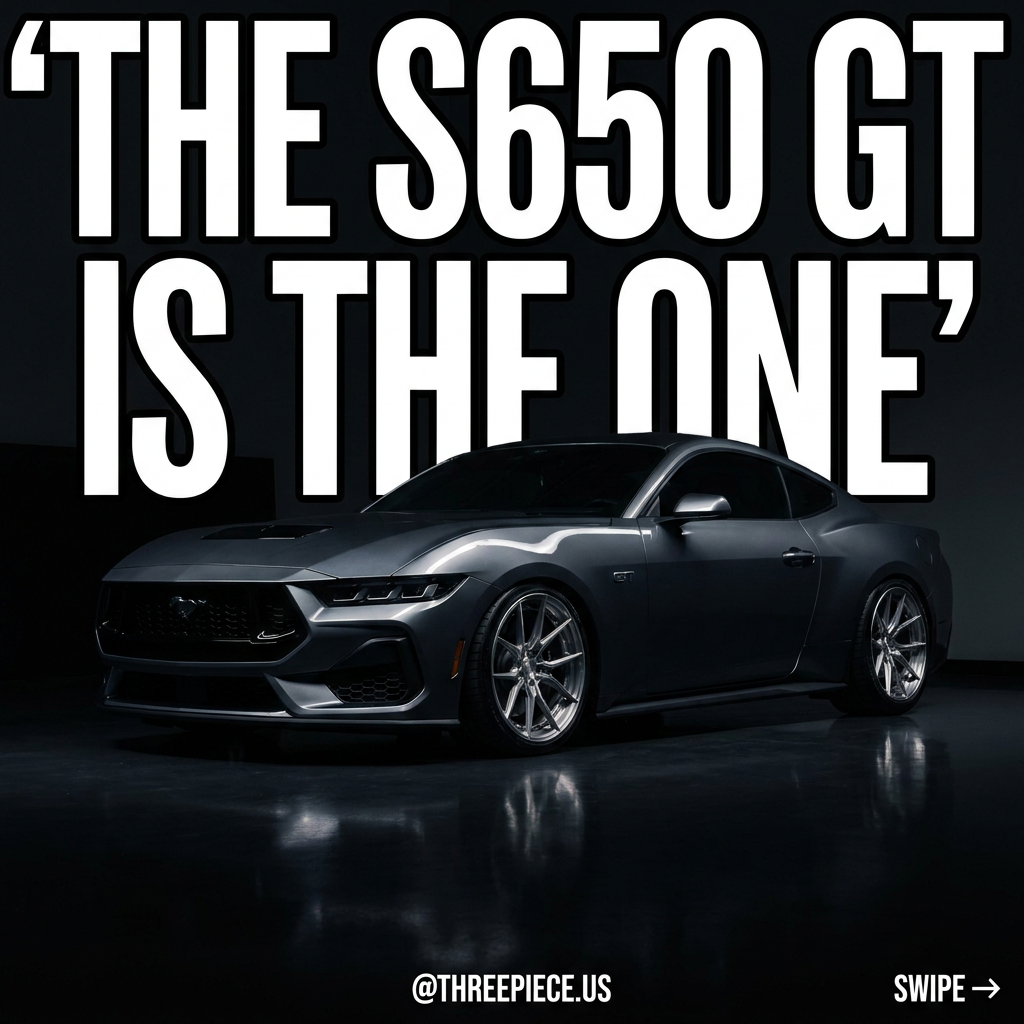
The Coyote V8 Still Hits Different
Every competitor is downsizing, turbocharging, or strapping a hybrid motor to the crankshaft and calling it progress. The S650's 5.0L Coyote makes 480 hp naturally aspirated and revs to 7,500 RPM — no turbos, no tricks, no electric torque-fill masking a lazy powerband. The dual throttle bodies and active exhaust make this thing sound like it resents being parked. That's not nostalgia talking. That's a flat-plane-adjacent V8 doing what no other new American car under $50K can do anymore.
And the aftermarket already knows what to do with it. HP Tuners cracked the S650's ECU, meaning full custom tune support is live. Shops are already pushing 420+ rwhp on bolt-ons alone — intake, exhaust, and a proper calibration. The Coyote platform has over a decade of supercharger kit development behind it, which is why the S650's ceiling isn't even visible yet. If you're coming from the S550, the motor isn't a revolution — it's a refinement of something that was already excellent, with better breathing up top and improved torque delivery through the midrange. If you're weighing this against the Coyote vs. Challenger debate, the answer is even more decisive now that the Challenger doesn't exist anymore.
The Chassis Finally Caught Up to the Motor
For years, the Mustang's reputation was "big motor, sloppy chassis." The S550 improved things dramatically with the independent rear, but the S650 is where Ford actually made the car feel like it was designed by someone who reads tire temperature data. The big changes: a splined steering shaft replacing the old isolator (which means real feedback instead of filtered mush), a new cross-car beam up front for rigidity, and a 15.5:1 electronic power steering rack that makes the car feel genuinely nimble rather than just pointed.
The optional Handling Package is where it gets serious — hollow 24mm front and solid 24mm rear sway bars, stiffer springs, lower ride height, and improved aero. The car goes flat in corners instead of leaning like it's trying to see around the apex. If you're planning to track the car or even just push it on a canyon road, this package is non-negotiable. For owners who want to go further, the Fortune Auto 500 Series Coilovers for the S550 at $1,799 are the proven starting point for Mustang suspension — Fortune Auto's S650-specific fitment follows the same architecture. And for the S197 owners upgrading, the Fortune Auto 500 Series for S197 at the same $1,799 is the move before you sell the old car.
The point is this: the S650 doesn't need an apology anymore when someone brings up handling. It earned its seat. If you want to understand how drag radials compare to street tires for getting that power down, that's the next layer of this conversation — because with the chassis sorted, tire choice actually matters now.

Last of a Formula That's Never Coming Back
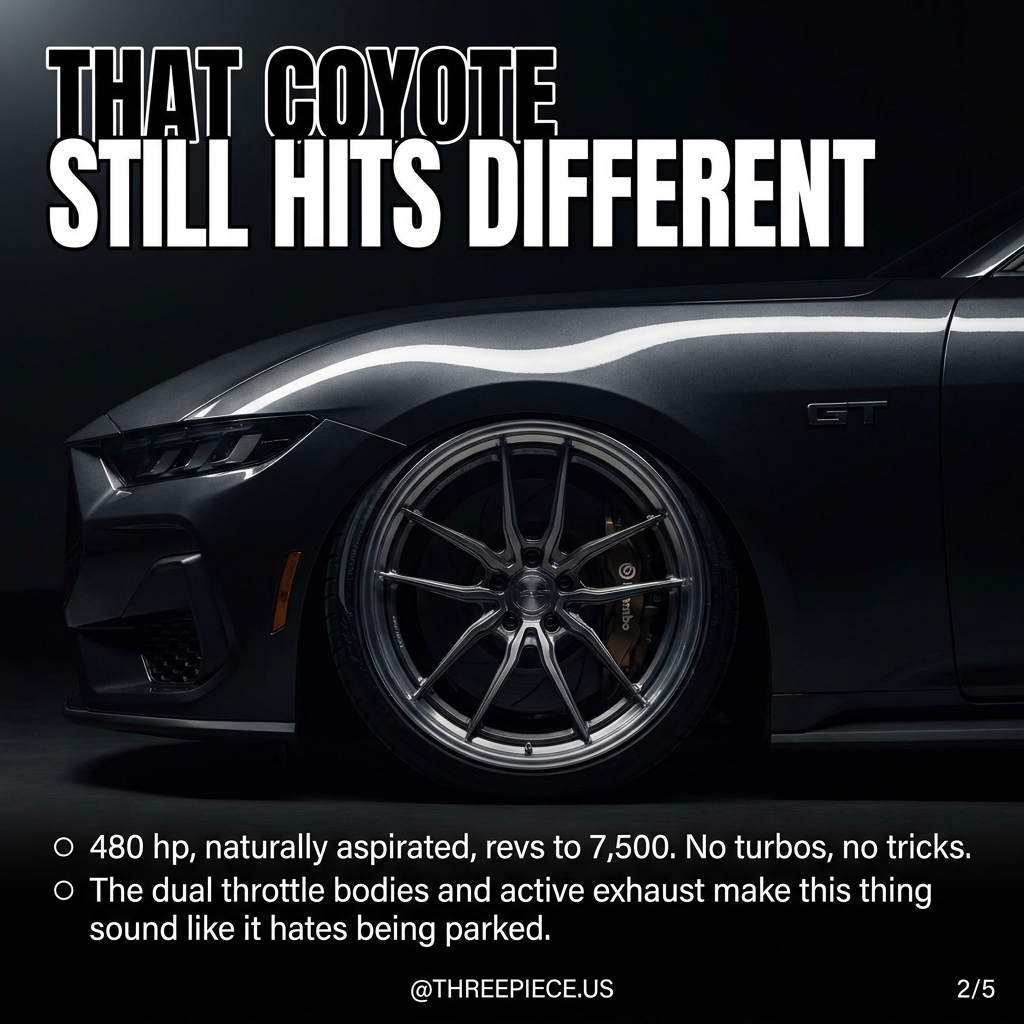
Front-engine, rear-wheel-drive, naturally aspirated V8, manual transmission, under $50K. Read that list again and try to name another new car that checks every box. The Challenger is gone. The Camaro is gone. The S650 is the last one standing, and when Ford inevitably follows the industry toward electrification, the math on S650 values is going to look very different than it does today.
This isn't speculation — it's the same pattern that played out with the final naturally aspirated Corvettes. The last car to offer a specific formula always appreciates once the formula disappears. The S650 GT with a six-speed manual is going to be that car for this generation. Owners on Mustang7G forums are already talking about it in those terms — not as a daily driver purchase, but as a "buy one now and put it away" decision.
The cultural weight matters too. This is the car that kids are putting on posters right now. The same way an S197 GT500 or a Terminator Cobra carries emotional value decades later, the S650 GT — especially in a loud color with the Performance Pack — is going to be the one people wish they'd bought when it was just sitting on dealer lots. That's not a guarantee of profit. It's a guarantee of regret if you skip it.
Budget the Right Stuff From Day One
Here's where most S650 builds go sideways: you buy the car, immediately blow $2,500 on a catback exhaust and a tune you can't feel below 5,000 RPM, and then spend 14 months running stock wheels on coilovers because "wheels are next month." We've all done it. Stop doing it.
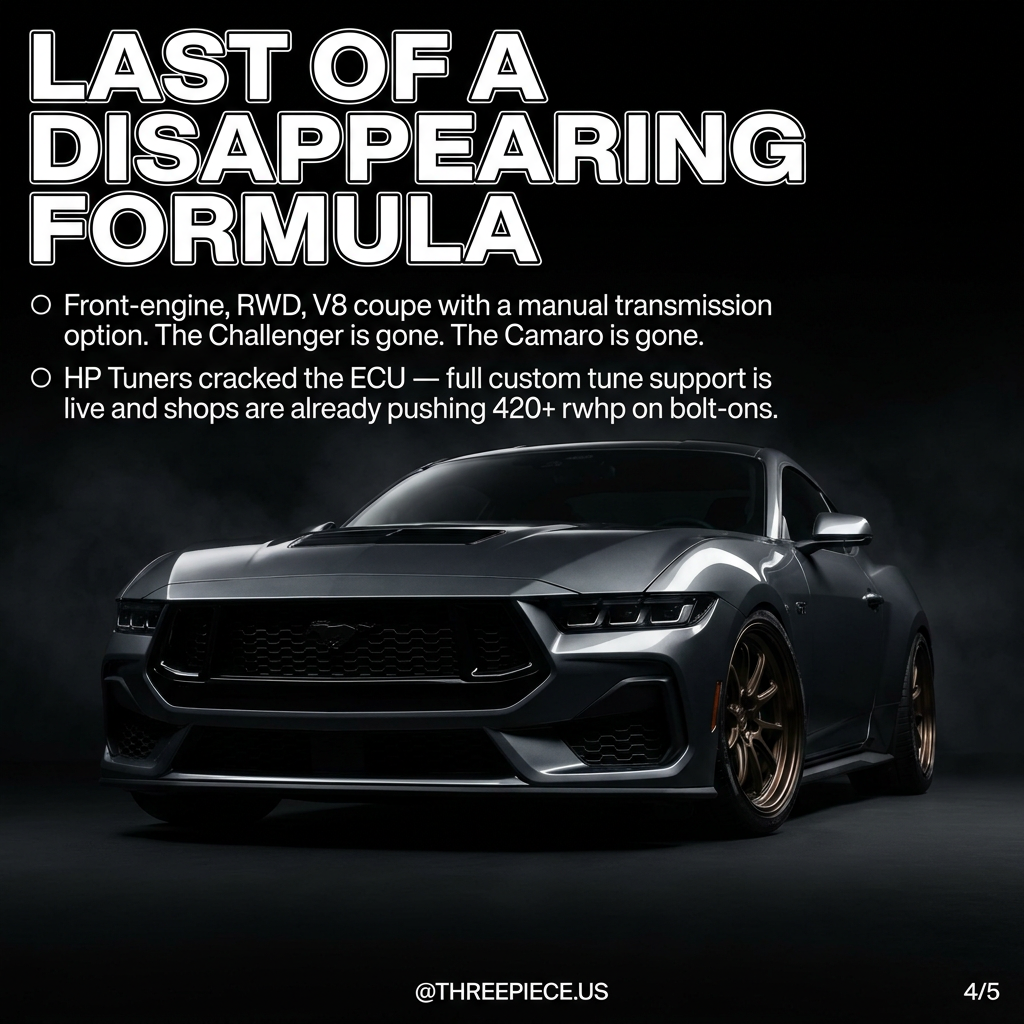
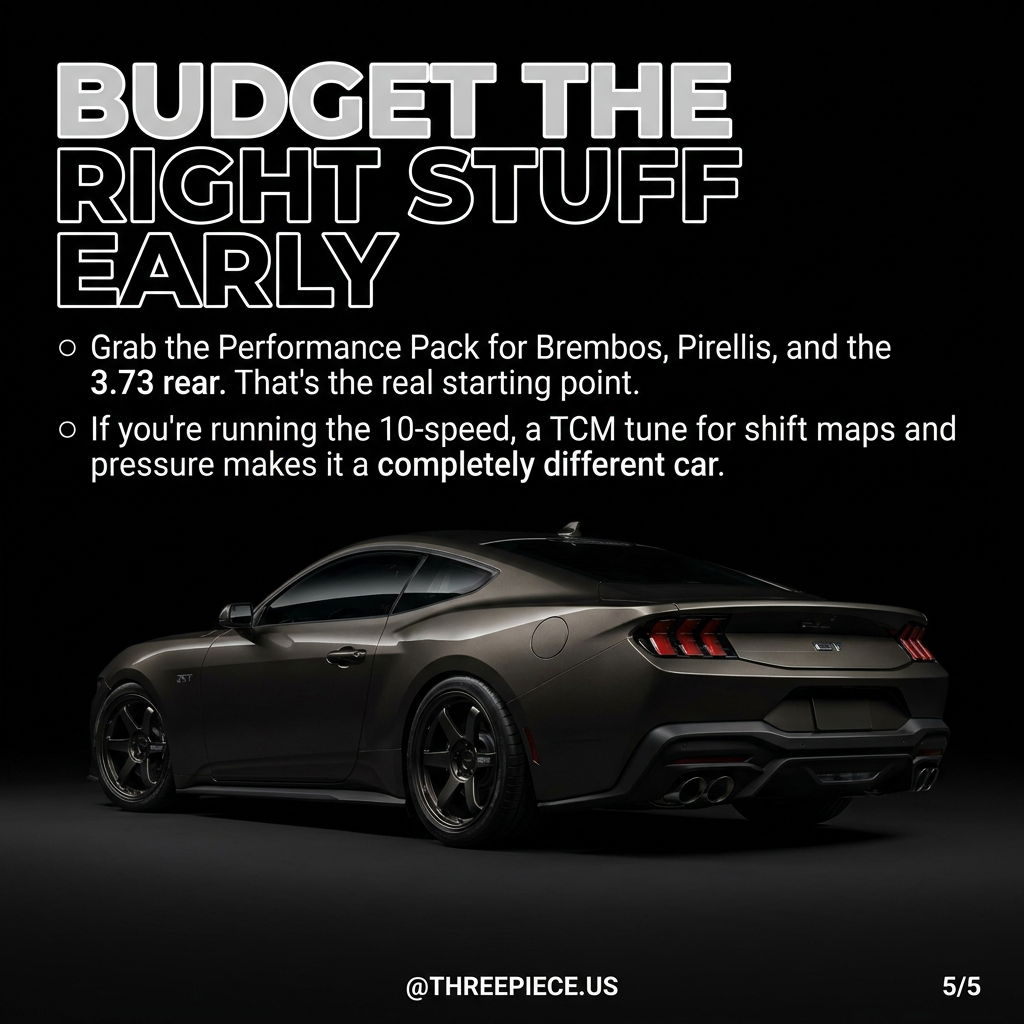
The Performance Pack is the real starting point — it gets you Brembo brakes, Pirelli tires, and a 3.73 Torsen rear. If you're buying a GT without the Performance Pack, you're leaving the best version of the car on the table. From there, if you're running the 10-speed automatic, a TCM tune for shift maps and line pressure is the single most transformative mod you can do. Owners on Reddit consistently describe it as "a completely different car" — crisper downshifts under load, no more lazy upshifts in sport mode, and actual willingness to hold gears when you need them.
For suspension, budget coilovers before power mods. The Fortune Auto 510 Series for S550 Mustang at $2,399 gives you digressive damping and external reservoirs — serious hardware for a car that's going to see track days. The S197 crowd can grab the Fortune Auto 510 Series for S197 at the same price point, or the more budget-conscious Function and Form Type 3 Coilovers for S197 at $1,590 if you're building a street-focused car. Either way, suspension first, power second. The car already makes 480 hp — it doesn't need more power, it needs to use the power it has.
And for the love of your build, pick your tire compound with intention. A 200-treadwear tire on the S650 with the Handling Package is a completely different animal than the all-seasons that some base GTs ship on.
S650 GT Wheel Fitment: The Specs That Matter
The S650 runs a 5x114.3 bolt pattern with a 70.5mm hub bore — same as the S550, which means the aftermarket wheel catalog is already enormous. The sweet spot for a street/show car that still sees spirited driving is a staggered setup: 19x9.5 +25 front · 19x10.5 +30 rear with 275/35R19 and 305/30R19 tires respectively. That fills the fenders without requiring aggressive camber or fender work. If you want to go square for track duty, 19x10 +30 all around with 285/35R19 tires gives you symmetrical grip balance and easy tire rotation.
For 19-inch wheels in 5x114.3, the options range from flow-formed to fully forged multi-piece. The Work Emotion T5R starting at $396 is one of the cleanest spoke designs for a modern muscle car — the concave face at 19x10.5 gives the S650's wide rear quarters the depth they need. If you're building something more aggressive, the Work Emotion CR 3P at $895.50 gives you a fully customizable barrel depth and finish — which is why it's the endgame wheel for builders who want exact fitment, not "close enough." For those who want to understand the difference between cast, flow-formed, and forged construction, our breakdown of wheel tiers explains why it matters at this power level.
Don't forget hubcentric rings — the S650's 70.5mm hub bore means most aftermarket wheels will need them, and skipping them introduces vibration at highway speed that you'll chase with balance weights for months before realizing the problem. A $15 part saves you hours of frustration.
The Verdict: Ford's Last Stand Deserves Your Attention
The S650 Mustang GT isn't perfect. The interior screens will divide people forever, the aftermarket ECU access is still catching up to S550 levels, and it's heavier than the car it replaced. But none of that changes the fundamental reality: this is the last naturally aspirated, V8-powered, rear-drive American coupe you can buy with a manual transmission and still have money left for wheels and suspension. When this formula is gone, it's gone.
Build it right from the start. Suspension, wheels, tires — in that order. Skip the impulse catback. Get the Performance Pack car. Put it on proper 19x10.5 wheels with real rubber, drop it on quality coilovers, and drive it like the last car of its kind — because it is. Check out the ThreePiece vehicle gallery for S550 and S650 builds that got the formula right, and figure out what your endgame setup looks like before "next month" turns into next year.