
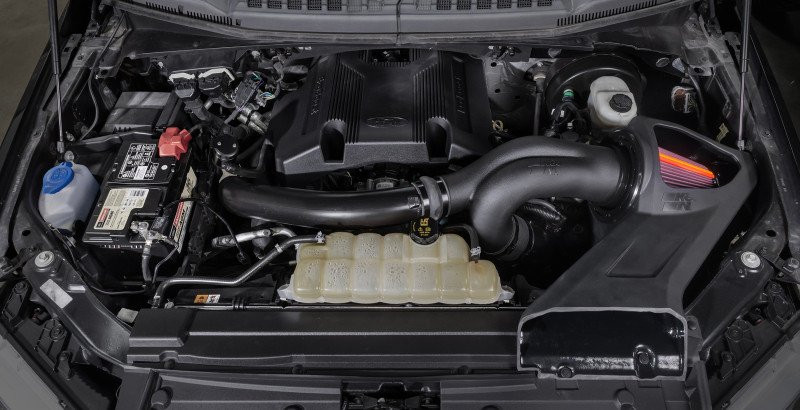
The 2015–2020 Ford F-150 sits on one of the most intake-friendly platforms in the full-size truck segment — but the factory airbox is a genuine choke point, especially on the turbocharged EcoBoost variants where the turbo is already working hard to pull air through a restrictive stock inlet. Whether you're running the twin-turbo 3.5L EcoBoost, the 2.7L EcoBoost, or the naturally aspirated 5.0L Coyote V8, a properly engineered cold air intake is one of the highest-return bolt-ons available: real intake temps drop, throttle response sharpens, and the EcoBoost's compressor actually sounds like what it is. What to look for: sealed airbox designs that physically isolate the filter from under-hood heat, mandrel-bent tubing sized to match your engine's airflow demand, and a filter medium you can actually live with long-term (oiled vs. dry matters here — read below). This guide covers only the intakes we actually stock, matched to specific F-150 engine families so you're not guessing at fitment.
Quick links
- 1. aFe Quantum Cold Air Intake — Best Value for 2015–2020 F-150
- 2. Corsa DryTech Cold Air Intake — Best Dry Filter for 3.5L EcoBoost
- 3. K&N NextGen Cold Air Intake (3.5L) — Best All-Around 3.5L Pick
- 4. Corsa Powercore Cold Air Intake — Best Maintenance-Free Option
- 5. Roush Cold Air Intake Kit — Best for 5.0L V8 Coyote Builds
- 6. K&N NextGen Aluminum Cold Air Intake (5.0L V8) — Best K&N for Coyote
- 7. aFe Track Series Carbon Fiber Cold Air Intake — Best Premium Pick
- How to Choose a Cold Air Intake for Your F-150
- FAQ
1. aFe 15-20 Ford F-150 Quantum Cold Air Intake System w/ Pro Dry S Filter
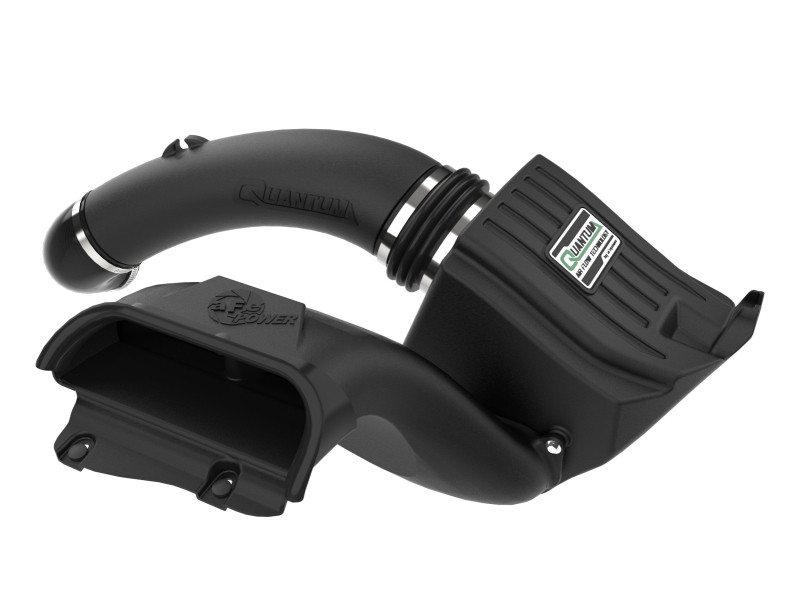
aFe 15-20 Ford F-150 Quantum Cold Air Intake System w/ Pro Dry S Filter — $392
At $392, this is the most accessible legitimate cold air intake on the list for 2015–2020 F-150 owners. The Quantum system uses a large-diameter mandrel-bent tube paired with aFe's Pro Dry S filter — a dry media that never needs oiling and won't raise MAF concerns. The sealed heat shield is the real story here: it creates a genuine cold air environment rather than just relocating the filter into ambient engine-bay temps. For truck owners who want documented gains without the top-shelf price, this is the entry point that doesn't compromise on engineering.
2. Corsa 2017-2020 Ford F-150 3.5L EcoBoost Cold Air Intake with DryTech Filter
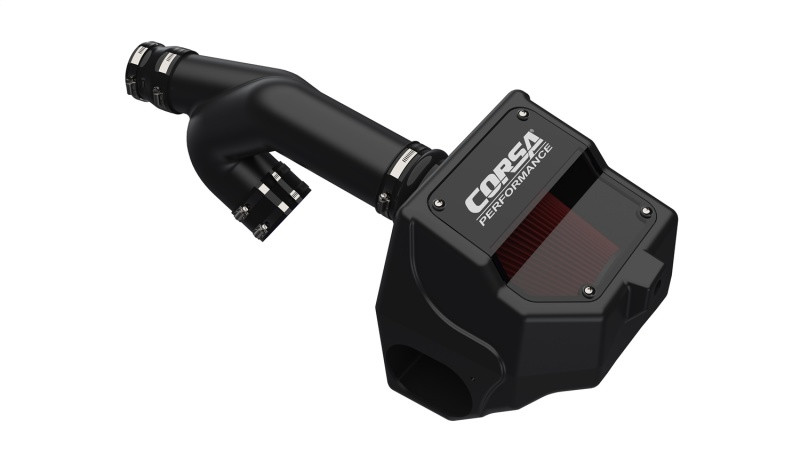
Corsa 2017-2020 Ford F-150 3.5L EcoBoost Cold Air Intake with DryTech Filter — $452
Corsa's DryTech filter is a specific advantage for 3.5L EcoBoost owners: no oil means zero risk of MAF sensor contamination, which is a legitimate concern on the twin-turbo EcoBoost's sensitive sensor setup. At $452, this system fits 2017–2020 applications and routes intake air through a sealed box that draws from low in the fender — real cold air, not recirculated heat. Corsa has a strong documented history on EcoBoost trucks specifically, and the DryTech medium outlasts oiled cotton gauze without performance compromise.
3. K&N 17-20 Ford F150/Raptor V6 3.5L NextGen Cold Air Intake
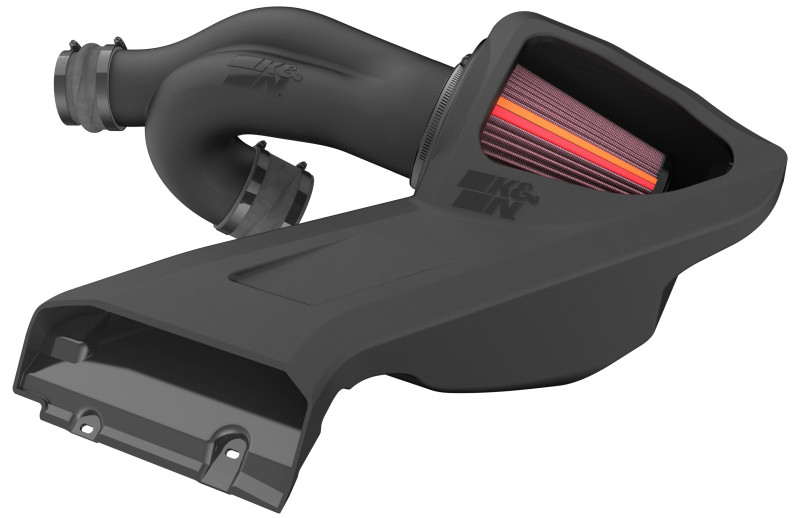
K&N 17-20 Ford F150/Raptor V6 3.5L NextGen Cold Air Intake — $476
K&N's NextGen series moves beyond the traditional tube-and-cone approach — the intake manifold is a single roto-molded piece engineered for this specific engine bay, reducing turbulence at the inlet. At $476, it covers both F-150 and Raptor 3.5L fitments, which tells you the airflow target is set for a boosted application with real demand. The included K&N filter is reusable and washable, and K&N's million-mile filter warranty remains one of the strongest in the category. This is the right call if you want brand reliability and Raptor-tested engineering on a standard 3.5L EcoBoost truck.
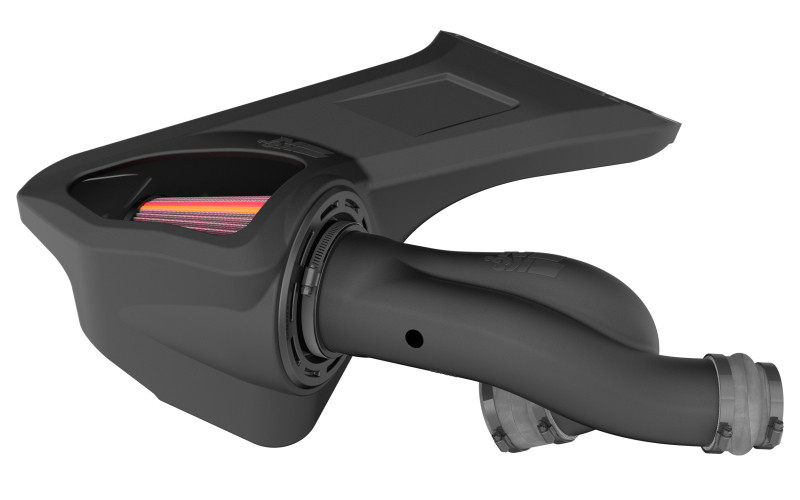
4. Corsa 17- Ford F-150 / 18-22 Ford Expedition 3.5L EcoBoost Cold Air Intake with Powercore Filter
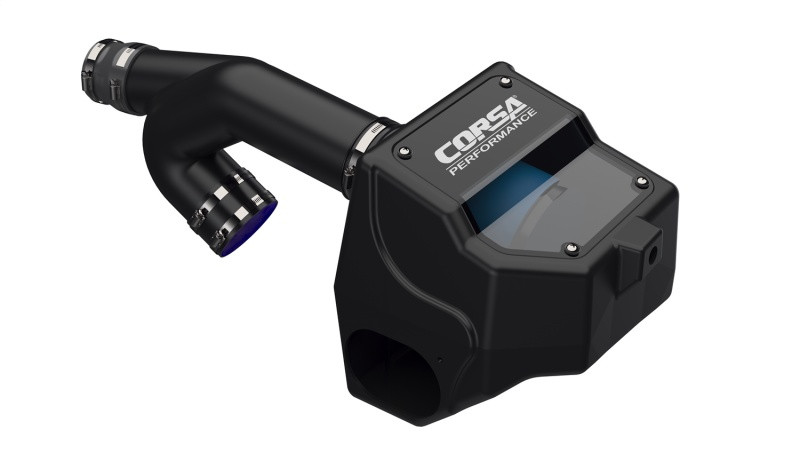
Corsa 17- Ford F-150 / 18-22 Ford Expedition 3.5L EcoBoost Cold Air Intake with Powercore Filter — $492
Corsa's Powercore filter is the choice for true set-it-and-forget-it maintenance: it's a synthetic media that never requires cleaning or re-oiling under normal driving conditions. At $492, this is also compatible with the 2018–2022 Expedition — same 3.5L EcoBoost platform — which means Corsa engineered it against a much wider range of load conditions and ambient temps than most F-150-only systems. If you tow, haul, or live somewhere with extreme temps, the Powercore's filtration durability under sustained stress is a real differentiator.
5. Roush 2018-2023 F-150 5.0L V8 Cold Air Intake Kit
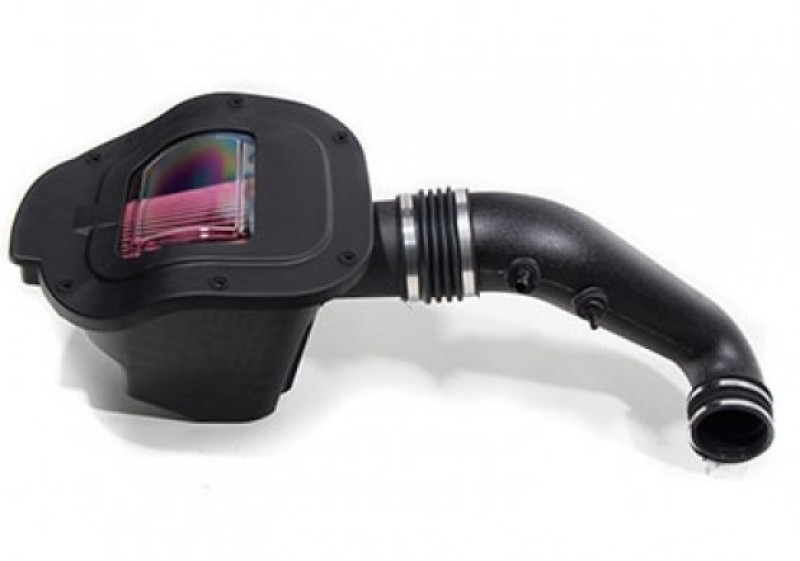
Roush 2018-2023 F-150 5.0L V8 Cold Air Intake Kit — $446
Roush designed this specifically around the 5.0L Coyote V8 in the F-150 — not adapted from a Mustang GT kit, not shared with another platform. At $446, it's tuned for the truck-specific airbox packaging constraints and the Coyote's naturally aspirated intake demand, which is different in character from the EcoBoost systems above. Roush's factory-adjacent engineering pedigree on the F-150 (they build full supercharger packages on this same engine family) means the intake geometry is validated against real dyno data on this exact application. Strong pick if the 5.0L is your engine.
6. K&N 2016-2020 Ford F-150 V8 5.0L NextGen Aluminum Cold Air Intake
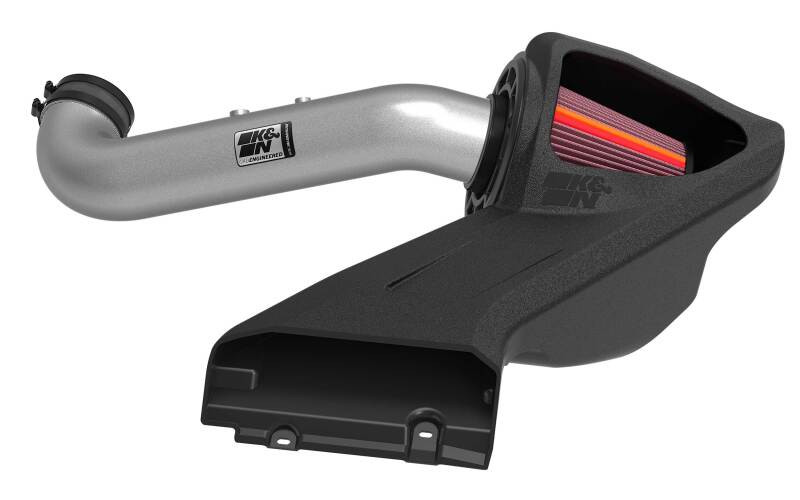
K&N 2016-2020 Ford F-150 V8 5.0L NextGen Aluminum Cold Air Intake — $576
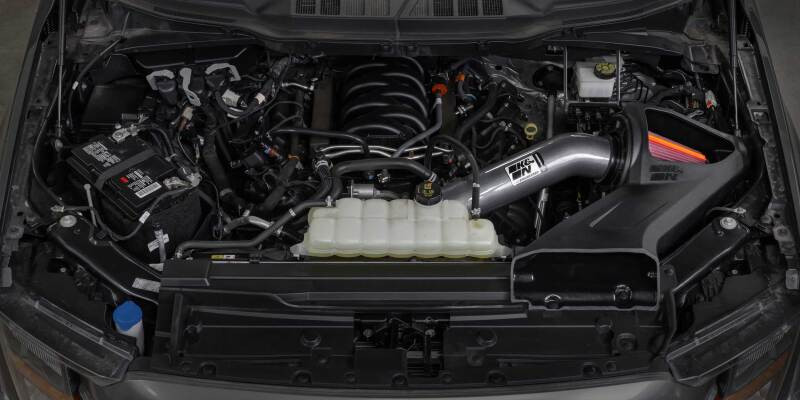
Where the Roush is a clean OE-style fit, this K&N NextGen steps up with a polished aluminum intake tube — a real visual upgrade in the engine bay and a tube that won't flex or degrade over time the way roto-molded plastic can. At $576, it's the premium option for Coyote V8 owners who want hardware that looks as good as it performs. K&N's dyno data on F-150 5.0L applications consistently shows gains in both peak horsepower and midrange torque, and the reusable filter and CARB-exempt status make this an easy long-term ownership decision.
7. aFe 17-20 Ford F-150/Raptor Track Series Carbon Fiber Cold Air Intake System With Pro 5R Filters
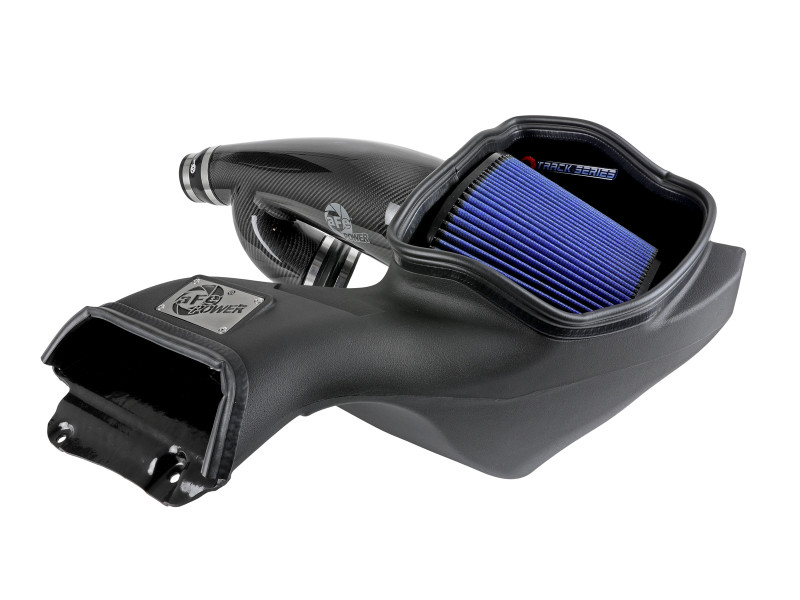
aFe 17-20 Ford F-150/Raptor Track Series Carbon Fiber Cold Air Intake System With Pro 5R Filters — $813
At $813, this is the top-spec option on the list and it earns it: the intake tube and heat shield are genuine carbon fiber — not a carbon-look wrap — which means meaningful weight reduction over aluminum and near-zero heat soak from the tube itself. The Pro 5R oiled filter is aFe's highest-flow media, designed for builds where maximum airflow is the priority. This is the intake for Raptor owners who are already into the engine, or for 3.5L EcoBoost trucks running supporting mods where the factory airbox is genuinely the limiting factor. If the rest of your F-150 is stock, this is overkill — that's not a criticism, it's context.
How to Choose a Cold Air Intake for Your F-150
Match the intake to your engine family first. The 3.5L EcoBoost, 2.7L EcoBoost, and 5.0L Coyote V8 are three distinct platforms with different airflow characteristics, turbo inlet geometry (or lack thereof), and MAF sensor placement. A system designed for the 3.5L will not drop in on the 5.0L — confirm fitment before anything else.
Sealed heat shield vs. open-element. On an F-150, the engine bay generates substantial heat under load. An open-element intake (filter exposed to engine bay air) will pull warm air under any real driving condition. A sealed airbox that draws from the fender well or a low-temperature zone is what actually earns the "cold" in cold air intake. Every system on this list uses a sealed or semi-sealed enclosure.
Oiled vs. dry filter media. Oiled cotton gauze (K&N, aFe Pro 5R) offers excellent flow but requires periodic cleaning and re-oiling — and improper oiling can coat the MAF sensor. On the EcoBoost specifically, this matters more than on the naturally aspirated 5.0L because the MAF sits closer to the boost circuit. Dry media (aFe Pro Dry S, Corsa DryTech, Corsa Powercore) eliminates that risk and is the lower-maintenance choice for daily drivers and towers.
Year-specific fitment on the EcoBoost. The 3.5L EcoBoost went through intake geometry changes between the 2015–2016 and 2017–2020 model years. Pay attention to the specific year range listed on each product — the Corsa and K&N 3.5L options above are explicitly 2017–2020 applications. If you're on a 2015–2016 3.5L, confirm compatibility or look at options explicitly listed for that range.
Accessory kits. If you're running a 2016–2019 F-150 with the 2.7L EcoBoost and already have an aFe Magnum FORCE intake, the aFe Magnum FORCE Spare Parts Kit ($42) and the aFe IAT Harness Extension ($39) are direct support items worth keeping in the parts bin. The harness extension handles the IAT sensor relocation that 2018–2019 2.7L owners need when swapping intakes — it's not optional on those trucks.
Also worth noting: if you're building out your F-150 further, check our guide on running 35s on the F-150 and our F-250 fitment guide if you're cross-shopping trucks. For suspension work to complement your build, browse our suspension catalog and wheel inventory.
FAQ
Will a cold air intake void my F-150's factory warranty?
Not automatically. Under the Magnuson-Moss Warranty Act, Ford cannot void your warranty simply because you installed an aftermarket intake — they must demonstrate that the intake caused the specific failure in question. That said, if you install an oiled-filter intake and have a MAF sensor failure, expect pushback at the dealer. Dry filter systems (Corsa DryTech, aFe Pro Dry S) minimize that risk entirely.
Which intake fits the 2017-2020 3.5L EcoBoost specifically?
The K&N NextGen 3.5L, Corsa DryTech, Corsa Powercore, and aFe Track Series Carbon Fiber are all explicitly confirmed for 2017–2020 3.5L EcoBoost applications. The aFe Quantum covers 2015–2020.
Do I need a tune after installing a cold air intake on my F-150?
On the 3.5L and 2.7L EcoBoost trucks, a tune is not required to see intake gains — the ECU runs MAF-based fueling and will adjust. However, if you're adding supporting mods (intercooler, exhaust, port injection), a tune will be necessary to realize the combined gains. On the naturally aspirated 5.0L Coyote, same answer: no tune required, but gains are more meaningful when paired with a full bolt-on combination and a tune.
What's the install difficulty on these intakes?
All of the intakes listed here are drop-in replacements requiring no cutting, drilling, or fabrication. Typical install time is 30–60 minutes with basic hand tools. The aFe IAT Harness Extension adds roughly 10 minutes for 2018–2019 2.7L applications where the sensor requires relocation. No professional installation required on any of these systems.
Try wheels on your Ford F-150: see the Ford F-150 bolt pattern, wheel sizes by year and wheel builds in our free wheel visualizer.