

For the vast majority of drivers, street performance tires are the right call—they deliver strong grip, all-weather safety and thousands of comfortable, quiet miles from one set. Dedicated track tires reward only those who spend real time on a road course and accept short tread life, poor wet manners and cold-weather weakness in exchange for maximum dry grip. The single deciding factor is simple: how you actually use the car most of the time. If more than a handful of days a year are spent lapping a circuit, a track-focused tire earns its place; otherwise, a street tire is the smarter, safer, longer-lasting choice.
Track explained
A track tire is a DOT-legal R-compound or competition tire built for road-course grip, not daily commuting. The rubber compound is the biggest difference from a street tire—it's engineered to reach and hold a high operating temperature, softening to bite into pavement through corners. Tread patterns run shallow with minimal void so more rubber contacts the road, which also helps the tire shed the heat that builds under repeated hard cornering. Sidewall behavior matters too: as demonstrated in track-day coverage, a tire needs enough controlled flex to keep its contact patch planted as cornering loads try to lift it off the pavement. These tires suit drivers doing frequent lapping days, autocross or amateur wheel-to-wheel racing.
Street explained
Street performance tires—the high- and ultra-high-performance category—balance grip with the qualities daily driving demands: tread life, ride comfort, low noise and, crucially, wet and (for all-season versions) light-winter safety. Their compounds work across a much wider temperature range, so they grip when cold on a morning commute rather than only after being heated on a track. Deeper tread and engineered grooves channel water away to resist hydroplaning. Many are all-season designs with siping for extra biting edges in cold and light snow. This is the right family for street cars, sport sedans, coupes and crossovers driven on public roads.
Head-to-head
Dry grip
Track tires win outright once up to temperature—their soft, low-void compounds are purpose-built for peak dry adhesion. A good street summer tire is impressively grippy for the road but won't match a true R-compound at the limit.
Wet grip
Street tires win clearly. Their deeper grooves evacuate water; many track tires have so little tread they can be genuinely dangerous in heavy rain.
Winter & snow
Neither is a winter tire, but all-season street options with siping handle cold and light snow far better. Track tires can turn hard and lose grip when cold—treat them as fair-weather only.
Tread life
Street tires win by a wide margin. As enthusiast forums note, the faster a tire is around a track, the faster it tends to wear—track compounds are consumables. Street tires are engineered for many thousands of miles.
Noise & comfort
Street tires win. Track tires and stiff, low-profile setups can be loud and harsh; street designs prioritize a refined, quiet ride.
Price
Street performance tires span a broad range here—roughly the low-$60s up to well over $1,200 each depending on size, load rating and brand—so there's a fit for modest budgets and premium fitments alike. Dedicated track tires typically aren't cheap to run once you factor in how quickly they're consumed.
Which should you buy?
If you drive on public roads, commute, or want one set to handle sun, rain and the occasional cold morning, choose a street performance tire—all-season if you see cold or light snow, summer if your climate stays warm and you want sharper dry response. If you regularly attend track days and are willing to trailer or swap wheels—and accept short life and weak wet grip—lean toward track-focused summer performance rubber. A common, sensible compromise is a streetable ultra-high-performance summer tire: strong dry grip for spirited driving with enough manners for the road. Always match size, load index and speed rating to your vehicle, and hedge toward the safer wet/winter tire if your conditions are unpredictable. Browse all tires to compare fitments.
Our top Track
Shop Track at ThreePiece
For track-day drivers who still need to drive to and from the circuit, streetable ultra-high-performance tires are the practical bridge. Consider a maximum-grip summer design like the Continental ContiSportContact 6, or the track-leaning Continental ExtremeContact Sport 02 and ContiSportContact 5P for aggressive dry performance.
Our top Street
Shop Street at ThreePiece


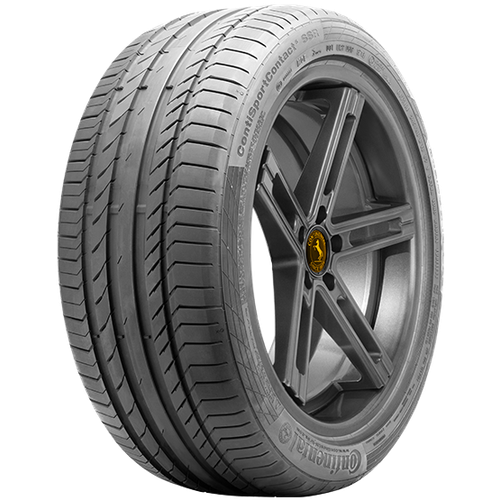

For everyday performance driving, popular choices include the Continental ExtremeContact DWS06 Plus all-season, the Pirelli P-Zero (PZ4) and PZero, the Falken Azenis FK510 summer and Azenis FK460 A/S, Yokohama Avid Ascend GT, and the value-focused Ironman iMOVE GEN 2 AS and GEN 3 AS. For crossover and SUV fitments, look at the Continental ContiCrossContact UHP or a Pirelli Scorpion Zero All Season. Refined touring-summer options like the Continental ContiSportContact 5 round out the range.
Frequently Asked Questions
Can I drive track tires on the street daily?
You can if they're DOT-legal, but it's not advisable. Track compounds wear quickly on the road, grip poorly in the rain, and can feel unsafe when cold, so they're best reserved for track use.
Are street performance tires good enough for occasional track days?
Yes for most enthusiasts. A streetable ultra-high-performance summer tire delivers plenty of grip for learning and casual lapping while remaining safe and long-lived on the road.
Why do track tires have so little tread?
Shallow, low-void tread puts more rubber on the pavement for grip and helps the tire shed the heat generated by repeated hard cornering. That same design is why they perform poorly in standing water.
How much do street performance tires cost?
They range widely—from around the low-$60s per tire up to well over $1,200 for large, premium, high-speed-rated fitments—so pricing depends heavily on your size and specification.