
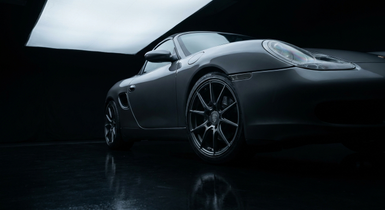
Porsche Boxster 986 build under $3000: The Truth Nobody M...
Porsche Boxster 986 Full Build Under $3,000: The Complete Parts Guide
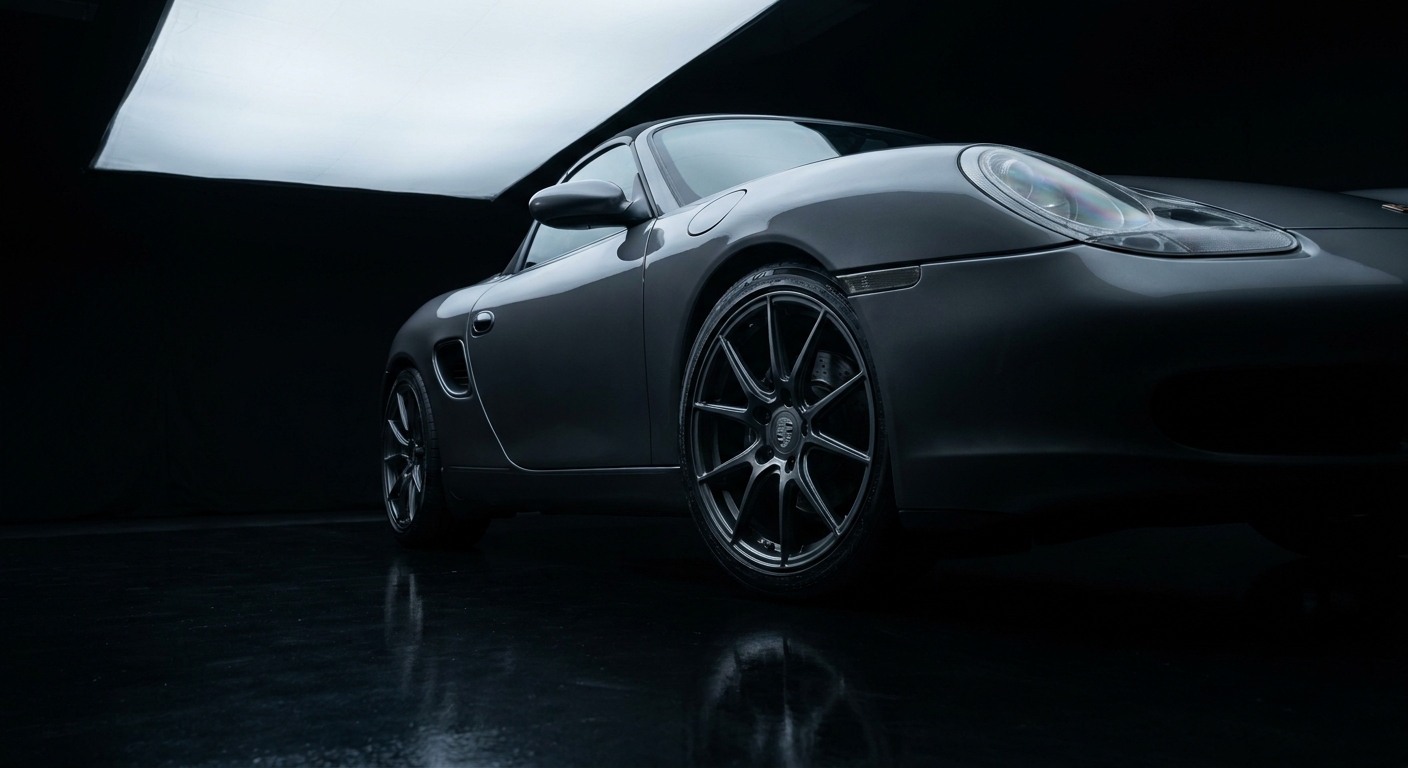
The 986 Boxster is one of the most undervalued sports cars on the used market. Mid-engine balance, a communicative chassis, and genuine Porsche DNA — all available for $5,000–$7,500 in 2024–2025. This $3,000 build plan turns a good used 986 into a great driver: sorted mechanically, lowered properly, rolling on fresh rubber, and stopping on new hardware. It does not turn a basket case into a show car. The baseline car matters, and so does the order in which you spend the money.
---
Quick Navigation
- Quick Answer
- Key Takeaways
- Budget Allocation
- Wheels: 5x130 Fitment on the 986
- Tires: Sizing, Models, and What the 986 Actually Needs
- Suspension: Springs vs. Coilovers at This Budget
- Brakes: Hardware, Sizing, and the Rear Caliper Rule
- Install Order
- What to Avoid
- Bottom Line
Quick Answer
A $3,000 parts budget on a 1999–2004 Porsche Boxster 986 buys you: full maintenance refresh (fluids, AOS, ignition), H&R Sport lowering springs, Zimmermann rotors and Hawk HPS pads at all four corners, a used set of OEM 5x130 Porsche wheels, and Falken Azenis FK510 tires. Add $150 for a professional four-wheel alignment and the car drives better than stock in every measurable way.
---
Key Takeaways
- The 986 uses a 5x130 bolt pattern with a 57.1mm center bore — Porsche-specific, shared with the 996/997 911 era
- Used OEM Porsche wheels are the most reliable budget path; expect to pay $300–$600 for a clean set of four
- H&R Sport Springs (part number 29498-1) drop the car 1.0–1.4 inches and are the community's near-unanimous suspension recommendation at this price point
- Falken Azenis FK510 tires keep the tire budget under $550 while delivering progressive, predictable limit behavior suited to the 986's mid-engine balance
- The rear caliper pistons must be rotated, not compressed — a $20 wind-back tool is mandatory
- Alignment after spring installation is not optional — misaligned 986s eat front tires in under 10,000 miles
- Do not run wheel spacers or adapters from unknown brands on a 5x130 application; the 986 community has documented wheel separation incidents
---
Budget Allocation
| Category | Parts Budget |
|---|---|
| Maintenance (fluids, AOS, ignition) | $450 |
| Wheels | $600 |
| Tires | $500 |
| Suspension (lowering springs) | $550 |
| Brakes (pads + rotors, all four corners) | $350 |
| Cosmetics (soft top, interior, exterior) | $350 |
| Alignment | $150 |
| Contingency | $250 |
Total: ~$2,950–$3,050 in parts. Shipping ($150–$300) and tax ($150–$250) are additional. Labor, if you're not doing the work yourself, adds $400–$900 depending on what gets farmed out. Suspension and brakes are the most DIY-friendly jobs. Alignment must be done professionally.
---
Wheels: 5x130 Fitment on the 986
The 986's bolt pattern is the first constraint that shapes every wheel decision. The 5x130 PCD with a 57.1mm center bore is Porsche-specific and shared across the 986 Boxster, 996 Carrera, and 997 Carrera. This limits new aftermarket options but creates a healthy used OEM market.
Recommended sizes:
- 17x7 front, 17x8.5 or 17x9 rear (staggered)
- 17x7.5 square setup (simpler tire sourcing, lower cost)
Offset targets:
- ET55 front, ET52–ET55 rear for stock-width fitment
- ET50 for a mild aggressive look without rubbing
Best budget path — used OEM Porsche wheels: Fitment is guaranteed, the used market is active, and clean examples in silver look period-correct without looking cheap. Budget $300–$600 for a clean used set of four. If the finish is rough, powder coating or paint adds $200–$400 but produces a custom-looking result for less than new aftermarket pricing.
New aftermarket options:
- Apex Arc-8 does not currently offer a 5x130 fitment as of 2024
- Fifteen52 Turbomac HD Classic is available in 5x130, 17x8.5, ET45 — approximately $200–$250 per wheel new, putting a set of four at $800–$1,000, which exceeds the wheel budget alone
Fitment verification: Before purchasing any used wheel, cross-reference offset and width against 986-specific fitment data on ThreePiece.us. The front strut clearance is the most common fitment problem on this car — an offset that works on the rear can contact the strut housing up front.
Do not run adapters. If a wheel requires an adapter to fit the 5x130 pattern, buy a different wheel. The 986 community has documented wheel separation incidents with low-quality adapters.
---
Tires: Sizing, Models, and What the 986 Actually Needs
Recommended sizes for a 17-inch setup:
- Front: 205/50R17
- Rear: 255/40R17 (staggered) or 225/45R17 (square)
The 986 has a reputation for eating front tires under stock alignment geometry. A proper four-wheel alignment after any suspension work is the fix — not a tire upgrade.
Michelin Pilot Sport 4 (PS4)**
- 205/50R17 front: ~$130–$160 each
- 255/40R17 rear: ~$170–$210 each
- Total for four: $600–$740 — slightly over budget at full MSRP
- The community's near-unanimous street recommendation; dry and wet grip are excellent on a car of the 986's ~2,800 lb weight
Falken Azenis FK510 (recommended for this budget)
- Total for four, mounted and balanced: $480–$550
- Strong wet grip, progressive limit behavior that suits the 986's mid-engine balance
- Well-documented on Rennlist and PCA forums; a legitimate performance tire, not a compromise
- Similar price range to the Falken; community-tested on the 986
- Slightly less wet-weather grip than the PS4 but comparable dry performance
- Another community-tested budget alternative; expect $60–$80 less per tire than the Michelin
---
Suspension: Springs vs. Coilovers at This Budget
At $3,000 total, lowering springs are the correct choice. A quality coilover setup for the 986 starts at $800–$1,000 for budget units (BC Racing, Tein) and climbs from there. Springs deliver 80% of the visual and handling benefit at roughly 30% of the cost.
H&R Sport Springs (recommended)
- Part Number: 29498-1 (verify for specific year/trim)
- Drop: 1.0–1.4 inches front and rear
- Spring rate increase of roughly 15–20% over stock improves body roll control without making the ride punishing on normal roads
- The single most commented-upon modification in the 986 community; reduced body roll, sharper turn-in, and improved high-speed stability are all documented
Eibach Pro-Kit Springs (alternative)
- Part Number: E10-72-003-01-22 (verify fitment)
- Drop: 0.8–1.2 inches — slightly more conservative
- Price: $240–$290
- Preferred by owners who want improved handling without sacrificing ride comfort on imperfect roads
On shocks: Inspect the OEM Bilstein or Sachs struts before installing new springs. Stock 986 shocks are often still serviceable at 80,000–100,000 miles. If replacement is needed, Bilstein B6 performance shocks are the correct pairing — approximately $80–$120 each, or $320–$480 for a set of four. This pushes the suspension budget over $550, so defer shock replacement if the OEM units are functional.
On sway bar end links: Lowering the 986 can cause OEM-length end links to bind. Adjustable end links from 034Motorsport or Rennline run $80–$150 per axle. Inspect after lowering and replace only if binding is present.
Do not buy cheap coilovers instead of quality springs. A $400 no-name coilover kit uses inferior valving that makes the car harsh and unpredictable at the limit. The 986's mid-engine balance is a precision instrument — poor damping ruins it. H&R springs on functional OEM shocks outperform cheap coilovers in every real-world metric.
---
Brakes: Hardware, Sizing, and the Rear Caliper Rule
The 986's stock brake hardware is genuinely good. The goal here is fresh pads and rotors, not a big brake kit.
Front rotors:
- Brand: Zimmermann Sport (cross-drilled/slotted) or Brembo OE-replacement
- Size: 298mm (base Boxster), 318mm (Boxster S)
- Price: $70–$100 per rotor, $140–$200 for the pair
- Zimmermann Sport adds light slotting for improved pad bite and heat dissipation without the cracking risk of cheap cross-drilled units
Rear rotors:
- Brand: Same as front
- Size: 292mm
- Price: $50–$80 per rotor, $100–$160 for the pair
Pads (all four corners):
- Hawk HPS — the most commonly recommended street pad on 986 forums; meaningfully better initial bite than OEM, minimal brake dust increase, no cold-bite penalty; $70–$100 front, $50–$80 rear
- EBC Yellowstuff — a step more aggressive; appropriate if occasional track days are planned
To stay at $350 total: Source Brembo OE-replacement plain-face rotors (~$50–$70 each) paired with Hawk HPS pads. Total drops to $280–$320 — a legitimate, reliable combination.
The rear caliper rule: The 986 integrates the parking brake mechanism into the rear caliper piston. Compressing the rear piston with a C-clamp will damage it. The rear piston must be rotated while being compressed. A caliper wind-back tool costs $15–$25 at any auto parts store. Buy one before you start.
Boxster S brake upgrade: The 318mm front rotors and larger calipers from the Boxster S can be retrofitted to the base Boxster. Used Boxster S brake components can be sourced for $200–$400 and represent a genuine upgrade for track use.
---
Install Order
Week 1–2 — Maintenance first. Flush all fluids, replace the AOS, verify the cooling system, and confirm IMS status. Nothing else happens until the car runs correctly.
Week 2–3 — Brakes. New rotors and pads are a half-day DIY job. Bed the pads properly: 10 moderate stops from 40 mph, then 10 harder stops from 60 mph, before any spirited driving.
Week 3–4 — Suspension. Spring installation requires spring compressors and basic mechanical confidence. Budget a full weekend DIY, or 3–5 hours of shop labor at $100–$130/hr. Do not drive aggressively until alignment is complete.
Immediately after suspension — Alignment. Book the appointment before the spring install is done. Drive directly to the alignment shop. Do not put miles on the car with incorrect geometry.
Recommended alignment settings (street/occasional track):
- Front camber: -1.5° to -2.0°
- Rear camber: -1.5° to -2.0°
- Front toe: 0 to slight toe-in (0 to +0.05° per side)
- Rear toe: slight toe-in per factory spec
Use an independent shop familiar with European vehicles. The 986 requires adjustable rear camber settings that quick-lube alignment bays are not equipped to handle.
Week 4–5 — Wheels and tires. Mount and balance tires on the new wheels. Torque wheel bolts to 130 Nm / 96 ft-lbs. Note: the 986 uses wheel bolts, not lug nuts — do not attempt to install wheels with a lug nut socket.
---
What to Avoid
Cheap coilovers over quality springs. Already covered above, but worth repeating:
URO Parts for suspension or cooling components. URO is acceptable for cosmetic or non-structural parts (trunk struts, interior clips). Do not use URO for brake hardware, suspension parts, or anything in the cooling circuit.
Skipping the alignment. Installing lowering springs and driving without an alignment will destroy a set of $500 tires in under 10,000 miles.
5x130 adapters from unknown brands. If a wheel doesn't fit the 986's bolt pattern natively, find a wheel that does.
Ignoring the rear caliper wind-back requirement. A $20 tool prevents a $300+ caliper replacement.
---
Bottom Line
A well-sourced 1999–2004 Porsche 986 Boxster on H&R Sport springs, Falken Azenis FK510 tires, clean OEM 5x130 wheels, and fresh Zimmermann/Hawk brake hardware is a sorted, visually compelling sports car that punches well above its total cost. The 986's mid-engine balance means suspension and tire improvements translate directly and immediately into driver feedback — you feel the difference in the first corner, not after a week of adjustment. Fresh rubber on properly aligned geometry reveals grip levels that worn stock tires were hiding entirely. This build respects what the platform actually needs rather than chasing power numbers the budget cannot support. The result is a car that rewards the driver every time it leaves the garage.