
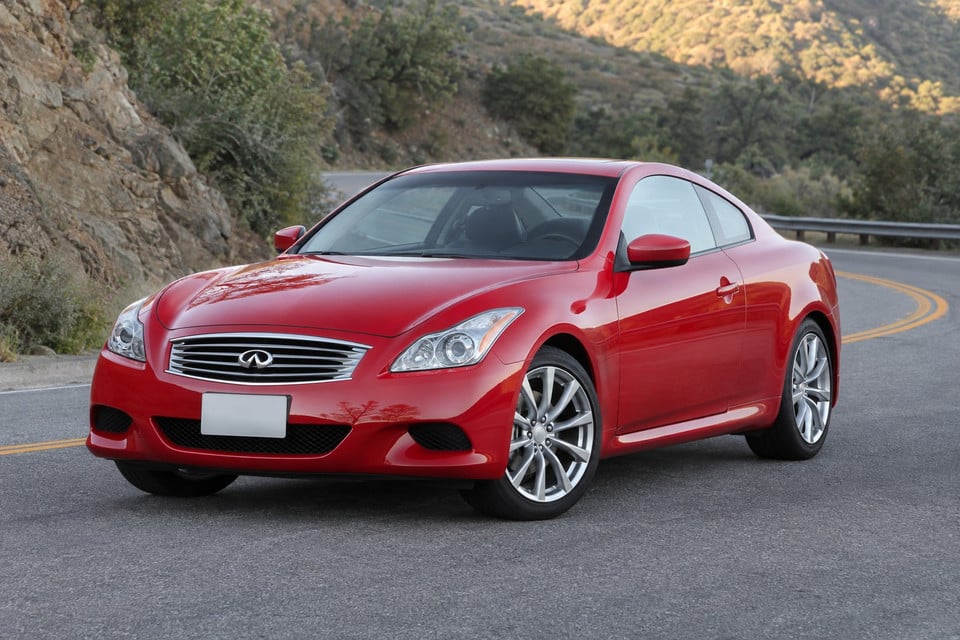
Quick answer: On a RWD G37 coupe, we'd bolt on the Injen SES1997TT. It runs 76mm (3-inch) stainless with X-pipe resonators and burnt titanium tips, and Injen claims +16 hp and +15 lb-ft. If you want a quieter coupe, go with the Invidia Gemini (60mm piping, 110mm tips). On a 2008 coupe, pick the MagnaFlow 16820 if it's your daily, or the HKS Hi-Power if you want the JDM look with 120mm titanium tips. Sedan owners should run the Invidia Q300 for a clean dual-tip upgrade, or the ISR GT Single if you want it loud.

Which G37 do you have? Get this right before you buy
The V36 G37 came as a coupe and a sedan. Exhausts do not swap between the two bodies, and some coupe systems care about model year and drivetrain too. Spend two minutes here and you avoid a return.
| Version | Engine | Factory power | What matters for exhaust fitment |
|---|---|---|---|
| G37 Coupe (2008-2013) | 3.7L VQ37VHR V6 | 330 hp | Two doors. Injen and ISR are RWD only. |
| G37 IPL Coupe (2010-2013) | 3.7L VQ37VHR V6 | 348 hp | Injen calls the IPL out by name. |
| 2008 G37 Coupe | 3.7L VQ37VHR V6 | 330 hp | The HKS and MagnaFlow systems we carry are listed for the 2008 coupe. |
| G37 Sedan | 3.7L VQ37VHR V6 | 328 hp | Four doors. Has its own sedan-specific systems. |
How to tell: Start by counting the doors. Next, check whether your car is RWD or AWD, because the Injen and the ISR coupe system only fit RWD coupes. Last, check the model year on your registration, because two of our coupe systems are listed for the 2008 car only.
Some history: the coupe launched in August 2007 as a 2008 model with the 3.7L VQ37VHR. It was the first Infiniti engine with VVEL, and it came with a 5-speed automatic or a 6-speed manual. The sedan started out as the G35 with the 3.5L VQ35HR (306 hp) and a 5-speed auto. This guide covers the 3.7 cars. If you're still shopping for one, our G37 Sport 6MT buying guide walks through what to look for in a V36 today.
Best cat-back exhausts for the Infiniti G37 Coupe (2008-2013)
Infiniti tuned the factory exhaust for a luxury coupe. It's smooth and quiet, and that's the problem. The VQ37VHR is one of the better-sounding V6s of its era, and most of that sound is muffled out of the box. Coupe owners almost always upgrade for sound first and power second.
Four of the systems we carry fit the coupe across the whole 2008-2013 run: one Injen and three versions of the Invidia Gemini. Browse the full lineup in our cat-back exhaust shop.
Injen SES1997TT: the big-pipe pick

The Injen 76mm Stainless Steel Exhaust (SES1997TT) is the biggest-diameter coupe system on our shelf at 76mm, which is 3 inches. The tubing, mufflers and flanges are all stainless. It uses X-pipe resonators and finishes in dual-wall burnt titanium tips, with the rest polished. Injen mandrel-bends the tubing, TIG-welds everything, and builds it in Pomona, California.
Injen claims +16 hp and +15 lb-ft and describes the sound as aggressive. This system is for RWD coupes only, including the IPL. If you have an AWD coupe, skip it.

Invidia Gemini: three tip choices, one quieter system

The Invidia Gemini Rolled Titanium Tip cat-back (HS07IG7GID) runs 60mm (2.36-inch) piping in 304 stainless and ends in dual 110mm titanium tips. The hangers are welded at the factory locations, so it bolts up without bending anything. Invidia doesn't publish a horsepower claim. Buy this one for sound and looks.

The Invidia Gemini Rolled Stainless Steel Tip (HS07IG7GIS) is the same system with polished stainless tips. It's the right call on a sleeper build: clean, OEM-plus, and nothing burnt-blue shouting from the rear bumper.

The Invidia Gemini Single Layer Titanium Tip (HS07IG7GIT) swaps the rolled double-wall tip for a single-layer titanium tip. That's a rawer look with a thinner lip. Same piping, same fit.

Our pick for the coupe: On a RWD coupe, buy the Injen. The 3-inch pipe suits the VQ37VHR, and it's the only coupe system here with a published power claim. If your car is AWD, or you want a quieter 60mm system, get the Invidia Gemini with the rolled titanium tips.
Best cat-back exhausts for the 2008 G37 Coupe
The 2008 coupe was the first year of the V36 coupe, with 330 hp. Two systems on our shelf are listed for that year only: the HKS Hi-Power and the MagnaFlow Street Series. They sit at opposite ends of the sound range.
HKS Hi-Power Dual: JDM looks, H-pipe inside

The HKS Hi-Power Dual Titanium Tip Catback (32009-BN003) is full dual 60mm piping in polished SUS304 stainless, with an H-pipe and dual 120mm burnt titanium tips. The tips are adjustable, so you can dial in the poke (how far the tips stick out past the bumper).
One hard rule: HKS says it does not fit cars with rear active steer. Check your car before you order. HKS publishes no horsepower number.

MagnaFlow 16820: the daily driver's choice

The MagnaFlow Street Series cat-back (16820) uses mandrel-bent 2.5-inch main piping and three straight-through mufflers. It exits through a dual split rear with 4.5-inch polished, double-wall, angle-cut tips. The inlet bolts on, and it's made in the USA.
MagnaFlow rates it Moderate outside and Mild inside the cabin, and that's the whole point of this system. You get a real V6 note at the curb without a headache on the interstate. MagnaFlow calls it dyno-proven but doesn't publish a number.
Our pick for the 2008 coupe: If it's your daily, get the MagnaFlow. If you want the car to look and sound more like a tuner build and you don't have rear active steer, get the HKS.
Best single-exit cat-back for the G37 Coupe RWD
Some owners want to ditch the dual-exit look completely. A single big tip on a G37 coupe reads as track car, not luxury car, and it's a strong look on a car that sits flush on the right wheels.

The ISR Performance GT Single Exhaust for the G37 Coupe RWD (IS-GT-G37C) is a y-pipe-back system in mandrel-bent stainless. The box holds a front pipe, a 3-inch muffler section with a 4.5-inch tip, two 2-bolt 3-inch gaskets, and four bolts and nuts. That's everything you need.
ISR pitches it as deeper and more aggressive while still livable on the street. It doesn't list a horsepower figure. It fits RWD coupes only.

Our pick: On a RWD coupe that's built more than babied, the ISR GT is the move. It's also the budget-friendly way to get a 3-inch single, which is why it fits right into a cheap-and-cheerful build like our budget G37 build.
Best cat-back exhausts for the Infiniti G37 Sedan
The G37 sedan makes 328 hp from the same VQ37VHR, and it's the most overlooked car in this whole family. We think it's a steal, as we argue in why the G37 is the most underrated budget sports sedan. The stock sedan exhaust is even more reserved than the coupe's. A cat-back is the quickest way to make it sound like the sports sedan it actually is.

ISR GT Single: loud, simple, RWD or AWD

The ISR Performance GT Single Exhaust for the G37 Sedan (IS-GT-G37SDN) is the sedan version of the coupe system above: a mandrel-bent stainless, TIG-welded, y-pipe-back single exit. ISR builds it for both RWD and AWD sedans, which is a big deal, because a lot of performance parts skip AWD cars. It replaces a factory system ISR calls restrictive, and it aims for a deep, aggressive tone.

Invidia Q300: the clean dual-tip upgrade

The Invidia Q300 Rolled Titanium Tip cat-back (HS07IG4G3D) is Invidia's sedan system, and the rolled titanium tips are the most popular finish for it. Think of it as the sedan counterpart to the Gemini: a full cat-back that keeps a dual-tip rear end.

The Invidia Q300 Stainless Steel Tip (HS07IG4G3S) is the subtle version. Polished stainless tips on a black sedan is the classic sleeper move.

The Invidia Q300 Single Layer Titanium Tip (HS07IG4G3T) gives you burnt titanium color with a thinner single-layer lip. Pick it on looks alone, since the system behind the tip is the same Q300.
Our pick for the sedan: For a daily that should keep its dual-exit look, run the Invidia Q300 with rolled titanium tips. If you want the sedan to sound angry and you like the single-exit look, buy the ISR GT. It's also the pick for AWD sedan owners, since ISR covers both drivetrains.
Every G37 cat-back side by side
Here's every system we carry for the V36 G37, with fitment, so you can compare them quickly.
| Part | Fits | Years | Type | Price |
|---|---|---|---|---|
| Injen SES1997TT | Coupe | 2008-2013 | Cat-back exhaust system | $1,998.98 |
| Invidia HS07IG7GID | Coupe | 2008-2013 | Cat-back exhaust system | $1,562.90 |
| Invidia HS07IG7GIS | Coupe | 2008-2013 | Cat-back exhaust system | $1,562.90 |
| Invidia HS07IG7GIT | Coupe | 2008-2013 | Cat-back exhaust system | $1,562.90 |
| HKS 32009-BN003 | Coupe (2008) | 2008 | Cat-back exhaust system | $2,000.00 |
| MagnaFlow 16820 | Coupe (2008) | 2008 | Cat-back exhaust system | $1,644.00 |
| ISR IS-GT-G37C | Coupe RWD | 2008-2013 | Cat-back exhaust system | $574.75 |
| ISR IS-GT-G37SDN | Sedan | 2008-2013 | Cat-back exhaust system | $574.75 |
| Invidia HS07IG4G3D | Sedan | 2008-2013 | Cat-back exhaust system | $1,562.90 |
| Invidia HS07IG4G3S | Sedan | 2008-2013 | Cat-back exhaust system | $1,562.90 |
| Invidia HS07IG4G3T | Sedan | 2008-2013 | Cat-back exhaust system | $1,562.90 |
Injen vs Invidia vs HKS vs MagnaFlow vs ISR on the G37
Injen vs Invidia (coupe): These two are the most common coupe comparison. The Injen is bigger (76mm vs 60mm) and comes with a power claim. The Invidia is the more restrained setup with three tip choices. Choose based on how much noise you want: Injen for more, Invidia for less.
HKS vs MagnaFlow (2008 coupe): HKS gives you an H-pipe, adjustable 120mm titanium tips and that polished JDM look. MagnaFlow gives you three straight-through mufflers and a Mild interior rating. If you drive the car every day, go with MagnaFlow. If it's a weekend car, go with HKS.
ISR vs everyone: ISR is the only single-exit system in the lineup, and like Invidia, it makes separate versions for the coupe and the sedan. It's the loudest-minded option here and the most stripped-down: a front pipe, one muffler, one 4.5-inch tip.
If you've shopped exhausts on other platforms, the same rules apply. Bigger pipe and fewer chambers mean more noise. We walk through the same tradeoffs on our Subaru WRX cat-back guide and our Acura Integra cat-back picks.
Sound and drone on the highway: what to expect
Drone is that low, steady hum inside the cabin at a steady cruise. It's the number one complaint with any V6 exhaust swap, and the G37 is no exception. How much you get depends mostly on muffler design and pipe size.
- Least drone risk: MagnaFlow 16820. It's the only system here with a published interior sound rating, and that rating is Mild.
- Middle ground: Invidia Gemini and Q300. Their 60mm piping keeps things more civil than a 3-inch system.
- Louder, built for enthusiasts: Injen (76mm with X-pipe resonators) and HKS (dual 60mm with an H-pipe). Injen calls its sound aggressive.
- Loudest intent: ISR GT Single. It's a 3-inch single with one muffler, and ISR aims it squarely at a deep, aggressive note.
If you commute long highway miles, take this seriously. A system that sounds great on a pull can get old at cruise after a few weeks. We make the same point in our Subaru BRZ exhaust guide, and it matters even more on a car people buy for comfort.
Cat-back vs axle-back on the G37
An axle-back replaces only the mufflers and tips behind the rear axle. A cat-back replaces everything from the catalytic converters back, including the mid-pipes, resonators and any crossover.
On the G37, that difference shows up in the parts you get. The Injen includes X-pipe resonators, the HKS includes an H-pipe, and the ISR starts at the y-pipe. An axle-back can't touch any of that, and those parts are where tone and flow really change. That's why every system we carry here is a full cat-back.
Our view: if you're going to put the car on jack stands anyway, do the whole job. An axle-back on a V36 is mostly a tip change.
Is a G37 cat-back legal? Will it pass inspection?
A cat-back leaves the catalytic converters alone, so you keep your emissions equipment. That's the part of a car's exhaust most inspections care about. A cat-back doesn't change what comes out of the cats. It changes how loud it is.
Noise is where local rules come in, and they differ by state and city. If you live somewhere strict, a moderate system like the MagnaFlow or the Invidia keeps you out of trouble. A 3-inch single exit gets noticed. Check your local noise rules before you go loud.
How much power does a cat-back add to a G37?
Be realistic here. Of everything we carry for this car, only Injen publishes a number: +16 hp and +15 lb-ft for the SES1997TT. MagnaFlow says the 16820 is dyno-proven but gives no figure. Invidia, HKS and ISR don't make horsepower claims.
On a naturally aspirated VQ37VHR, buy a cat-back because you want the sound. Any power it adds is a bonus. Real gains come when the exhaust is part of a plan with intake and tuning. We lay out the order that makes sense in our G37 Sport 6MT build guide. ISR does note its GT systems are built for both NA and forced-induction VQ37VHR builds, so the ISR won't hold you back if you add boost later.
Are there valved exhausts for the G37?
None of the systems we carry for the G37 are valved. A valved exhaust uses a flap to switch between a quiet and a loud mode. Everything here is a fixed design, so the sound you hear at startup is the sound you live with.
That's why muffler choice matters so much on this car. If you want quiet-when-you-need-it manners without a valve, the MagnaFlow, with its straight-through mufflers and Mild interior rating, comes closest.
How long does a G37 cat-back install take?
These are bolt-on systems. The MagnaFlow uses a bolt-on inlet. The ISR comes with its gaskets, bolts and nuts in the box. The Invidia Gemini's hangers are welded at the factory locations. No cutting, no welding.
Plan on an afternoon on jack stands, or less on a lift. Most of that time goes into the factory hardware. On an older V36, the original bolts can be crusty, so soak them in penetrating oil the night before. Have a second set of hands for lining up the long sections. A helper makes it a much easier job.
What we'd do
If it were our RWD coupe, we'd run the Injen SES1997TT, set the tips flush with the bumper, and pair it with wheels that fill the arches. Our G37 wheel fitment guide covers the offsets that work. If it were our sedan, we'd put the Invidia Q300 with rolled titanium tips on it and enjoy a quick sleeper that doesn't drone to work. If it were a 2008 coupe that gets driven every day, we'd go MagnaFlow and not look back.
Ready to compare everything in one place? Head to our cat-back exhaust category.
G37 cat-back exhaust FAQ
What is the best cat-back exhaust for the Infiniti G37 coupe?
For a RWD coupe, our pick is the Injen SES1997TT. It's the biggest pipe on our shelf at 76mm, it uses X-pipe resonators and burnt titanium tips, and Injen claims +16 hp and +15 lb-ft. If you want something quieter, or your coupe is AWD, the Invidia Gemini is the better choice at 60mm with 110mm tips. On a 2008 coupe, the MagnaFlow 16820 is the best daily-driver option.
What is the best cat-back exhaust for the G37 sedan?
Get the Invidia Q300 for a clean dual-tip system with your choice of rolled titanium, stainless, or single-layer titanium tips. Get the ISR GT Single if you want an aggressive single exit. ISR builds the sedan system for both RWD and AWD cars, so it's the obvious pick for an AWD sedan. Coupe systems will not fit the sedan, and sedan systems will not fit the coupe.
Do V36 coupe exhausts fit the sedan?
No. The coupe and sedan bodies take different systems, which is why Invidia makes the Gemini for the coupe and the Q300 for the sedan. ISR also builds separate GT systems for each body. Count the doors and order the matching part number.
Will a cat-back make my G37 drone on the highway?
It can, depending on the system. The MagnaFlow 16820 is rated Mild inside the cabin, so it's the safest bet for long commutes. The 60mm Invidia systems are next. The Injen, HKS and ISR are built to be louder. The ISR's single 3-inch muffler section is the most aggressive setup here.
How much horsepower does a cat-back add to a G37?
Injen is the only maker here that publishes a number: +16 hp and +15 lb-ft for the SES1997TT. MagnaFlow calls its system dyno-proven without giving a figure, and the others make no power claims. On the 330 hp coupe or 328 hp sedan, think of a cat-back as a sound upgrade first. Bigger gains come from pairing it with intake and tuning.
Is a cat-back better than an axle-back on a G37?
Yes, if you want a real change. An axle-back only swaps the parts behind the rear axle. A cat-back replaces the mid-pipes, resonators and crossover too. On the G37 that means things like the Injen's X-pipe resonators and the HKS's H-pipe, which shape the tone far more than the tips do.
Does the HKS Hi-Power fit every 2008 G37 coupe?
No. HKS says it does not fit cars with rear active steer, so check yours before ordering. The system we carry is listed for the 2008 coupe. It runs dual 60mm SUS304 stainless piping with an H-pipe and adjustable 120mm titanium tips.
Will a G37 cat-back pass inspection?
A cat-back leaves the catalytic converters in place, so your emissions equipment stays untouched. Where you can run into trouble is noise, and those rules vary by state and city. A moderate system like the MagnaFlow or the Invidia is the low-risk choice in strict areas. Check your local noise limits before buying a loud single exit.
Is there a valved cat-back for the G37?
None of the systems we carry for the G37 are valved. They're all fixed designs, so the sound level never changes. If you want a civil cabin with a good note outside, the MagnaFlow 16820's Mild interior rating is the closest thing to a quiet mode.
How hard is it to install a G37 cat-back yourself?
It's a bolt-on job with basic hand tools and jack stands. No cutting or welding. The ISR comes with the gaskets and hardware you need, and the Invidia Gemini's hangers sit at the factory locations. Older cars often have rusty factory bolts, so soak them the night before and bring a helper to line up the long sections.
Shop every Infiniti G37 cat-back exhaust