
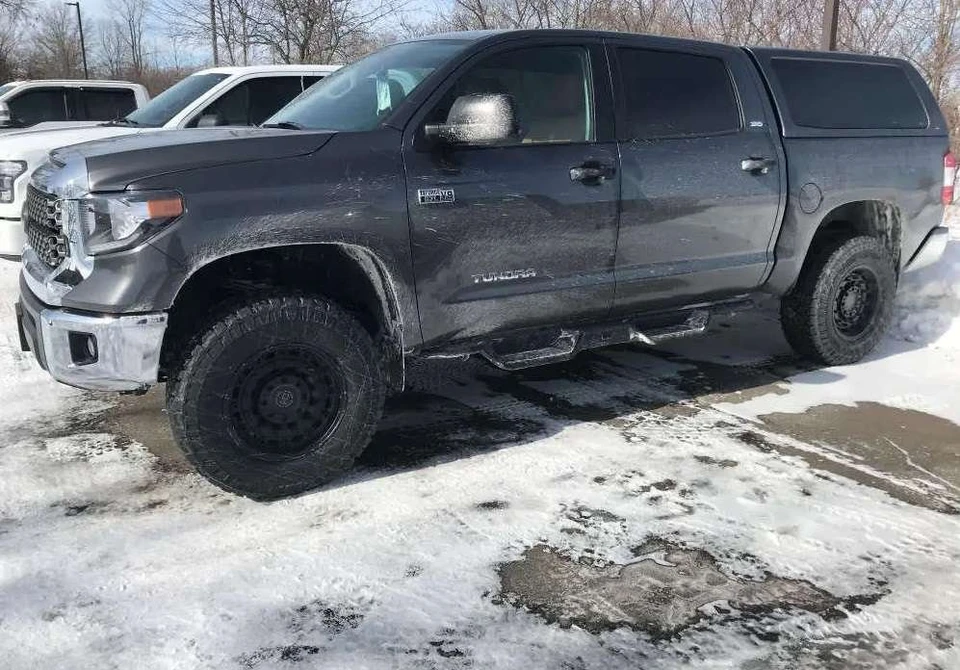

Yes, but you'll want a lift. About 3 inches is the common setup on a 2nd Gen Tundra, and builds run anywhere from 2 to 6 inches. A true 35 stands about 2.9 inches taller than the tallest factory tire. Pair it with a 9-inch wide wheel around +30 offset and plan on pulling some plastic.
What are the factory specs that matter?
These are the numbers you work from when you size up for 35s. The 2nd Gen ran 2007-2021, with the Regular Cab sold from 2007 to 2017 and the Double Cab and CrewMax running through 2021, and all of them share the same hub and bolt pattern.
| Spec | Value |
|---|---|
| Generation | 2nd Gen Tundra (2007-2021) |
| Body styles | Regular Cab, Double Cab, CrewMax |
| Bolt pattern | 5x150 |
| Hub bore | 110 mm |
| Factory wheel | 18x7.5 +60 |
| Factory tire sizes | 255/70R18, 275/65R18, 275/55R20 |
| Factory tire diameter | 31.9-32.1 in. |
| Height gain to a true 35 | About 2.9 in. |
| Curb weight (2014 CrewMax SR5 4.6L 2WD) | 5,335 lbs |
| GVWR (same truck) | 6,800 lbs |
| Gross axle rating, front / rear | 3,900 lbs / 4,050 lbs |
Trim decides your starting tire. SR and SR5 steel-wheel trucks came on 255/70R18. TRD Pro and SR5 aluminum trucks got 275/65R18. Platinum and 1794 Edition rolled on 275/55R20.
What fits, and what rubs?
Most guys running 35s on these trucks lift them about 3 inches. On a Tundra that usually means a 3-inch front level with an inch or so in the rear, the classic "3/1" setup. Truck owners who call it a level instead of a lift tend to land around 2.75 inches, somewhere in the 2.5 to 3 inch range.
A few owners squeeze 35s under a stock-height truck, including skinny 35s like a 285/75R18 or 295/70R18. A few others tried it and gave up. We wouldn't plan a build around stock height.
Even with the lift, trimming comes with the territory. Here's where a 35 touches, roughly in the order you'll find it:
- Front mud flaps. They rub forward and reverse at almost any steering angle. Pull them. Nearly every 35 build starts here.
- Lower front fender liner and bumper plastic. This one usually rubs in reverse at full lock. Push it forward and redrill the holes, or warm it with a heat gun and reshape it. Another trick: stack up to 8 washers on the lower front bumper studs to gain about an inch. Pulling the liner out completely can let extra water into the foglight housing, so we'd push it instead.
- Front skid plate corner. Trim about 1/2 inch off the corner or bend it up. High-offset wheels make this worse.
- Body mount. This is the usual rub point at full lock, especially in reverse. The fix is the "body mount chop" (BMC), cutting and reshaping the mount for clearance. Low offset and wide tires make it a must.
- Upper control arm (UCA) and sway bar. Too much offset tucks the tire in toward the arm. That's the other end of the offset problem.
Bigger cutting jobs show up on some builds, mostly the ones chasing poke. That can mean trimming the pinch weld back a few inches, or chasing rear fender liner screws that tires tear out at full stuff. A -21 offset on a 10-inch wide rim still rubs by the door even after cutting.
Want to see one done right? Check out this 2021 Tundra on 18x9 +25 Method MR305s with 315/70R18s on coilovers. You'll also find customer Tundras on 35s throughout this post.
What else does it take?
Offset and backspacing
This is where 35s on a Tundra are won or lost. Too much offset and the tire rubs the skid plate and UCA. Too little and it eats the body mount. The sweet spot is a 9-inch wide wheel at +25 to +35. Stay at +20 or higher, which is about 5.75 inches of backspacing. Drop to +18 and you'll get a little rub at full lock. True 35x12.50s on a 0 offset wheel will rub the body mount without the chop.
Keep the wheel at 9 inches wide or narrower, at +30 to +35 offset, if you want to skip the body mount chop.
| Wheel | Offset window | Notes |
|---|---|---|
| 17x8.5 | +35 to +60 | None, bolt-on |
| 17x9 | +35 to +60 | None, bolt-on |
| 17x9 | -15 to +30 | Check fitment, possible clearance issues; extreme fitment, check lift kit requirements |
| 18x9 | +30 to +55 | None, bolt-on |
| 18x9 | +12 to +35 | Check fitment, possible clearance issues |
| 20x9 | +12 to +60 | None, bolt-on |
| 20x10 | +35 to +55 | Check fitment, possible clearance issues |
| 20x12 | -46 to 0 | Check fitment, possible clearance issues; extreme fitment, check lift kit requirements |
| 22x9.5 | +35 to +55 | None, bolt-on |
Those windows describe the wheel on the truck. With a 35 hanging off it, the tire decides what rubs, so stick to the +25 to +35 zone. Rim width here is a general guide. The tire maker's approved rim list for your exact tire is the final word.
Spacers
Spacers lower your effective offset. Convert the spacer thickness to millimeters and subtract it from the wheel offset. A 1.5-inch spacer on a factory +60 wheel lands you around +22. It works, but if you're buying tires this big, buy the right wheels and skip the spacers.
How high can you go up front?
Stock suspension only has about 4 inches of droop. Go past 2 inches with stock arms and shocks and the shock tops out, and 4WD trucks start rubbing CV boots. Three inches up front is fine with aftermarket UCAs, a CV boot fix and a diff drop. Want more than that? Go to a real lift kit. Our Tundra lift kit roundup covers the options.
Speedo, weight and fuel
At nearly 3 inches taller, your speedometer will read low. Get it recalibrated. Going up about an inch in tire size adds roughly 10 to 15 lbs per tire, plus more rolling resistance. Expect the MPG to drop and the truck to feel a little lazier off the line. If you tow heavy or drive hills, talk to a gear shop about your axle ratio before you blame the tires.
Load rating and alignment
Make sure your tire's load index covers the truck's axle ratings. Get an alignment after the lift and tires go on. A level changes front geometry, and a crooked wheel turns minor rub into real rub.
What we'd run
If it were our Tundra, we'd run a 35x12.50R18 on an 18x9 +30 wheel with about a 3-inch front level and an inch or so out back. That +30 sits in the bolt-on window for an 18x9. It also keeps the tire off the UCA and well clear of the body mount. Pull the front mud flaps, push the fender liner forward, and trim the skid plate corner if it touches. That's a weekend, not a fab project.
Rather run 20s? Same plan: a 35x12.50R20 on a 20x9 +30. One owner on that exact combo with a 2.5-inch front and an inch of rear block runs it with no rub after pulling the flaps and pushing the liner.
Who should do something different:
- TRD Pro owners: Run a skinny 35 like a 285/75R18 or 295/70R18 on the stock +60 Pro wheels. The factory 2-inch front lift does most of the work.
- Poke-and-stance builds: Want 20x10 -18 or 20x12 -44 like a lot of our customer trucks? Budget for the body mount chop, bumper trimming and more cutting.
- Serious off-road: Skip the near-zero offsets and go to a full lift kit with control arms and a diff drop. A tire tucked close to the body mount isn't something we'd take on the trail.
- Stock-height daily: Honestly, run 33s. They fit without a lift, and plenty of owners who forced 35s say they'd go 33s next time.
For the full menu of 2nd Gen setups, check out our wheels and tires guide for every 2nd Gen Tundra build.
Which 35-class sizes fit a 2nd Gen Tundra?
Anything from 34.0 to 35.9 inches tall counts as a 35. These are the sizes that run on these trucks:
| Size | Overall diameter |
|---|---|
| 275/65R20 | 34.1 in. |
| 295/70R18 | 34.3 in. |
| 285/55R22 | 34.3 in. |
| 315/70R17 | 34.4 in. |
| 315/50R22 | 34.4 in. |
| 325/65R18 | 34.6 in. |
| 285/75R18 | 34.8 in. |
| 325/50R22 | 34.8 in. |
| 315/60R20 | 34.9 in. |
| 315/70R18 | 35.4 in. |
| 325/60R20 | 35.4 in. |
The narrow ones (275, 285 and 295) rub less and are the easy way into the 35 club. The 315s and 325s look meaner, but they need more offset discipline and more trimming.
Shop 35s for your Tundra
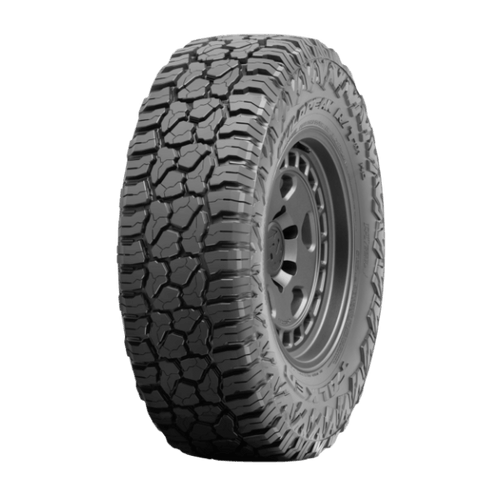
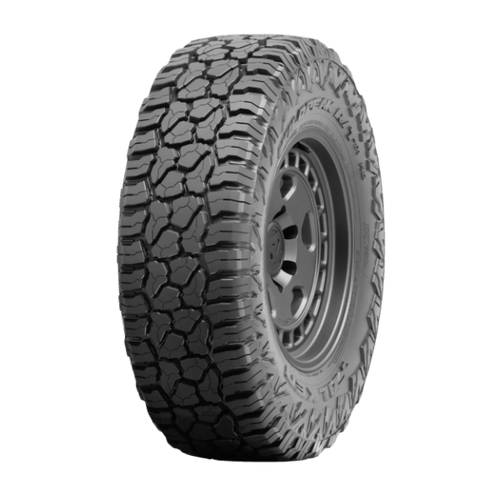
Grab a set like the Falken Wildpeak R/T01 35x12.50R18, or search 35x12.50R17 and 315/60R20 for 17s and 20s. Then match them with a 9-inch wheel from our wheel lineup, or browse every size in our tire shop.
35-inch tires for the Toyota Tundra (in stock)



Frequently Asked Questions
Do you need a lift for 35s on a Tundra?
Yes, for most trucks. About 3 inches is the common setup, and owners run anywhere from 2 to 6 inches. A few fit 35s at stock height, including skinny 35s.
Will 35s fit with just a leveling kit?
Yes. Owners who level usually run about 2.75 inches up front. Expect to pull the mud flaps, push the fender liner forward, and possibly trim the skid plate corner.
What offset should I run with 35s?
Run a 9-inch wide wheel at +25 to +35, and don't go below +20 (about 5.75 inches of backspacing). Lower offsets hit the body mount. Higher ones crowd the skid plate and UCA.
Will I need a body mount chop?
Not if you stay at 9 inches wide or narrower with +30 to +35 offset. Go to 0 offset or wider wheels and plan on the chop.
Can I run 35s on my factory wheels?
Yes. The +60 factory offset favors a narrower 35 like a 285/75R18 or 295/70R18.
Will my speedometer be off?
Yes. A true 35 is about 2.9 inches taller than the tallest factory tire, so it reads low until you recalibrate.
Try wheels on your Toyota Tundra: see the Toyota Tundra bolt pattern, wheel sizes by year and wheel builds in our free wheel visualizer.