
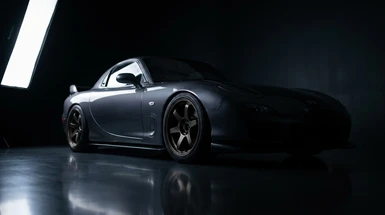
5 Things RX-7 FD Owners Only Learn After It's Too Late
Mazda RX-7 FD Wheel & Tire Fitment: 5 Things Owners Wish They Knew Before Buying
The FD RX-7's chassis — 50/50 weight distribution, a curb weight around 2,800 lbs, double-wishbone front and multi-link rear suspension — is one of the best-balanced platforms of the 1990s. But that same chassis makes wheel and tire selection far less forgiving than owners expect. More than one FD buyer has learned that the "easy" upgrade — bigger wheels, better tires, a coilover drop — is actually the most technical part of owning this car.
Quick Navigation
- Quick Answer
- Key Takeaways
- Factory Wheel & Tire Specs (Stock Baseline)
- Why Bigger Wheels Get Complicated on the FD Chassis
- The Tire Compound Problem With 16- and 17-Inch Diameters
- Custom Forged Wheels: Solving Fitment at the Source
- Suspension Changes That Shift Your Ideal Offset
- Big Brake Kits and the Wheel Clearance Domino Effect
- Budgeting for Wheels and Suspension Together
- The Most Common Wheel-Buying Regret
- Bottom Line
Quick Answer
The FD RX-7 left the factory on 16-inch wheels (some trims got 17s) in a staggered setup, roughly 225/50R16 front and 245/45R16 rear depending on model year. Those diameters are increasingly hard to find in modern high-performance tire compounds, which pushes many owners toward 18–19-inch upgrades — sizes the FD's fender arches and suspension geometry weren't designed around. Getting offset wrong means rubbing, bent lips, or bent wheels; getting it right usually means custom-specified forged wheels rather than off-the-shelf fitments.
Key Takeaways
- Factory FD wheels are 16-inch (17-inch on some later/limited trims), staggered, with narrower fronts and wider rears.
- Modern 18–19-inch wheel swaps are popular but fitment-sensitive — offset mistakes are the single most repeated wheel regret in FD ownership communities.
- Coilovers, camber plates, and aftermarket control arms all shift the "correct" offset, meaning a wheel that fit before a suspension upgrade may not fit after.
- Big-brake kits reintroduce the fitment conversation entirely, since larger calipers demand more inner-barrel clearance.
- Custom-specified forged wheels — the kind built by ThreePiece.us — are how a growing share of owners solve fitment precisely instead of guessing with generic aftermarket sizing.
- Suspension refresh costs ($800–$2,000 for bushings, $1,500–$4,000+ for coilovers) are commonly bundled with wheel projects because both affect the same clearance math.
Factory Wheel & Tire Specs (Stock Baseline)
Before touching aftermarket wheels, know what you're starting from:
- Wheel diameter: 16-inch on most U.S.-spec trims; 17-inch on some later or limited-production variants.
- Staggered fitment: narrower front, wider rear — commonly cited as roughly 225/50R16 front and 245/45R16 rear on many trims.
- Exact sizing varies by model year and market, so confirm against your specific chassis rather than assuming a universal spec across all FDs.
This staggered, relatively narrow factory setup was tuned around the FD's suspension geometry and its 50/50 weight balance — which is exactly why deviating from it isn't as simple as "just buy bigger wheels."
Why Bigger Wheels Get Complicated on the FD Chassis
The FD's fender arches and suspension geometry weren't designed with 18–19-inch wheels or wider modern tires in mind. Going bigger — which most owners eventually do, both for looks and for tire selection — requires careful offset selection, and often spacers or fender work, to avoid:
- Tire rubbing under compression or at full steering lock
- Popped or rolled fender lips
- Bent wheels from offsets that "looked right in photos" but didn't clear suspension components in the real world
This is consistently cited as one of the most common wheel-related regrets on the platform: buying a wheel based on looks or a generic fitment guide, only to discover it doesn't actually clear at full lock or full compression.
The Tire Compound Problem With 16- and 17-Inch Diameters
There's a second, less obvious reason owners move away from factory diameters: tire manufacturers have largely phased out fresh high-performance compound development in 16- and 17-inch sizes. That leaves FD owners who stick with factory-diameter wheels with a shrinking, aging selection of serious performance rubber — a real limitation for anyone using the car hard on track or in aggressive street driving. It's a major driver behind the trend toward 18–19-inch wheel swaps, despite the fitment headaches that size jump introduces.
Custom Forged Wheels: Solving Fitment at the Source
Because factory-fitment diameters limit modern tire choice, and because generic aftermarket wheels are a common source of clearance problems, a large share of FD owners upgrade to custom-built wheels where diameter, width, and offset can be specified precisely for their exact suspension setup.
Builders like ThreePiece.us, who specialize in made-to-spec forged three-piece wheels, come up repeatedly in FD circles for this exact reason — they let an owner dial in an aggressive, corrected-offset look while avoiding the rubbing and clearance problems that plague off-the-shelf purchases. This isn't a cheap fix: custom forged wheel sets commonly land well into four figures per wheel depending on size, finish, and construction. It's a deliberate line-item purchase, not an impulse buy, but it's the difference between a wheel project done once and one that gets redone after a rubbing or bent-wheel incident.
Suspension Changes That Shift Your Ideal Offset

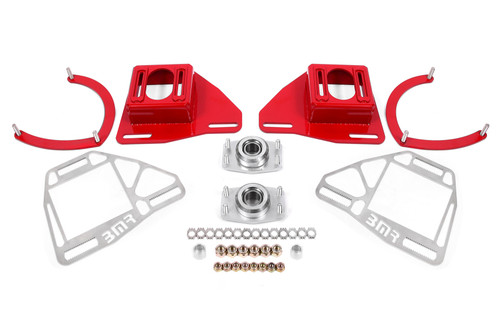

Wheel fitment on the FD isn't a static calculation — it moves every time the suspension changes. Coilovers, camber plates, and aftermarket control arms all shift what counts as the "correct" offset for a given wheel width and diameter. That means:
- A wheel that cleared perfectly on stock suspension may not clear after a coilover install.
- Popular coilover options like BC Racing, Feal, and KW — commonly installed in the $1,500–$4,000+ range — change ride height and camber curves enough to affect fender and strut clearance.
- Bushing refreshes ($800–$2,000 depending on poly vs. OEM rubber and labor) are often done alongside wheel and suspension work precisely because 20–30-year-old bushings affect how much the wheel actually moves relative to the fender under load.
This is why fitment specialists recommend finalizing suspension setup before finalizing wheel offset — not the other way around.
Big Brake Kits and the Wheel Clearance Domino Effect
Factory brakes on the FD are adequate but dated, and many owners upgrade to big-brake kits for track use or general peace of mind. The catch: larger calipers need wheels with sufficient inner-barrel clearance, which reopens the entire fitment conversation. A wheel that fit the car perfectly before a brake upgrade can suddenly interfere with a larger caliper — another reason the community increasingly leans toward custom-specified wheels rather than buying generic aftermarket sizes and hoping for clearance.
Budgeting for Wheels and Suspension Together
Because wheel fitment, suspension geometry, and brake clearance are all connected on this chassis, treating them as one combined project — rather than three separate purchases — is the practical path. A realistic wheel-and-chassis budget on an FD often includes:
- Bushing refresh: $800–$2,000
- Coilover upgrade: $1,500–$4,000+ installed
- Custom forged wheel set: well into four figures per wheel
Sequencing matters: suspension geometry first, then wheel offset specified against that final setup, then brakes checked against the chosen wheel's inner barrel.
The Most Common Wheel-Buying Regret
Across FD ownership circles, the same story repeats: buy wheels first based on looks, then discover fitment problems that require spacers, camber correction, or outright wheel replacement — turning what should have been a one-time expense into two. The fix isn't complicated, just disciplined: measure against your actual suspension setup, not a generic staggered fitment guide, before you buy.
Bottom Line
The FD RX-7's chassis rewards precision and punishes guesswork — and nowhere is that more true than in wheel and tire fitment. Factory 16- and 17-inch sizing is increasingly limited by tire compound availability, but jumping to 18–19-inch wheels demands careful offset selection against a fender and suspension geometry that wasn't built for it. Add coilovers, camber plates, or a big-brake kit, and the "correct" fitment moves again. Owners who spec wheels — often through builders like ThreePiece.us — against their actual suspension and brake setup avoid the rubbing, bent lips, and do-over purchases that make up the platform's most common wheel regret.