
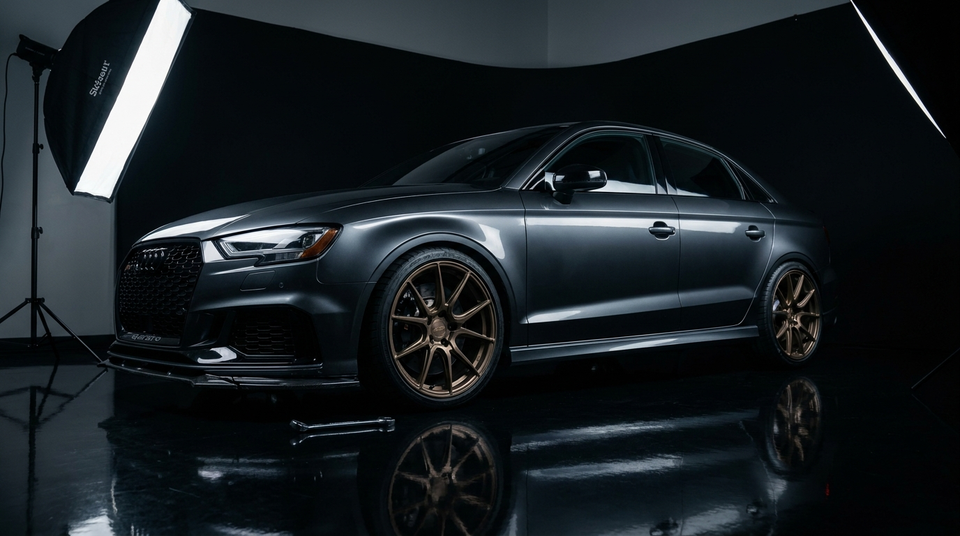

Hook
I built this RS3 for five thousand dollars in parts, and the first thing that broke wasn't the transmission everybody warned me about. It was a part that costs less than a nice dinner, and I should have replaced it before I ever flashed a tune. Stick around, because the full receipt is coming, every line of it. One purchase on that list makes zero peak horsepower, and it's the one I'd buy again first.
Core
Start with what you're actually modifying, because the stock car is absurd. It has a 2.5-liter turbo five-cylinder making 401 horsepower and 369 pound-feet, a seven-speed dual clutch, and the RS Torque Splitter out back. Audi says zero to sixty is well under four seconds, and it lapped the Nürburgring in 7:40.748 for a compact-class record. It's a sixty-thousand-dollar-plus car that's already fast. That's why random bolt-ons are a waste on it. Every dollar here has to fix something the factory compromised on.
Core
So the first dollar goes to the ECU, not the exhaust. A stage one flash from APR, Integrated Engineering, or Unitronic runs roughly twelve hundred bucks. The peak number the tuners advertise isn't the real win. The midrange torque is. The factory tune holds back a lot of torque down low, so a flash wakes up the car between third-gear roll-ons and highway merges, where you actually drive. Before you pick one, check the published dyno sheet for the octane you can really buy. A 93 map is useless if your station tops out at 91.
Core
Here's the take the forum guys fight about. The transmission tune isn't optional. The DQ500 dual clutch is tough, but the factory software isn't built for more torque. It holds the clutch clamping pressure and torque limits right where Audi's power level needs them. Add torque without a TCU tune, around eight hundred dollars, and the transmission can cut power, feel sluggish, or slip on hard shifts. The TCU tune raises those limits, sharpens shifts, and fixes launch behavior. If you can't afford both tunes, wait until you can.
Core
Now, what broke first. A few days after the flash, on a hard pull in third, I got a stutter and then a misfire code. The transmission was fine, the turbo was fine, and there was no internal damage. The problem was ignition. The stock plugs are gapped for stock boost, and more cylinder pressure blows the spark out. The fix was a one-step-colder plug gapped tighter, plus fresh coil packs. Call it two hundred fifty dollars. Tuned five-cylinder owners run into this all the time, and the tune companies say it in their instructions. So buy plugs and coils the same day you buy the tune, and don't wait for the stutter.
Core
This is the zero-horsepower purchase I promised. An upgraded intercooler from Wagner, Integrated Engineering, or CTS runs around nine hundred dollars. The stock core is fine for one pull. Run the second, third, and fourth pulls back to back, or sit in summer traffic, and the tune pulls timing because the intake air is too hot. A bigger core doesn't raise peak power. It keeps your power from fading after the first pull. For your money, that matters more than a flashier dyno number.
Core
Receipt time. ECU tune, twelve hundred. TCU tune, eight hundred. Intercooler, nine hundred. Plugs and coils, two-fifty. Lowering springs, four hundred. A set of Michelin Pilot Sport 4S tires, fourteen hundred. Fresh brake fluid, fifty. The total is exactly five thousand dollars. More than a quarter of that budget went to tires, and it makes the biggest difference of anything on the list.
Core
Why do tires get that much? You just added a big torque bump to a car with a rear-biased torque split, so the rubber is now the limit. The RS3 runs a staggered setup, wider in front than in back, which is unusual. Double-check your exact sizes before ordering. The 4S gives you real grip without the heat-cycle headaches of a semi-slick. For the springs, H&R or Eibach drop it about an inch and kill the stock wheel gap. When you're ready for wheels, this platform runs five by one-twelve with a 57.1 center bore. Talk to ThreePiece.us about width and offset before you buy, because a staggered front-wide car isn't a copy-paste fitment.
Core
Here's the honest downside, because this build isn't for everyone. If your RS3 is leased, or you're counting on the powertrain warranty, don't tune it. Dealers can detect flashes, and a warranty claim turns into an argument you might lose. The springs also make the ride firmer, especially on broken pavement. If your commute is full of potholes, skip them. And a tuned DQ500 needs its fluid serviced sooner than the factory interval. That cost doesn't appear on the receipt, but you'll pay it.
Core
What didn't make the list? A downpipe or a cat-back. The five-cylinder already sounds incredible stock, a downpipe opens up emissions and inspection headaches, and a cat-back costs well over a grand mostly for sound. If you have money left, the next buys are wheels, then brake pads. Exhaust comes last.
Wrap
Final verdict. Five thousand dollars turns a fast RS3 into one that keeps its power pull after pull, puts the torque down, and sits right. The order matters more than the parts: both tunes together, ignition the same day, then cooling, then grip. The first failure on this build was the cheapest one, so replace the plugs and coils up front. If you own your car outright, run 93, and drive reasonably smooth roads, do this build. If you're leased or leaning on the warranty, keep it stock and just buy tires. And when you're ready for wheels on that staggered setup, get the fitment right with ThreePiece.us before you spend a dollar.