
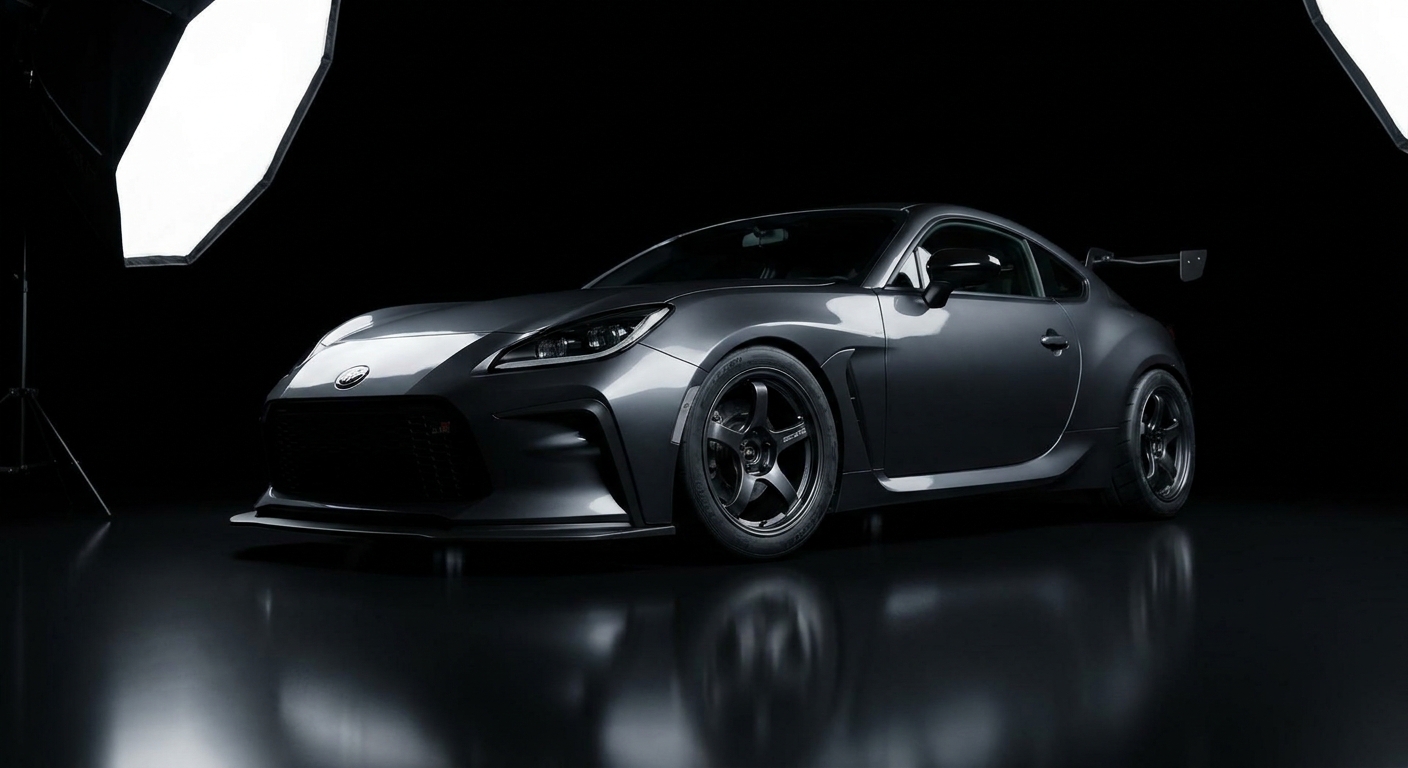
I Built a Track-Ready GR86 for $2000 (Dealers Hate This)
Full Toyota GR86 Build for Under $2,000: The Exact Parts, Prices, and Order of Operations
Two thousand dollars won't turbocharge a GR86. It won't cage it, big-brake it, or meaningfully move the power needle on a naturally aspirated FA24. What it will do — spent correctly — is transform the car's stance, grip, and steering feel into something that looks and drives with genuine purpose. The GR86 is the right platform for this because Toyota and Subaru already solved the hard engineering problems. The FA24 makes 228 horsepower in a 2,822-pound car. The suspension geometry is close to correct from the factory. The Sachs dampers are legitimately good units. What the factory left on the table falls into three categories: wheel and tire fitment, suspension tuning, and visual presence. That's exactly where this $2,000 goes.
---
Quick Navigation
- Quick Answer
- Key Takeaways
- Budget Allocation
- Wheels: The Enkei RPF1 Is the Right Answer
- Tires: Where the Performance Budget Goes
- Suspension: Keep the Sachs Dampers, Change the Springs
- Alignment: Non-Negotiable After Any Spring Change
- Brake Pads and Fluids
- Cosmetics
- Install Order
- Mistakes That Kill Budget Builds
- Full Parts List and Pricing
- Bottom Line
Quick Answer
Spend the majority of your budget on a wider wheel and a stickier tire. An 18×9.5 Enkei RPF1 at +38 offset with a 245/40R18 Falken Azenis RT660 or Michelin Pilot Sport 4S, dropped 1.0–1.4 inches on Tein S-Tech springs, is the highest-impact combination available at this price point. Add Hawk HPS front brake pads, a four-wheel alignment, and a trunk spoiler, and you've built a car that looks and drives like a significantly more expensive machine.
---
Key Takeaways
- Tires beat coilovers at this budget. A $450 entry coilover set on stock-size tires handles worse than a stock-height car on Michelin PS4S rubber. Buy the tires.
- The GR86's factory Sachs dampers are an asset. Tein S-Tech springs work with them. Budget coilovers don't improve on them.
- Target fitment: 18×9.5 +38 to +45, 245/40R18. This fills the fender correctly on a lowered GR86 without rubbing or fender modification.
- Bolt pattern is 5×100, hub bore is 56.1mm. Verify both before purchasing any wheel.
- Alignment is mandatory after spring installation. It is not optional padding — it is part of the suspension job.
- Skip intake and exhaust. On a naturally aspirated FA24, those mods return 5–8 horsepower and consume budget that belongs on tires.
---
Budget Allocation
Total: $2,000
| Category | Allocation |
|---|---|
| Maintenance (fluids, pads) | $150 |
| Wheels | $400–$500 |
| Tires | $600–$700 |
| Lowering springs | $200–$230 |
| Brake pads (front) | $75–$85 |
| Cosmetics | $100–$150 |
| Alignment | $120–$160 |
| Contingency (shipping, tax, hardware) | $150–$200 |
The contingency line is real. Shipping on a set of wheels, sales tax, and one unexpected hardware item — a stripped lug seat, a missing hub ring — will eat a tight budget. If you come in under on wheels and tires, roll the savings into tire quality. If you're over, cut cosmetics first.
---
Wheels: The Enkei RPF1 Is the Right Answer
Target spec: 18×9.5, +38 to +45 offset, 5×100 bolt pattern, 56.1mm hub bore
The GR86 runs a 5×100 bolt pattern with a 56.1mm hub bore. Factory Premium trim wheels are 18×7.5 +45. Base trim runs 17×7.0 +48. Both are being replaced, so trim level is irrelevant to the final outcome.
**Primary recommendation: Enkei RPF1 18×9.5 +38
- Price: $140–$175 per wheel new; $400–$500 for a used set of four
- Weight: approximately 17.2 lbs in 18×9.5 — meaningfully lighter than OEM cast alloys
- Available in the correct 56.1mm hub bore or compatible with hub rings
- JWL/VIA certified; strong resale market if you change direction
At +38 offset, the wheel sits approximately 5mm more outboard than the OEM 18×7.5 +45 setup. On a stock-body GR86 lowered 1.0–1.4 inches, this fills the fender gap without rubbing.
**Budget alternative: Konig Dekagram or Hypergram 18×9.5
- Price: $100–$130 per wheel new
- Flow-formed construction with a good strength-to-weight ratio
- Clean multi-spoke aesthetic; legitimate choice when RPF1 pricing is out of reach
Hub centric rings: If your chosen wheel has a larger center bore than 56.1mm — common on cast wheels with a 73.1mm bore — order a set of 73.1→56.1mm hub rings. They cost $10–$15 for a set of four and eliminate vibration from wheel-to-hub play.
TPMS sensors: The GR86 uses direct TPMS sensors on the valve stems. If buying used wheels without sensors, budget $65 for a set of four Autel MX-Sensor programmable units.
---
Tires: Where the Performance Budget Goes
Target size: 245/40R18
On an 18×9.5 wheel, 245/40R18 is the community consensus fitment — no rubbing, no fender modification, and speedometer deviation under 2%. A 255/40R18 is possible but requires verification of inner liner clearance at full suspension compression; some GR86 owners report occasional contact at full droop with 255-width tires on 9.5-inch wheels.
Primary recommendation: Michelin Pilot Sport 4S 245/40R18
- Price: $165–$195 per tire
- The benchmark summer performance tire in this size class
- A genuine step up from the OEM Michelin Primacy HP and Yokohama ADVAN Sport
- Four tires: approximately $660–$780 before mounting and balancing
Budget recommendation: Falken Azenis RT660 245/40R18
- Price: $120–$145 per tire
- Max-performance summer compound that punches above its price point
- Wears faster than the PS4S on daily-driven cars; strong choice for weekend/enthusiast use
- Saves approximately $150–$200 over a set of four PS4S tires — meaningful in a $2,000 build
- Heavily embraced by the GR86 autocross community since its release
**Lower-cost alternative: Hankook Ventus V12 Evo2 or Nitto NT555 G2 245/40R18
- Price: $90–$115 per tire
- Legitimate summer performance tires; give up ultimate grip to the PS4S and RT660
- Strong wet-weather reviews on the Hankook, making it a reasonable choice for daily drivers in wet climates
Mounting and balancing: $15–$20 per tire at a local shop, or $60–$80 for four. Some online retailers offer installer networks with discounted rates — ask before paying separately.
---
Suspension: Keep the Sachs Dampers, Change the Springs
The GR86's factory Sachs dampers are a genuine asset. At 15,000–45,000 miles, they don't need replacing. Budget coilovers at this price point don't improve on them — they trade damper quality for ride-height adjustability, and that's a bad trade on a street car.
**Recommended: Tein S-Tech Lowering Springs
- Price: $200–$230 (Tein's website, Amazon, Enjuku Racing)
- Drop: 1.0–1.4 inches front, 0.8–1.2 inches rear
- Spring rates: 5.0 kg/mm front, 4.0 kg/mm rear — stiffer than stock but not punishing on public roads
- GR86-specific application; tested extensively on both the ZN8 GR86 and the first-gen platform
- No rubbing issues with 18×9.5 wheels and 245/40R18 tires on a stock-body car
**Alternative: Megan Racing Street Series Coilovers
- Price: $380–$450
- 16 clicks of combined compression/rebound adjustment
- Acceptable for a street-only car that will never see a track day
- Dampers feel slightly harsh over sharp bumps compared to stock Sachs units with Tein springs
- Not recommended for autocross or HPDE use
Verdict: Use Tein S-Tech springs at $220 and put the $150–$200 difference into tire quality. The stock dampers are better than what you'd get in a budget coilover at this price.
Installation note: Spring installation requires a spring compressor, floor jack, jack stands, and a torque wrench. The GR86's front struts are accessed from the engine bay and wheel well; rear shocks from the trunk. Front strut top nut torque is approximately 41 ft-lbs — verify against the Toyota service manual. Replace the strut top nut rather than reusing it; new ones run $5–$10 from the Toyota dealer parts counter.
---
Alignment: Non-Negotiable After Any Spring Change
Book a four-wheel alignment immediately after spring installation. Driving on misaligned suspension wears tires unevenly and stresses components. Cost at an independent shop: $120–$160. If installing tires at the same shop, ask about a bundled rate.
Community-recommended street/mild performance alignment targets:
| Corner | Target |
|---|---|
| Front camber | -1.5° to -2.0° |
| Rear camber | -1.5° to -2.0° |
| Front toe | 0 to +0.1° (slight toe-in) |
| Rear toe | +0.1° to +0.15° (slight toe-in) |
Stock front camber on the GR86 is approximately -0.5°. Lowering springs will add negative camber, but the stock eccentric camber bolt has limited adjustment range. If the alignment shop can't reach -1.5° without additional hardware, a pair of SPC or Whiteline front camber bolts runs $40–$80 and solves the problem.
---
Brake Pads and Fluids
**Brake fluid: Motul RBF 600
- Price: $15–$18 per 500ml bottle; one bottle covers a full flush
- Dry boiling point: 594°F. Wet boiling point: 421°F
- Stock brake fluid on used GR86s is frequently degraded. This is cheap insurance.
**Transmission fluid (if service history is unknown): Idemitsu GL-4 75W-90
- Price: $12–$15 per quart; the GR86 6-speed takes approximately 2.4 quarts
- Toyota-approved; widely used in the GR86/BRZ community as a smooth-shifting alternative to Toyota Genuine fluid
**Front brake pads: Hawk HPS
- Part number: HB453F.585 (verify fitment — the GR86 uses a different caliper than first-gen 86/BRZ)
- Price: $65–$85 per axle set
- Improved bite and fade resistance over stock without the cold-bite penalty of a track compound
- Direct drop-in; no other modifications required
- Bed the pads before spirited driving: 10–15 moderate stops from 45 mph with cool-down periods
**Budget alternative: EBC Greenstuff — $55–$75 per axle set. Mild upgrade over stock with better initial bite; acceptable for a street-only car.
Rotor note: At this budget, don't replace rotors unless they're at or below minimum thickness or show significant scoring. The OEM rotors are adequate for street use.
---
Cosmetics
Trunk spoiler (OEM-style ABS)
- Price: $80–$130 on Amazon or eBay; OEM Toyota part runs $250–$350 installed at a dealer
- The base GR86 doesn't come with a trunk lip spoiler. Adding one is the highest visual-impact-per-dollar modification on a base car.
- Pre-painted versions require your car's color code, found on the door jamb sticker.
**Lug nuts: Muteki SR48 or McGard Spline Drive
- Price: $35–$55 for a 20-piece set (5 lugs × 4 wheels)
- Match the seat type to your wheel — GR86 OEM lug nuts are conical (60-degree). Most aftermarket wheels are also conical, but verify before ordering. Using the wrong seat type is a safety issue, not an aesthetic one.
Vinyl accents: Gloss-black lower trim overlays or side stripe kits run $30–$60. Reversible, no permanent modification, and add visual weight to the lower body.
---
Install Order
Week 1 — Maintenance and brakes first. Complete the brake fluid flush, oil change, and transmission fluid service before touching performance parts. Install Hawk HPS front pads and bed them on stock tires. This keeps new performance rubber off the bedding process.
Week 2–3 — Suspension. Install Tein S-Tech springs. Book the alignment immediately after — don't drive the car more than necessary before the shop visit.
Week 3–4 — Wheels and tires. By the time wheels and tires arrive (3–7 business days for wheels, 2–5 for tires from online retailers), the suspension and alignment are done. Mount and balance at the shop, install TPMS sensors, torque lug nuts to 89 ft-lbs, and re-torque after 50 miles.
Anytime — Cosmetics. Trunk spoiler, vinyl accents, and lug nuts have no mechanical dependencies. These are the first items to defer if budget runs short.
---
Mistakes That Kill Budget Builds
- Cheap coilovers over quality tires. A $350 coilover set on stock-size tires handles worse than a stock-height car on PS4S rubber. The contact patch is the performance. Everything else is secondary.
- Wrong lug nut seat type. Conical, ball seat, and flat seat are not interchangeable. Verify your wheel's seat type before ordering lug nuts.
- Skipping the alignment. Uneven tire wear and a car that pulls under braking are the direct consequences. The alignment is part of the spring installation job.
- Wheels with unverified hub bore. A 73.1mm bore wheel on a 56.1mm GR86 hub without hub rings will vibrate and can allow wheel movement. Confirm hub bore before checkout.
- First-gen 86/BRZ parts on a second-gen GR86. The 2022+ GR86 (ZN8 chassis) uses a different front strut, different brake caliper, and different wheel offset than the 2013–2020 generation. Always verify the application states 2022+ GR86 or ZN8 specifically.
- Intake and exhaust for power. A cold air intake and cat-back exhaust on the FA24 return 5–10 horsepower combined, and realizing even that number requires an ECU tune at $400–$800. The total investment approaches $1,000–$1,700 for a marginal gain. That money belongs on tires.
---
Full Parts List and Pricing
| Item | Brand/Model | Estimated Price |
|---|---|---|
| Brake fluid | Motul RBF 600 (500ml) | $16 |
| Transmission fluid | Idemitsu GL-4 75W-90 (2.5 qt) | $30 |
| Engine oil + filter | Toyota 0W-20 + OEM filter | $48 |
| Lowering springs | Tein S-Tech GR86 | $220 |
| Wheels ×4 | Enkei RPF1 18×9.5 +38 | $480 |
| Tires ×4 | Falken Azenis RT660 245/40R18 | $520 |
| Mount and balance | Local shop | $70 |
| TPMS sensors ×4 | Autel MX-Sensor | $65 |
| Hub rings ×4 | 73.1→56.1mm | $10 |
| Front brake pads | Hawk HPS (HB453F.585) | $75 |
| Trunk spoiler | OEM-style ABS | $100 |
| Lug nuts ×20 | Muteki SR48 | $45 |
| Four-wheel alignment | Independent shop | $140 |
| Camber bolts (if needed) | SPC or Whiteline (front pair) | $50 |
| Contingency | Shipping, hardware, tax | $131 |
| Total | ~$2,000 |
---
Bottom Line
A GR86 on 18×9.5 Enkei RPF1s with 245/40R18 tires and Tein S-Tech springs sits 1.0–1.4 inches lower with the fender gap filled correctly, steering that responds to a wider, stickier contact patch, and a stance that reads as intentional rather than modified. The factory Sachs dampers stay in place and keep the ride livable. The Hawk HPS pads give the brake pedal real feel without requiring warm-up laps. The whole thing costs $2,000 if you sequence it correctly and don't waste money on intake noise and dyno theater. Power comes later, when the budget is bigger. This is the build that makes the GR86 look and feel like the car it was always trying to be.