
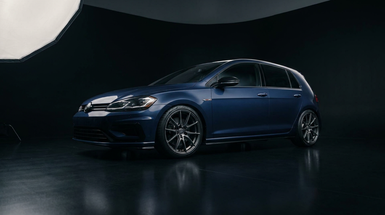
Volkswagen Golf GTI problems: The Truth Nobody Mentions
5 Things Volkswagen Golf GTI Owners Wish They Knew Before Buying
The Volkswagen Golf GTI has earned legendary status as the original hot hatch, but there's one critical oversight that catches nearly every first-time buyer off guard: the true cost of maintaining German engineering standards. While shoppers focus on attractive lease deals and competitive purchase prices, they consistently underestimate premium parts costs, specialized service requirements, and the vehicle's sensitivity to maintenance intervals.
Quick Navigation
- Quick Answer
- Key Takeaways
- The Real Cost of German Engineering
- Reliability Issues That Blindside Owners
- Modification Roadblocks and Warranty Risks
- Daily Driving Reality Check
- Performance Tire and Suspension Costs
- What Makes GTI Ownership Worthwhile
- Pre-Purchase Inspection Essentials
- Bottom Line
Quick Answer
GTI ownership surprises center on higher-than-expected maintenance costs, specific reliability issues like water pump failures, modification limitations due to emissions equipment, daily driving compromises, and expensive performance tire replacement cycles. Budget $1,500-$2,500 annually for maintenance after warranty expiration.
Key Takeaways
- Major services cost $800-$1,200 vs. $300-$500 for Japanese competitors
- Carbon cleaning every 40,000-60,000 miles is mandatory ($400-$600)
- Water pump failures plague 2015-2018 models ($800-$1,200 repair)
- Performance tires wear faster and cost significantly more to replace
- Modification detection can void warranty coverage
The Real Cost of German Engineering
While a new GTI starts around $32,000-$35,000, the real financial commitment becomes apparent when examining total cost of ownership. VW's 10,000-mile service intervals initially seem generous compared to competitors' 5,000-7,500 mile recommendations, but the services themselves are comprehensive and expensive.
A typical major service at 40k or 80k miles runs $800-$1,200 at dealerships, compared to $300-$500 for equivalent Honda or Toyota services. The TSI engine's direct injection system requires carbon cleaning every 40,000-60,000 miles, costing $400-$600. This isn't mentioned in sales presentations but is essential for maintaining performance and preventing rough idle, misfires, and reduced power output.
Cost breakdown by ownership period:
- Years 1-3: Minimal costs beyond oil changes ($80-$120 each)
- Years 4-5: Carbon cleaning ($500), brake pads/rotors ($600-$800), suspension components ($400-$800)
- Years 6+: Water pump ($800-$1,200), timing chain tensioner ($1,000-$1,500), turbo-related issues ($1,500-$3,000)
Reliability Issues That Blindside Owners
The most notorious GTI reliability issue affects primarily 2015-2018 models with the EA888 Gen 3 engine. The plastic impeller water pump fails catastrophically, often without warning, typically between 40,000-80,000 miles. Symptoms include coolant loss without visible leaks, overheating, and the dreaded "coolant workshop" warning message. Replacement costs $800-$1,200 including labor, and failure can cause severe engine damage if not addressed immediately.
Mk6 GTIs (2010-2014) suffer from timing chain tensioner failures that create a distinctive rattling noise on cold starts. Left unaddressed, this can lead to timing chain jump and catastrophic engine damage. Repair costs range from $1,000-$2,500 depending on whether chain guides require replacement.
Common electrical issues include:
- Window regulator failures ($300-$500 per window)
- Sunroof drain clogs leading to water damage ($200-$2,000 depending on damage)
- Infotainment system freezes and failures (particularly MIB units in 2015-2017 models)
For DSG-equipped models, transmission service every 40,000 miles costs $400-$600 and is non-negotiable. Skipping this service leads to rough shifts, mechatronic unit failures ($3,000-$5,000), and potential transmission replacement.
Modification Roadblocks and Warranty Risks
The GTI's sophisticated emissions equipment creates significant hurdles for modification enthusiasts. Unlike older naturally aspirated vehicles, removing or modifying emissions components can trigger permanent check engine lights, failed state inspections, and potential warranty voidance.
While Stage 1 tunes (typically +40-60hp) are relatively safe and popular, pushing beyond requires supporting modifications that quickly become expensive. Stage 2 requires downpipe ($400-$800) plus tune ($500-$700). The popular IS38 turbo swap costs $3,000-$5,000 installed.
VW dealers have become increasingly sophisticated at detecting modifications. Even "stealth" tunes can be discovered through ECU flash counters and adaptation values. TD1 flags (modification detection) can void powertrain warranty coverage.
Parts availability concerns:
- Mk5 GTI (2006-2009) parts are becoming scarce, particularly interior trim pieces and some engine components
- Mk6 specific parts like timing chain tensioners experienced supply shortages
- OEM+ performance parts often have long lead times from European suppliers
Daily Driving Reality Check
The GTI's sport-tuned suspension delivers excellent handling but compromises comfort on poor road surfaces. The 18" and 19" wheel options (Performance Package) exacerbate this issue with reduced sidewall height and increased road noise transmission.
EPA ratings of 24/32 mpg (manual) and 25/33 mpg (DSG) prove optimistic in real-world driving. Owners report 18-22 mpg in city driving with aggressive driving style, and 28-32 mpg highway depending on speed and traffic. Premium fuel requirement adds $200-$400 annually versus regular unleaded.
Space and comfort limitations:
- Rear seat legroom adequate for children but tight for adults on longer trips
- Cargo space (22.8 cubic feet) smaller than many compact SUVs
- Sunroof-equipped models lose additional headroom
- Road noise increases significantly with larger wheel packages
GTIs, particularly Mk7+ models, appear on theft target lists due to desirable wheels, performance parts, and relatively easy theft methods. This results in higher comprehensive insurance costs and parking anxiety in urban areas.
Performance Tire and Suspension Costs
The GTI's performance-oriented tire requirements create ongoing expense that many buyers underestimate. OEM tire costs vary significantly by wheel size:
- 17" setup: 225/45R17 tires cost $150-$250 each (
Suspension component replacement timeline:
- Front struts: 60,000-80,000 miles ($600-$1,000 for pair)
- Rear shocks: 80,000-100,000 miles ($400-$600 for pair)
- Control arm bushings: 50,000-70,000 miles ($300-$500)
- Sway bar links: 40,000-60,000 miles ($150-$250)
Performance driving demands create higher brake maintenance costs, with front pads lasting 25,000-40,000 miles ($150-$300) and front rotors needing replacement every 50,000-70,000 miles ($300-$500).
What Makes GTI Ownership Worthwhile
Despite ownership challenges, the GTI maintains a devoted following. The turbocharged engine provides strong low-end torque while maintaining smooth power delivery, and the chassis balance allows both spirited driving and comfortable commuting. The extensive aftermarket support and enthusiast community provide resources for both maintenance and performance enhancement.
GTIs generally feel more substantial and refined than Japanese or American competitors, with interior materials, panel gaps, and overall fit and finish exceeding expectations for the price point. The combination of usable rear seats, cargo space, and daily drivability makes the GTI more versatile than traditional sports cars while offering superior driving dynamics compared to conventional compact cars.
Pre-Purchase Inspection Essentials
Service records to verify:
- Carbon cleaning service (especially on vehicles over 50,000 miles)
- DSG service intervals (40,000-mile intervals for DSG models)
- Water pump replacement documentation (2015-2018 models)
- Timing chain tensioner service (Mk6 models particularly)
Physical inspection points:
- Cold start inspection for timing chain rattle (Mk6 models)
- Check for coolant leaks around water pump area
- Inspect intake manifold for runner flap operation codes
- Examine tire wear patterns for alignment issues or aggressive driving signs
Run a full system diagnostic scan for stored codes, check adaptation values for signs of previous tuning, and verify emissions readiness status. Avoid any vehicle with evidence of modification without supporting documentation, irregular service intervals, or multiple previous owners.
Bottom Line
The GTI rewards owners who treat it as the sophisticated European performance car it is, rather than a basic transportation appliance. For buyers who appreciate its unique character and budget appropriately for its needs—including $1,500-$2,500 annually for maintenance after warranty—it provides a driving experience that few vehicles can match in its price range. The key is approaching the purchase with realistic expectations about ownership costs and maintenance requirements, rather than expecting economy car operating expenses from a performance vehicle.
Shop at ThreePiece.us
See all wheels that fit your Volkswagen Golf GTI →
Browse?utm_source=youtube&utm_medium=blog&utm_campaign=HjU6L5Uhg7g All Wheels →
Browse?utm_source=youtube&utm_medium=blog&utm_campaign=HjU6L5Uhg7g All Wheels ->
Ready to upgrade?
Browse All Wheels