
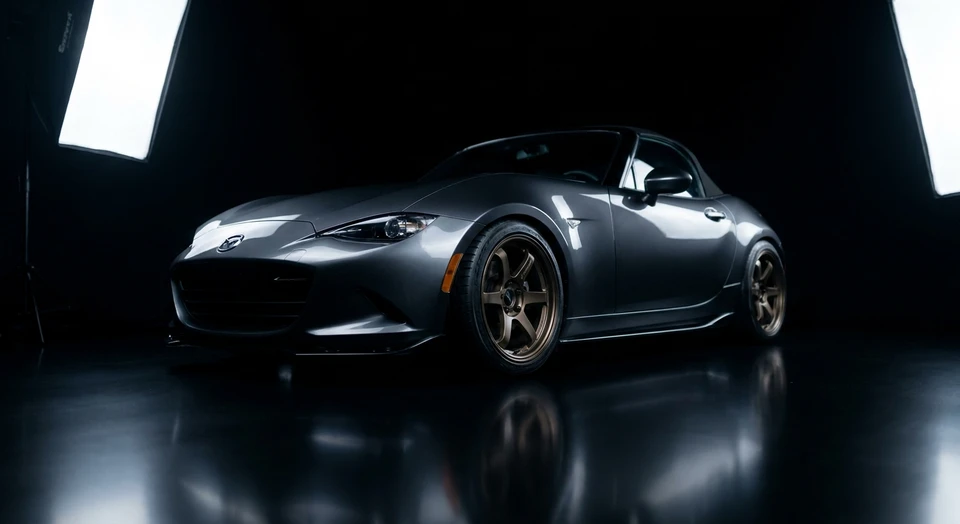
Ranking Every Mazda Miata MX-5 Mod From Best to Worst
The Miata is the most-modded sports car in history — and also one of the easiest to mod badly. Four generations, a massive aftermarket, and a low entry price attract first-time builders who spend money in the wrong order and end up with a car that handles worse than stock. This guide cuts through the noise with a ranked list from the single best upgrade you can make to the mods that will actively hurt the car.
---
Quick Navigation
- Quick Answer
- Key Takeaways
- S-Tier: The Mods That Actually Transform the Car
- A-Tier: Strong Upgrades With Real Caveats
- B-Tier: Worthwhile for Specific Build Goals
- C-Tier: Low Priority
- D/F-Tier: Avoid These
- Tire Guide by Use Case
- Build Stage Roadmap
- Bottom Line
Quick Answer
The best Miata mod is a quality coilover set paired with an immediate alignment tune. Together they cost under $2,500 and transform the car more than any other single investment. The worst mods — cheap no-name coilovers, lowering springs on stock dampers, and stretched tires — don't just waste money. They create genuine safety risks.
---
Key Takeaways
- Suspension and alignment deliver more measurable improvement per dollar than any powertrain mod
- The ND2's factory chassis is already excellent — the best mods enhance what it does, not what it isn't
- Mod order matters: brakes and alignment before exhaust, exhaust before power, power before forced induction
- Wheel sizing sweet spot is 15–17 inches; 18-inch fitment fights the car's unsprung weight budget
- ND models use a 5x114.3 bolt pattern with a 67.1mm hub bore and factory +45mm offset
- Never install lowering springs on stock dampers — it's one of the most common and most damaging beginner mistakes
---
S-Tier: The Mods That Actually Transform the Car
Coilovers — $800–$2,500
The single best bang-for-buck upgrade on any Miata. Factory suspension is competent but soft. A quality coilover set gives you adjustable ride height, spring rate tuning, and damper control — three variables that affect everything the car does.
Top picks:
- Öhlins Road & Track (DFV) — $2,200–$2,500. Continuously variable damping. The gold standard for street/track dual use on the ND. Forum consensus on r/Miata and MX5nutz.com consistently calls this the best single purchase an ND owner can make.
- Fortune Auto 500 Series — $1,400–$1,800. Custom-valved options available. Popular in NASA and SCCA club racing.
- Tein Flex Z — $700–$900. Acceptable for street use; needs revalving before serious track work.
- BC Racing BR Series — $750–$950. Widely used, but quality control reviews are polarizing.
Install difficulty is 2/5 — standard strut replacement, completable by a home mechanic in 4–6 hours. Budget $100–$150 for a four-wheel alignment immediately after. Without it, tire wear will be rapid and handling unpredictable.
---
Alignment Tune — $100–$250 Total
Technically not a "part," but functionally one of the highest-value changes you can make. Factory Miata alignment is set conservatively for broad-audience tire longevity. Adding -1.5° to -2.0° of front camber and dialing in rear toe cuts understeer and increases cornering grip noticeably.
Adding camber bolts ($50–$80) before the alignment appointment gets you meaningful front camber change without camber plates. Rear camber and toe are adjustable on the ND with aftermarket arms or alignment cams.
Street/track dual-use alignment targets:
- Front camber: -1.8° to -2.2°
- Front toe: 0 to -0.05° (slight toe-out)
- Rear camber: -1.5° to -2.0°
- Rear toe: +0.1° to +0.15° (slight toe-in)
Beyond -2.5° front camber accelerates inner tire wear on street cars. Track-only builds can run -3.0° or more.
---
Performance Brake Pads + Fluid — $75–$200
Factory pads are adequate for street driving and fade fast on track. This is the cheapest safety upgrade on the list.
Pad options by use case:
- Hawk HPS — $60–$80/axle. Best all-around street upgrade. Low dust, no warm-up required.
- Hawk DTC-60 — $120–$160/axle. Dual-purpose street/track. Needs heat to activate — not ideal for cold commutes.
- Carbotech XP8 — $150–$180/axle. Track-focused. Popular in SCCA Solo and time attack.
- EBC Yellowstuff — $80–$120/axle. Good street performance, widely available.
Upgrade brake fluid at the same time. Motul RBF 600 (~$15–$20/bottle) has a dry boiling point of 593°F versus the factory fluid's ~400°F. Install difficulty: 1/5.
---
Cat-Back Exhaust — $400–$1,200
The Miata's factory exhaust is one of the most restrictive components on the car, especially on ND models. A quality cat-back delivers 5–12 hp on naturally aspirated cars and transforms the exhaust note.
Independent dyno tests on ND2 models show 5–8 whp from cat-back alone. Paired with an intake, combined gains reach 10–14 whp.
Top picks:
- Racing Beat — $700–$900. The most respected Miata-specific exhaust brand. Available for NA/NB/NC/ND. Excellent tone without drone.
- Borla S-Type — $800–$1,000 for ND. Good power gains, minimal drone.
- Flyin' Miata — $500–$800. Strong fitment, well-regarded in the community.
- Megan Racing — $350–$500. Budget option. Louder than premium alternatives.
Install difficulty: 2/5. Bolt-on with basic hand tools.
---
Cold Air / Short Ram Intake — $150–$350
On the ND2 2.0L, intake upgrades show 3–6 whp on the dyno. The bigger payoff is throttle response and induction sound, which changes the character of every drive.
- K&N 57 Series FIPK — $250–$300. Proven filtration, strong flow numbers.
- Mishimoto Performance Air Intake — $200–$280. Popular for ND, good fit and finish.
- Flyin' Miata Short Ram** — $150–$200. Simple and effective.
Cold air intakes routed near the wheel well can ingest water in heavy rain. Short ram intakes avoid this at the cost of some peak power.
---
A-Tier: Strong Upgrades With Real Caveats
Sway Bars — $200–$600/pair
The ND's factory rear bar is notably softer than the front, which produces mild understeer. An aftermarket rear bar in particular tightens the handling balance significantly. Whiteline's adjustable end link kits ($80–$120) let you tune bar stiffness without swapping bars.
Recommended brands: Flyin' Miata, Racing Beat, Whiteline.
Stiffer sway bars on stock dampers can feel harsh over rough pavement. Best paired with coilovers. Install difficulty: 2–3/5.
---
Lightweight Wheels — $800–$2,500/set
Unsprung and rotational mass reduction affects acceleration, braking, and handling simultaneously — making wheel weight one of the most efficient performance gains available. Factory ND Sport wheels run approximately 19–20 lbs each. Quality aftermarket wheels drop that to 14–16 lbs per corner.
ND fitment specifics:
- Bolt pattern: 5x114.3
- Hub bore: 67.1mm
- Factory offset: +45mm
- Street sweet spot: 17x8 or 17x8.5 at +35 to +42 offset with 215/45R17 or 225/45R17 tires
- Track fitment: 15x8 or 15x9 at +35 to +42 with 195/50R15 or 205/50R15 — optimal for SCCA Street Touring and NASA classes
ThreePiece.us is a reliable resource for verifying Miata-specific wheel fitment — width, offset, and backspacing — before purchasing. Getting offset wrong on a Miata causes rubbing that's expensive to diagnose after the fact.
Wheel picks by budget:
- Enkei RPF1 (15x8 or 17x7/8) — $150–$200/wheel. One of the lightest production cast wheels made. Dominant in club racing.
- Volk Racing TE37 — $400–$600/wheel. Forged, significant weight savings, premium price.
- Gram Lights 57DR — $200–$250/wheel. Strong value, popular fitment.
- Konig Hypergram — $100–$130/wheel. Acceptable for street use on a budget.
---
Stainless Steel Brake Lines — $60–$120
Replaces rubber OEM lines with braided stainless. Eliminates pedal sponginess from line expansion under pressure. Immediate improvement in pedal feel and modulation. Strongly recommended before any track use. Install difficulty: 2/5, requires bleeding the system afterward.
---
LSD (Torsen or Clutch-Type) — $800–$2,500+ installed
The factory open differential is the Miata's most significant dynamic limitation. Under hard cornering and acceleration, the inside rear wheel spins uselessly. An LSD transforms the car's ability to put power down and rotate through corners.
- Torsen Type 2 (Gleason) — $800–$1,200 parts. Gear-based, no maintenance, smooth engagement. Factory option on some trims.
- Cusco RS — $1,200–$1,800. Clutch-type, more aggressive engagement, preferred for track use.
- OS Giken — $2,000–$2,500. Top-tier clutch LSD used in professional competition.
Clutch-type LSDs require periodic fluid changes. Installation requires differential removal — install difficulty: 4/5. For a dedicated track car this is S-tier. Cost and complexity keep it at A-tier for most builds.
---
B-Tier: Worthwhile for Specific Build Goals
Short throw shifter ($150–$400): Reduces throw by 20–40%. Real improvement, but the factory Miata shifter is already one of the best in the industry. Moves toward A-tier for autocross and track use. Recommended brands: Flyin' Miata, Mazda Motorsports, Kartboy.
Roll bar / roll hoop ($400–$1,200): Essential for track use, unnecessary for street. Hard Dog M2 Sport (~$600–$800) is the most recommended for dual street/track use. Full roll cages require a helmet for legal track use at most venues; bolt-in bars typically do not for HPDE events.
Lightweight battery ($150–$300): Braille or Antigravity lithium-iron phosphate units save 15–25 lbs from the nose of the car. Meaningful on a 2,400 lb vehicle. Requires a compatible charger; can be damaged by deep discharge.
Chassis bracing ($200–$600): Tunnel brace, front strut tower brace, rear subframe brace. More impactful on older NA/NB models. The ND is already very stiff from the factory, making this a lower priority on newer cars. Brands: Flyin' Miata, Cusco, Racing Beat.
---
C-Tier: Low Priority
- Aftermarket steering wheel ($200–$600): Smaller diameter (330mm vs. factory 360mm) improves feedback, but airbag deletion is a legal and safety concern on public roads. C-tier for street; B-tier for track-only.
- Gauge pods ($100–$300): Useful for monitoring oil pressure and coolant temp on older NA/NB builds. Largely redundant on ND with OBD-II monitoring.
- Shift knob ($30–$150): Aesthetic and tactile preference only. No measurable performance impact.
- Stubby antenna ($15–$40): Prevents antenna damage in car washes. Worth doing once for under $20; not a priority.
- Seat covers ($50–$500): Aesthetic. Recaro or Bride seat replacements ($800–$2,000/seat) move to B-tier for track use due to lateral support and harness compatibility.
---
D/F-Tier: Avoid These
Cheap no-name coilovers ($200–$400): The most dangerous category of Miata mod. Coilover failure at speed is a serious safety event. Minimum acceptable brands are Tein, BC Racing, and KW. Below that, the risk is unacceptable.
Lowering springs on stock dampers ($150–$300): The most common beginner mistake. Lowering springs compress the stock damper beyond its designed travel range, causing it to top out or bottom out over bumps. The result is unpredictable handling, rapid damper wear, and a car that performs worse than stock. Always pair lowering springs with appropriate dampers, or buy coilovers.
Unengineered turbo kits ($1,500–$3,000): A properly engineered turbo kit from Flyin' Miata, Hard Dog, or GReddy is a legitimate B-tier mod with proper supporting modifications — upgraded injectors, a tune, intercooler, oil cooler, and often clutch and transmission upgrades. Any turbo kit under $2,000 from an unknown brand with no tune included will detonate and destroy the engine.
Hydraulic handbrake conversion ($300–$800): Useful for dedicated drift builds. Removes the parking brake function and is illegal on public roads in most U.S. states. D-tier for any street car.
18-inch+ wheels ($800–$2,000): The Miata's suspension geometry and unsprung weight budget make 18-inch wheels a poor fit. Heavier wheels in this size negate any visual benefit with handling degradation. The sweet spot is 15–17 inches. 18-inch fitment also limits tire choice and increases ride harshness.
Stretched tires: Running tires significantly narrower than wheel width reduces the contact patch, compromises wet-weather grip, and risks sudden bead separation. No performance benefit. Active safety hazard.
---
Tire Guide by Use Case
| Use Case | Tire | Size | Approx. Price |
|---|---|---|---|
| Street daily | Michelin Pilot Sport 4S | 225/45R17 | $180–$220/tire |
| Street performance | Continental ExtremeContact Sport 02 | 225/45R17 | $150–$180/tire |
| Dual street/track | Falken Azenis RT660 | 205/50R15 | $120–$160/tire |
| Track only | Bridgestone Potenza RE71RS | varies | max grip, limited street life |
| Track only | Yokohama A052 | varies | max grip, limited street life |
---
Build Stage Roadmap
First $1,000 (street foundation):
- Hawk HPS pads + stainless lines + Motul RBF 600 — ~$200
- Camber bolts + alignment tune — ~$250
- Cat-back exhaust (Megan Racing or Flyin' Miata) — ~$400–$500
Best $3,000 street performance path:
- Öhlins Road & Track coilovers + alignment — ~$2,350
- Hawk HPS pads + stainless lines — ~$200
- K&N intake — ~$250
- Racing Beat cat-back — adjust budget as needed
HPDE / club racing path (~$5,000–$7,000 on top of the car):
- Fortune Auto 500 or Öhlins coilovers + alignment
- Carbotech XP8 pads + Motul RBF 600 + stainless lines
- Hard Dog M2 Sport roll bar
- Enkei RPF1 15x8 wheels + Falken Azenis RT660 in 205/50R15
- Torsen or Cusco RS LSD
This combination is competitive in NASA ST5 and SCCA Street Touring.
---
Bottom Line
The Miata doesn't need 50 more horsepower to be faster. It needs better tires, sorted suspension, and a proper alignment. Mazda already built one of the most balanced chassis in production car history — the modification hierarchy here is about unlocking that potential, not overriding it. Start with brakes and alignment, add coilovers, then work outward. Every dollar spent in that order compounds. Every dollar spent out of order fights the car.