

What Wheels Actually Fit Your Mustang GT? Complete Guide
What Wheels Fit a Ford Mustang GT – Complete Fitment Guide
Getting wheel fitment right on your Mustang GT isn't just about looks—it's about safety, performance, and avoiding expensive mistakes. The wrong offset or width can cause dangerous tire rub, handling problems, or even blowouts. But nail the fitment, and you'll transform your GT's stance while maximizing grip and performance.
Quick Navigation
- Quick Answer
- Key Takeaways
- Stock Wheel Specifications by Generation
- Most Popular Aftermarket Setups
- Pushing the Limits: Aggressive Fitment
- Tire Recommendations by Use Case
- Spacers and Adapters Done Right
- Suspension Impact on Fitment
- Common Fitment Mistakes to Avoid
- Who Should Upgrade Their Wheels
- When to Skip Aftermarket Wheels
- Final Verdict
Quick Answer
All modern Mustang GTs (1994+) use a 5×114.3 bolt pattern with 70.5mm hub bore. Popular aftermarket setups include 19×10/19×11 staggered with +35/+50 offsets for flush stance, or 20×10/20×11 with +33/+55 for show builds. Stock wheels range from 17×8" on older models up to 19×11" on Performance Pack Level 2. Maximum aggressive fitment without major mods: roughly 11" wide rear (+50 offset) with 305-315 tires, 10.5" front (+30 offset) with 295 tires on S550 generation.
Key Takeaways
• Bolt pattern consistency: 5×114.3 across all modern GTs makes wheel swapping between generations possible • Generation differences matter: S550 (2015+) accommodates wider wheels than S197 (2005-2014) due to larger wheel wells • Offset is critical: Too high causes inner clearance issues, too low causes fender rub or dangerous poke • Suspension affects fitment: Lowering adds negative camber (helps outer clearance) but reduces fender gap • Quality matters: Cheap wheels can crack under the GT's weight and power—invest in reputable brands
Stock Wheel Specifications by Generation
SN95 & New Edge (1994-2004): Most GTs came with 17×8" wheels at +30mm offset wearing 245/45R17 tires. The narrow fenders limit aggressive fitment without modifications.
S197 (2005-2014): Base GTs typically ran 17×8" +45mm with 235/55R17 tires early on, evolving to 18×8" or 19×8.5" by 2011-2014. Performance Pack and Brembo-equipped GTs got 19×9" wheels with +42 to +45mm offsets. The 2012-13 Boss 302 featured 19×9" front and 19×10" rear with staggered tire sizes.
S550 (2015-2023): The game changer for fitment. Base GTs came with 18×8" +40mm wheels, while Performance Pack models got 19×9" front and 19×9.5" rear staggered setups. Performance Pack Level 2 pushed boundaries with 19×10.5" front and 19×11" rear wheels wearing massive 305/30R19 Michelin Cup 2 tires.
S650 (2024+): Continues S550 fitment compatibility with similar wheel sizes and the same 5×114.3 bolt pattern.
Most Popular Aftermarket Setups
Flush Stance 19" Staggered (S550): The community favorite runs 19×10 +35 front with 19×11 +50 rear, typically wrapped in 285/35R19 and 325/30R19 tires. This setup sits perfectly flush with fender lips on lowered S550s without requiring fender modifications.
20" Show & Go: For maximum visual impact, 20×10 +33 front and 20×11 +55 rear with 285/30R20 and 315/30R20 Michelin Pilot Sport 4S creates an aggressive stance while maintaining daily drivability.
Square Track Setup: Performance-focused builds often run 19×11 +50 all around with 305/30R19 tires for tire rotation and neutral handling. This requires careful offset selection and often spacers up front for proper clearance.
Pushing the Limits: Aggressive Fitment
S550 Maximum Specs:
- Rear: 11.5" wide wheels with +50 offset and 315-325 tires (stock fenders)
- Front: 10.5" wide with +25-30 offset and 295 tires (minor fender work needed)
S197 Maximum Specs:
- Rear: 11" wide with +50 offset and 305 tires (requires fender rolling)
- Front: 9.5-10" wide with +35-40 offset and 275-285 tires (coilovers recommended)
Beyond these limits, you're looking at fender flares, extensive bodywork, or accepting some rubbing during extreme suspension compression.
Tire Recommendations by Use Case
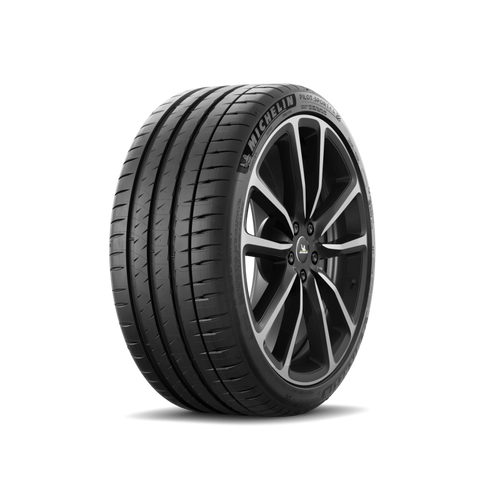
Street Performance: Michelin Pilot Sport 4S leads the pack for daily driving with excellent dry and wet grip. Continental ExtremeContact Sport offers similar performance at lower cost, while Firestone Firehawk Indy 500 provides budget-friendly performance.
Track Use: Michelin Pilot Sport Cup 2 delivers track-focused grip with street legality. Toyo Proxes R888R and Nitto NT01 offer pure track performance at lower prices but sacrifice street manners.
All-Season: Continental ExtremeContact DWS 06 Plus provides near-summer tire grip with snow capability. Michelin Pilot Sport All-Season 4 offers premium all-weather performance.
Spacers and Adapters Done Right

Quality spacers solve offset issues safely when chosen correctly. Hub-centric spacers from H&R, Eibach-ers-7-00-inch-l-x-2-50-inch-dia-x-650-lbs-coil-over-spring-0700-250-0650/), or BORA%20spacers) maintain proper wheel centering and eliminate vibrations. Common applications include 20-25mm rear spacers to flush out stock Performance Pack wheels.
Key spacer rules:
- Always use hub-centric designs (70.5mm bore for Mustangs)
- Bolt-on spacers (15mm+) are safer than slip-on types
- Check for wheel relief pockets to clear protruding studs
- Torque properly and re-check after initial driving
Suspension Impact on Fitment

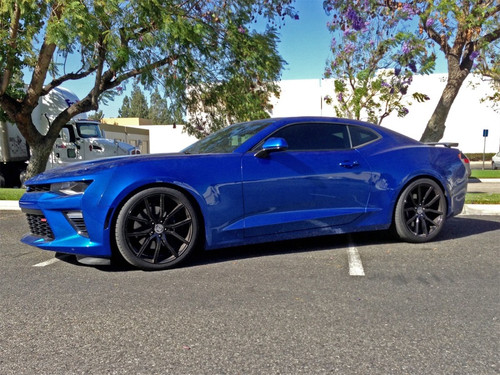
Lowering your GT affects wheel clearance significantly. Springs provide fixed drops with stock strut limitations, while coilovers offer adjustability and often better inner clearance due to slimmer spring perches.
Benefits of lowering for fitment:
- Adds negative camber (helps outer fender clearance)
- Reduces wheel gap for better aesthetics
- Can improve handling with proper setup
Considerations:
- S197 models need adjustable panhard rods to recenter the rear axle
- Aggressive camber settings help fitment but increase tire wear
- Extremely low setups may require bump stop modifications
Common Fitment Mistakes to Avoid
Wrong center bore: Many aftermarket wheels use 73.1mm bores requiring hub-centric rings for proper centering on Mustang's 70.5mm hubs.
Incorrect offsets: Too high causes brake or suspension interference; too low creates dangerous fender contact or excessive poke.
Cheap wheel quality: Budget wheels may crack under the GT's weight and power. Stick to established brands with proper load ratings.
Ignoring brake clearance: Performance Pack Brembo calipers require specific spoke designs or minimum wheel diameters.
Extreme tire stretch: Mounting narrow tires on wide wheels reduces contact patch and risks bead failure.
Who Should Upgrade Their Wheels
Mustang GT owners looking to improve aesthetics, handling, or track performance will benefit from proper wheel upgrades. Those planning suspension modifications should coordinate wheel fitment with their suspension goals. Show car builders and track enthusiasts particularly benefit from custom-spec wheels that maximize their specific requirements.
When to Skip Aftermarket Wheels
If you're satisfied with your GT's current performance and appearance, stock wheels often provide the best balance of cost, durability, and functionality. Budget-conscious owners might prioritize other modifications like tires, suspension, or engine upgrades first. Those in harsh winter climates may prefer keeping stock wheels for winter tire mounting.
Final Verdict
Proper wheel fitment transforms your Mustang GT's appearance and performance when done correctly. The key is understanding your generation's limitations, choosing appropriate specs for your use case, and working with knowledgeable vendors who understand Mustang-specific requirements. Whether you're going for a subtle OEM+ look or maximum aggressive stance, the information in this guide provides the foundation for making informed decisions that avoid costly mistakes while achieving your vision.
For custom builds or complex fitment questions, specialists like ThreePiece.us offer the expertise to dial in perfect specifications tailored to your specific setup and goals.