
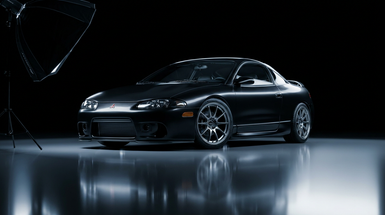
Mitsubishi Eclipse GSX buyer guide: The Truth Nobody Ment...
Why the Mitsubishi Eclipse GSX Is the Last Affordable Japanese Performance Car
The Mitsubishi Eclipse GSX is the last great Japanese performance car you can still afford to buy, modify, and actually drive without worrying about destroying a six-figure investment. While the automotive world obsesses over Skylines, Supras, and STIs, the Eclipse GSX quietly delivers all-wheel-drive turbocharged performance at a fraction of the cost.
Quick Navigation
- Quick Answer
- Key Takeaways
- The 4G63T Engine: Evolution DNA in Eclipse Clothing
- Tuning Potential: From Street to Strip
- Essential Modifications for Real Performance
- Model Years: Which GSX to Buy
- Performance Comparison: GSX vs. The Competition
- Ownership Reality Check
- Bottom Line
Quick Answer
The Eclipse GSX combines the legendary 4G63T turbo engine with AWD traction and massive tuning potential, all for $8,000-18,000. It's the same powerplant found in the Lancer Evolution, wrapped in a practical package that can serve as both daily driver and weekend warrior.
Key Takeaways
- Engine: 4G63T 2.0L turbo producing 195-213 hp stock, easily tunable to 300-450+ hp
- Performance: 6.4-6.7 second 0-60 times with quarter-mile runs in the mid-14s
- Generations: First-gen (1990-1994) and second-gen (1995-1999) each offer distinct advantages
- Best Years: 1995-1996 for maximum tuning potential, 1998-1999 for refined reliability
- Market Position: Significantly cheaper than comparable WRX/STI or 300ZX Turbo models
The 4G63T Engine: Evolution DNA in Eclipse Clothing
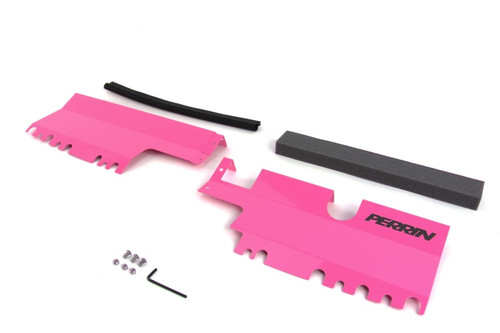
The Eclipse GSX's 4G63T engine is the same basic architecture that powered the Lancer Evolution to rally dominance. First-generation models (1990-1994) produced 195 hp and 203 lb-ft, while second-generation cars (1995-1999) bumped output to 210-213 hp and 214 lb-ft.
The critical distinction lies in the engine block construction. Early models through 1991 featured the coveted 6-bolt crankshaft design, considered more robust for high-power applications. The 7-bolt blocks introduced in 1992 are lighter but suffer from "crank walk" issues beyond 400-450 hp.
For serious tuning, seek out 1995-1996 models that retained the 6-bolt architecture while gaining the second-generation's improved turbocharger (TD05-14B) and engine management systems.
Tuning Potential: From Street to Strip
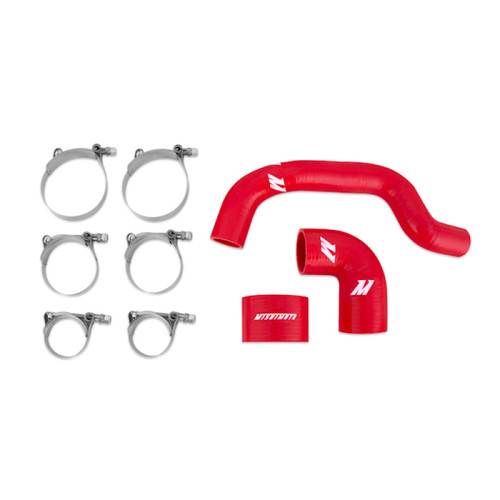
Stage 1: 300-350 HP on Stock Internals
Basic bolt-ons reliably achieve 300-350 hp:
- Aftermarket downpipe and exhaust system
- Cold air intake
- Front-mount intercooler
- Boost controller set to 18-20 psi
- ECU tune from Modern Automotive Performance (MAP), AMS Performance, or aFe Takeda 3in 304 SS Cat-Back Exhaust System 15-18 Subaru WRX/WRX STI H4-2.0/2.5L (t) - 49-36801-L
Stage 2: 350-450 HP with Internal Upgrades
- Upgraded turbocharger (TD05H-16G)
- Larger fuel injectors (550cc minimum)
- Forged pistons and connecting rods
- ARP head studs
Stage 3: 450+ HP Serious Builds
- Fully built bottom end with forged internals
- Larger turbocharger (GT2860RS, GT3071R)
- Standalone engine management
- Upgraded transmission internals
Essential Modifications for Real Performance
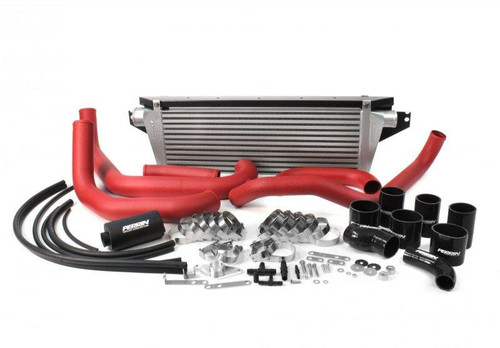

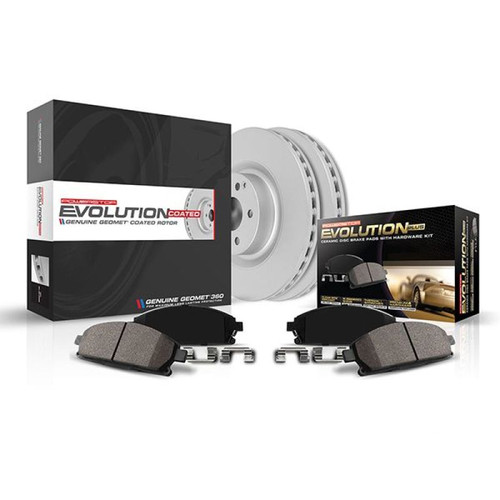
Intercooler: The Biggest Bottleneck
The stock side-mount intercooler is severely restrictive. Front-mount intercooler upgrades deliver 20-30 hp gains and dramatically better heat management:
- AMS Performance Alpha Series: $1,200-1,500
- Mishimoto 04-07 Subaru WRX STI (STI only) USDM Red Silicone Intercooler Hoses - MMHOSE-SUB-INT4RD: $800-1,000
- Mishimoto 04-07 Subaru WRX STI (STI only) USDM Red Silicone Intercooler Hoses - MMHOSE-SUB-INT4RD: $900-1,200
Exhaust: Downpipe First, Cat-Back Second
The restrictive stock exhaust system responds well to upgrades. Start with a 3-inch downpipe from aFe Takeda 3in 304 SS Cat-Back Exhaust System 15-18 Subaru WRX/WRX STI H4-2.0/2.5L (t) - 49-36801-L, Mishimoto 04-07 Subaru WRX STI (STI only) USDM Red Silicone Intercooler Hoses - MMHOSE-SUB-INT4RD, or AMS Performance ($300-500). Follow with cat-back systems from aFe Takeda 3in 304 SS Cat-Back Exhaust System 15-18 Subaru WRX/WRX STI H4-2.0/2.5L (t) - 49-36801-L, aFe Takeda 3in 304 SS Cat-Back Exhaust System 15-18 Subaru WRX/WRX STI H4-2.0/2.5L (t) - 49-36801-L, or aFe Takeda 3in 304 SS Cat-Back Exhaust System 15-18 Subaru WRX/WRX STI H4-2.0/2.5L (t) - 49-36801-L ($600-1,000) for another 10-15 hp.
Suspension: Handling the Power
The Eclipse GSX's MacPherson strut front and multi-link rear suspension benefits from modern coilover systems:
- BC Racing BR Series: $1,000-1,200
- Bilstein B16 (PSS10) Subaru WRX STi Base/Limited H4 2.5L Front & Rear Performance Suspension System - 48-249546: $1,400-1,600
- Bilstein B16 (PSS10) Subaru WRX STi Base/Limited H4 2.5L Front & Rear Performance Suspension System - 48-249546: $1,800-2,200
Add Hotchkis or Whiteline sway bars ($400-600) for improved handling balance.
Model Years: Which GSX to Buy
First Generation (1990-1994)
The original Diamond Star Motors collaboration shared platforms with the Plymouth Laser AWD and Eagle Talon TSi AWD. Early 1990-1991 models offer the strongest 6-bolt blocks, while 1994 represents the most refined first-generation package.
Second Generation (1995-1999)
The complete redesign brought modern styling and improved build quality. The 1995-1996 models combine the desirable 6-bolt engine with updated turbocharger and engine management. Final 1998-1999 models included standard limited-slip differential and represent the most reliable option.
Avoid: Early 1995 models due to potential transmission issues.
Performance Comparison: GSX vs. The Competition
Subaru Impreza WRX/STI
- GSX Advantages: Lower purchase price ($8,000-18,000 vs $15,000-30,000+), more comfortable interior, better highway manners
- GSX Disadvantages: Less raw performance, smaller aftermarket, less track-focused suspension
Audi S4/S6 (B5 Generation)
- GSX Advantages: Much lower maintenance costs, simpler mechanics, stronger aftermarket
- GSX Disadvantages: Less sophisticated AWD system, lower interior quality
Nissan 300ZX Turbo
- GSX Advantages: AWD traction, lower maintenance complexity, better parts availability
- GSX Disadvantages: Less exotic appeal, smaller displacement engine
Ownership Reality Check
The Good
- Performance Value: Few cars match this power potential at current prices
- Community Support: Active DSM community with extensive technical knowledge
- Parts Availability: Excellent due to shared Evolution components
- Daily Usability: Practical transportation when properly maintained
The Challenges
- Electrical Issues: Aging wiring harnesses and ECU capacitor failures
- Transmission Wear: W5M33 5-speed may need $2,000-3,000 rebuild
- Rust Susceptibility: Northern cars suffer rear quarter panel and suspension mount corrosion
- Crank Walk: 7-bolt engines vulnerable to crankshaft movement causing catastrophic failure
Running Costs
- Annual Maintenance: $1,500-2,500 including regular services
- Timing Belt Service: $800-1,200 every 60,000 miles
- Clutch Replacement: $1,200-1,800 every 80,000-120,000 miles
- Fuel Economy: 20-25 mpg stock, 18-22 mpg modified
Bottom Line
The Eclipse GSX represents the last opportunity to own serious Japanese turbocharged AWD performance without paying collector car prices. The 4G63T engine's proven ability to handle significant power increases, combined with the car's practical daily-driver nature, makes it an exceptional value in today's inflated performance car market.
Target a 1995-1996 model for maximum tuning potential or a 1998-1999 for the best reliability balance. Budget for immediate maintenance needs like timing belt service, then build power gradually rather than attempting overnight transformations. Most importantly, the window for affordable Eclipse GSX ownership is closing as clean examples become increasingly rare—buy now while you still can.
Shop at ThreePiece.us
Vision American-Muscle 142 Legend 5x114.3 18x9.5+0 Gunmetal Machined Lip